18 Types of Sofas: Styles, Shapes and How to Choose the Right One
Buying a sofa is the biggest furniture decision in a home — it is the largest piece, the most used, and usually the most expensive. And the first confusion hits immediately: what is the difference between a settee and a loveseat? Is a sectional right for a small room? What does “tuxedo” mean, and should you care?
This guide explains the eighteen sofa types you will actually meet while shopping, in plain language: what each one looks like, how it sits, who it suits, and its honest downsides. By the end you will be able to walk into any store — or scroll any listing — and know exactly what you are looking at.
Keep your room measurements in mind as you read. The best sofa type in the world is wrong if it doesn’t fit the room — and the checking rules are in the mistakes section at the end.
In this guide
- The Classic Standalone Sofas
- The Loungers: Sofas Built for Comfort
- The Flexible & Space-Smart Sofas
- Six More Sofa Types Worth Knowing
- Sofa Fabrics & Frames: The Inside Story
- Sofa Shopping Day: A Walkthrough
- How to Choose: A Simple Decision Path
- Budget Guide: Where to Save, Where to Spend
- Mistakes to Avoid
- Your Sofa-Buying Checklist
- Frequently Asked Questions
The Classic Standalone Sofas
These are the traditional three-seat (or two-seat) sofas that anchor most living rooms.
1. The Chesterfield
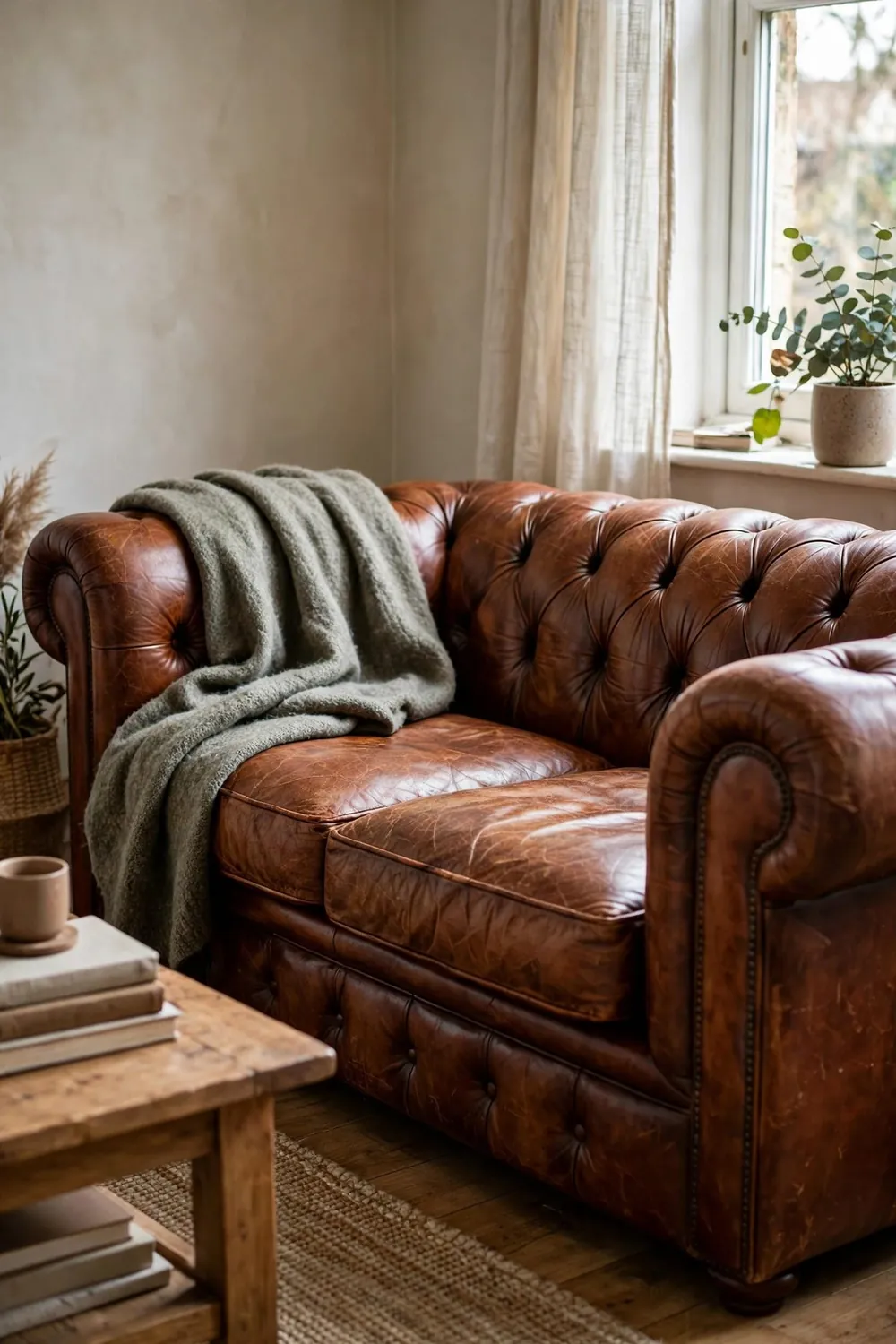
The Chesterfield is the aristocrat: deep button tufting across the back and arms, rolled arms the same height as the back, and traditionally leather upholstery. It reads “library” instantly and anchors traditional, vintage, and even industrial rooms.
Sit test: the seat is firm and upright-ish — great for conversation, less ideal for sprawling. Choose it if you love the look forever (it never dates) and your room leans classic. Downsides: tufting collects crumbs, and it is visually heavy, so pair it with lighter pieces around it.
2. The Loveseat
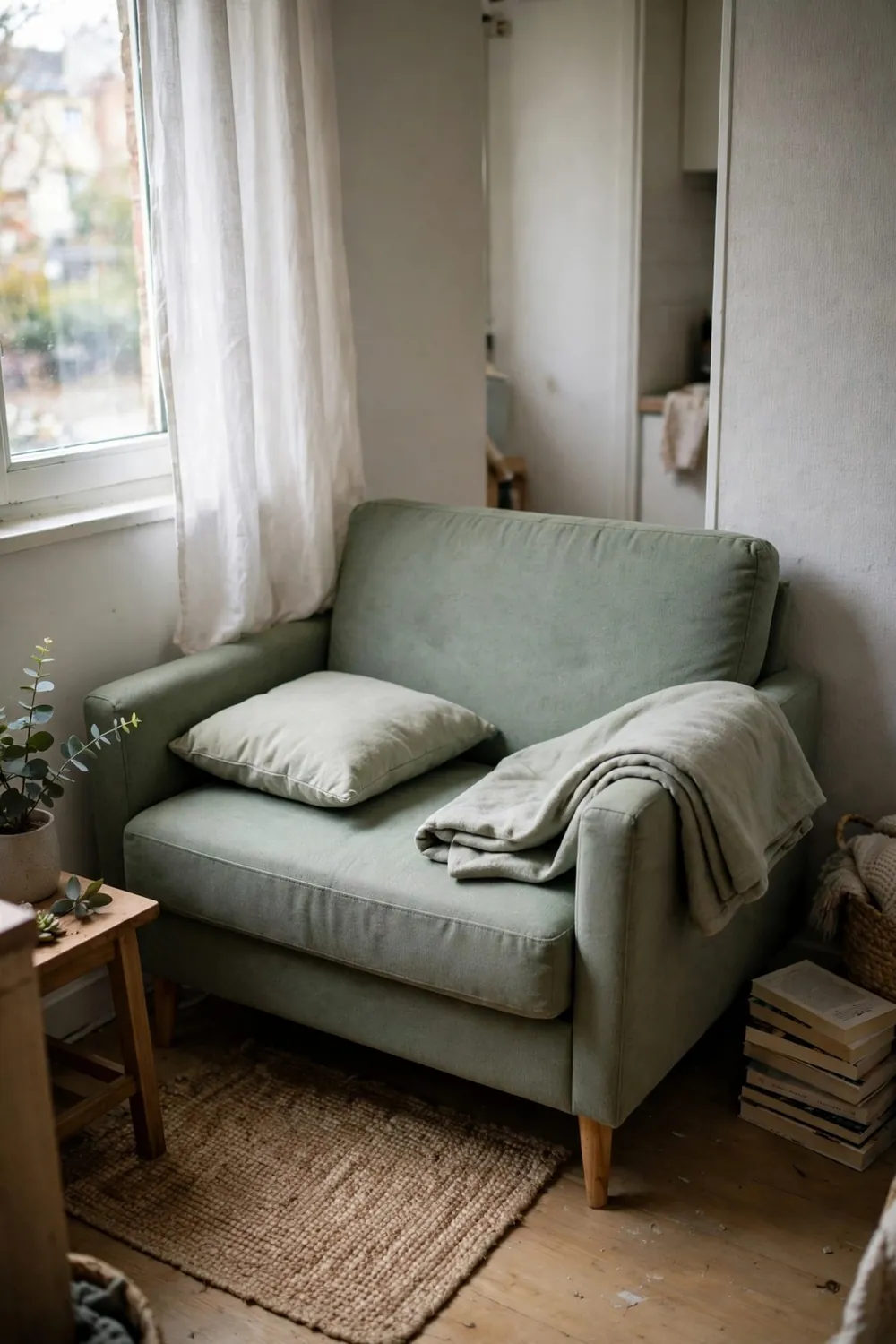
A loveseat is simply a compact two-seater — usually 48 to 72 inches wide. It is the small apartment’s best friend, the bedroom sitting area’s classic, and the partner piece to a larger sofa in bigger rooms.
Sit test: cozy for two friendly people, honest seating for curling up alone with a blanket. Choose it if your room is small or your “sofa” is really a reading throne for one or two. Downside: it will not host a crowd or a tall napper comfortably.
3. The Tuxedo Sofa
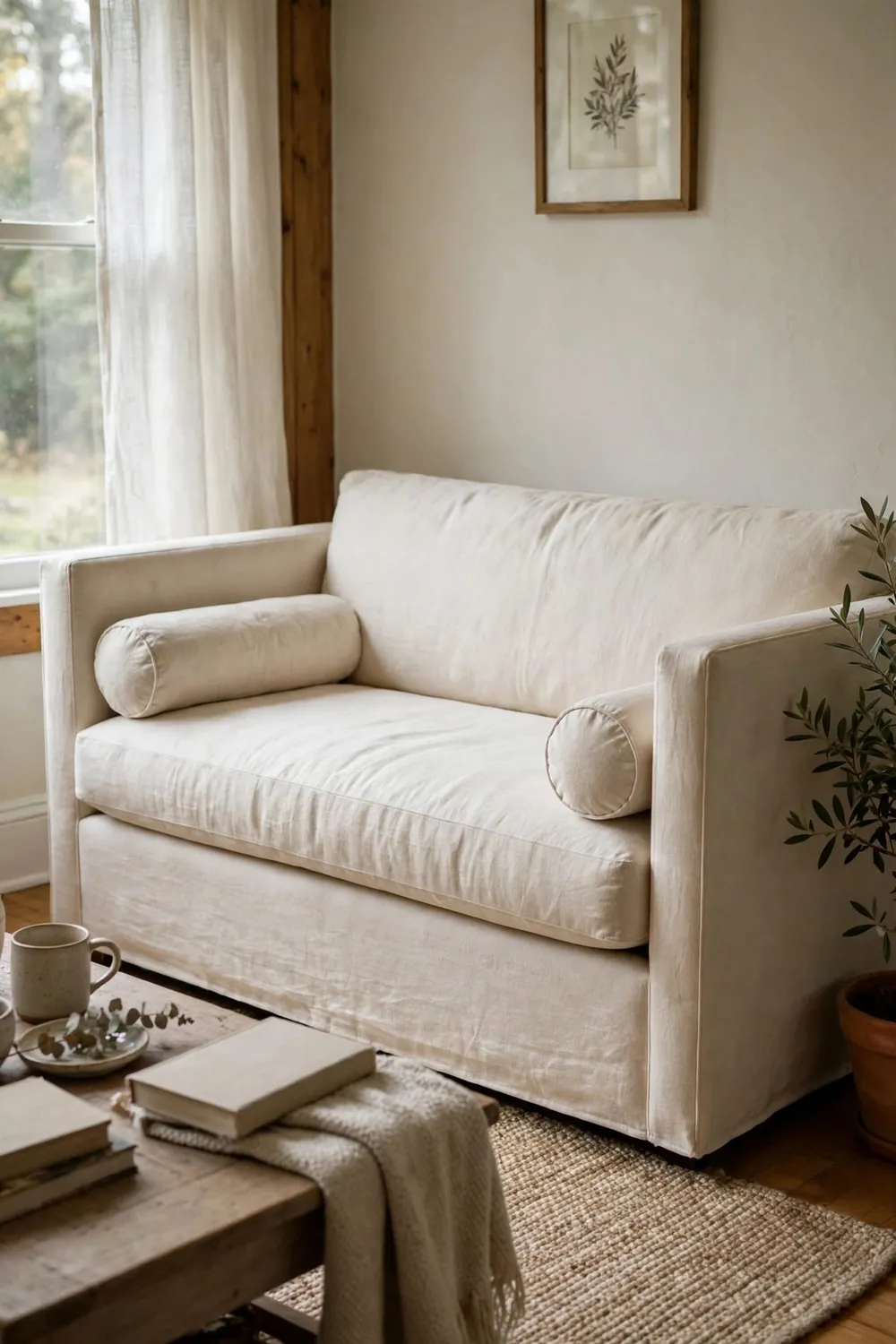
The tuxedo sofa is the tailored one: arms and back all one height, clean lines, often with a single row of tufting or channel stitching, named for the sharp look of formal wear. It suits modern, glam, and transitional rooms and photographs beautifully.
Sit test: structured and upright — the high arms make it a great reader’s sofa. Downside: those same high arms are not made for lying across with your head propped; nappers, look elsewhere or keep a good cushion budget.
4. The Mid-Century Modern Sofa
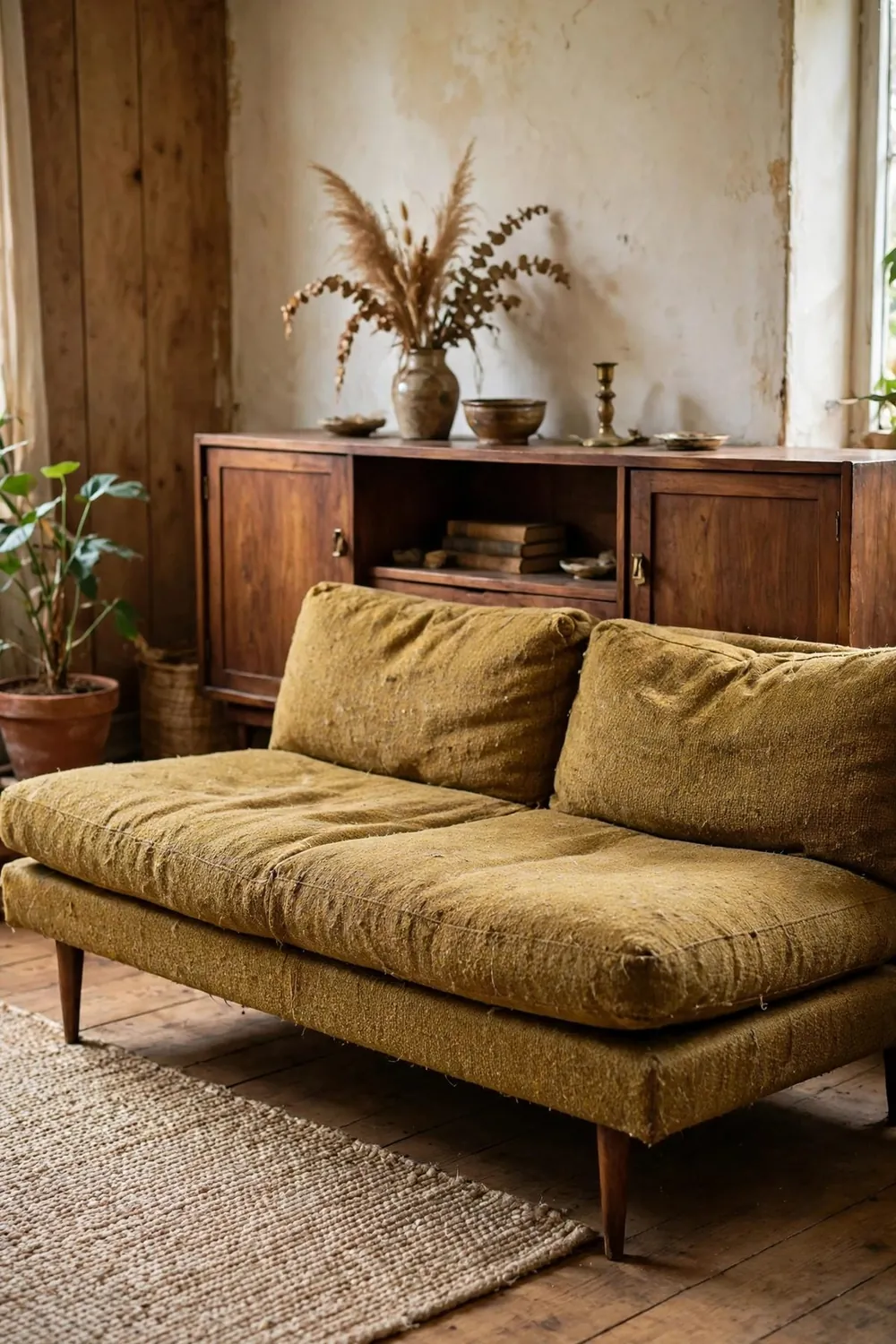
Low profile, slim tapered wooden legs, clean rectangular cushions, often in a bold or mustard-tweed fabric — the mid-century sofa is design’s most enduring silhouette. It suits small rooms superbly because its raised, leggy base lets light and sightlines flow underneath.
Sit test: firmer and shallower than modern sink-in sofas, which many backs secretly prefer. Choose it if your style leans clean and your room leans small. Downside: not the sofa for slouching through a film trilogy in one sitting.
The Loungers: Sofas Built for Comfort
These types prioritize sprawling, napping, and gathering the whole household in one soft place.
5. The Sectional

Two or more pieces joined into an L or U shape — the sectional is the modern family’s headquarters. It seats the most people in the least wall space, defines zones in open-plan rooms, and gives everyone a corner to claim.
Sit test: maximum lounge potential, especially with a chaise section. Choose it if your room is medium-to-large, your household gathers together, and you measure carefully (sectionals are the #1 sofa returned for not fitting). Downsides: it fixes your layout, and moving it means committing to the plan. Always confirm whether the chaise is left or right-facing before ordering — the classic expensive mistake.
6. The Chaise Sofa (and Daybed Sofas)

A regular sofa with one elongated seat for stretching your legs out fully — all the lounge, smaller footprint than a sectional. Daybed-style sofas go further: a deep, twin-width seat that doubles as a guest bed and the world’s best nap spot.
Choose a chaise sofa if you lounge more than you host. Choose a daybed style if guests sleep over in the living room often. Downside: the chaise end seats one person luxuriously and everyone else normally — households argue over it, lovingly.
7. The Sleeper Sofa (Sofa Bed)
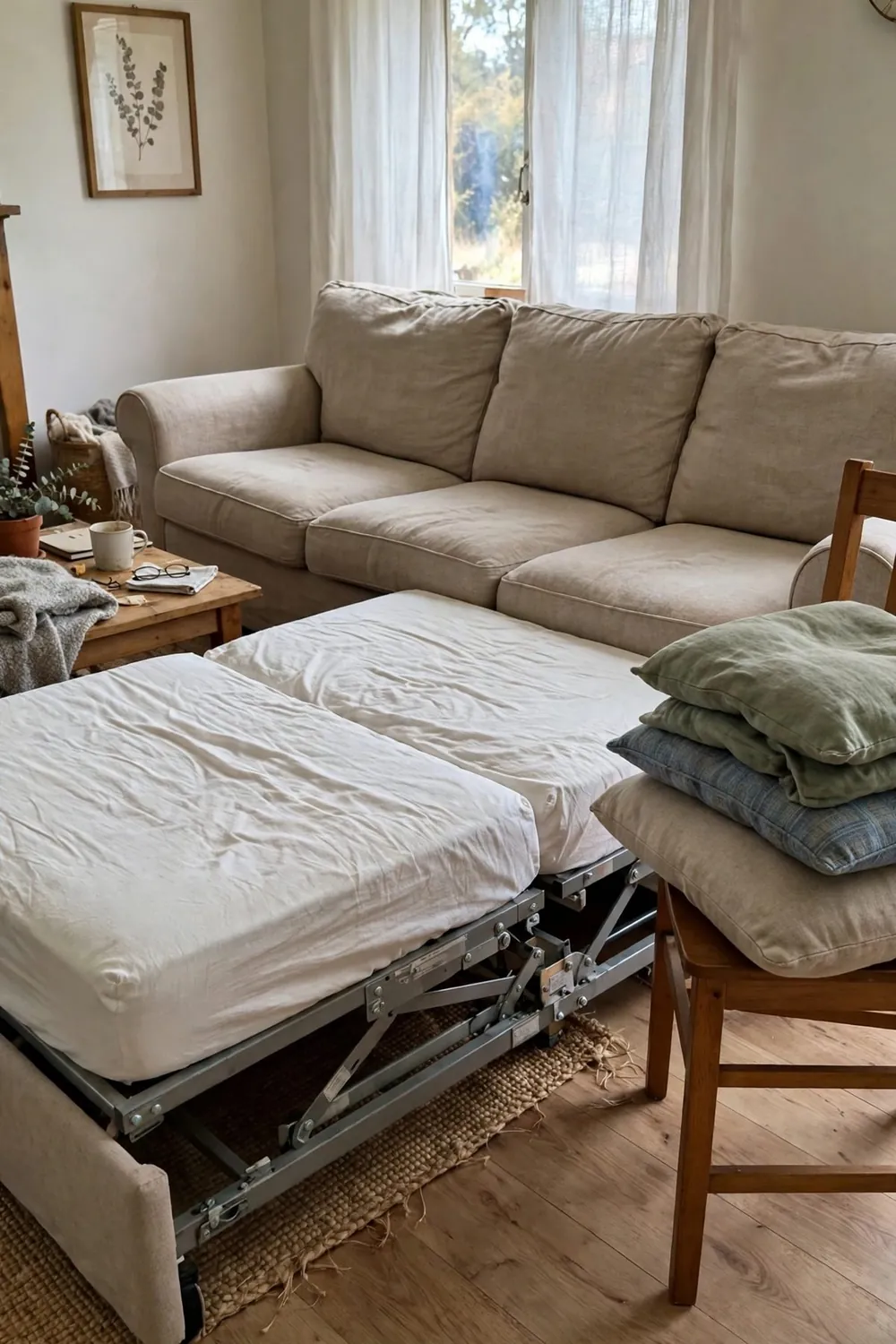
A sofa with a fold-out bed inside: the small home’s insurance policy. Modern sleepers are far better than the bar-in-the-back legends — memory foam and platform mechanisms have genuinely fixed them.
Choose it if you host overnight guests without a spare room. Downsides: it is the heaviest sofa type (plan your delivery route), and the seat cushions sit a touch firmer because of the mechanism below. Test the bed mechanism in store — you will operate it half-asleep at midnight.
8. The Curved Sofa
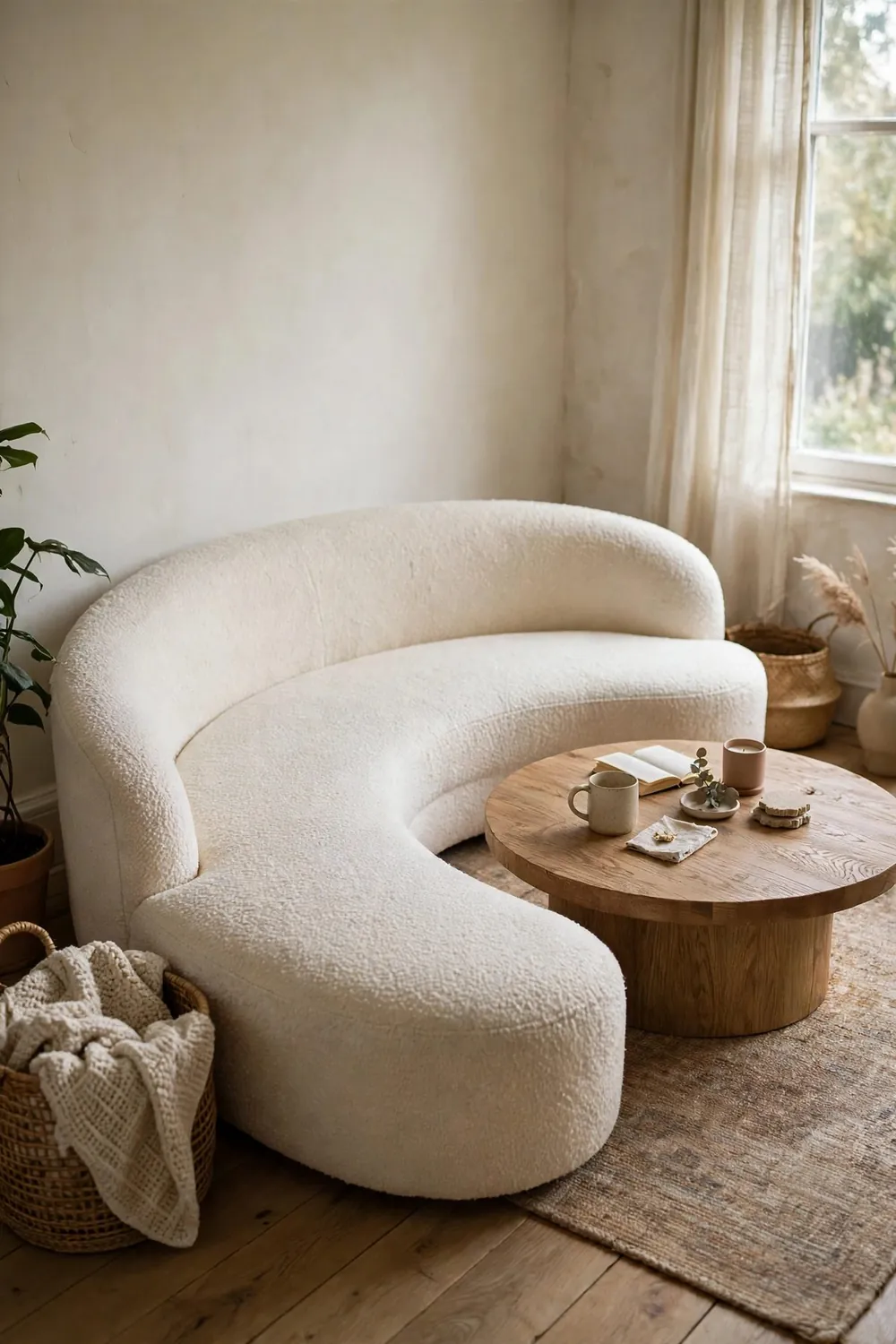
The statement piece: a gentle arc or full crescent that turns seating into sculpture. Curved sofas are having a major moment because they soften rooms full of straight lines and make conversation circles natural.
Choose it if your room is large enough for the sofa to float (curved backs need space behind them) and your style loves a focal point. Downsides: it wastes the corners boxy rooms rely on, does not push against walls gracefully, and costs more per seat than almost any other type.
The Flexible & Space-Smart Sofas
For small rooms, rentals, and lives that rearrange often, these types punch above their weight.
9. The Modular Sofa
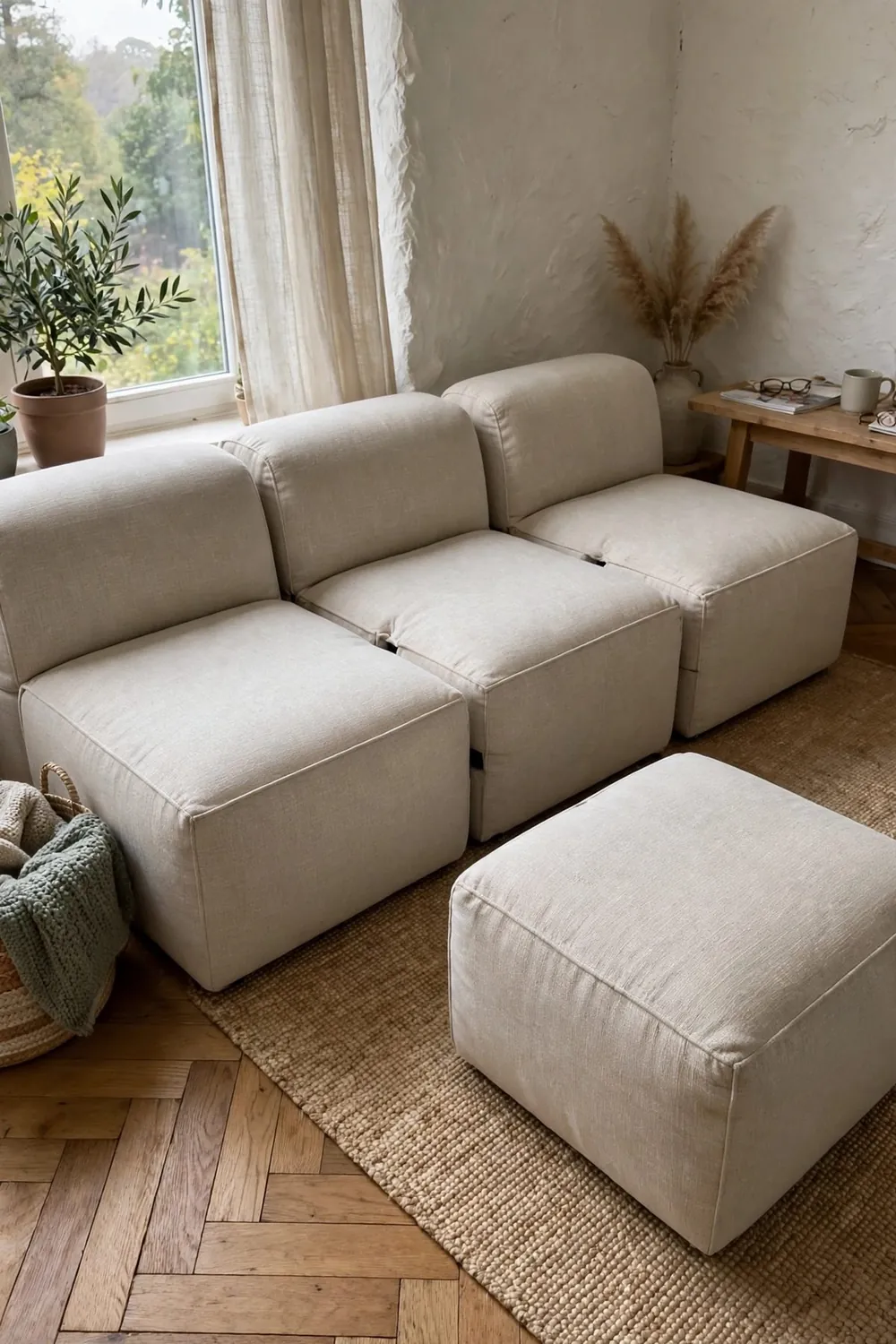
Individual seat units that clip or sit together in any arrangement — corner today, straight three-seater next year, two chairs when you move. Modularity is the renter’s and the indecisive heart’s answer to the forever-sofa problem.
Choose it if you move often, host variably, or cannot get a full sofa through your door or stairs (each piece travels separately — a genuine lifesaver in walk-up apartments). Downsides: units can drift apart on hard floors without connectors, and the per-seat price is usually higher than a fixed sofa.
10. The Armless Sofa
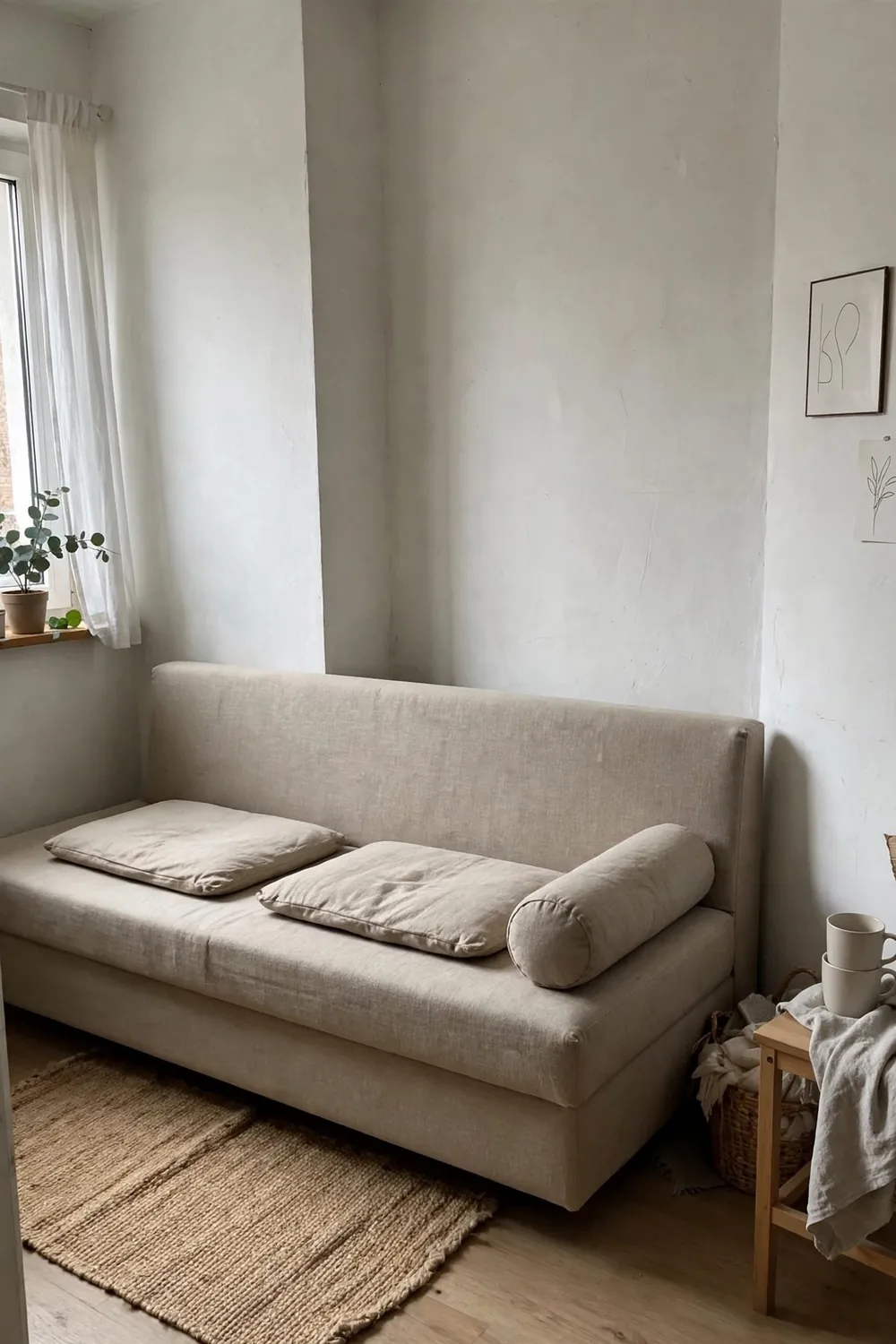
No arms — which makes it lighter visually, easier to pair with chairs, and surprisingly good in small rooms where arms eat inches and sightlines. Armless sofas also slide together into daybed-like arrangements.
Choose it for tight spaces and minimalist rooms. Downsides: nothing to lean an elbow or a head on, and cushions migrate off the open ends. A good throw and a side table compensate for both.
11. The Settee
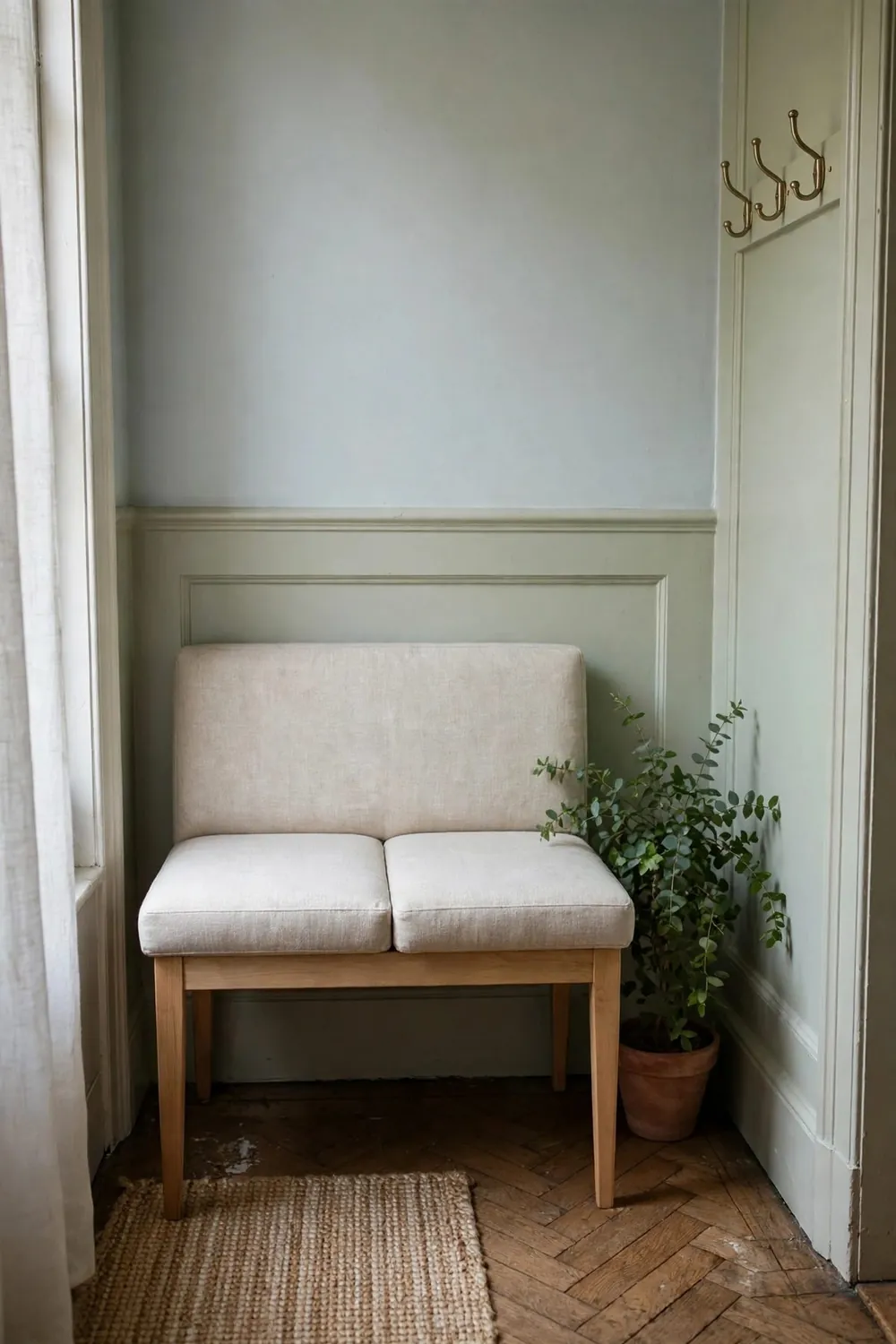
The settee is the loveseat’s formal ancestor: a small, upright, often wood-framed two-seater with roots in dining rooms and entry halls. Today it shines at the foot of a bed, in a hallway, or as delicate extra seating in a formal living room.
Sit test: perch, don’t sprawl. Choose it for elegance and small footprints, in traditional or vintage-leaning rooms. Downside: it is seating in the polite sense — nobody watches a whole film on a settee by choice.
12. The Camelback Sofa
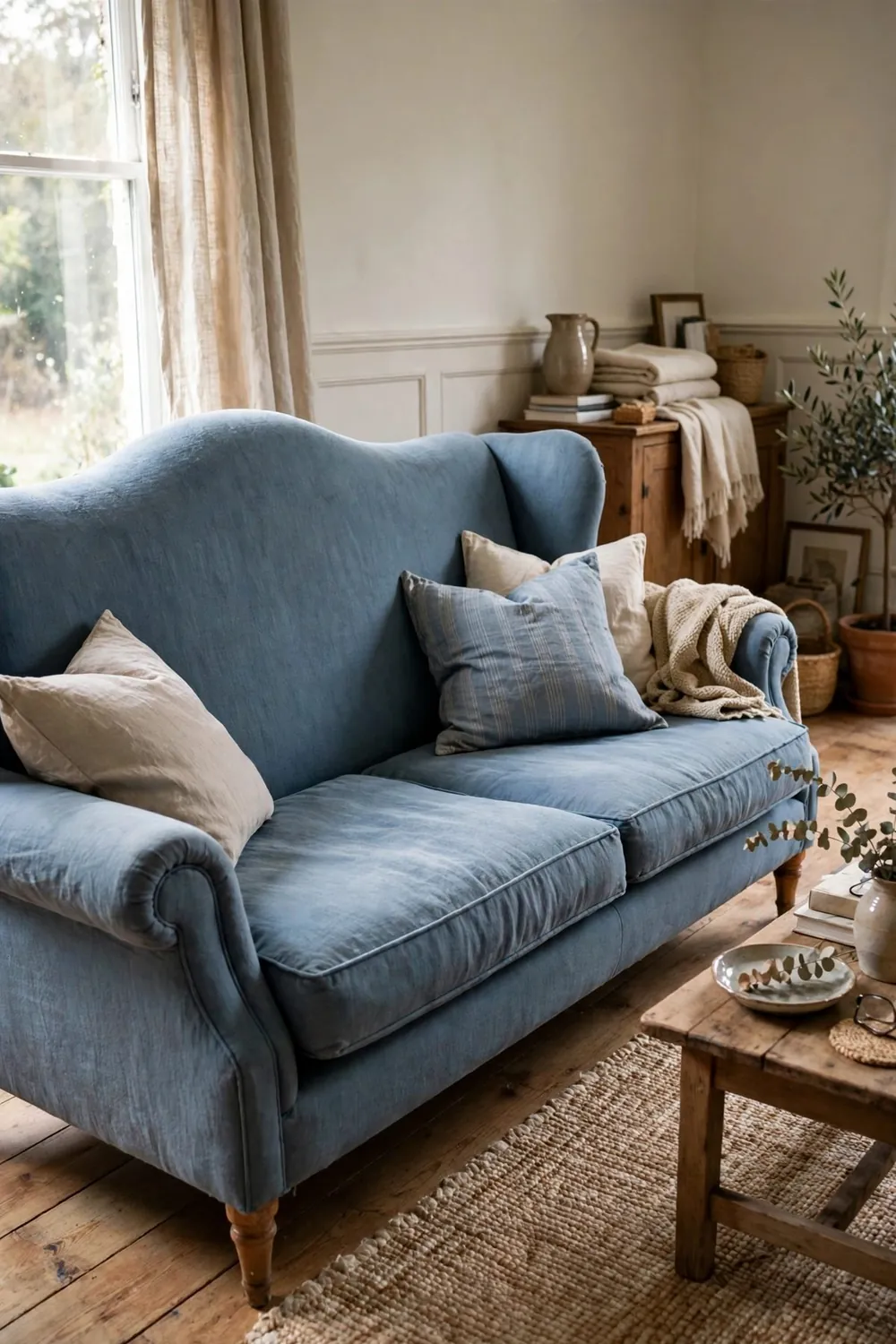
Recognizable by its arched, humped back — highest in the middle — the camelback is a graceful traditional silhouette, often with exposed wood trim and rolled arms. It suits formal and classic rooms and looks especially beautiful floated where its shaped back can be seen.
Choose it if your home leans traditional and your sofa will be seen from behind (open-plan rooms, rooms you enter facing the sofa’s back). Downsides: the shaped back means standard slipcovers do not fit, and its formality can fight casual fabrics.
Six More Sofa Types Worth Knowing
Still collecting ideas? These final additions round out the list — each one tested against the same rule as everything above: it has to earn its place in a real home, on a real budget.
13. The Bridgewater Sofa
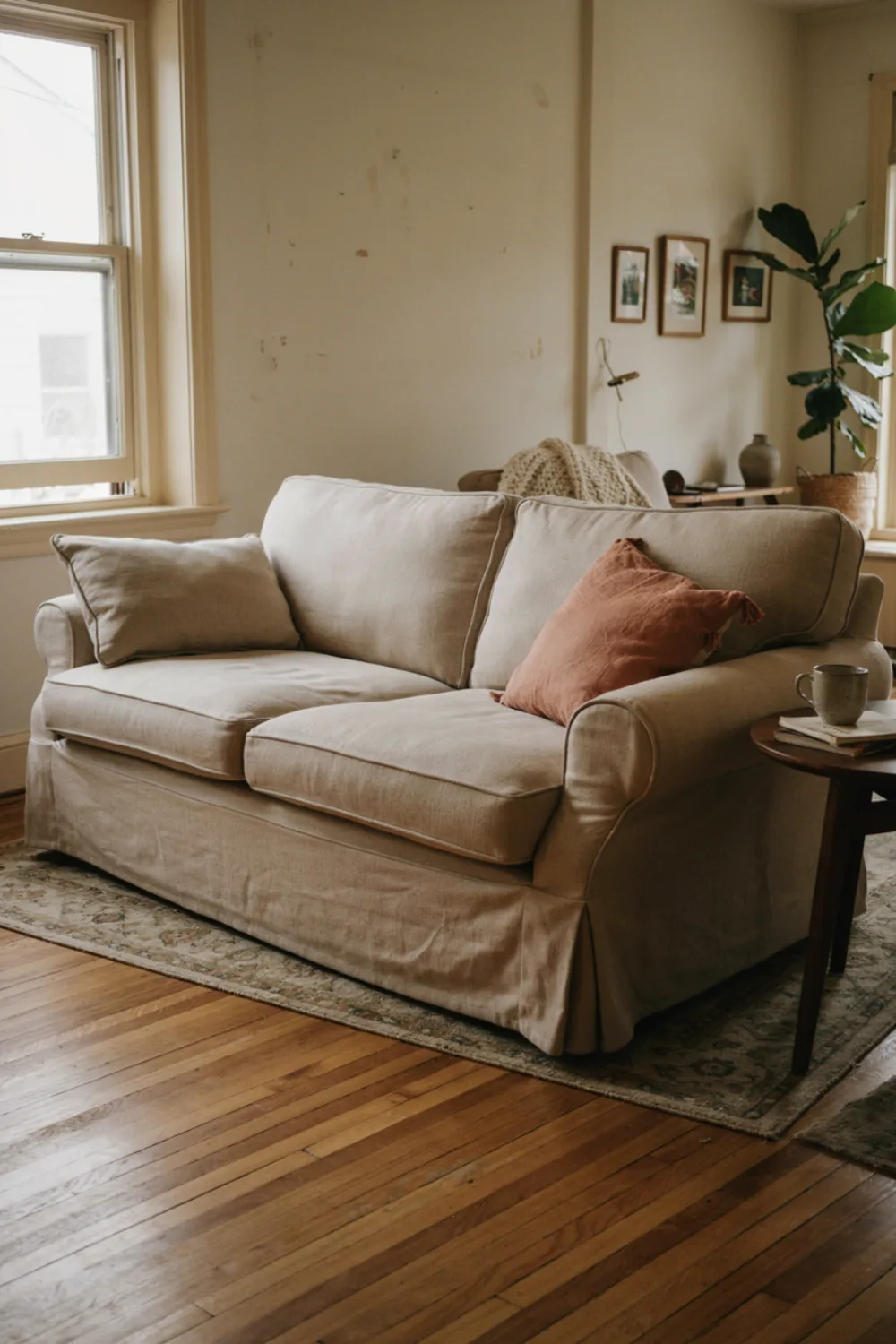
The Bridgewater is the relaxed, country-house classic: low arms that roll outward and sit set back from the front of the seat, plump loose cushions, and often a skirt or a full slipcover. It looks lived-in from day one, in the best way.
Choose it for cottage, coastal or traditional rooms, and for families who want a sofa you can sink into. Before you buy, check the arm height (low arms are lovely for lounging but less supportive for sitting upright) and whether the slipcover is removable and machine washable.
14. The Recliner Sofa
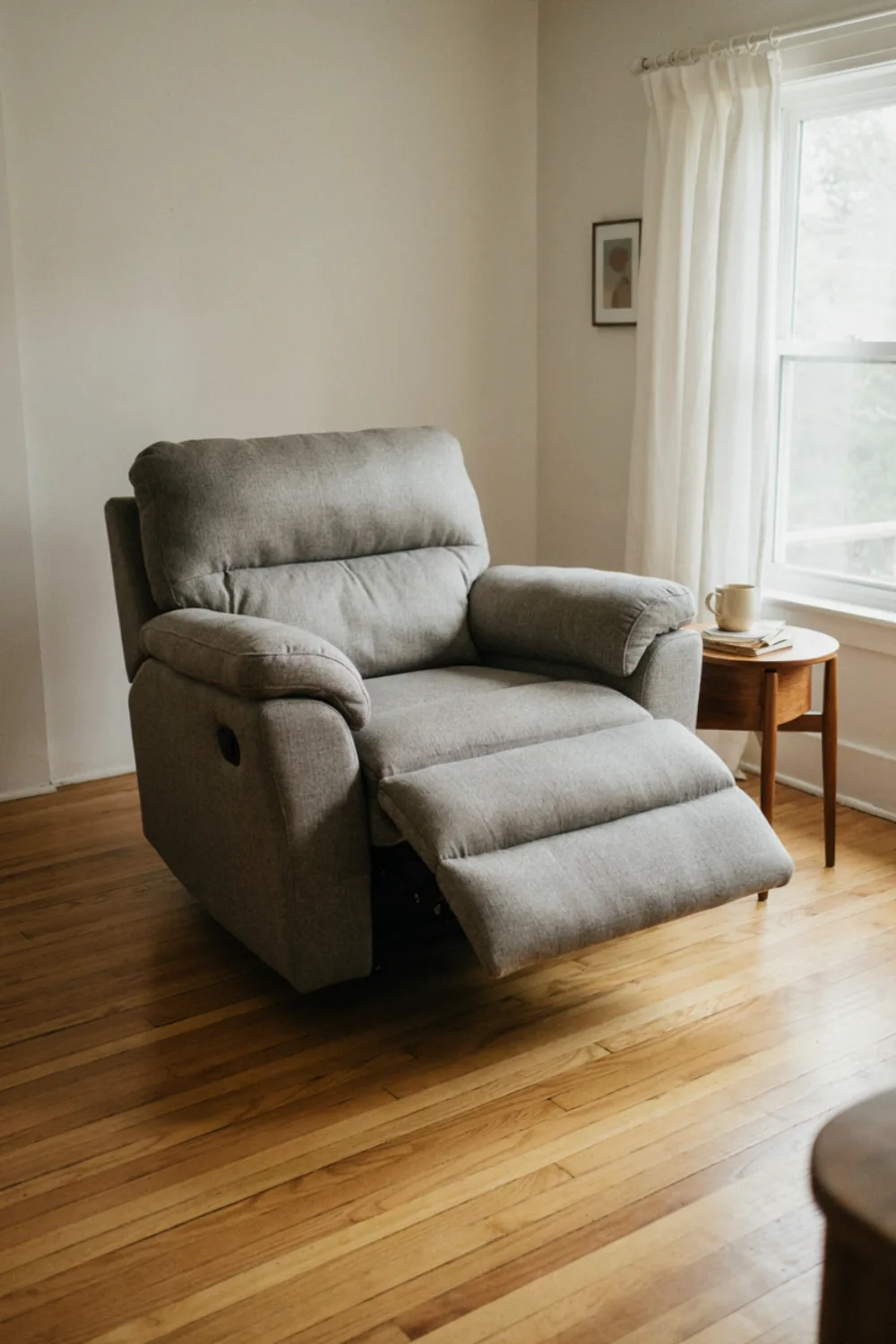
Recliner sofas trade tailored looks for engineered comfort: footrests rise, backs tilt, and some add power headrests and USB ports. For film lovers and anyone with a bad back, nothing else in this guide competes at 8 p.m.
Choose wall-hugger designs if your room is small — they recline fully with only a few centimeters of wall clearance. Downsides: the segmented cushions read casual, repairs to mechanisms can be specialist work, and they are seriously heavy.
15. The Daybed
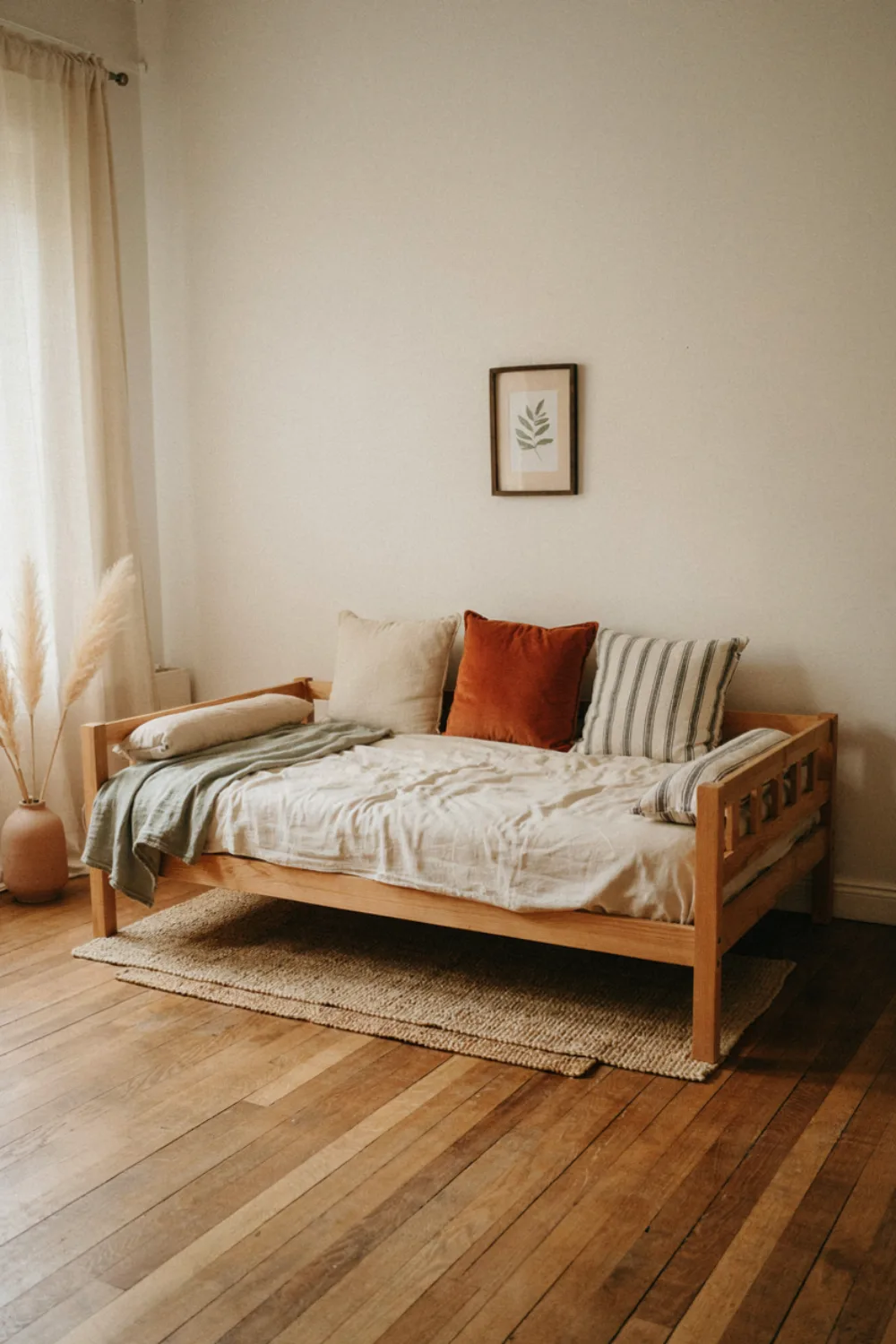
Part sofa, part bed, all versatility: a twin-size mattress on a frame with a back and two ends. Daybeds earn their keep in studios, spare rooms, and teenagers’ rooms where sitting and sleeping genuinely split the day.
Dress it as a sofa with a fitted cover and firm bolsters along the back — loose bedding is what makes daybeds look like unmade beds. Downsides: deep seats need those bolsters for comfortable upright sitting, and making it daily is a habit you must actually keep.
16. The Futon
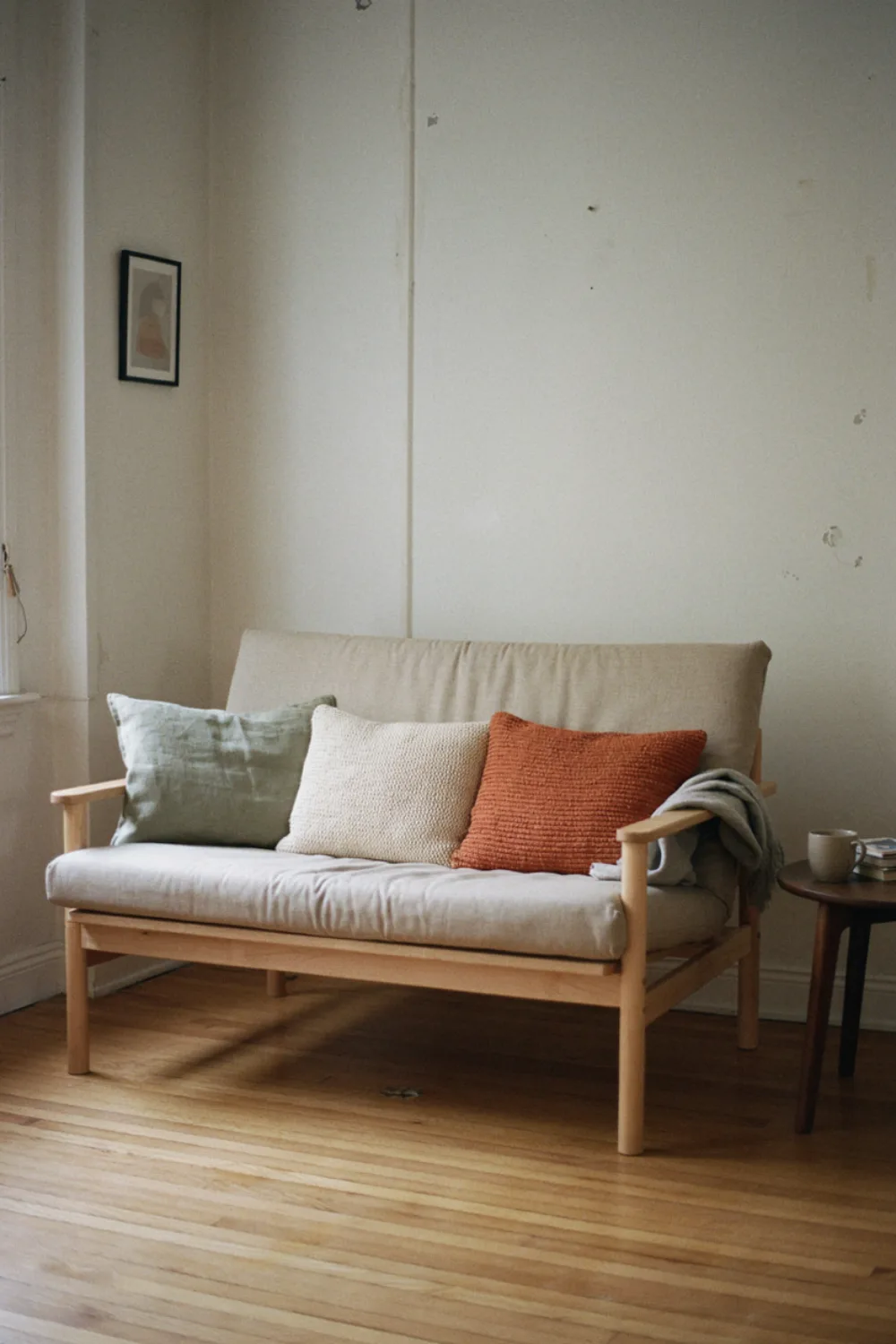
The futon is the budget original: a mattress that folds between sofa and flat bed on a simple frame — wooden or metal. Modern futon mattresses with foam and pocket coils are a world away from the thin student pad of legend.
Choose it for first apartments, spare corners, and tight budgets. Downsides: it will never look tailored, the fold line is felt by light sleepers, and frames vary wildly in quality — test the conversion mechanism twice in the shop.
17. The Lawson Sofa
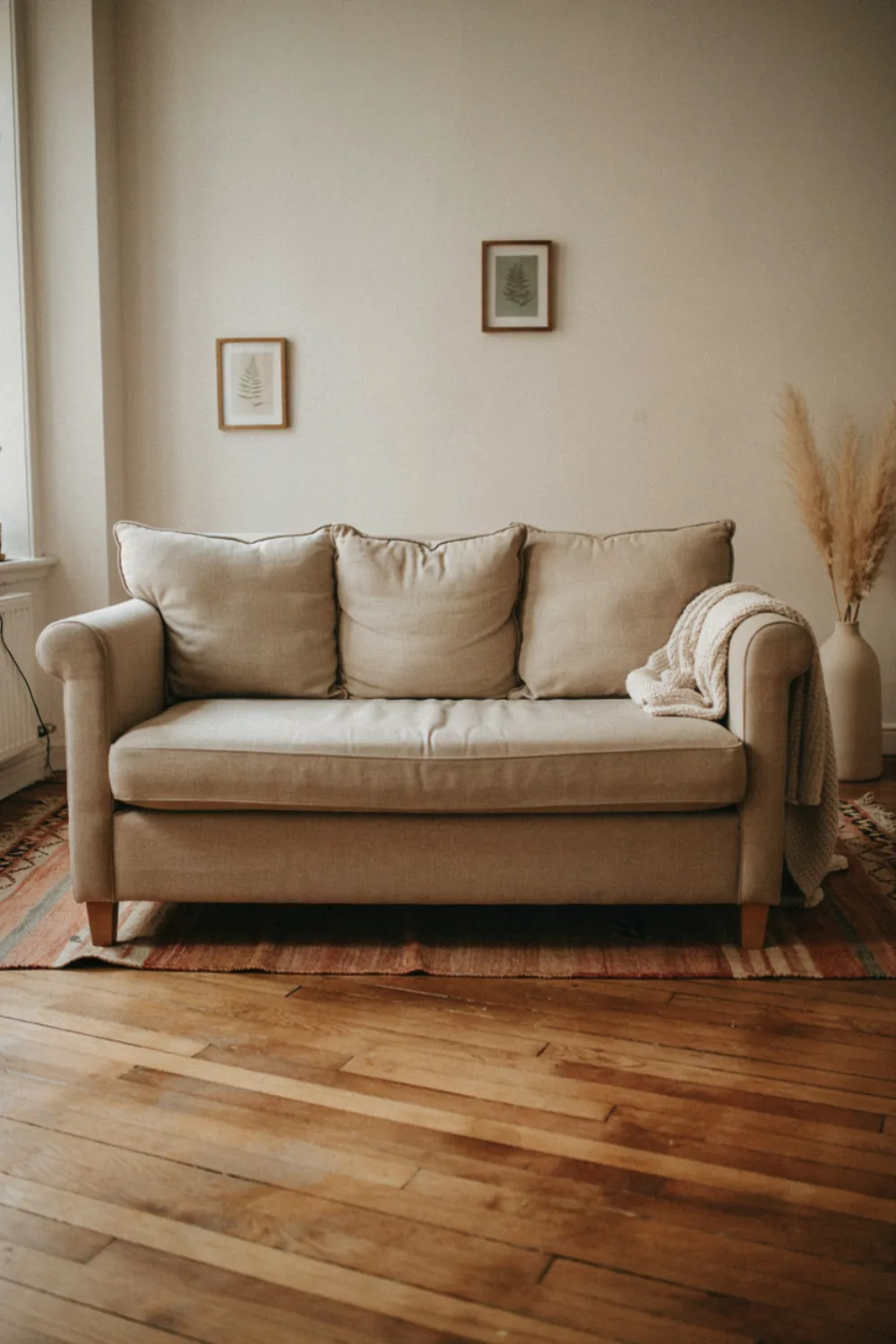
The Lawson is the comfortable classic hiding in plain sight: a three-cushion sofa with arms lower than the back, plump loose cushions, and no fussy detailing. If you have sat on a ‘normal comfy sofa’ at a friend’s house, it was probably a Lawson.
Choose it when comfort outranks silhouette and the room’s style is relaxed-traditional. Downsides: loose cushions need regular plumping and rotating, and its easygoing shape can look plain without good fabric and cushions to dress it.
18. The English Roll-Arm Sofa
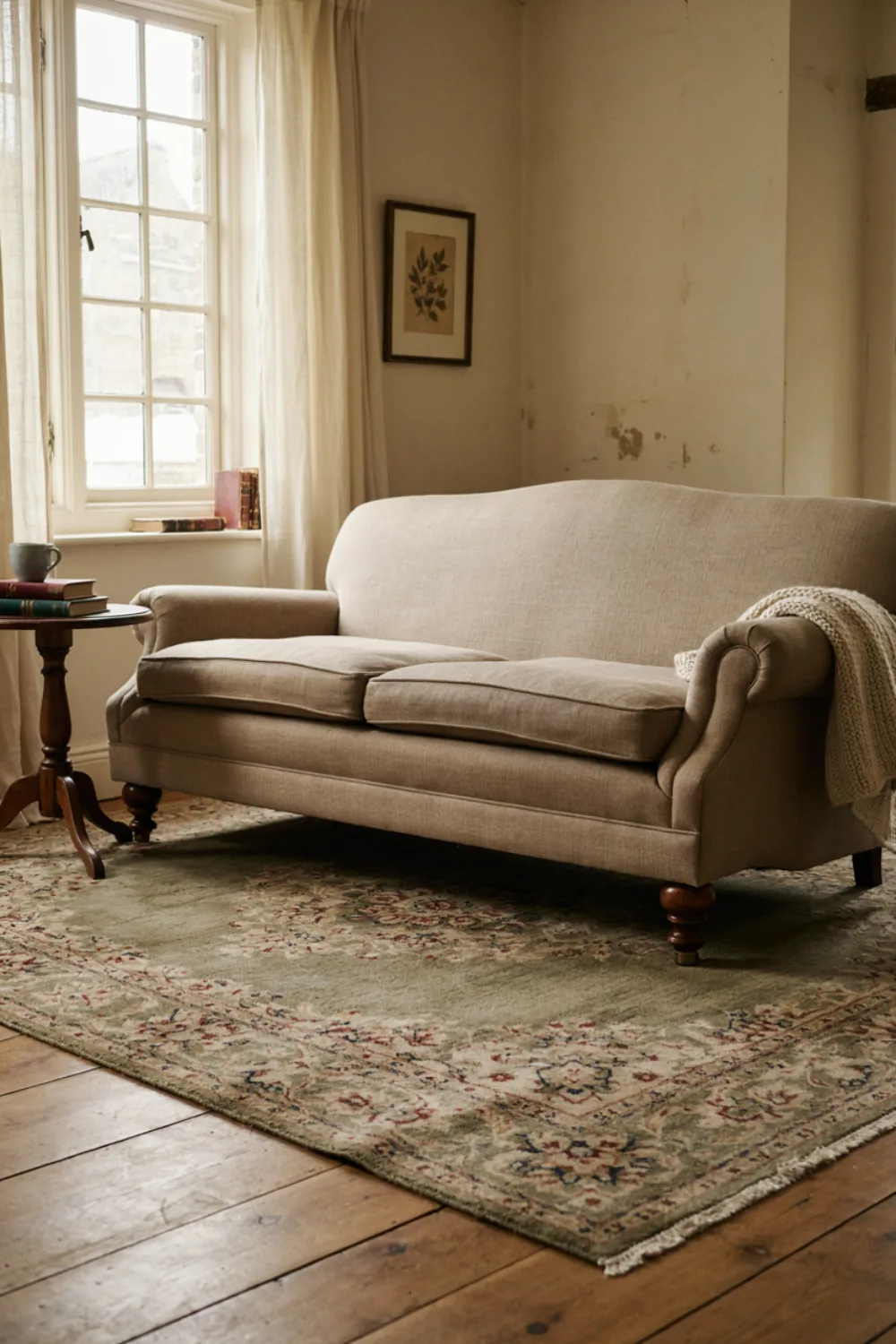
Low rolled arms, a slightly sloped back, plump cushions, and often turned wooden feet: the English roll-arm (or club sofa) is the countryside cousin of the Chesterfield — softer, lower, and made for sinking into with a book.
Choose it for traditional and cottage rooms and serious lounging. Downsides: the low arms defeat head-propping for side-lying readers, and its generous proportions need measuring twice in small rooms and narrow doorways.
Sofa Fabrics & Frames: The Inside Story
The type gets you to the shortlist — the materials decide whether you still love the sofa in five years.
Performance fabrics. Woven synthetics engineered to shrug off stains, spills, and claws. Modern versions look and feel like real linen or weave, clean with water, and have changed the math for light-colored sofas in family homes. If the listing says “performance” and names a fiber, it is worth the upgrade in almost any household with a pulse.
Natural fabrics: linen, cotton, wool. Linen breathes, rumples charmingly, and suits casual-classic types (it is the Chesterfield’s modern rival look and the mid-century’s best friend). Cotton is soft and affordable but stains eagerly unless treated. Wool is naturally stain-resistant, durable, and regulates temperature beautifully — the connoisseur’s choice, priced accordingly. All naturals fade in direct sun over years; rotate cushions and mind the window side.
Leather. Ages into beauty, wipes clean, and suits traditional and industrial rooms. Full-grain leather is the investment grade; corrected and bonded leathers cost less and age less gracefully. Leather feels cool in winter and warm in summer until it adjusts to you — a throw solves the first ten minutes. Homes with cats who knead should test a sample first.
Velvet. The glamour fabric — light-playing, rich, and surprisingly practical in synthetic versions that resist crushing and clean well. It elevates tuxedo and curved sofas especially. Velvet shows every sit-print for a moment (brush it back), and it collects pet hair visibly — a lint roller by the sofa is the velvet owner’s honest tax.
Frames and suspension, in one breath. Ask two questions: “Is the frame kiln-dried hardwood?” and “What is the suspension — sinuous springs, eight-way hand-tied, or webbing?” Hardwood plus springs is the fifteen-year answer; webbing-only on a softwood frame is the three-year answer wearing the same outfit. Cushions of high-resilience foam (or foam wrapped in feather) hold their shape; plain low-density foam is why cheap sofas develop a permanent person-shaped dip.
Sofa Shopping Day: A Walkthrough
Knowing the types is theory. Here is how a good shopping trip actually goes.
Before you leave home. Measure the room, the seating zone, and the full delivery route (door widths, the tightest hall turn, stair landings, elevator). Photograph the room from its doorway and from above the seating area if you can. Put the measurements and photos on your phone. Decide your top two types from this guide and your honest budget ceiling — including delivery and the inevitable cushion or throw additions.
In the store, work the shortlist physically. Sit in every candidate your real way: upright with feet down, curled with legs up, stretched along it if naps matter. Lie your head on the arm (tuxedo shoppers, this is your moment of truth). Test the sleeper mechanism if applicable, lift a corner to feel the frame’s heft, and ask the two questions — frame material? cushion filling? — out loud. A good salesperson answers both instantly; vagueness is information.
Judge the fabric in your light, not theirs. Take fabric swatches to the store’s window, or better, home for a day against your walls and floor. Showroom light flatters; your north-facing living room will not. Rub the swatch, scratch it lightly, and if the household includes pets, press sticky tape to it — hair behavior on the swatch predicts hair behavior on the sofa.
Before you sign. Confirm the chaise direction against your room sketch one final time. Confirm the delivery date, the route plan with the delivery team, the return window and its conditions, and the warranty on frame and cushions in writing. Then go home and tape the sofa’s footprint on your floor with painter’s tape for one evening — live around the ghost sofa, walk the walkways, open the doors it might block. That single evening has saved more households from the wrong sofa than any other step in this guide.
How to Choose: A Simple Decision Path
Step 1 — Measure the room and the route. Room dimensions, door widths, stair turns, elevator size. Write them down. This one step eliminates more regret than any style decision.
Step 2 — Count your real life. How many people sit here daily? Weekly? Do guests sleep over? Do you nap on the sofa? Let the honest answers rank your top three types.
Step 3 — Match the silhouette to the room’s style. Classic room: Chesterfield, camelback, tuxedo. Clean modern room: mid-century, modular, curved. Family-everything room: sectional or sleeper.
Step 4 — Sit test properly. Sit how you actually live — upright, curled, sprawled, “asleep by accident.” Five honest minutes in the store beats five years of almost-comfortable.
Step 5 — Check the bones. Kiln-dried hardwood frame, high-resilience foam or feather-wrapped cushions, and fabric rated for your household (pets and kids want performance fabric or washable covers). A sofa’s type gets you to the shortlist; its bones decide whether you still love it in year five.
Going deeper: the ten-minute sit test, done properly. Showroom sitting fails because it lasts forty seconds. Give a serious candidate ten real minutes: sit as you sit at home — sideways, feet up, slouched with a book, upright with a laptop. Shoes off if the shop allows; your legs should reach the floor or rest fully supported, never dangle. Press the cushion and watch the recovery: good foam pushes back within seconds, poor foam keeps your handprint. Lie down if you ever nap on a sofa — length between the arms is the honest measure, not the advertised size. Check the back height against your shoulders, and sit in the middle seat, the one nobody tests and everybody eventually gets. Ten honest minutes has saved more living rooms than any review score, because your body collects data your eyes cannot.
Budget Guide: Where to Save, Where to Spend
Save on: type choice itself — a loveseat or armless sofa in good fabric beats a giant cheap sectional in every way that matters at year three. Save also by choosing stock fabrics over custom and by buying during the big furniture sale weekends, which are predictable and deep.
Spend a little more on: frame and cushion quality in whichever type you choose. The difference between a five-year sofa and a fifteen-year sofa is almost entirely inside, where you cannot see it — so buy from makers who tell you exactly what the frame and foam are. Vague specs are a warning, not a mystery.
Mistakes to Avoid
Falling for the chaise side trap. Sectionals and chaise sofas come in left-facing and right-facing. Order the wrong one and the chaise lands against the wall or in the walkway. Sketch your room, mark the chaise, triple-check the product diagram.
Ignoring the delivery route. The most common sofa disaster has nothing to do with taste: it does not fit through the door, the hall turn, or the stairs. Measure the route like the sofa’s life depends on it, because it does.
Choosing by looks alone. A gorgeous sofa you cannot nap on will be resented daily. The sit test — in your real positions — is non-negotiable.
Wrong scale for the room. A huge sectional in a small room does not read “cozy,” it reads “sofa showroom.” Keep walkways at 30 inches or more, and let the sofa occupy its zone without colonizing the whole floor.
White performance promises. Light sofas can work with kids and pets IF the fabric is genuinely washable or performance-rated. If the care label says “dry clean only,” believe it, and choose the oatmeal instead.
Your Sofa-Buying Checklist
- Room measured (length, width, walkways)
- Delivery route measured (doors, halls, stairs, elevator)
- Daily sitters counted; guest and nap habits admitted
- Top three types shortlisted by lifestyle
- Chaise direction confirmed on the diagram (if applicable)
- Frame material asked and answered in writing
- Cushion filling identified (foam, feather-wrap, springs)
- Fabric care checked against your household
- Sit test done in real positions, five full minutes
- Return policy read — especially for sectionals
Frequently Asked Questions
What is the most versatile sofa type?
The classic three-seat sofa with low arms (in the tuxedo/mid-century family) adapts to the most rooms and lives. But for households, the sectional wins on pure usefulness. “Versatile” really means “matches your real evenings” — which is why the lifestyle questions come first.
What sofa is best for a small living room?
A loveseat, a mid-century sofa with raised legs, an armless sofa, or a compact modular. Raised legs and slim arms are the features to hunt — they preserve floor sightlines and make the room breathe. Avoid sectionals and deep Chesterfields in truly small rooms.
How long should a good sofa last?
A well-built sofa (hardwood frame, quality foam) lasts 10–15 years of daily use; a budget sofa lasts 3–5 before cushions sag. Reupholstering a quality frame is often cheaper than replacing a cheap sofa twice — one more reason to buy bones, not just looks.
What is the difference between a loveseat and a settee?
Size is similar; posture and purpose differ. A loveseat is a small sofa — deep, cushioned, made for relaxing. A settee is more upright and formal, often with a wood frame and a shallower seat — made for perching, conversation, and pretty corners.
Should I choose a sectional or a sofa plus chairs?
Sectional if the household lounges together and the layout is settled. Sofa plus chairs if you rearrange, host formally, or might move — chairs give flexibility and let two people have armchairs with opinions. Many families start with a sofa and add chairs as life changes.
Save this for later
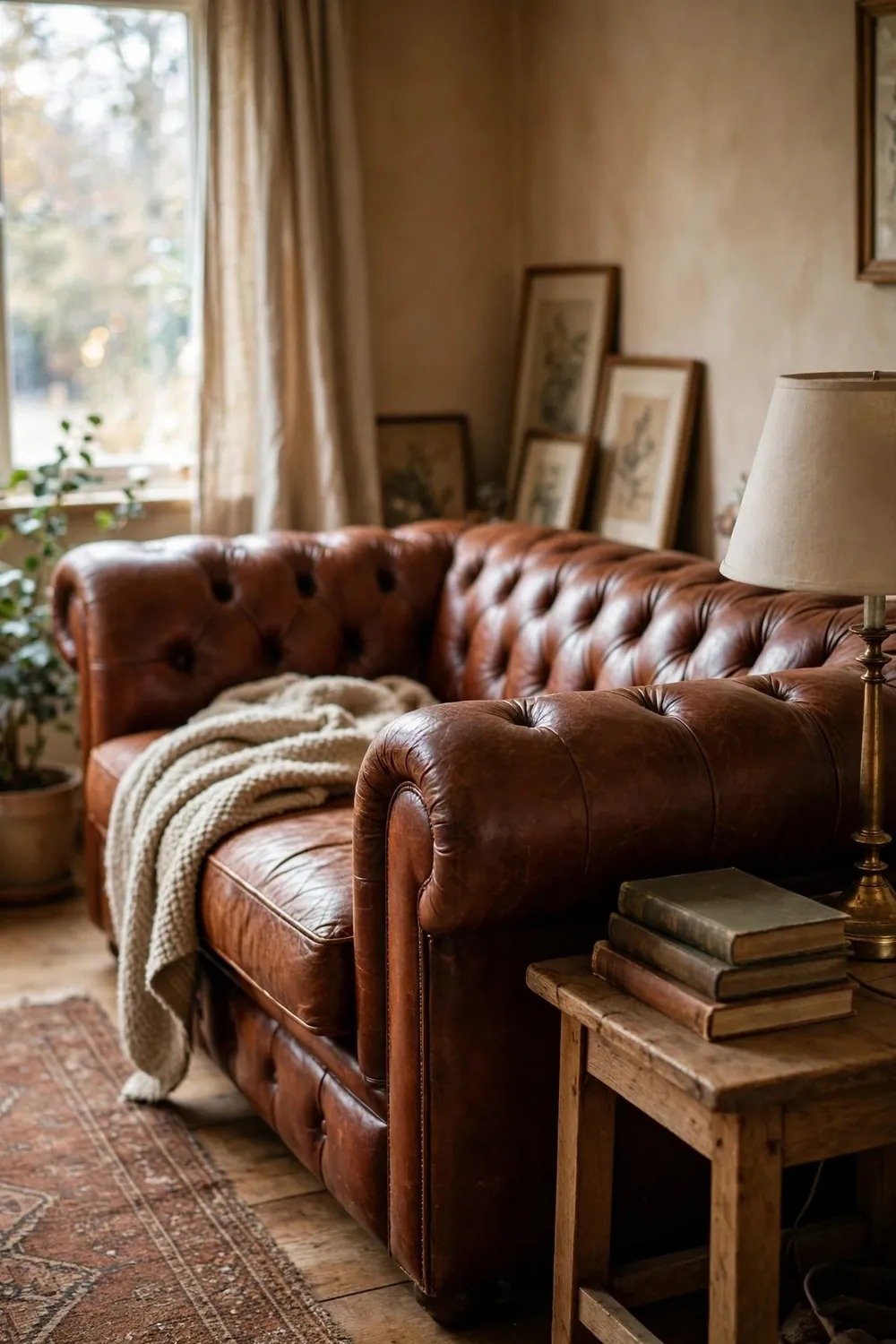
Save this guide before you set foot in a showroom — knowing the eighteen types turns a confusing afternoon into a confident shortlist. Measure first, sit honestly, buy the bones. Your future self, napping perfectly, says thank you.
Keep reading: 22 Small Living Room Ideas That Make Your Space Feel Bigger for arranging whatever sofa you choose, and 20 Neutral Scandinavian Living Room Ideas for a Calm, Minimal Home for styling a light sofa the Scandi way.