20 Neutral Scandinavian Living Room Ideas for a Calm, Minimal Home
Scandinavian style has a reputation for being stark — white rooms, bare floors, furniture like sculpture. But real Scandinavian homes are built for long dark winters, and they are some of the coziest rooms on earth. The secret is that Scandi cozy is not about color. It is about light, texture, and warmth layered inside a calm neutral palette.
A neutral living room, done the Scandinavian way, is never boring and never cold. It is warm white on warm white, wood the color of honey and wheat, wool and linen you can feel from across the room, and light — as much of it as you can gather — treated like the most important material of all.
This guide walks the room in the order a Scandinavian stylist would: light first, then the neutral palette, the sofa zone, natural materials, and finally the small warm rituals (the Danes call it hygge) that make minimalism feel like a hug.
In this guide
- Light First: The Scandinavian Obsession
- The Neutral Palette & the Sofa Zone
- Natural Materials & Calm Styling
- More Neutral Scandi Ideas to Try
- Scandi Neutral in Real Homes: Small Rooms, Rentals & Families
- The Neutral Palette, Shade by Shade
- Adding One Accent Color, the Scandinavian Way
- How to Recreate the Look Step by Step
- Budget Guide: Where to Save, Where to Spend
- Mistakes to Avoid
- Your Neutral Scandi Living Room Checklist
- Frequently Asked Questions
Light First: The Scandinavian Obsession
In Nordic homes, light is not an afterthought — it is the foundation everything else stands on.
1. Maximize Daylight Ruthlessly
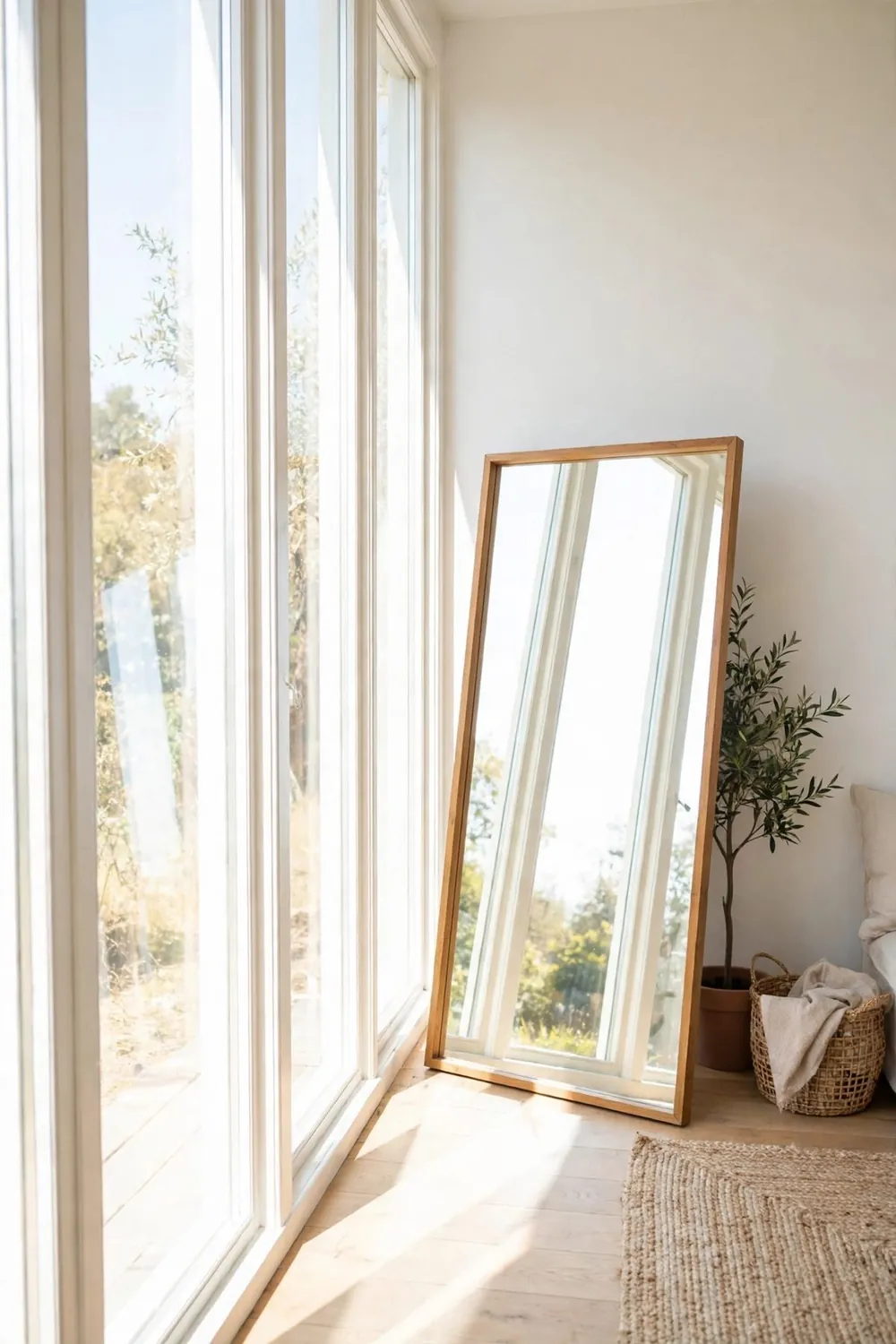
Sheer or linen curtains that filter rather than block, nothing tall in front of windows, mirrors placed to bounce light deeper into the room, and windowsills kept nearly empty. In a neutral room, daylight IS the color — every decision that protects it pays you back daily.
If privacy allows, consider no curtains at all on upper floors. Scandinavian homes often leave windows bare and let the light pour in unfiltered.
2. Choose Warm White, Never Blue White
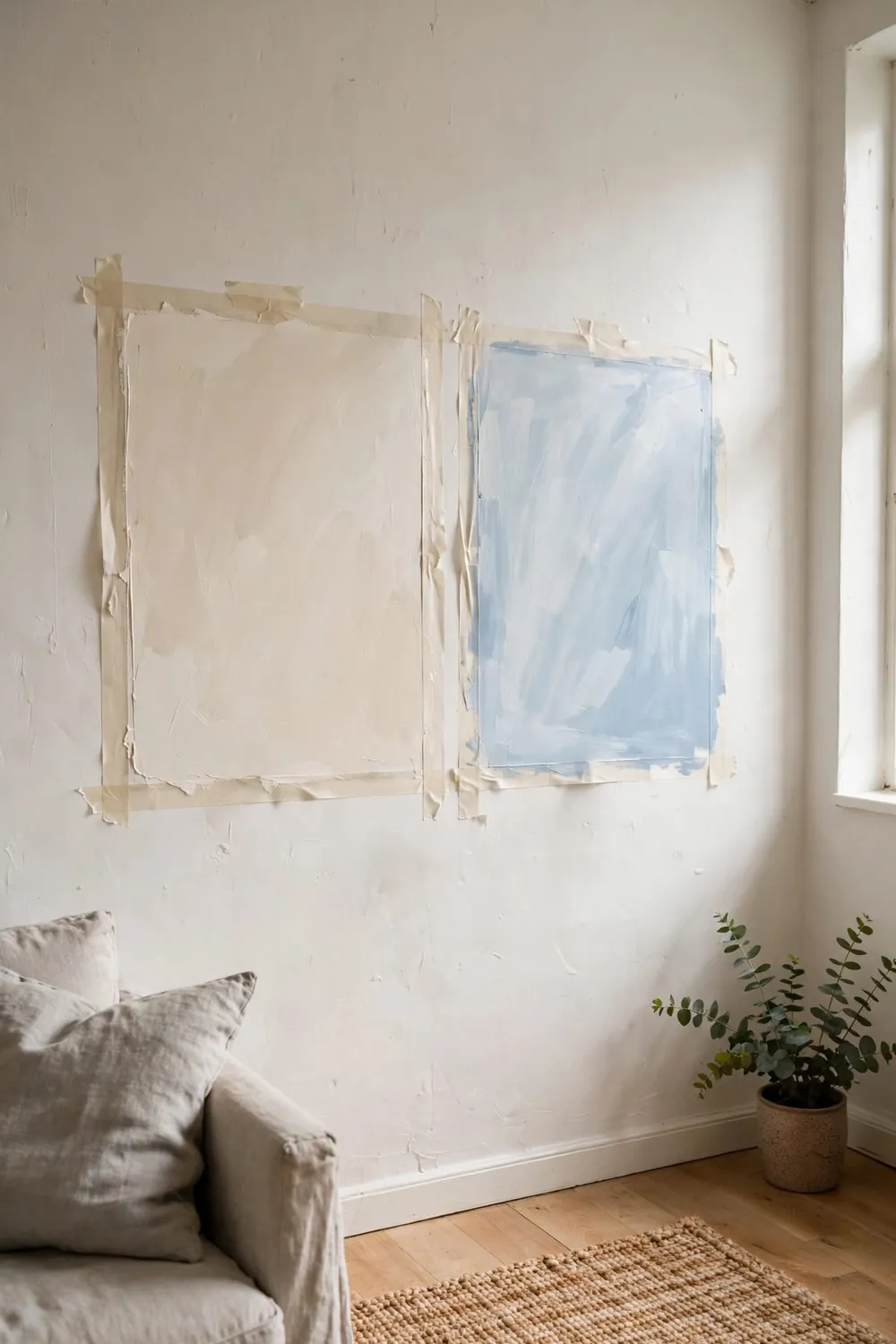
The neutral palette starts with the right white. Warm whites (with a drop of cream or beige in them) glow in daylight and stay friendly under lamps; blue whites turn a room into a fridge. Test whites on the wall in morning and evening light and pick the one that never looks grey or icy.
Paint walls, ceiling, and trim all in it. The seamless envelope of warm white is what makes a small set of furniture feel like a designed room.
3. Layer Lamplight Like Firelight
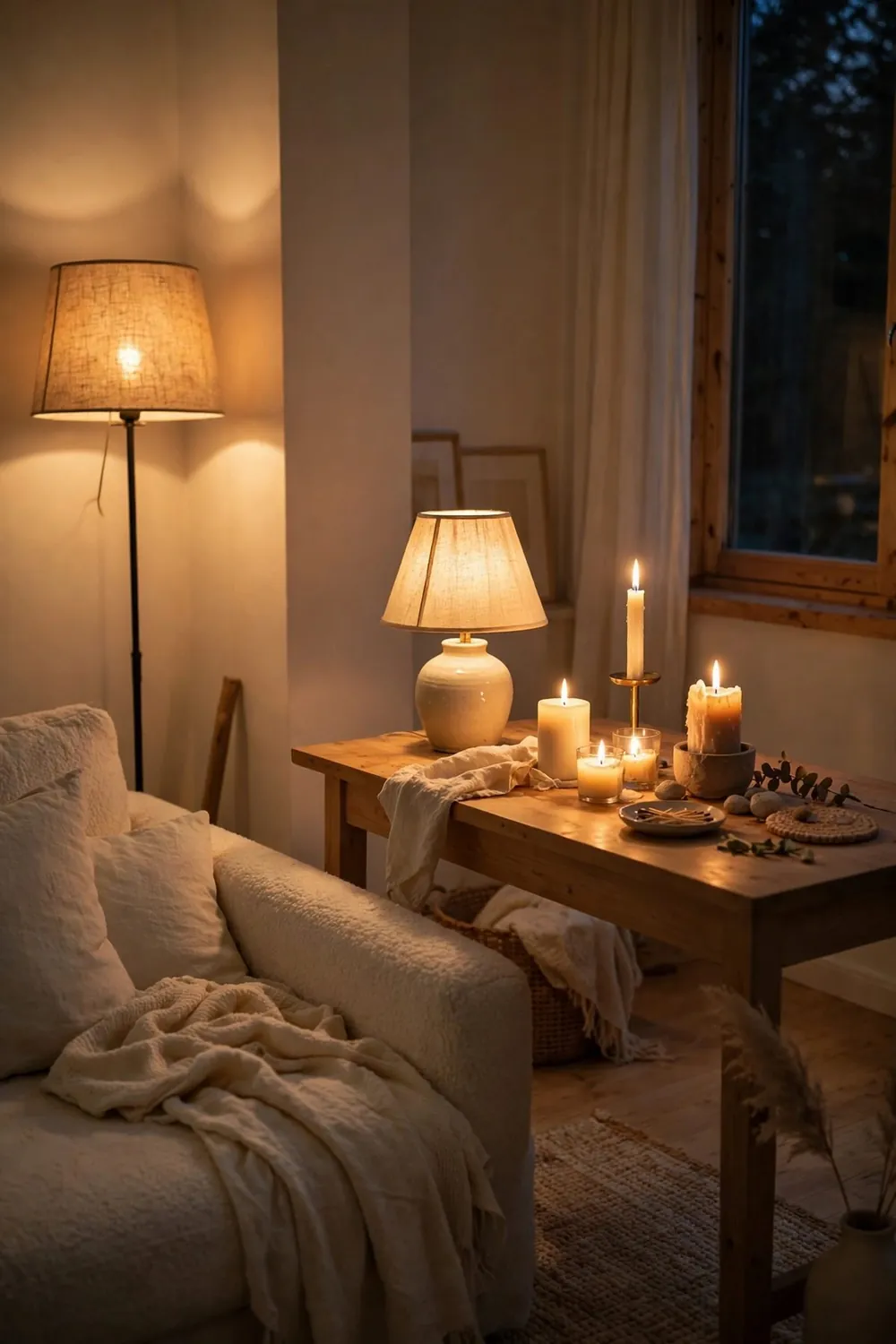
Scandinavian evenings run on lamps, not overheads: a floor lamp by the reading chair, a table lamp on the sideboard, a paper pendant glowing low over the coffee table, candles everywhere. The rule is many small warm light sources at different heights, each one a little pool of evening.
Warm bulbs only — 2700K or lower. In a neutral room, the light’s color becomes the room’s color after dark.
The Neutral Palette & the Sofa Zone
With light handled, the palette is almost embarrassingly simple — which is exactly why texture has to work so hard.
4. Build the Palette From Nature’s Neutrals
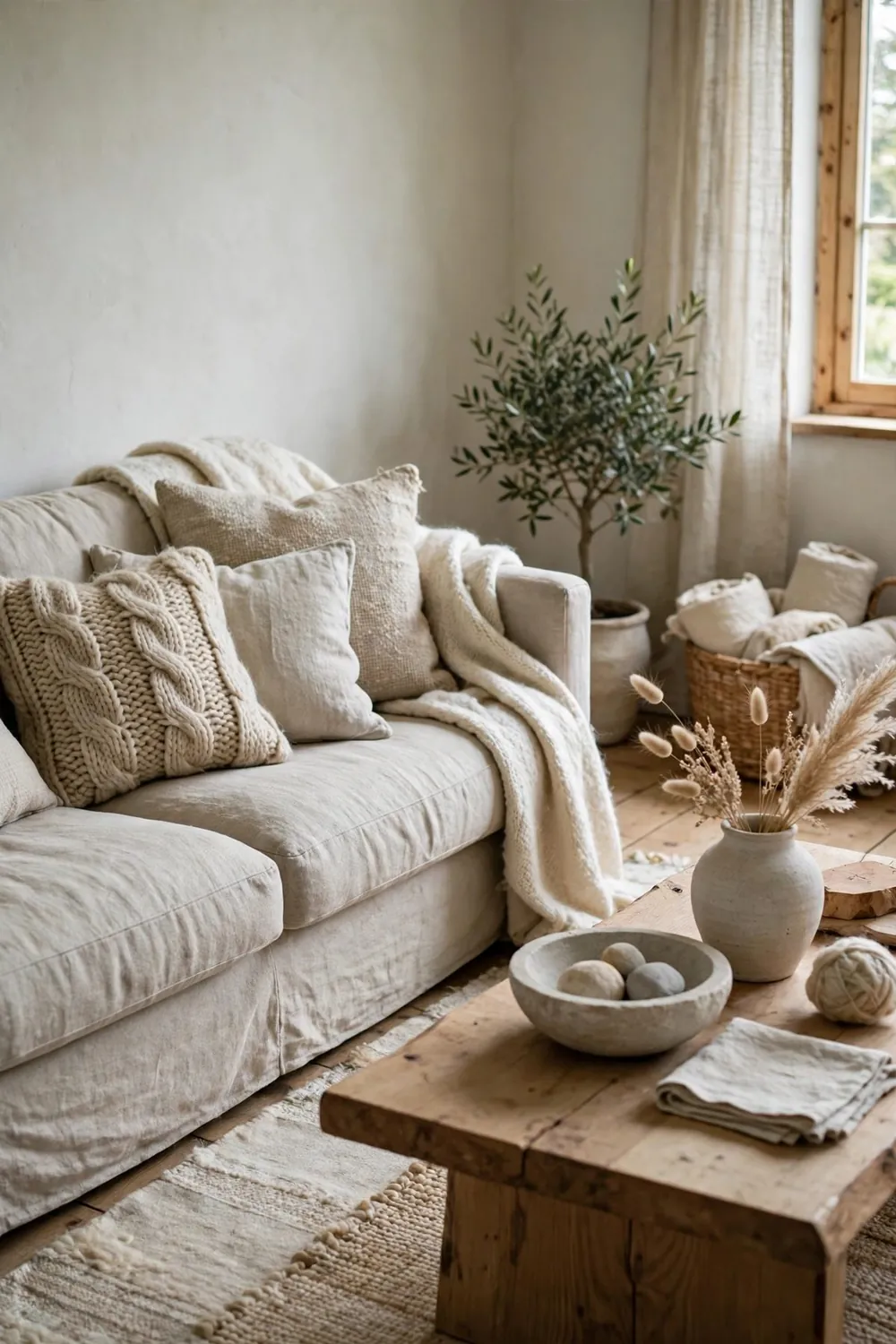
Warm white, oatmeal, sand, stone grey, pale wood, and one soft black or deep brown for contrast. Every color in a Scandi room could be found on a beach in November. Keep the palette this tight and the room can hold any amount of texture and shape without ever looking busy.
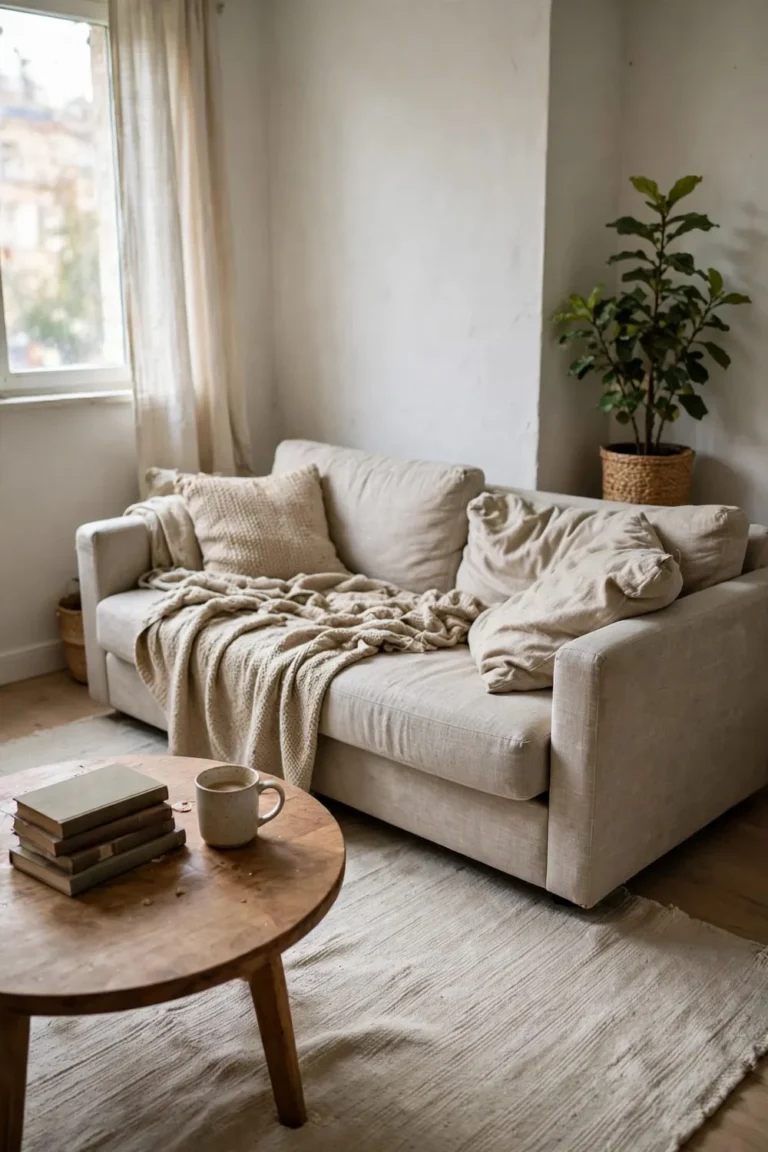
5. Choose a Light Linen or Boucle Sofa
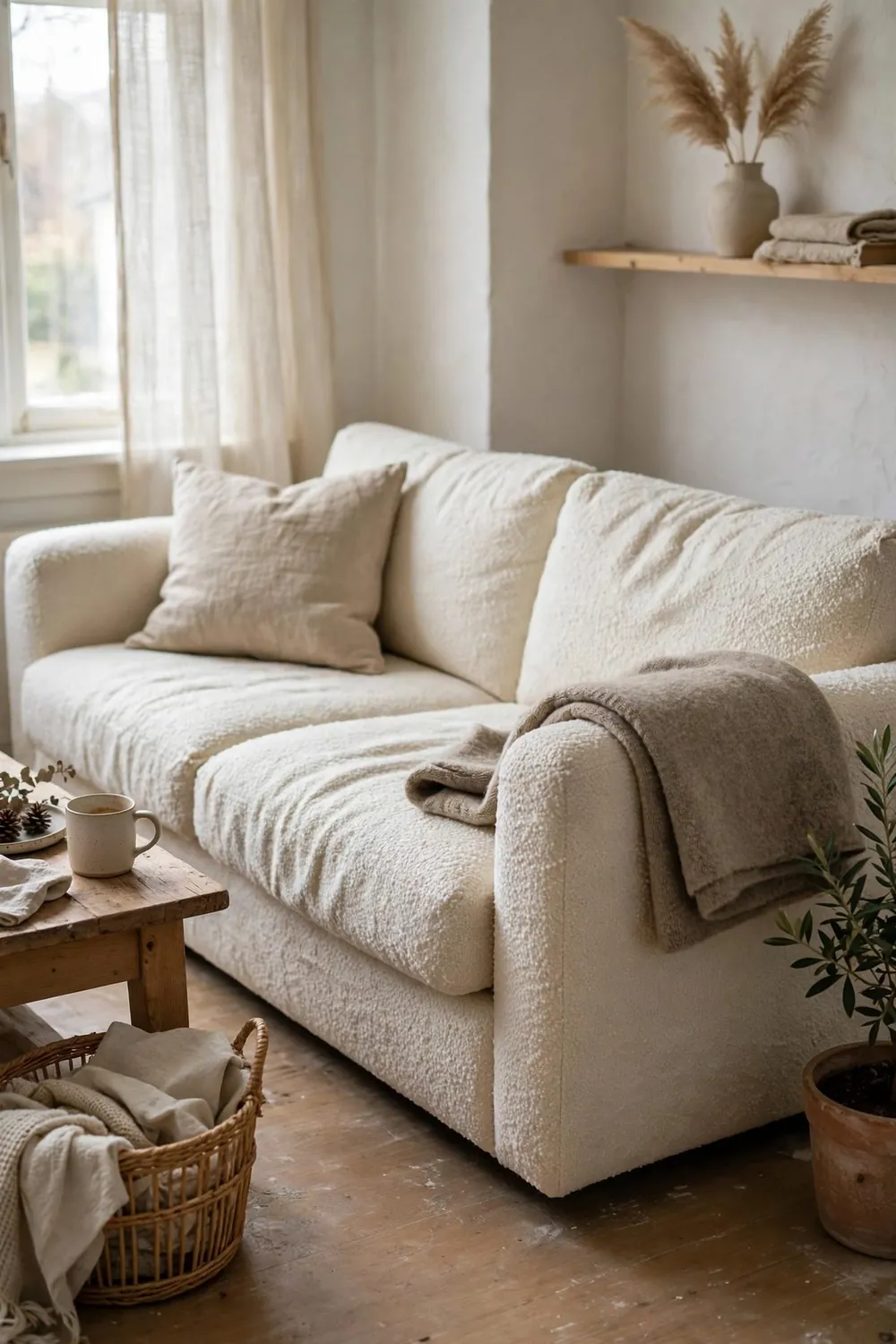
The sofa is the room’s largest actor — in neutral Scandi style it wears cream or oatmeal linen (rumpled is welcome) or soft boucle. Slipcovered linen sofas are the practical hero here: washable, relaxed, and more beautiful unironed.
Low profiles and visible wooden or slim legs keep the big light shape from landing heavily. The sofa should look like a cloud that learned manners.
6. Layer Texture Like It Is Color

This is the core skill. On and around the sofa: a wool throw, linen cushions, one boucle or sheepskin accent, a woven rug underfoot — all in the same tight neutrals, all in different textures. Your eye mixes them the way it mixes colors in a bolder room. A neutral room without texture variety is just an empty room; with it, it is the richest room in the house.
7. Anchor With Light Wood Furniture
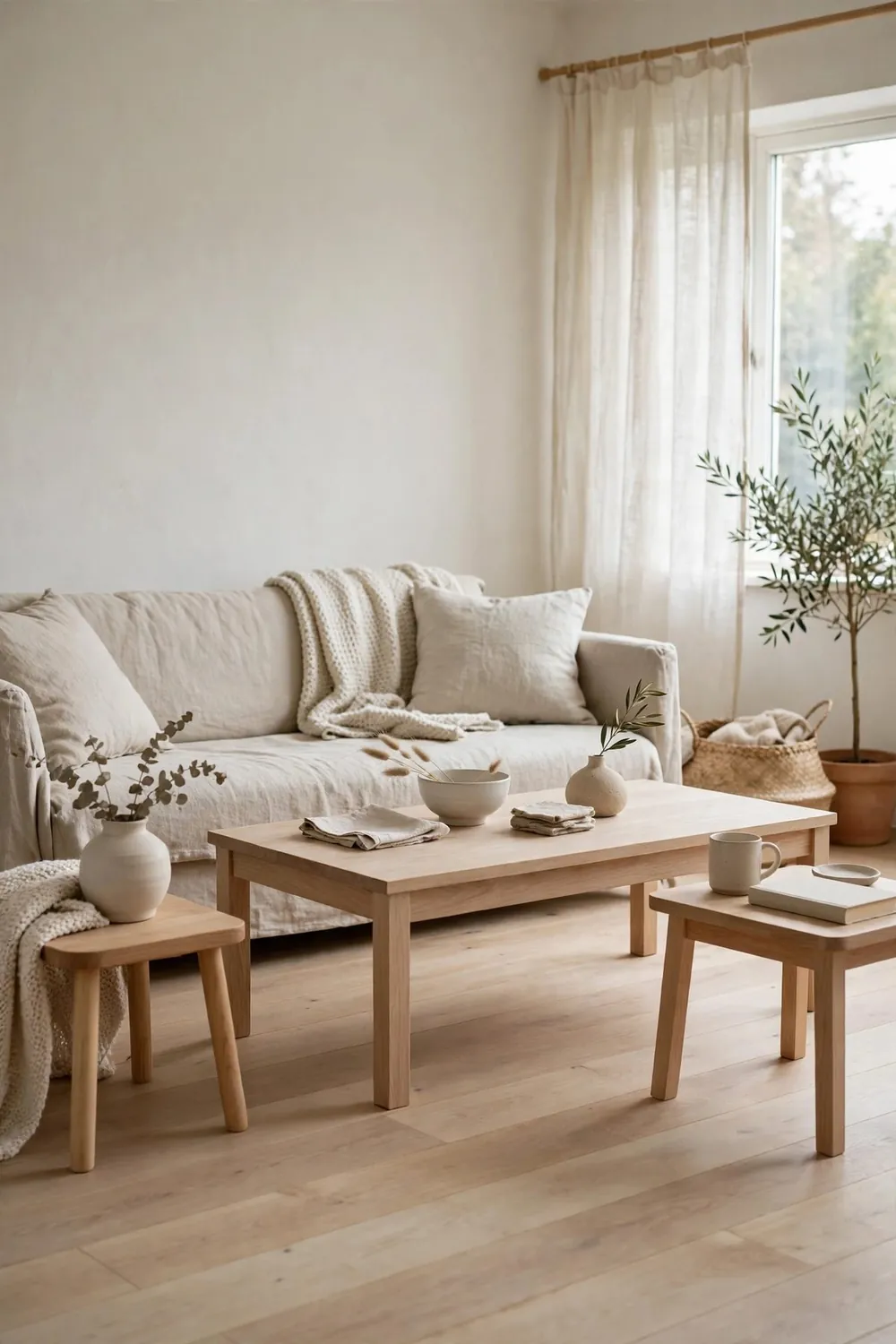
Pale oak, ash, beech, and birch coffee tables, sideboards, and chairs bring the warmth neutrals cannot. One or two wood tones, repeated calmly. A beautiful light-wood sideboard is the classic Scandi investment piece — storage, surface, and sculpture in one.
Avoid mixing in dark heavy woods here; save them for other styles. Scandi furniture should look like it could float.
Natural Materials & Calm Styling
The finishing layer is about honesty: real materials, few objects, everything touchable.
8. Decorate With Ceramics, Wood, and Weave
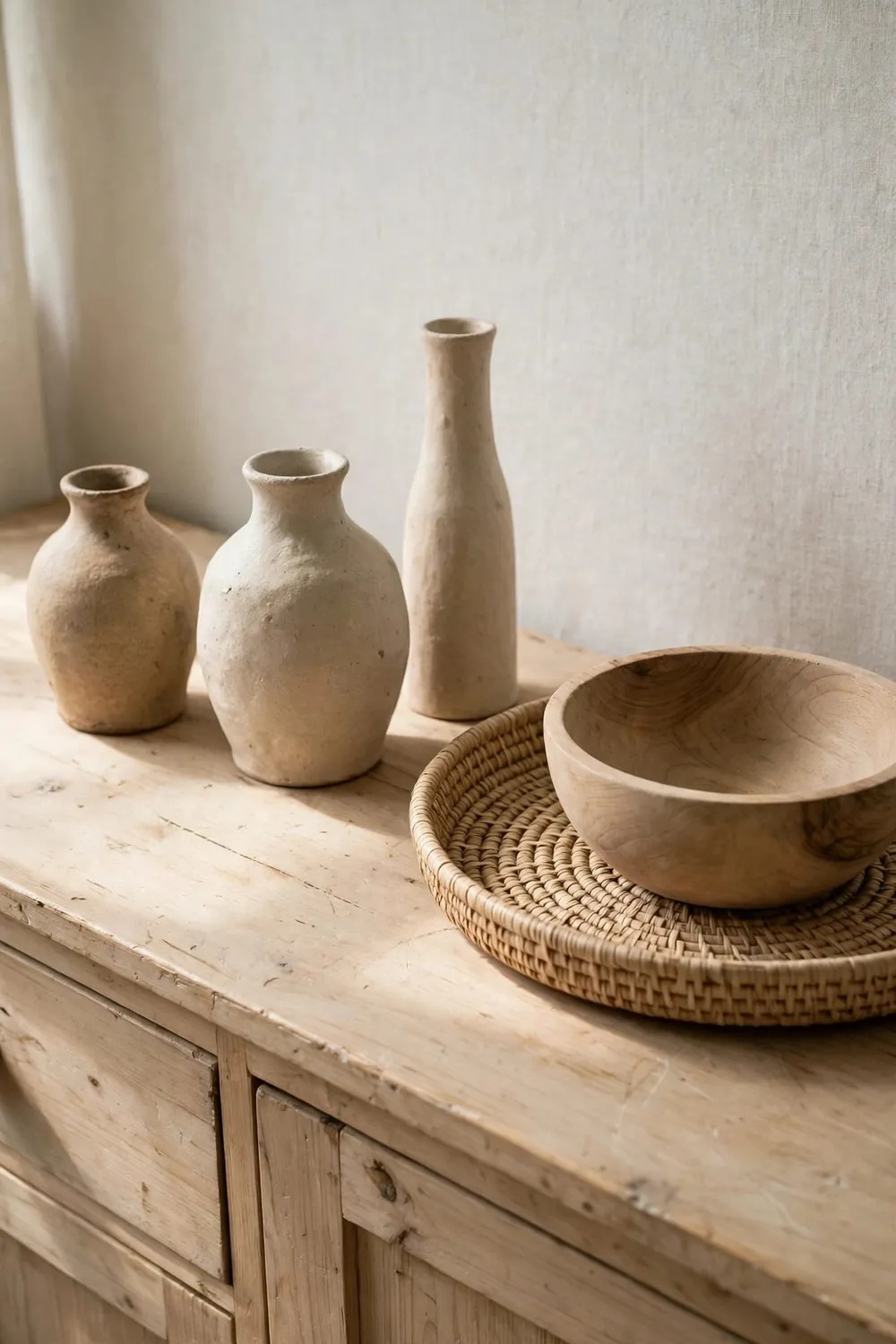
The Scandi object palette: matte ceramic vases, wooden bowls and boards, woven baskets, a stoneware mug left honestly on the table. Group objects in twos and threes with space around them. On a sideboard, three pieces and emptiness looks like a gallery; twelve pieces look like storage.
9. Bring in One Green Plant (or a Branch)
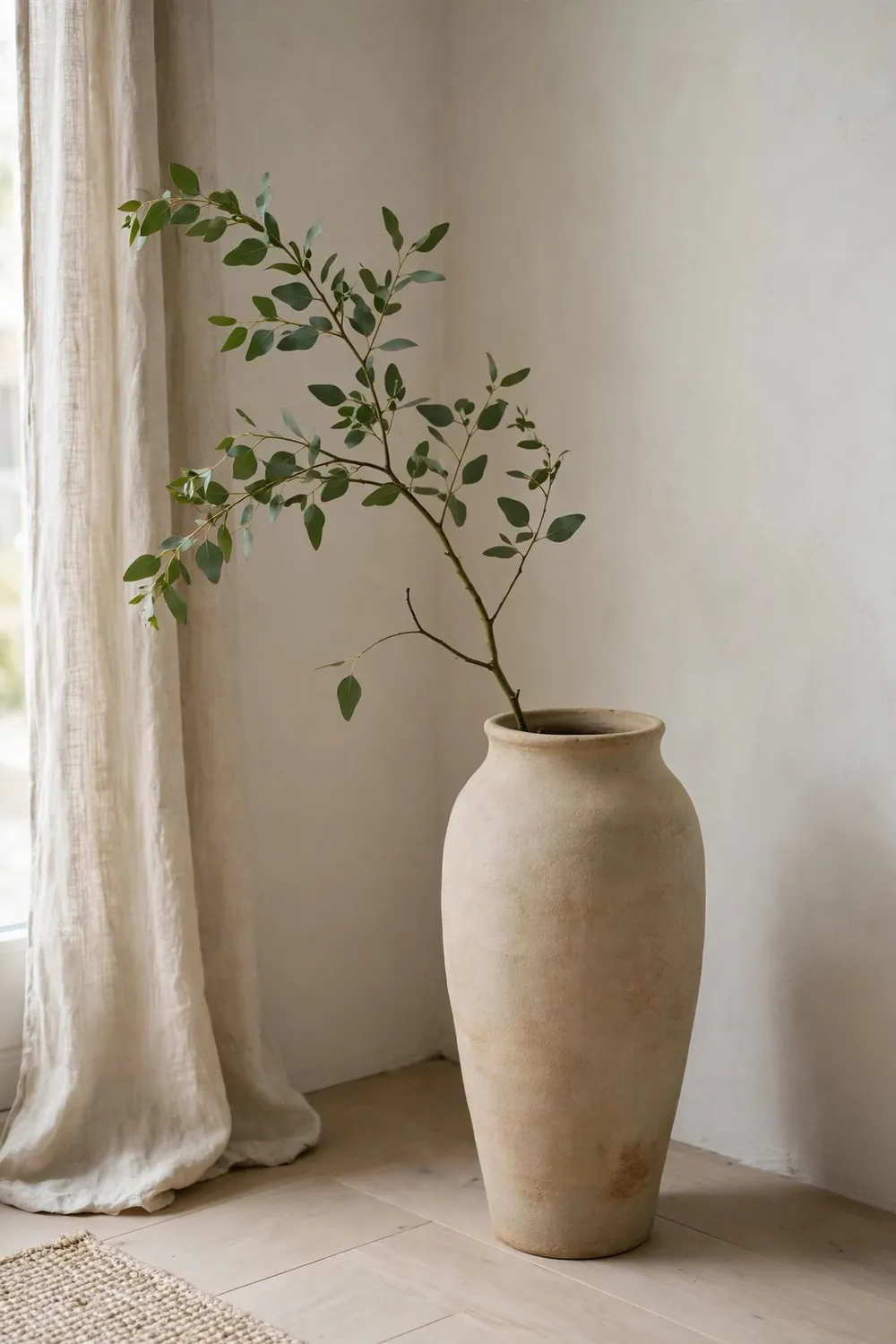
Against all that neutral, one leafy plant glows like a jewel. A small olive tree, a fig, or even a tall branch in a vase of water gives the room its single living color. Scandinavian rooms use plants sparingly and proudly — one plant, well placed, in a simple pot.
10. Let the Rug Be Big, Light, and Textured
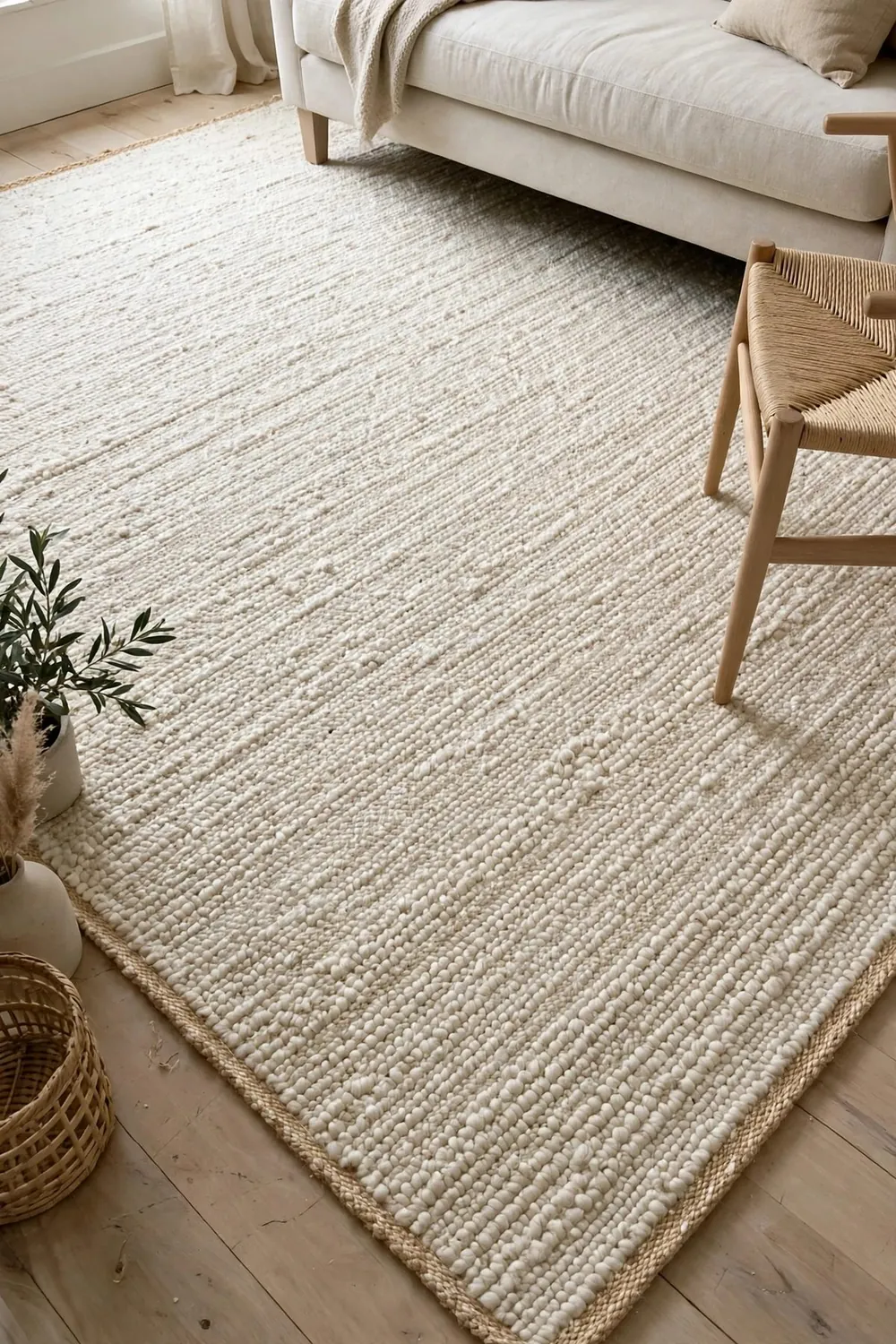
A large wool or wool-look rug in cream or oatmeal, with visible weave or a subtle pattern, grounds the seating and warms the pale floor. In Scandi rooms the rug is often the coziest single object — thick enough to sit on, because people do.
11. Practice Hygge: The Warm Rituals
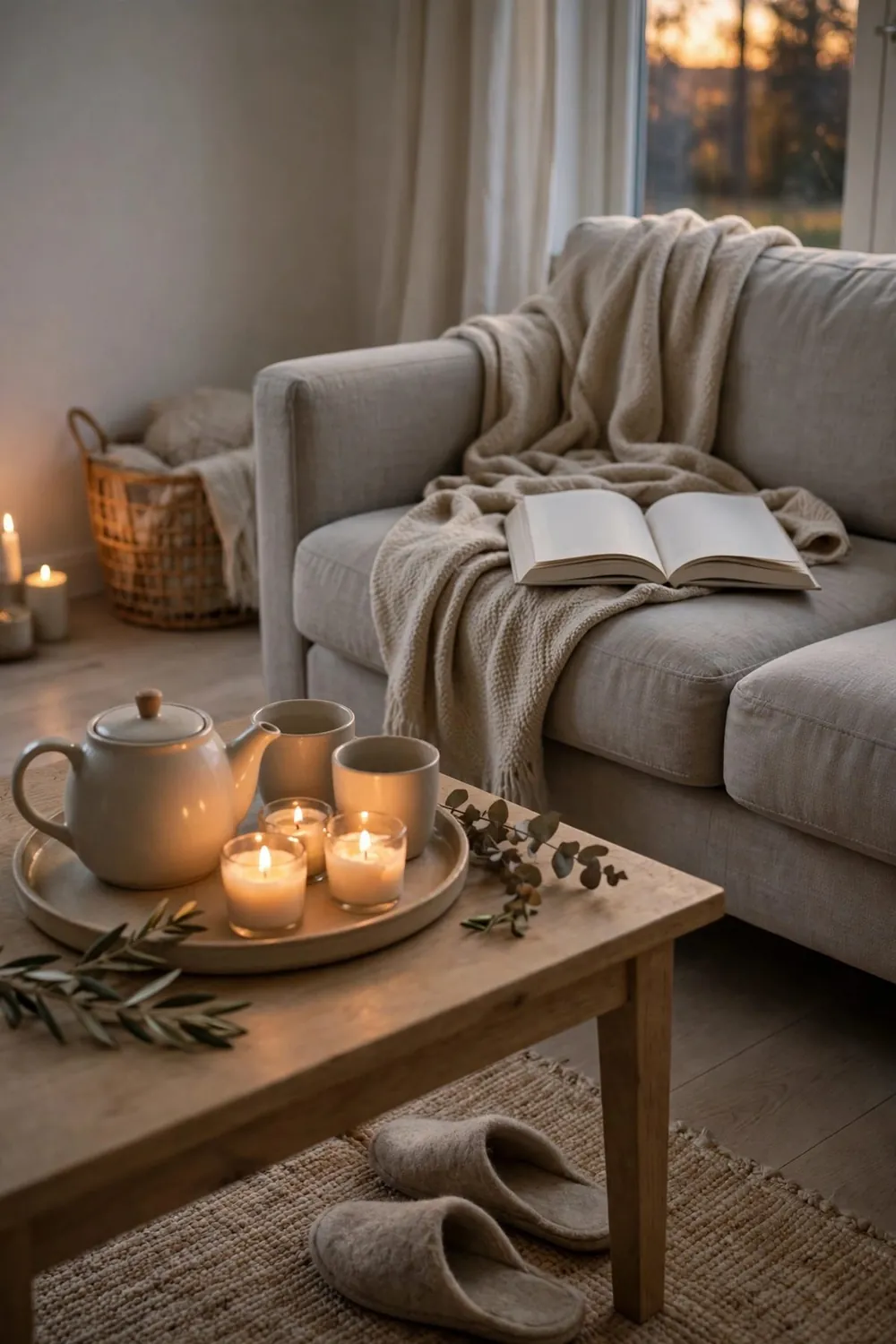
Hygge is not a product; it is what the room is for. Candles lit at dusk without an occasion. A sheepskin over the chair where someone always reads. The good blanket that lives on the sofa, not in a cupboard. Coffee served in the beautiful cups on a Tuesday. Design the room, then use it generously — a neutral Scandi room that is lived in warmly is the finished version.
12. Edit Like a Scandinavian
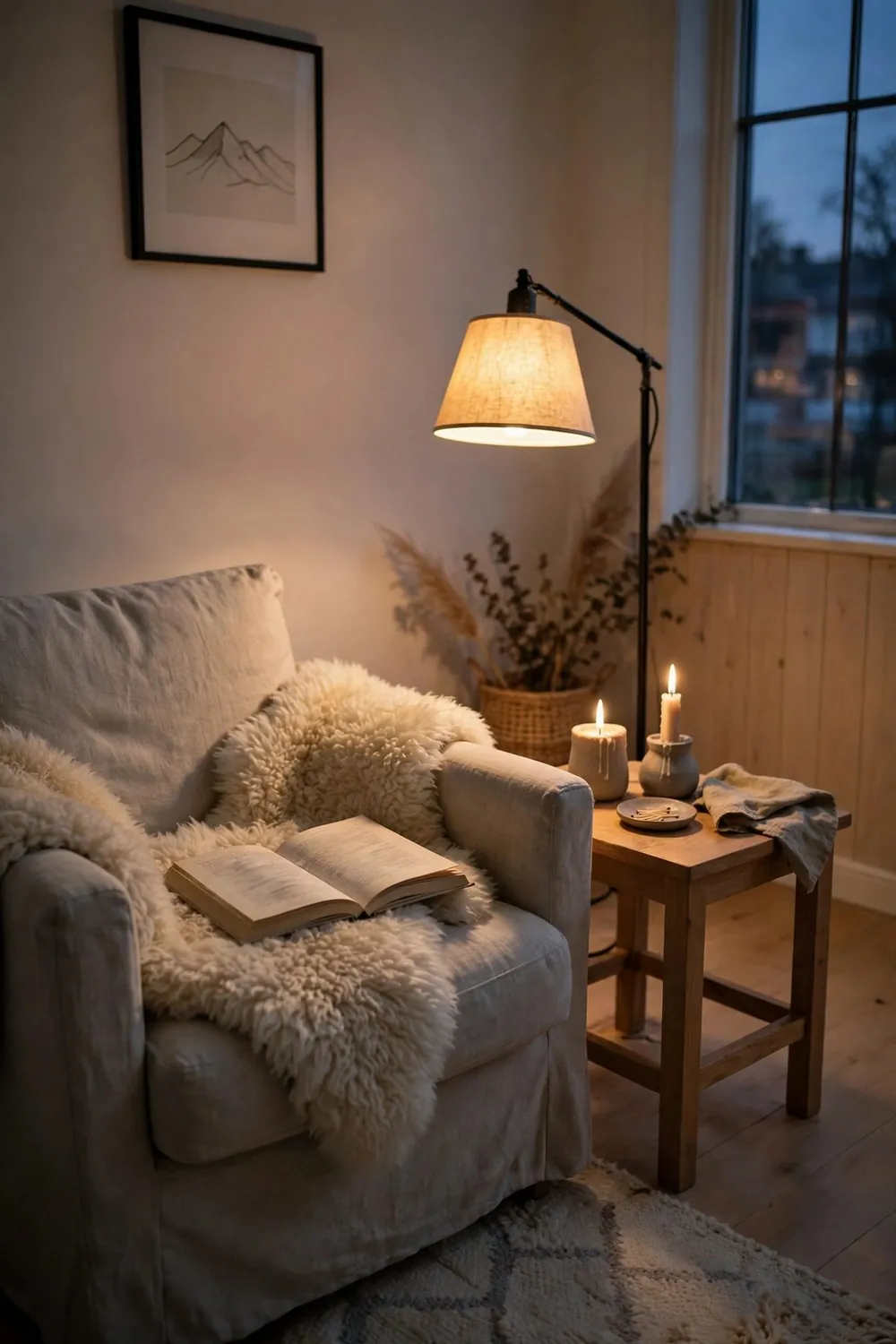
The final step is subtraction. Scandinavian rooms are maintained by a habit: things earn their place by being useful or beautiful, and most things must be both. When the room starts to feel off, do not add — remove three things and reassess. Calm is a practice, renewed weekly.
More Neutral Scandi Ideas to Try
Still collecting ideas? These final additions round out the list — each one tested against the same rule as everything above: it has to earn its place in a real home, on a real budget.
13. Choose a Light Wood Coffee Table With Soft Edges
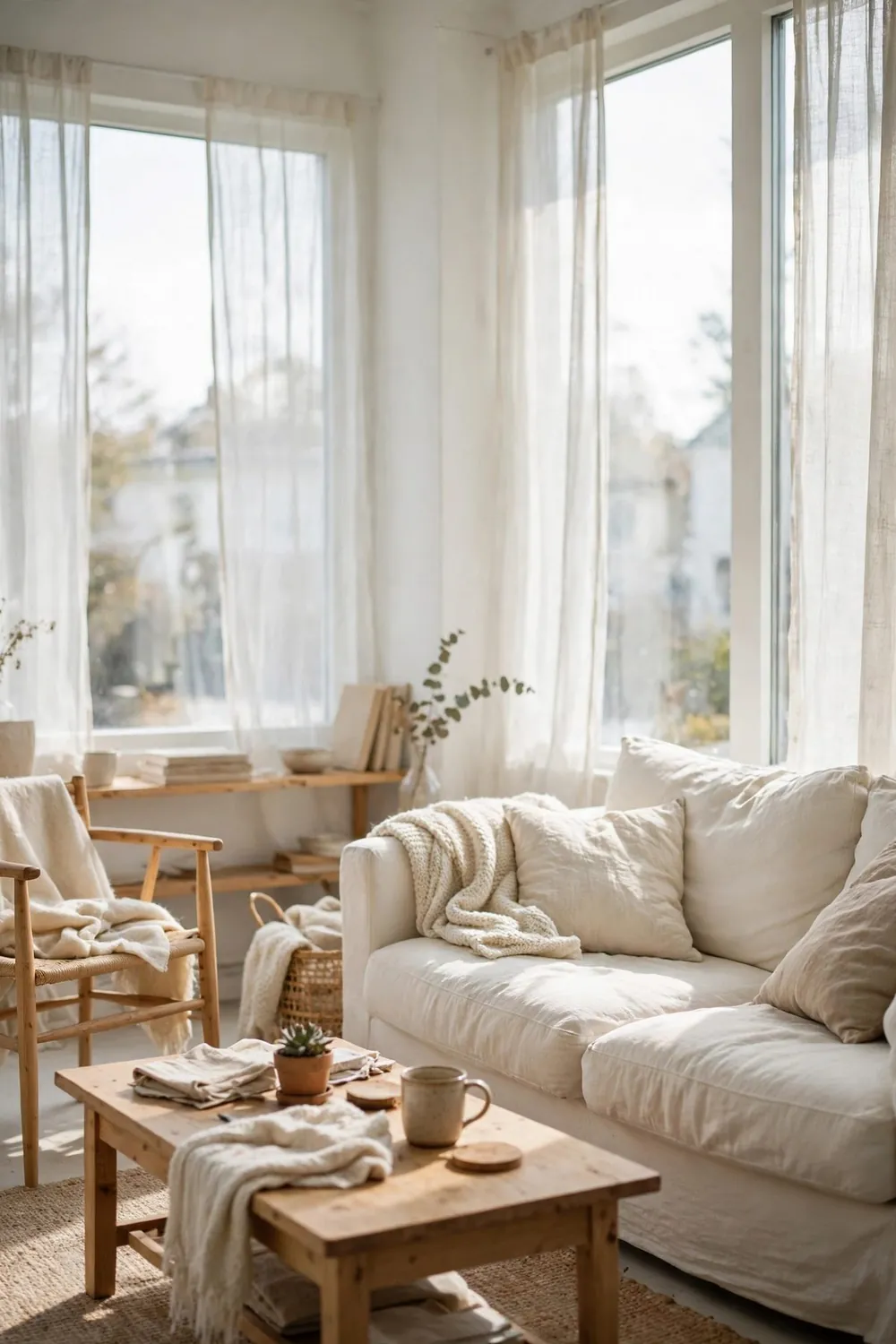
A coffee table in pale oak or ash with rounded corners keeps the room’s center light and safe for passing knees. Rectangles in dark wood anchor a Scandi room too heavily; pale wood floats.
Size it to two-thirds the sofa’s length and leave room to walk around it. A lower shelf in the same wood doubles styling space without visual weight.
14. Soften Daylight With Sheer Linen Curtains
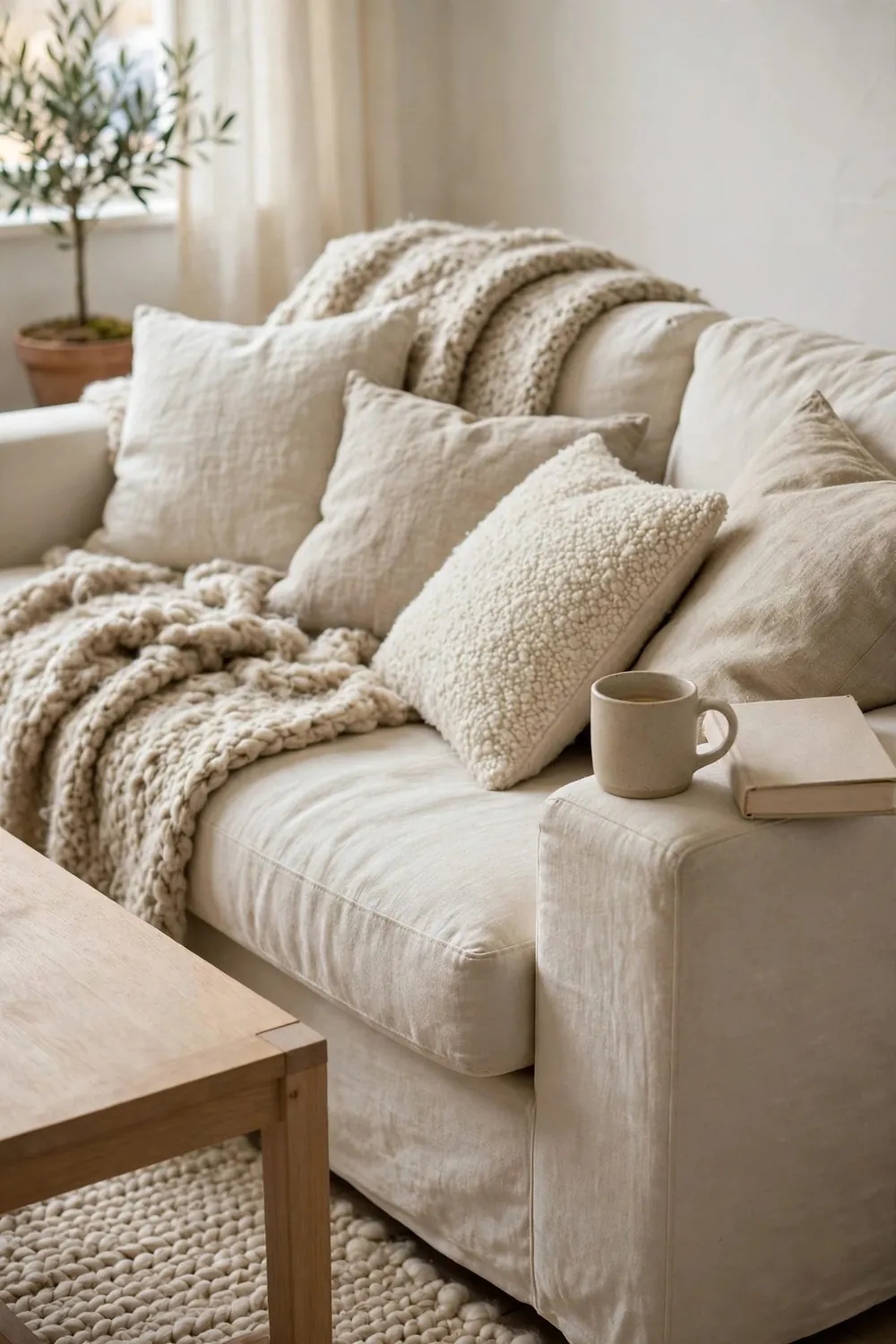
Scandinavian homes treat daylight as a material. Sheer linen curtains diffuse it into a soft glow, hide an unlovely view, and keep privacy without the gloom of heavy drapes. Hang them high and wide so the window reads bigger.
In winter, layer a heavier cream curtain in front for evenings — the sheer stays, the warmth joins it. Two simple layers beat one complicated treatment every time.
15. Add a Bouclé or Wool Accent Chair
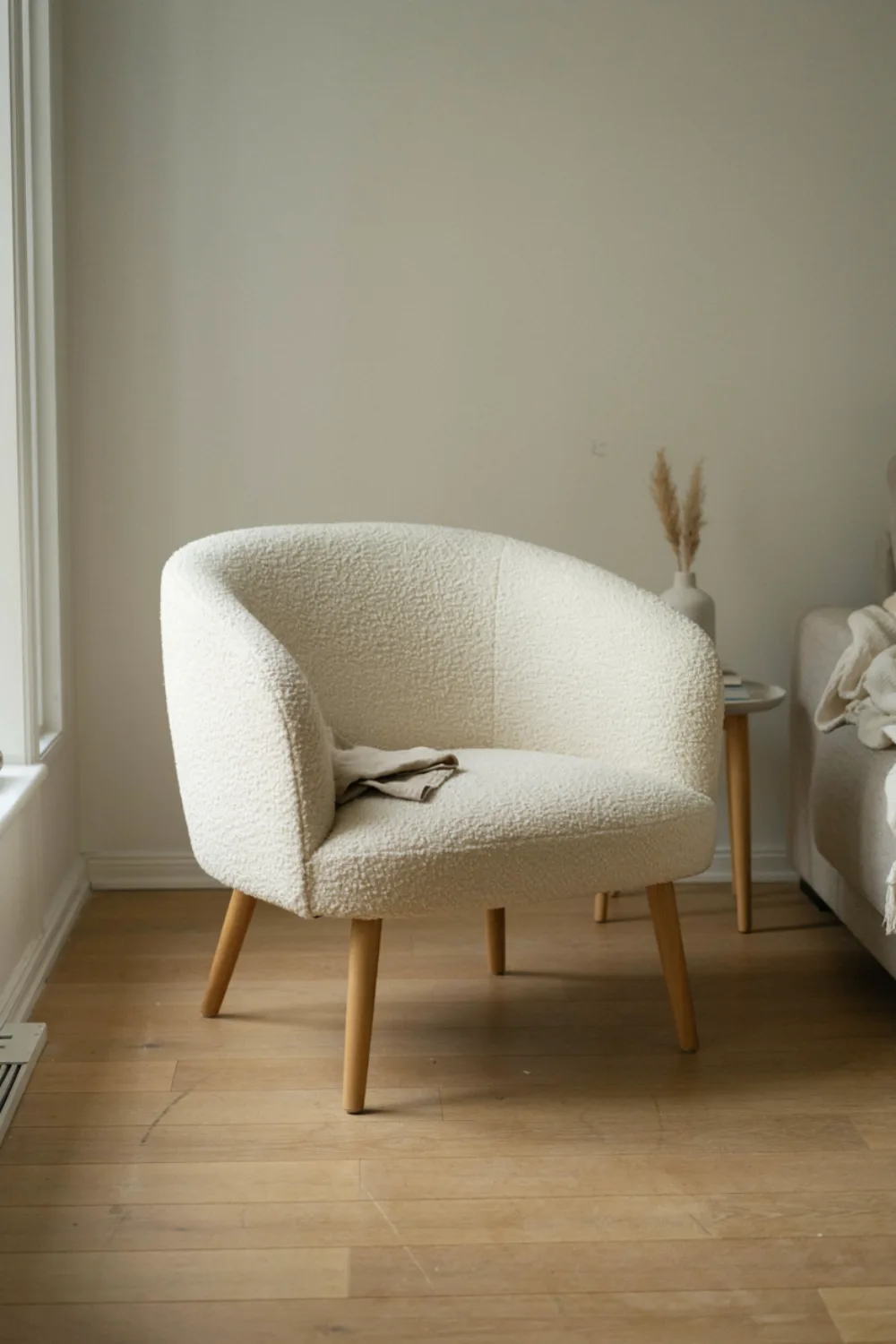
One accent chair in cream bouclé or a wool blend gives the neutral room its sculptural moment and its best seat. Curved shapes suit Scandi rooms especially — they echo the softness of the palette in three dimensions.
This is a spend-or-wait piece: a good chair outlasts trends. Hunt second-hand for real wool upholstery; it cleans well and ages into the room.
16. Style in Groups of Three
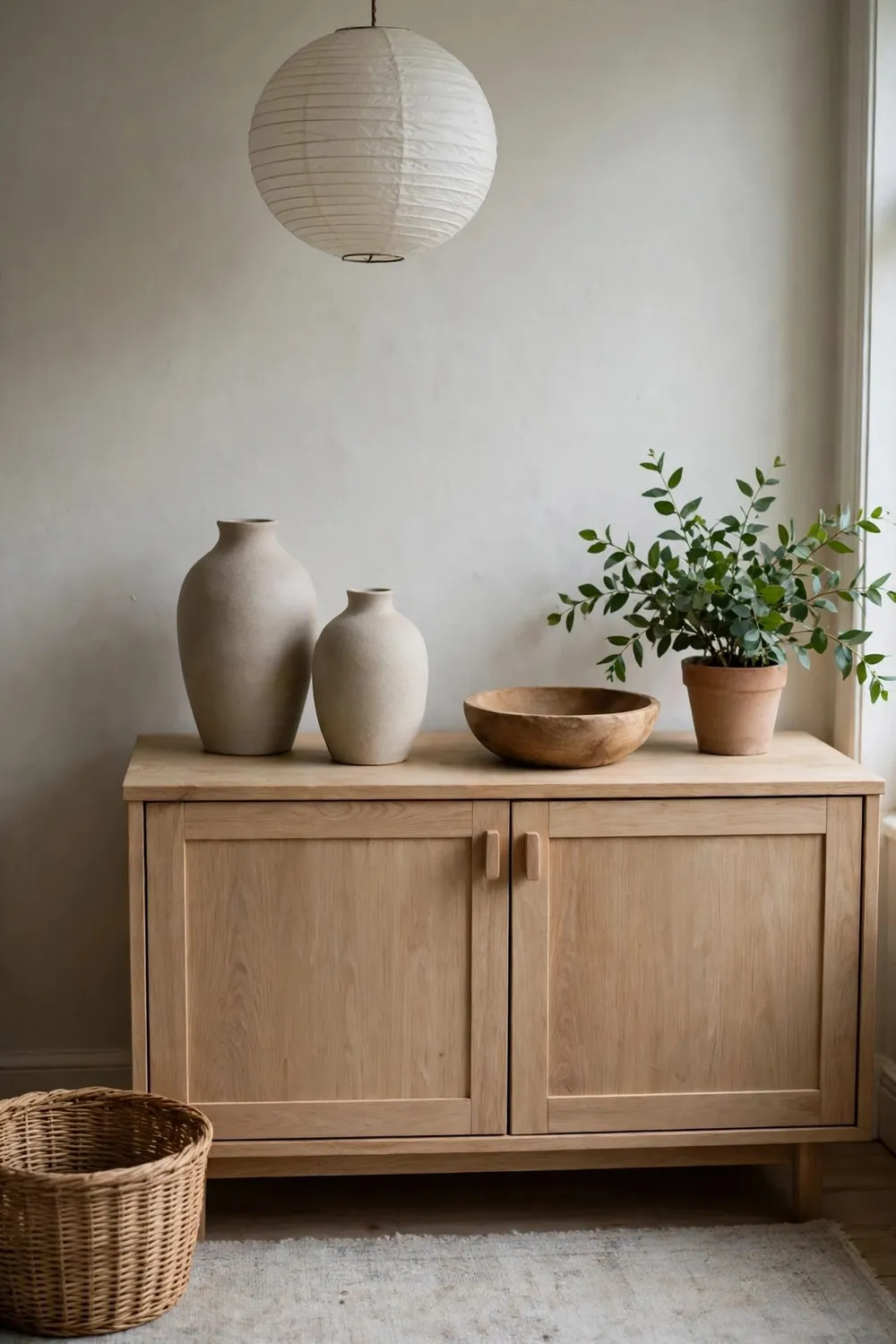
The calm of Scandinavian styling often comes down to arithmetic: objects in odd groups — three vases, three books, three candles — look gathered and intentional, while even groups look like pairs waiting for a purpose.
Vary heights within each group and leave empty space around it. The emptiness is not unfinished; in this style it is half the composition, and it is free.
17. Lay a Pale Rug With Quiet Texture
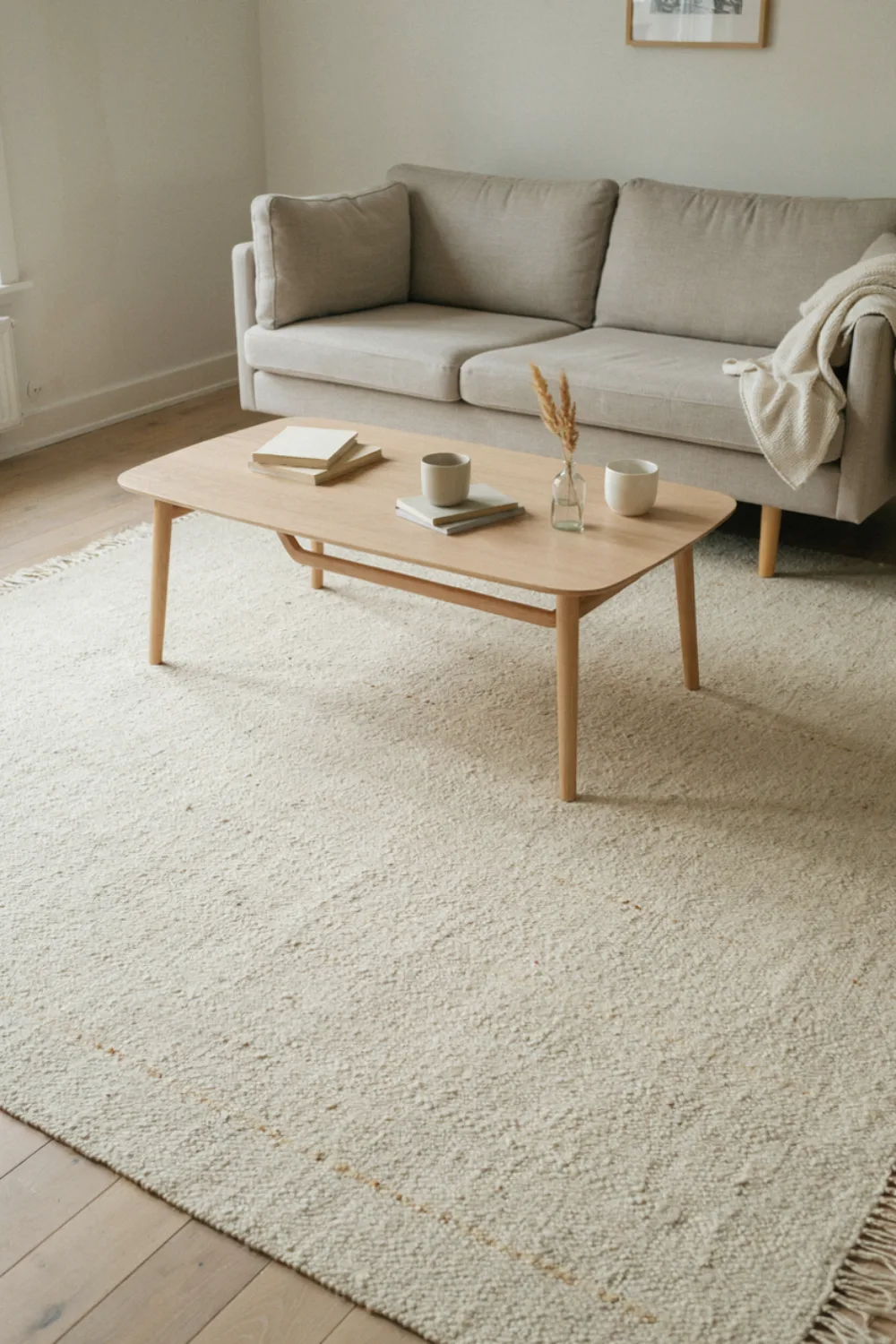
A jute, wool, or cotton rug in pale natural tones with visible weave — but no pattern — grounds the seating zone and adds the warmth wooden floors need. Texture replaces pattern throughout Scandi styling, and the rug is where that rule shows most.
Choose the largest size that leaves a floor border. A small rug in a neutral room does more harm than none, shrinking the zone it was meant to define.
18. Use Black Only as a Thin Accent
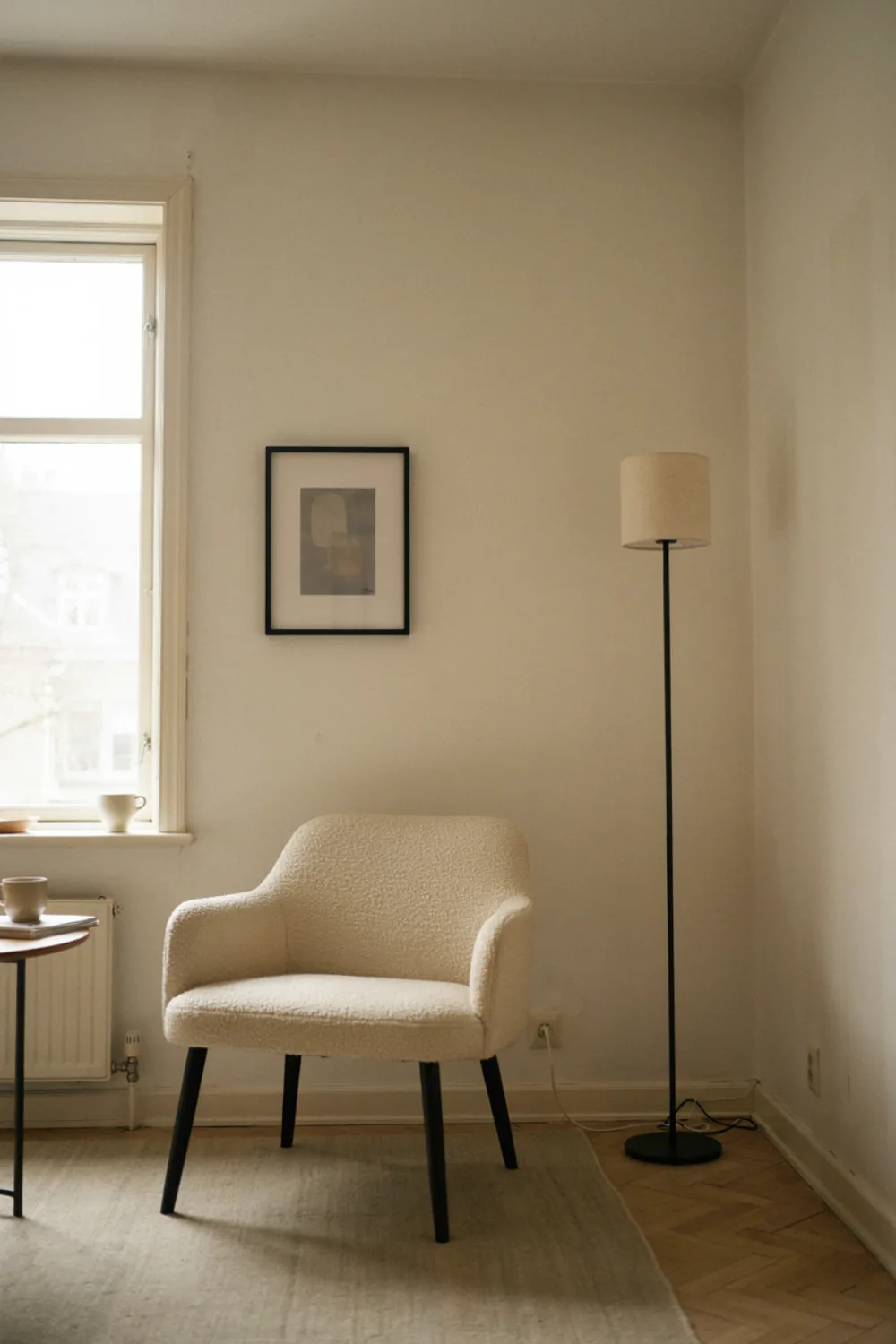
A whisper of black — a picture frame, a lamp stem, the legs of a chair — sharpens a neutral room the way eyeliner defines an eye. Used in thin lines only, it adds the contrast that stops pale rooms looking washed out.
Audit your black: if it arrives in big blocks (a large dark unit, a heavy rug), the calm goes. Keep black under five percent of the room and it will always read as punctuation.
19. Add One Tall, Leafy Plant
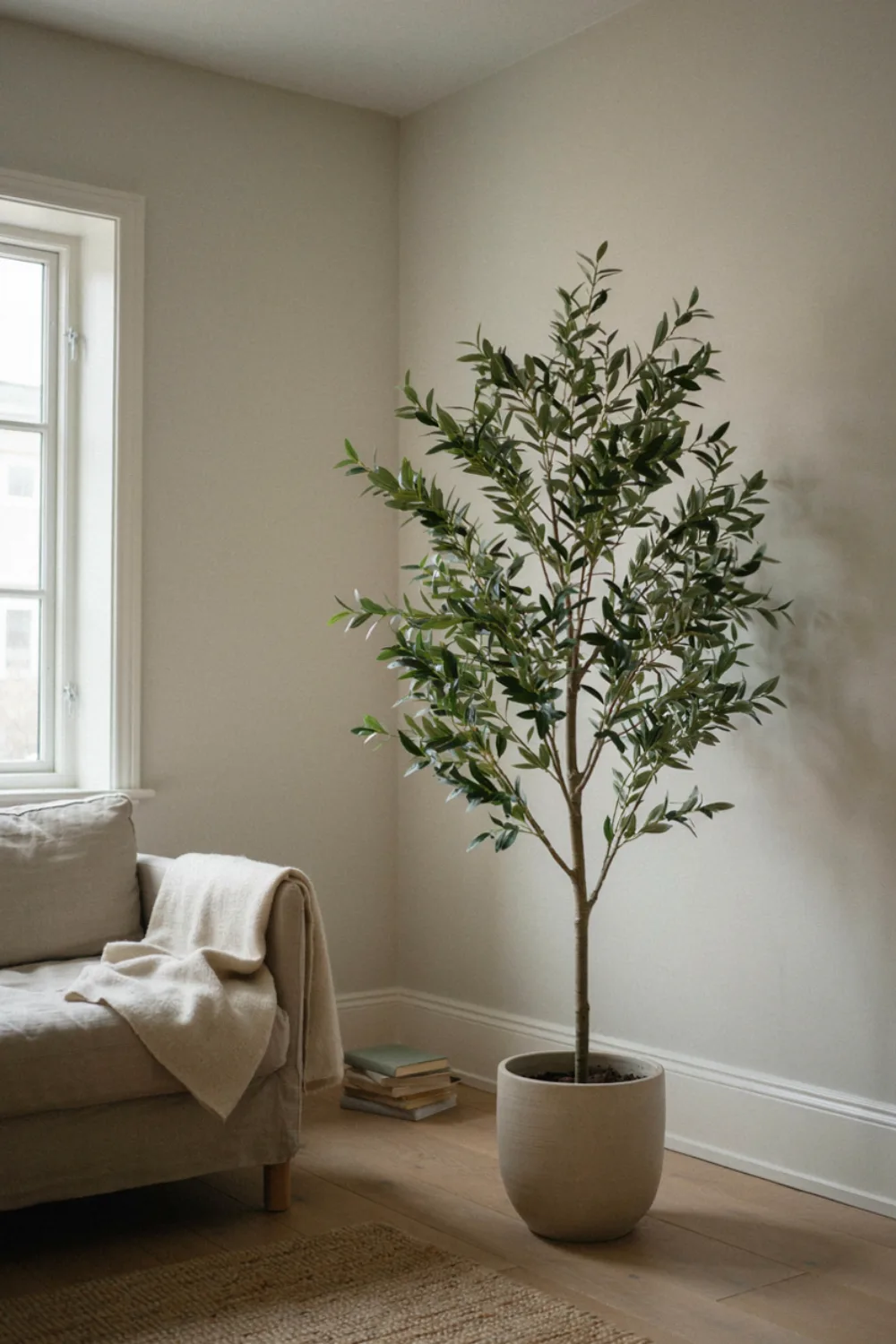
A single generous plant — an olive tree, a tall monstera, a fiddle-leaf — brings the living green a neutral room needs and connects the palette back to nature. Place it where daylight finds it: beside the window, not in the dark corner.
One healthy large plant beats five struggling small ones, in looks and in effort. If your light is poor, a high-quality faux olive is the honest Scandi solution — these rooms prize calm over purity tests.
20. Hide Clutter in Lidded Baskets
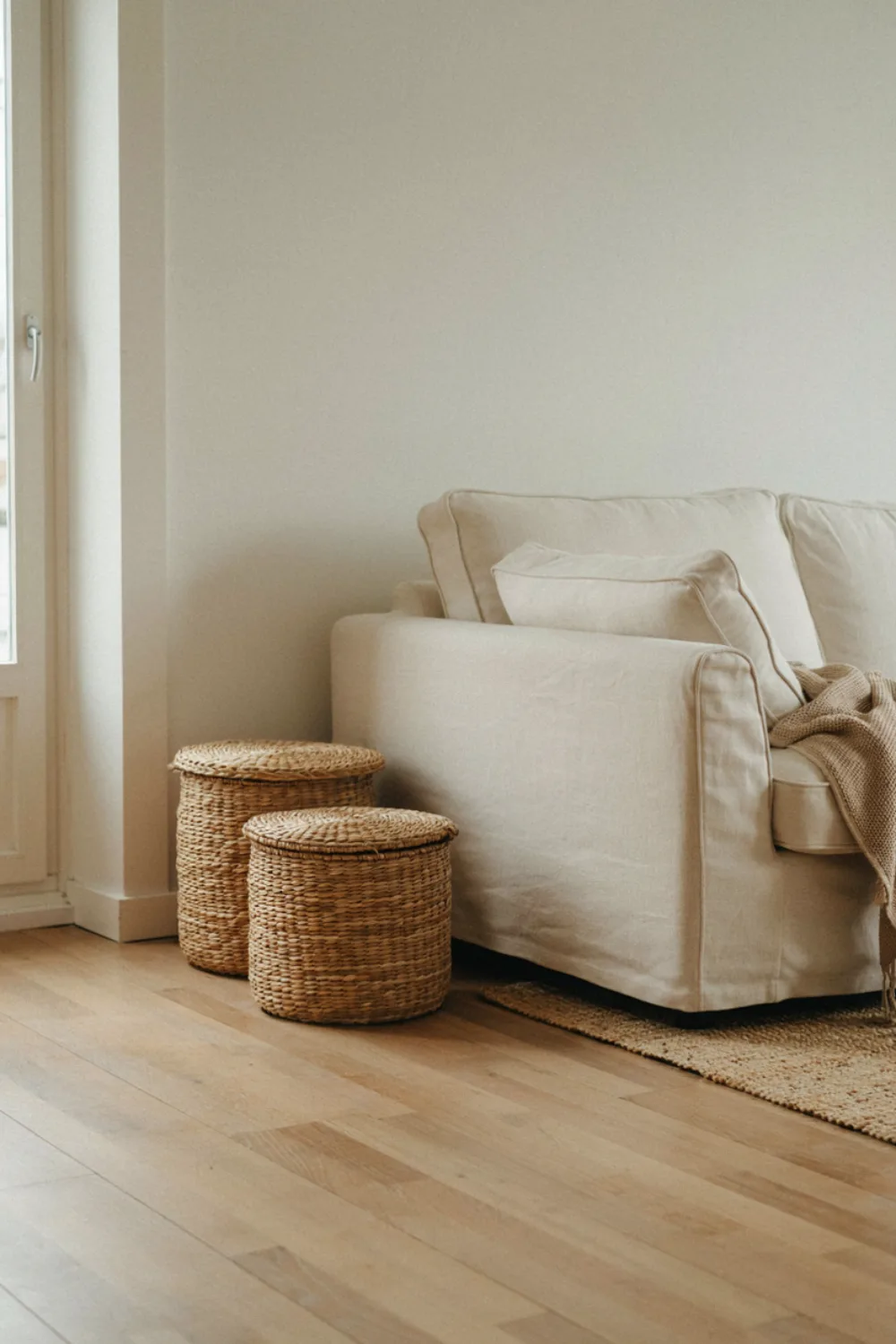
Neutral calm collapses the moment clutter shows. Lidded baskets in seagrass or pale woven cotton — one by the sofa for throws and remotes, one for magazines — keep the room’s serenity with everything still within reach.
Lids are the whole trick: open baskets display their contents, closed ones erase them. Measure your basket spots before buying and label the insides for the family’s sake.
Scandi Neutral in Real Homes: Small Rooms, Rentals & Families
The styled version is easy to admire. Here is how the style survives contact with real life.
In small rooms. Scandi is small rooms’ best friend, but choose the furniture scale honestly: a two-seat linen sofa beats a three-seat one straining the walls, and one generous rug unifies better than two small ones competing. Keep the sideboard low or skip it for floating shelves. Vertical space is your storage; floor space is your light’s playground. The mirror trick from Idea 1 is not optional in a small Scandi room — it is the second window you do not have.
In rentals. Everything structural in this style is portable: the palette lives in textiles, the wood in furniture, the light in lamps. For walls you cannot paint, lean on the large pale rug and cream sofa to set the room’s brightness, and hang art with removable strips. A rental Scandi room can be packed into boxes in a day and reassembled in the next home without losing a thing — arguably the most renter-suited style of all.
With kids and pets. The honest adjustments: oatmeal and stone tones instead of pure cream on the highest-wear pieces, washable everything (slipcovers, machine-wash throws, indoor-outdoor weave rugs that mimic wool), and baskets with lids — toys vanish into them at tidy-up time and the room returns to calm in three minutes. Scandinavian families with small children are the style’s origin, remember; the look was designed by people with toddlers, not despite them.
When the room still feels cold. Diagnose before you decorate: it is almost never the color. Check, in order — are the bulbs warm? Is there wool or weave within arm’s reach of the sofa? Is one lamp lit at sitting height? Is there anything wooden and one thing green? Cold Scandi rooms are missing texture or warm light nine times out of ten, and both fixes are cheaper than the new sofa you were about to blame.
The Neutral Palette, Shade by Shade
“Neutral” is not one color — it is a family with members who behave very differently. Here are the ones a Scandi room actually uses, and what each brings.
Warm white is the architecture: walls, ceiling, the largest surfaces. It should have a breath of cream in it — hold the swatch against a sheet of printer paper; the right warm white looks gently ivory beside it, never grey or blue. This is the neutral that does the light work, and getting it right matters more than any other choice in the room.
Oatmeal and natural linen are the sofa-and-textile neutrals: slightly deeper than the walls, endlessly forgiving, and the color of unbleached natural fibers. A room whose textiles live at oatmeal while its walls live at warm white has the subtle two-step depth that keeps all-neutral from going flat.
Sand and stone are the grounding neutrals — the rug, a chair, cushions a shade deeper still. They connect the pale room to the earth and keep it from floating away into whiteness. Stone grey belongs here too, but choose the warm, brown-leaning greys (greige) and avoid blue-greys, which chill the family.
Pale wood is the warm neutral nobody calls a color: oak, ash, and birch tones act as the room’s warmth supply. If your room feels cold, the diagnosis is often simply “not enough wood visible” — a sideboard, a table, frames, a stool. Wood is a neutral you can add without touching a paint tin.
The one deep note. Almost-black brown, deep charcoal, or black in tiny doses — a lamp base, a frame, the legs of a chair, a single cushion — gives the pale family its contrast and its confidence. Pale rooms without one deep note look unfinished, like a sentence trailing off. One percent darkness makes the other ninety-nine percent glow.
Adding One Accent Color, the Scandinavian Way
Sooner or later most neutral-room owners want a whisper of color. Scandinavian style allows it — under strict, sensible rules.
Choose from nature’s muted shelf. Soft sage, dusty blue, muted clay, faded mustard — colors that look like they were found outdoors in northern light. Saturated and neon shades do not visit Scandi rooms; they would shout in a space designed for whispers.
Confine it to textiles. The accent lives in cushions, one throw, perhaps a rug border — things that can leave in five minutes when the season or your mood changes. The architecture (walls, sofa, wood) never takes the accent color. This is how Scandinavian homes wear sage in spring and clay in autumn while remaining, underneath, the same calm room.
Repeat it exactly three times. One cushion is an accident; three sightings of the same soft color — cushion, throw, a small ceramic — is a decision. The rule of three makes the accent look woven into the room’s thinking rather than dropped on it.
Let it go when it stops pleasing you. The accent is a guest, not a resident. When it starts to feel like noise, it goes back in the cupboard and the room returns to its neutral rest — which is, in the end, the whole philosophy: calm as the permanent state, color as the occasional visitor.
How to Recreate the Look Step by Step
Step 1 — Light audit. Sheers up, windowsills cleared, mirror placed for bounce, warm bulbs everywhere, lamps counted (aim for three light sources minimum).
Step 2 — Palette reset. Remove anything in a color outside the neutral family — just box it for a week and feel the room exhale. Paint if needed: one warm white, everywhere.
Step 3 — The sofa layer. Cream base, then texture: wool throw, linen cushions, one boucle or sheepskin. Different neutrals, different textures.
Step 4 — Wood anchors. Light wood coffee table or sideboard; baskets for the practical things. Two wood tones maximum.
Step 5 — Three objects and a plant. Style the main surface with a trio, place the plant, light a candle. Then stop — stopping is a step.
Going deeper: the grayscale test. Photograph your neutral living room and switch the photo to black and white. Without color to hide behind, the truth appears: a successful neutral room still shows clear light, middle, and dark values, with texture doing the talking. If your grayscale photo looks like one flat fog, the room needs a value, not a color — add the darkest wood or the palest throw, whichever is missing. If it looks patchy and restless, one tone is arriving in too many small pieces; gather it into fewer, larger statements. Repeat the test after every change. Scandinavian rooms look effortless because their value structure is strong enough to survive losing color entirely — and this two-minute check is how you build that strength without guessing or overspending.
Budget Guide: Where to Save, Where to Spend
Save on: ceramics and baskets (thrift stores are full of beautiful matte pottery and weave), sheer curtains, candles, and paint — warm white is warm white at many price points, and coverage matters more than brand. Linen-look textiles in the right neutrals are widely available at budget prices.
Spend a little more on: the sofa and the rug. In a room with this little color, the two biggest textiles ARE the design, and they are touched and seen every day. A washable slipcovered linen sofa is a decade-long friend; a real wool rug outlives five cheap ones.
Mistakes to Avoid
Blue-white paint. The classic beginner error — “white” that turns the room cold and grey in real light. Always warm white, tested at dusk.
Too little texture. A neutral room of smooth surfaces (leather sofa, glass table, bare floor) feels like an office. If your room feels cold, add wool, weave, and grain before you add color.
Overhead-only lighting. One bright ceiling light flattens every texture you layered. Lamps and candles are structural in this style, not decorative extras.
Clutter in disguise. Neutral clutter is still clutter. Open surfaces should hold a styled trio at most; the rest lives in the sideboard and baskets.
Going full showroom. A Scandi room without signs of life — the book, the mug, the blanket in use — is only a photograph. Hygge means the room must be used warmly, mess slightly included.
Your Neutral Scandi Living Room Checklist
- Sheer or linen curtains; windowsills nearly bare
- Warm white paint on walls, ceiling, and trim
- Three or more warm light sources at different heights
- Candles ready for ordinary evenings
- Palette held to nature’s neutrals
- Light linen or boucle sofa, low and relaxed
- At least four textures in the seating zone
- Light wood furniture, two tones maximum
- Main surface styled with a trio, then space
- One green plant in a simple pot
- Large, light, textured rug
- Baskets hiding the everyday things
- A weekly five-minute edit
Frequently Asked Questions
Won’t an all-neutral living room look boring?
Only if the textures are boring. Neutral rooms shift the interest from color to texture, shape, and light — a wool throw beside smooth linen beside rough ceramic is a rich visual meal. Most people find neutral Scandi rooms get more compliments than their colorful ones did.
How do I keep a cream sofa clean with kids or pets?
Choose a washable slipcover or a performance fabric in a slightly deeper oatmeal (pure cream shows everything; oatmeal forgives). Keep a beautiful throw over the most-used seat — it takes the wear and washes in minutes. Neutral rooms survive family life by being washable, not by being precious.
What colors can I add if I want a little more life?
The Scandi-approved accents: soft sage, dusty blue, muted clay, and black in tiny doses. Add one accent color in cushions and a throw only — the architecture stays neutral, the mood can shift seasonally.
Does Scandi style work in a small living room?
It was practically invented for small northern homes. Light colors, low furniture, protected daylight, and ruthless editing are exactly the small-room recipe. Add the mirror-for-light trick and the room will feel twice its size.
What is the difference between Scandinavian and minimalist?
Minimalism is about having less. Scandinavian style is about having what you need, beautifully made, in natural materials, arranged for warmth and light. A Scandi room can hold a fair amount — it just refuses to hold anything cold, useless, or unloved.
Final Thoughts
Finally, a permission slip: your Scandi room does not have to look like the photographs every day. It has to glow at dusk, welcome you home, and hold your actual life — the school bags, the dog, the half-finished project — without making any of it feel like a failure of style. The Scandinavian secret was never perfection. It is a calm base that forgives real life, and warm light over all of it.
Save this for later
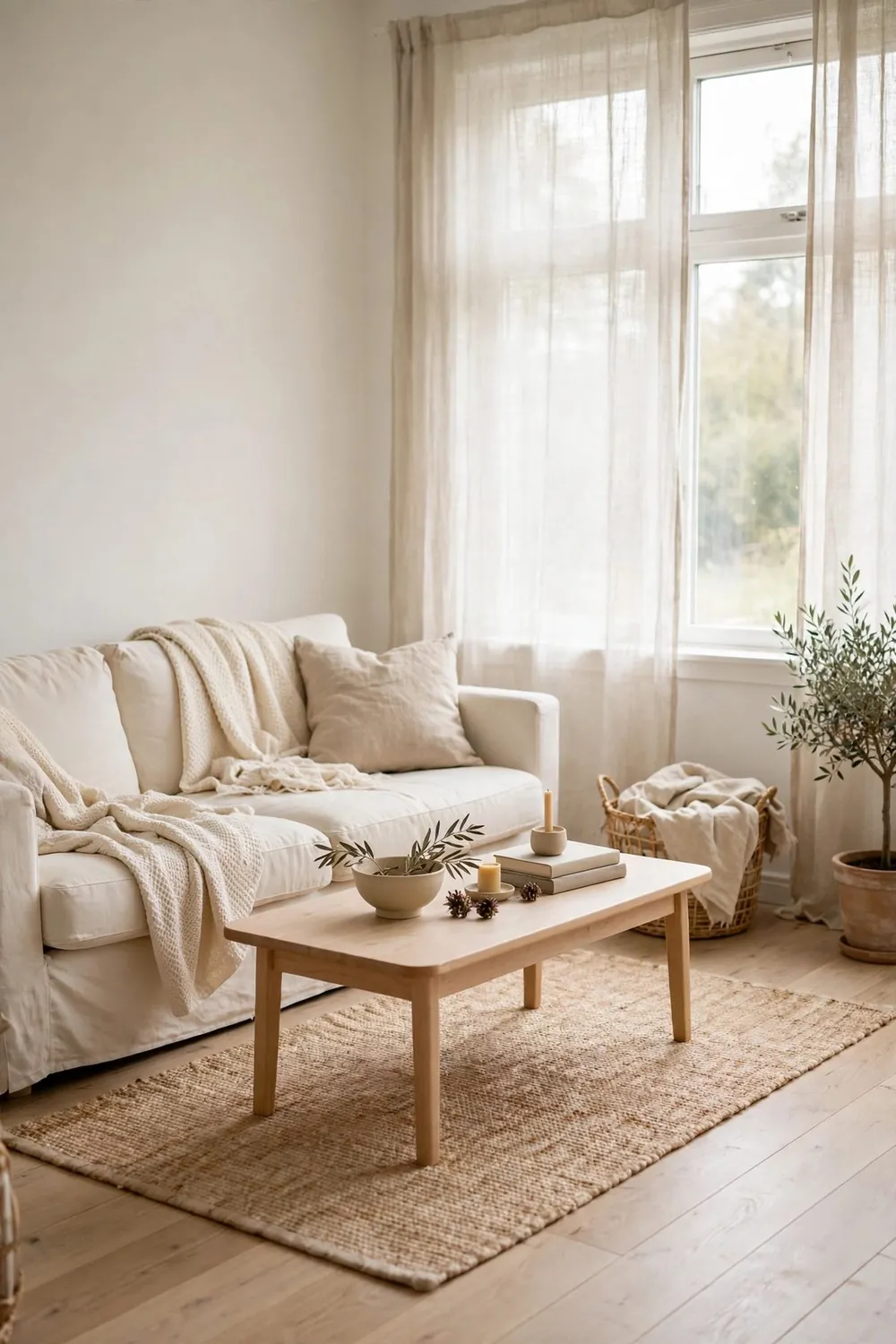
Save this before your next living room purchase — the discipline here (light first, palette tight, texture rich) turns even a rental’s plain room into the calm, glowing space Scandinavian homes are famous for. Then light a candle on an ordinary evening and call it finished.
Keep reading: Earth Tone Living Room Ideas: Cozy Boho Color Palettes for the warmer, deeper cousin of this palette, and 22 Small Living Room Ideas That Make Your Space Feel Bigger for layout tricks that pair perfectly with Scandi calm.