25 Cozy Winter Decor Ideas for Small Spaces
Winter asks a lot of a small home. The days are short, the light is grey, and you are spending more hours inside four walls than any other season. The answer is not more stuff — in a small space, winter clutter closes in fast. The answer is warmth, layered in the right places.
Think of winter decorating for small spaces as three layers: softness you can touch, light that glows instead of glares, and a little living green to remind you the world outside is only sleeping. These ideas are organized by those layers, and every single one was chosen to work in a studio, a small apartment, or a compact little house where every inch already has a job.
You will also find the storage swaps that make winter in a small space work — because a cozy room that you cannot tidy in five minutes is not cozy for long.
In this guide
- Layer One: Softness You Can Touch
- Layer Two: Light That Glows
- Layer Three: Green Life & Winter Scents
- Small-Space Storage Swaps for Winter
- More Winter Ideas for Small Spaces
- Winter Cozy in Every Other Room
- Why Winter Cozy Works: A Little Honest Science
- Winter Mornings: Winning the First Ten Minutes
- How to Recreate the Look in One Weekend
- Real-Life Problems, Solved
- Budget Guide: Where to Save, Where to Spend
- Mistakes to Avoid
- Your Winter Small-Space Checklist
- Frequently Asked Questions
Layer One: Softness You Can Touch
Winter cozy starts with what touches your skin. In a small space, two or three well-chosen textiles do the work of ten decorations.
1. Double Up the Throws

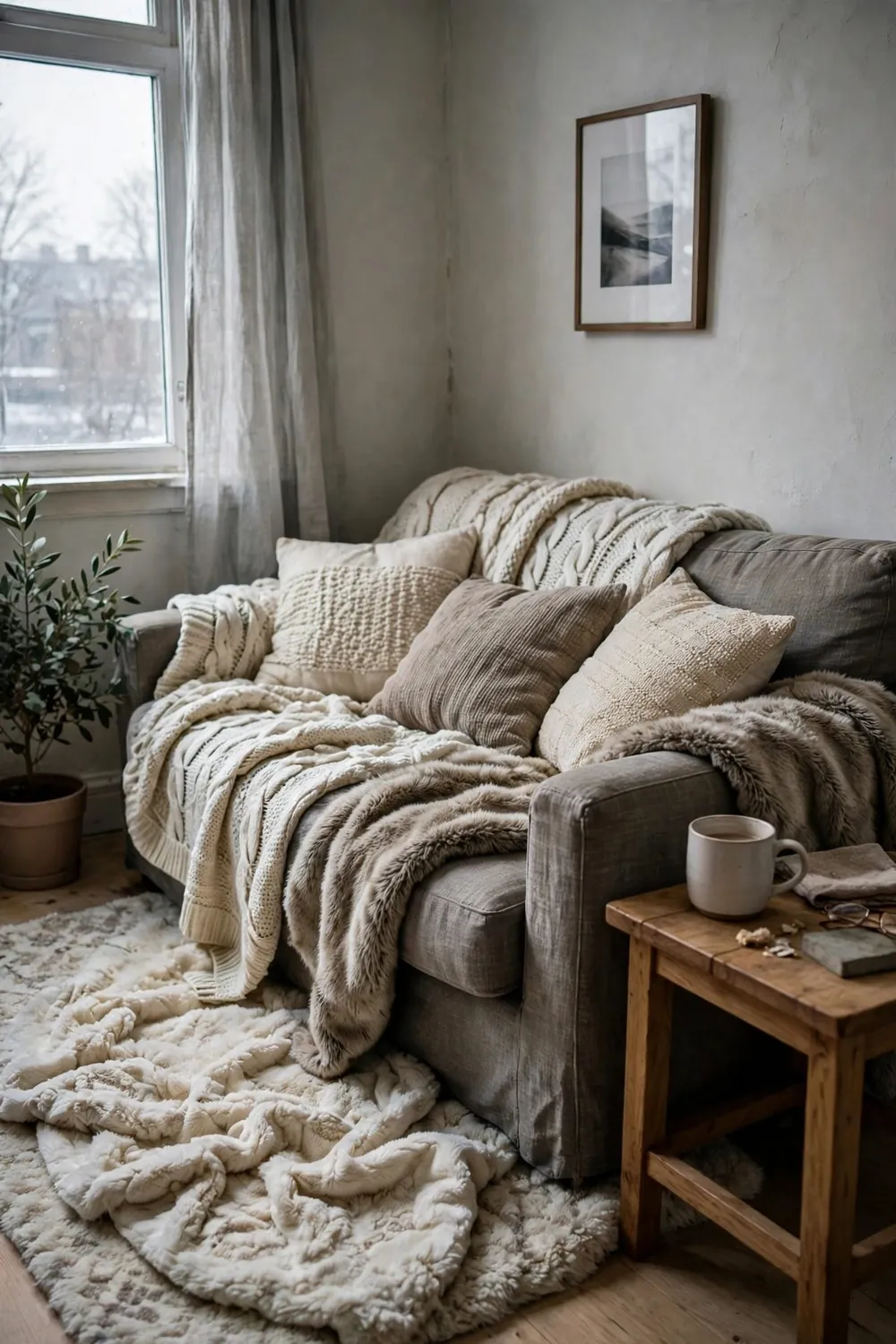
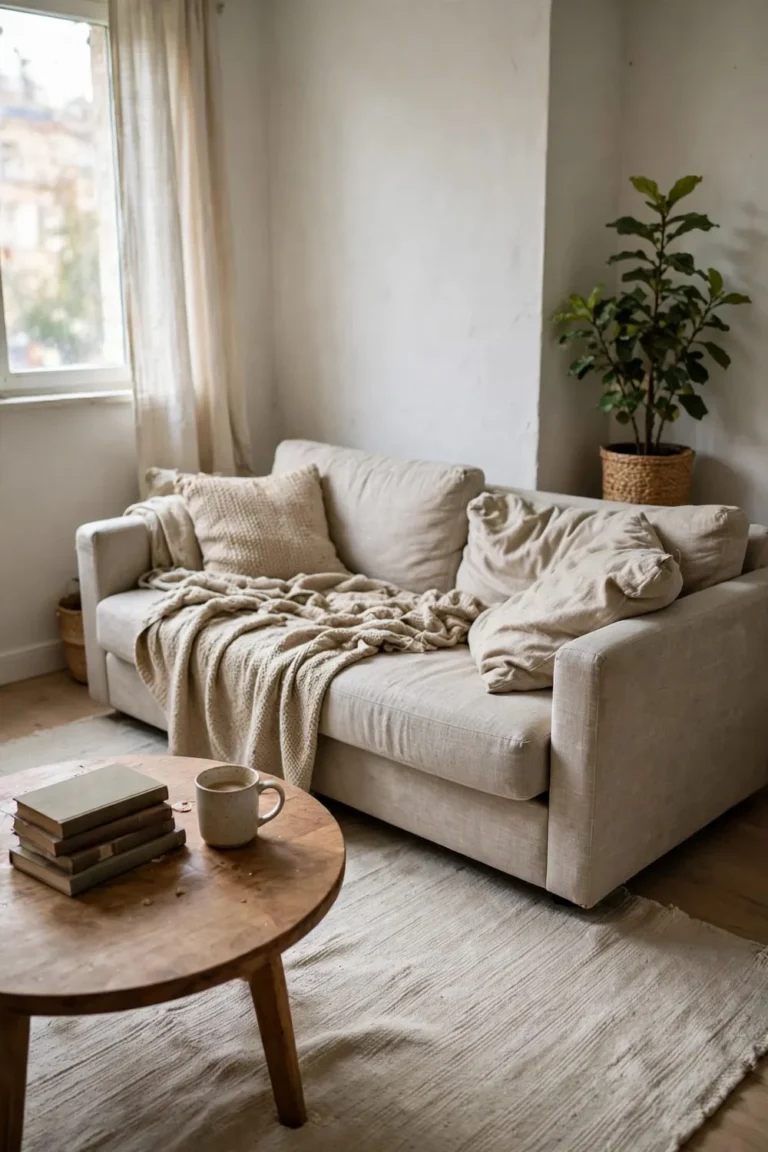
One throw is decor; two throws is winter. Layer a chunky knit over a softer fleece or wool blanket on the sofa — the mix of textures looks rich, and on genuinely cold nights you will use both. Drape one over the arm and fold the other along the back so both patterns show.
In a small space, choose throws in the same color family — creams, warm greys, one deep accent — so the layering reads calm rather than busy.
2. Swap in Winter Cushion Covers
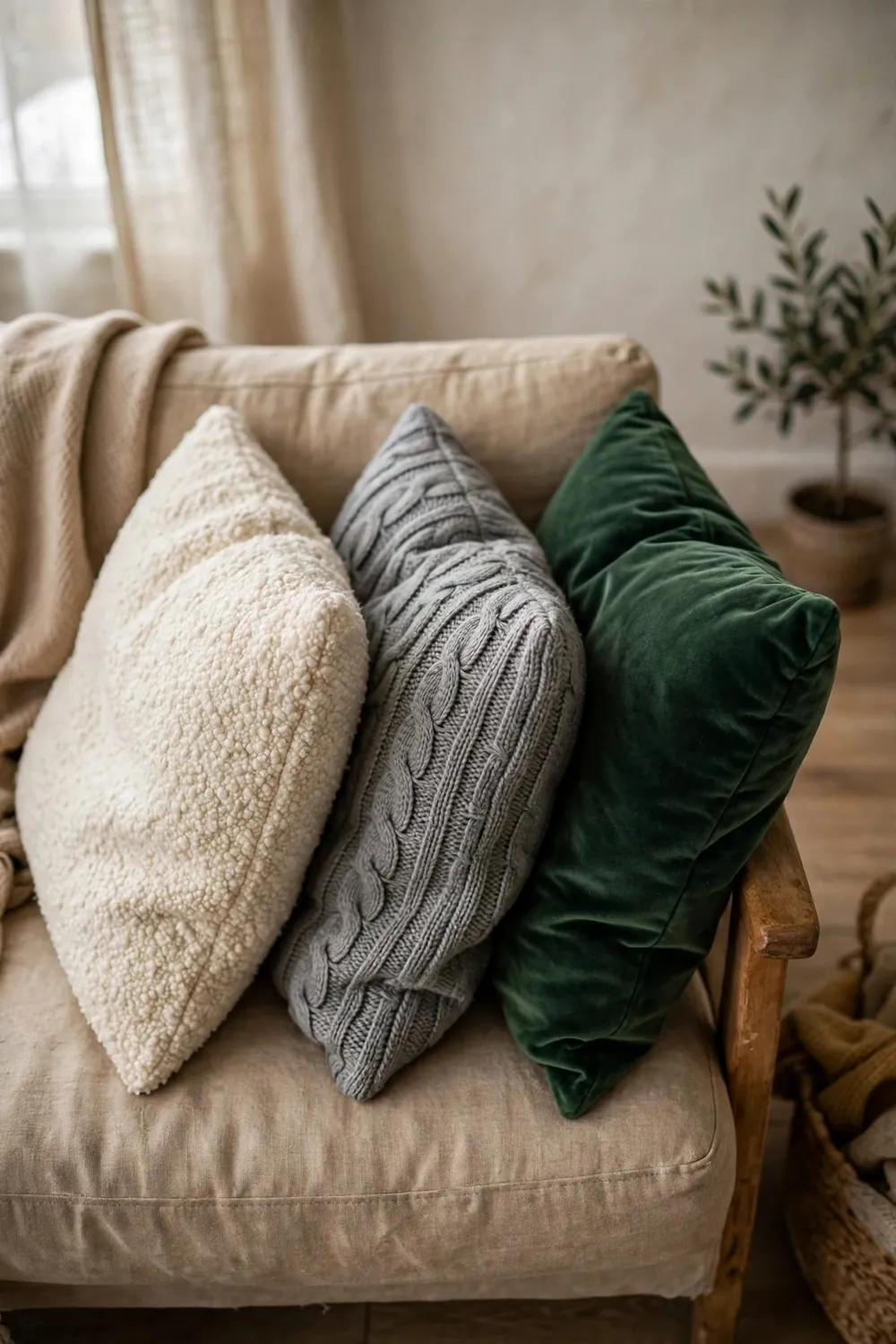
As in fall, covers are the small-space decorator’s best friend: they store flat and change everything. Winter calls for boucle, faux fur, velvet, and chunky knits in cream, warm white, deep green, or burgundy. Two or three covers are plenty — one texture star, the rest quiet support.
3. Put a Real Rug Under Your Feet (or Layer One)
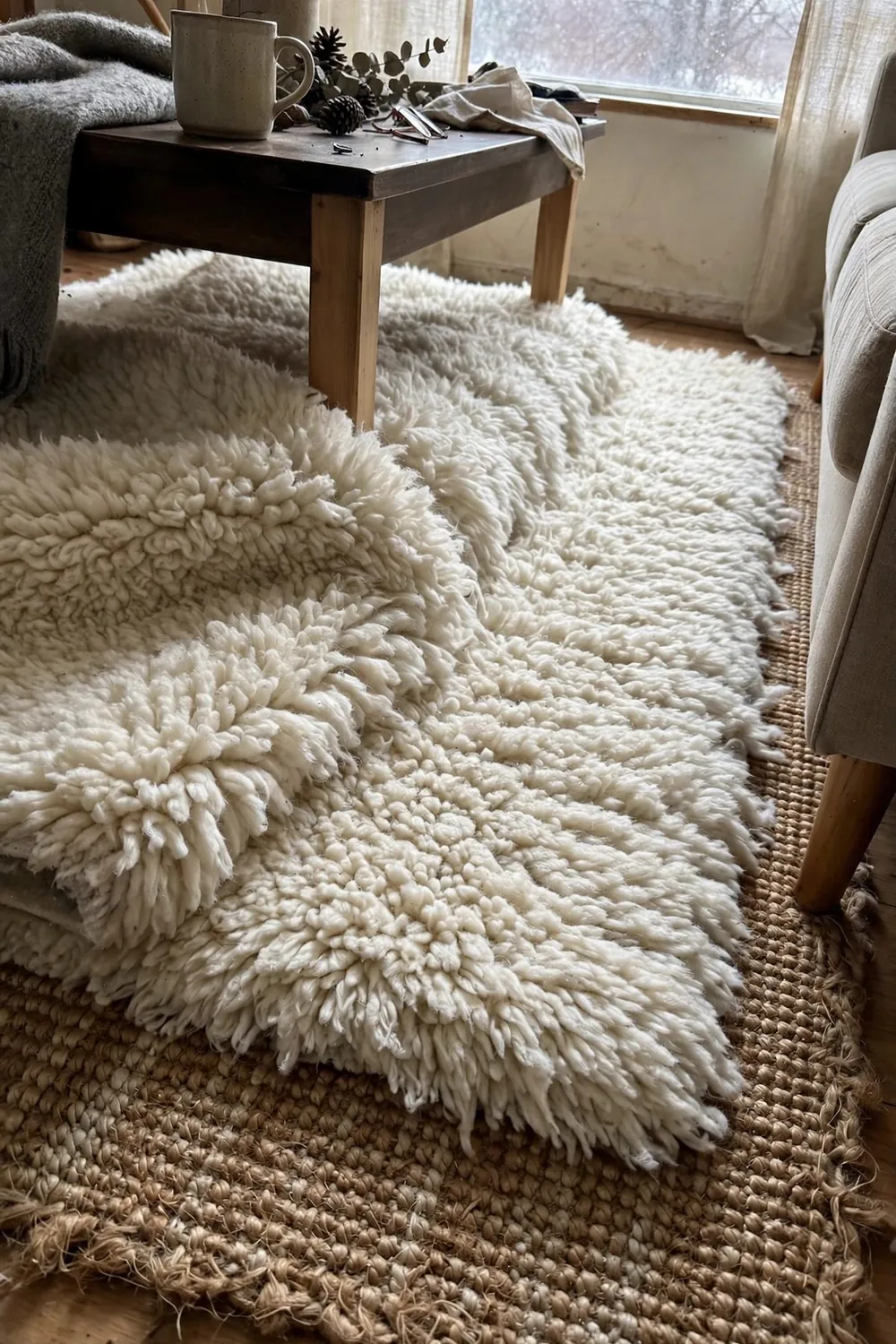
Cold floors are winter’s loudest complaint. If your rug is thin, layer a plush or faux-sheepskin rug over it in the seating area, or place a small sheepskin-style rug where your feet land getting out of bed. That first step in the morning sets the tone for the whole day.
Layered rugs also define zones in a studio — “living” here, “sleeping” there — without a single wall.
4. Add Curtains That Feel Like Blankets
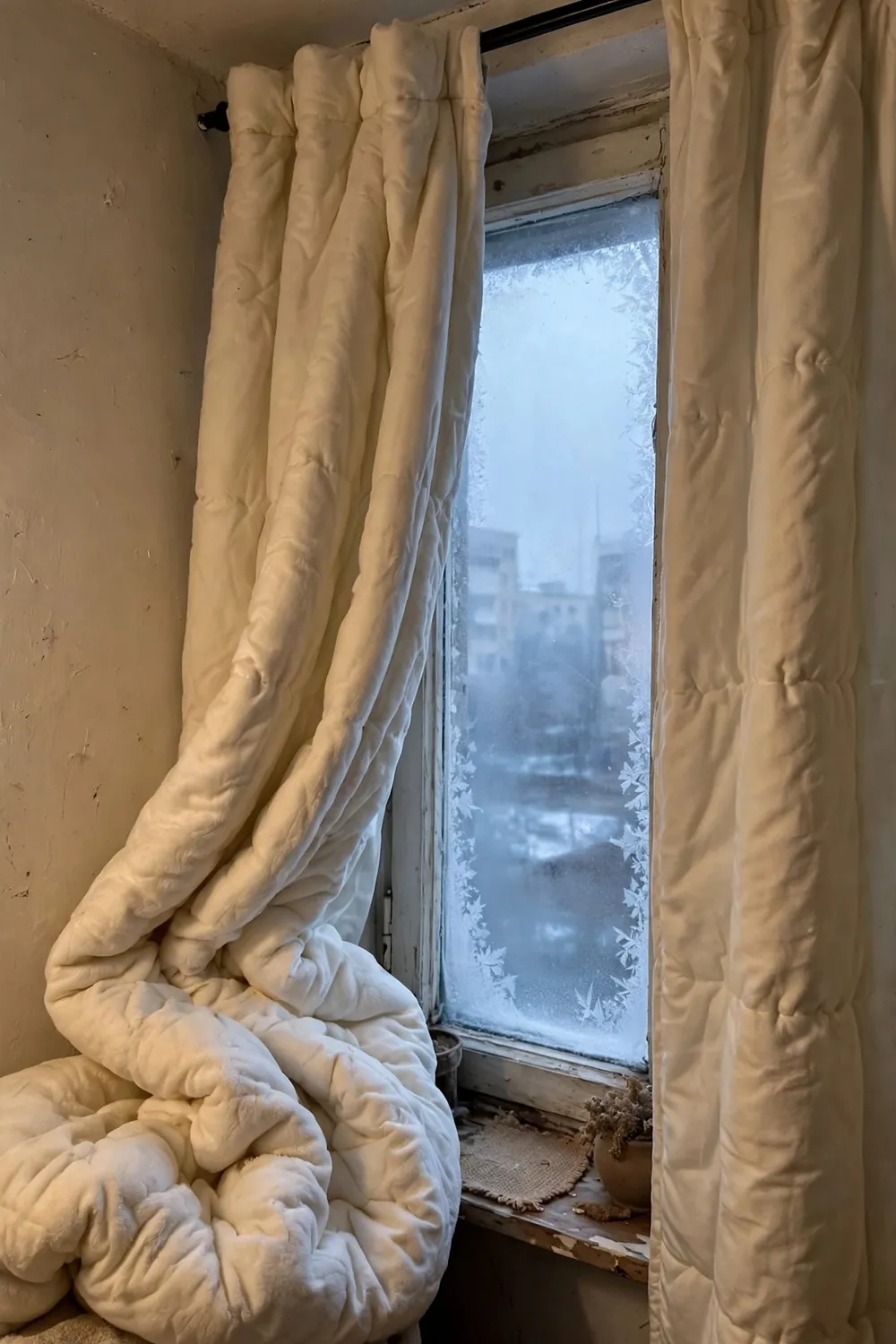
If your windows wear thin summer sheers, winter is when heavier curtains earn their storage space the rest of the year. Lined, velvet, or simply thicker linen curtains in a warm tone stop drafts visually and literally, and a room with dressed windows feels finished in a way a small space especially needs.
Hang them as high and wide as you can — in winter, the cozy effect and the “bigger window” illusion work together.
5. Make the Bed a Nest
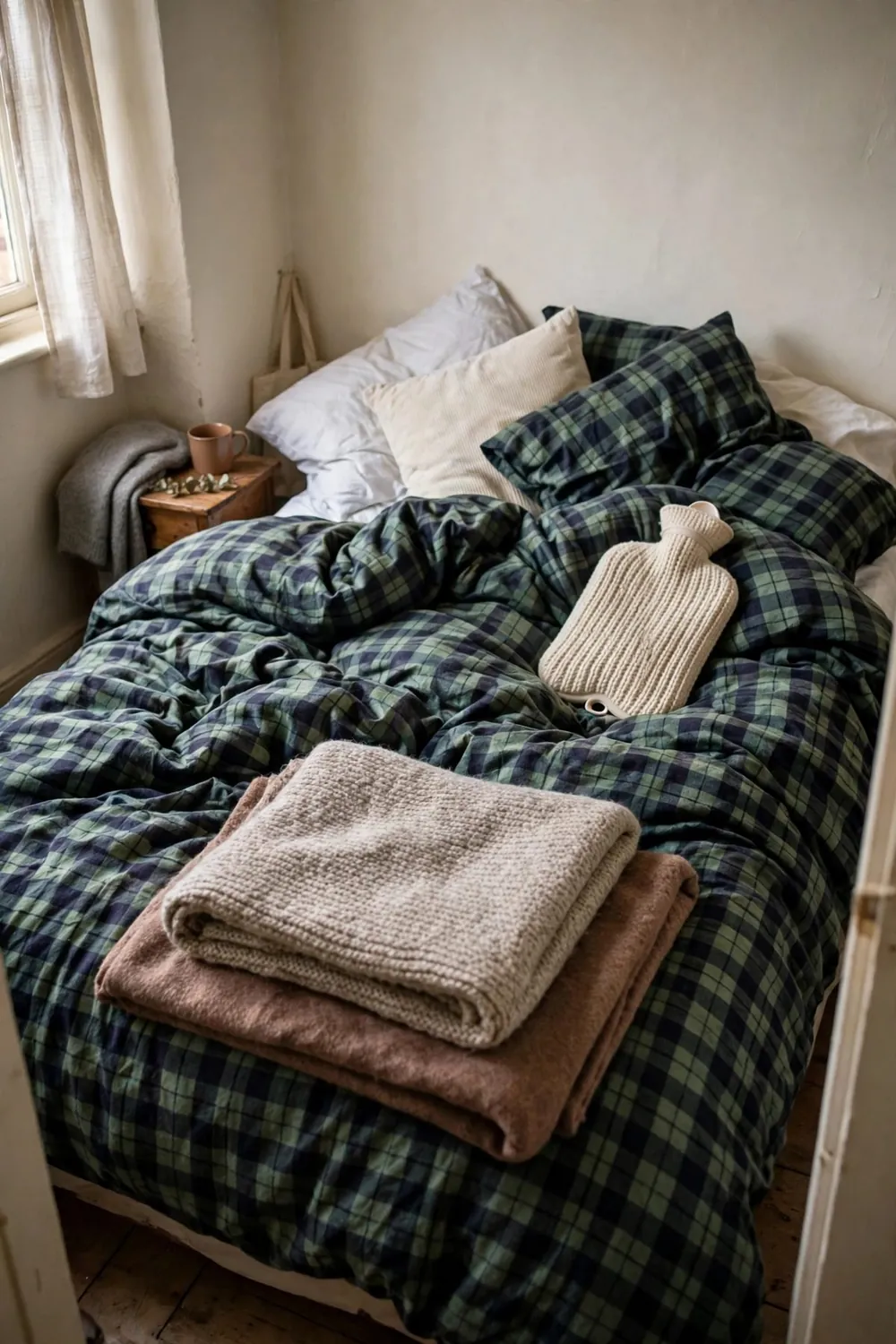
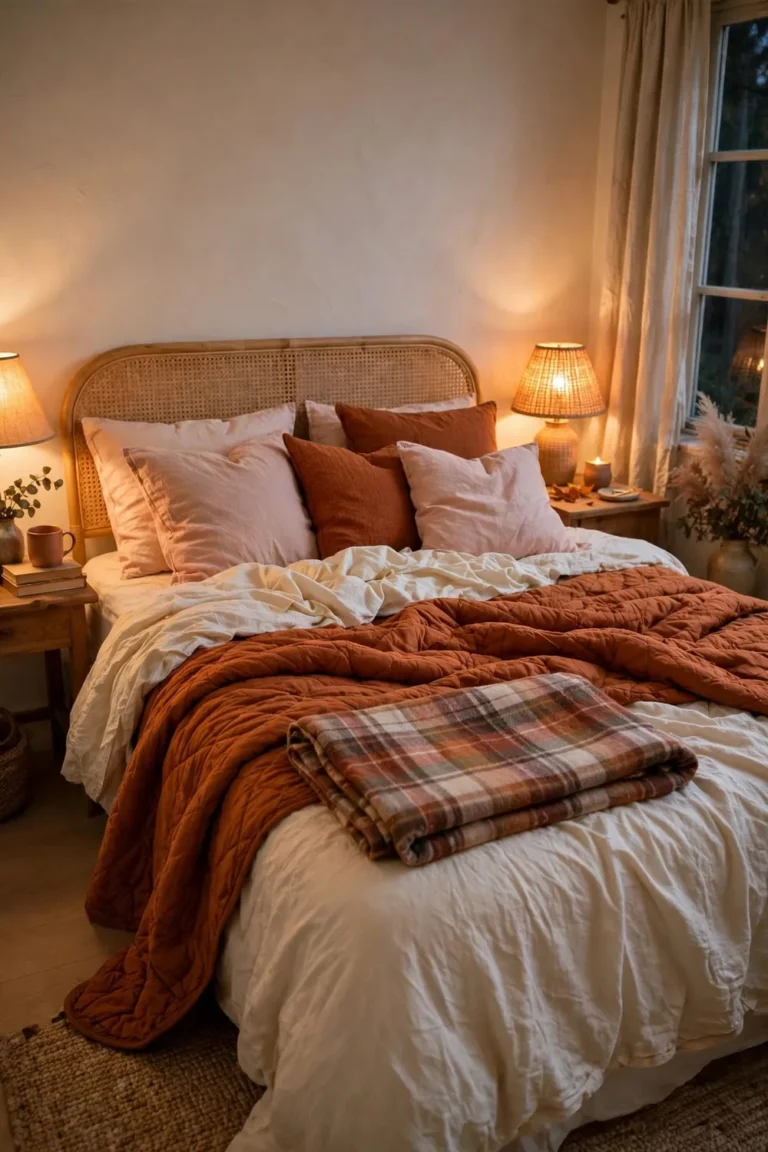
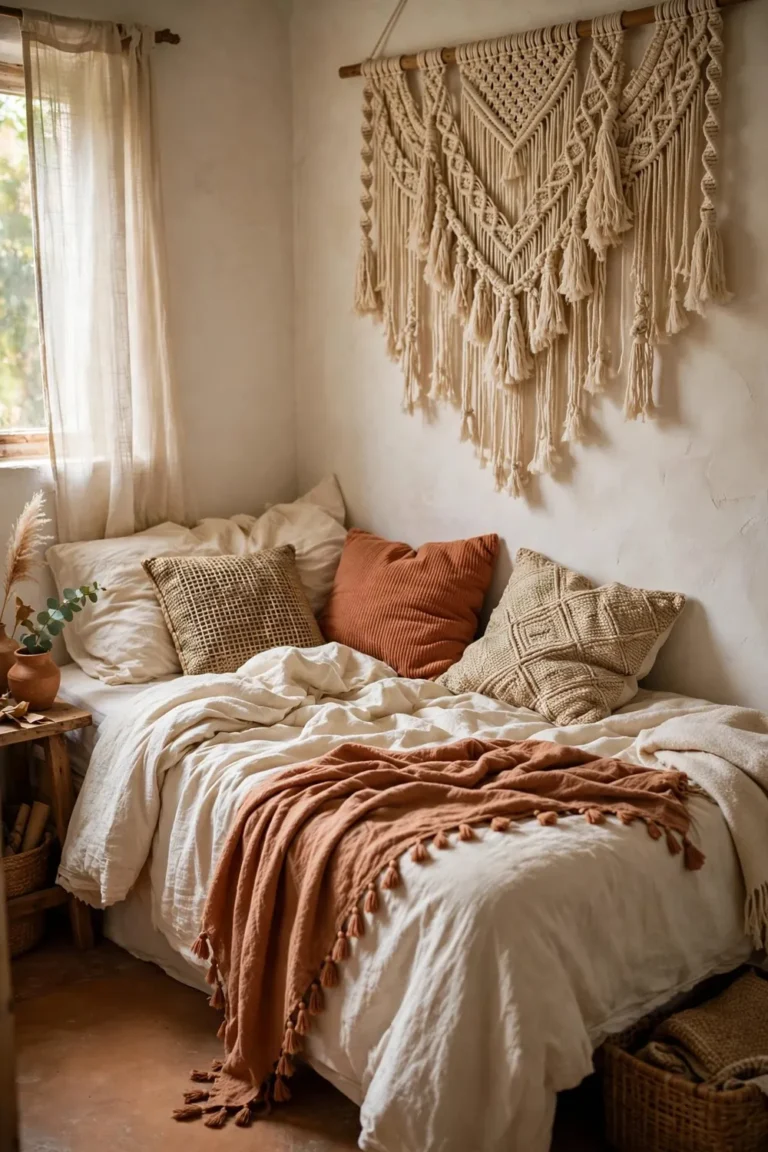
A winter bed wants layers you can count: flannel or brushed cotton sheets, a duvet, a folded quilt, and a throw across the foot. In a studio, the bed is half the room — a beautifully layered bed makes the whole space look intentional.
Add one long lumbar cushion in a winter texture and the bed reads “boutique cabin” instead of “room with a bed in it.”
Layer Two: Light That Glows
Winter light is the whole game. When the sun sets at five, your lamps become your atmosphere — and small spaces, with their short distances, glow beautifully.
6. Ban the Big Light After Dark
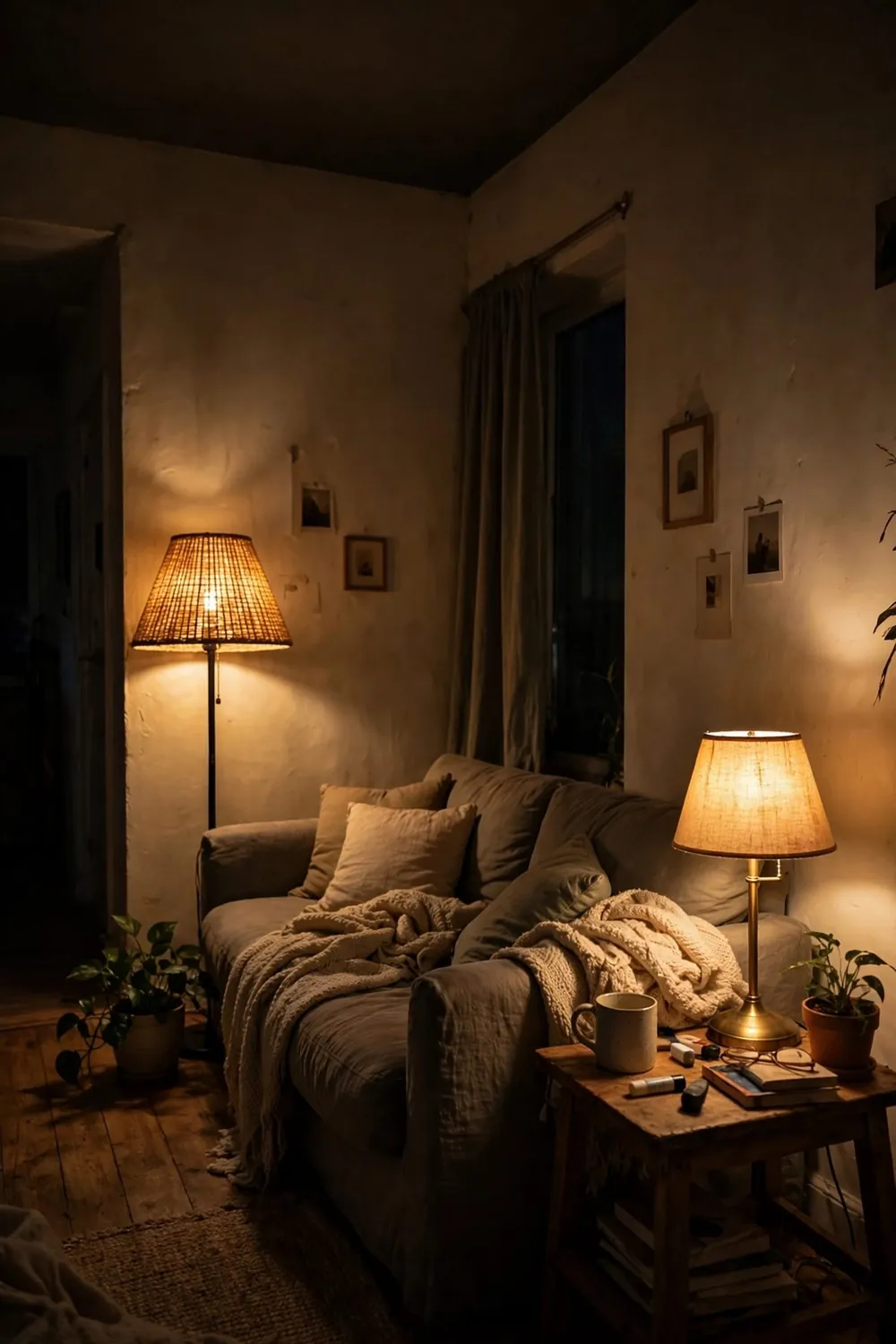
Make it a house rule from November to February: evenings run on lamps, candles, and fairy lights only. Overhead light is for finding things, not for living in. Small rooms transform completely under low, warm light — edges soften, colors deepen, and the space feels like a den in the best sense.
7. String Fairy Lights Where You Spend Evenings
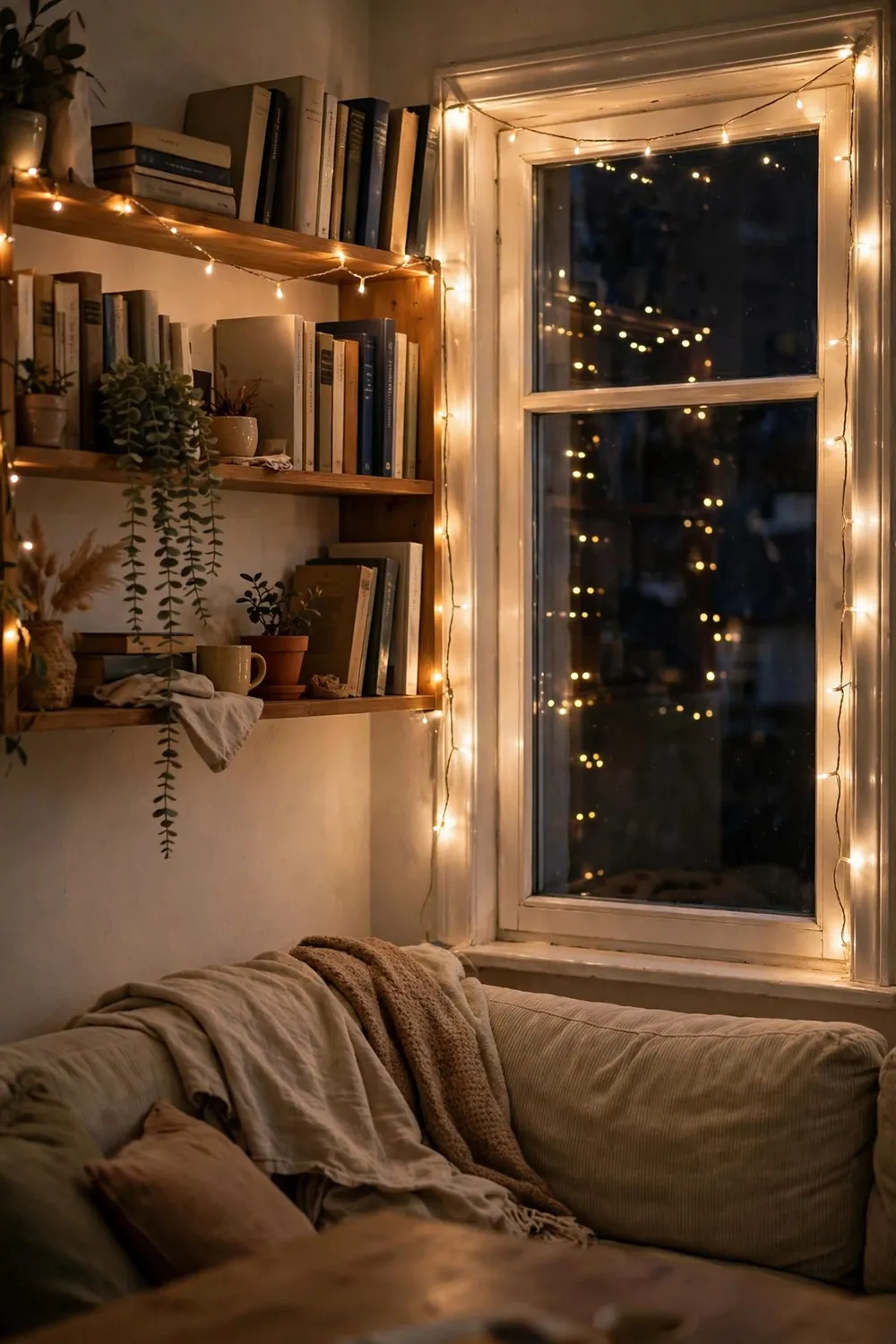
One warm-white strand does more for a winter room than any ornament. Drape it along a shelf, around a mirror, inside a glass jar or vase as a “light bouquet,” or along the headboard. Battery strands with timers mean the glow is waiting for you at dusk without a thought.
Keep the color temperature warm — cool white lights read as office, warm white reads as firelight.
8. Cluster Candles in Safe, Glowing Groups
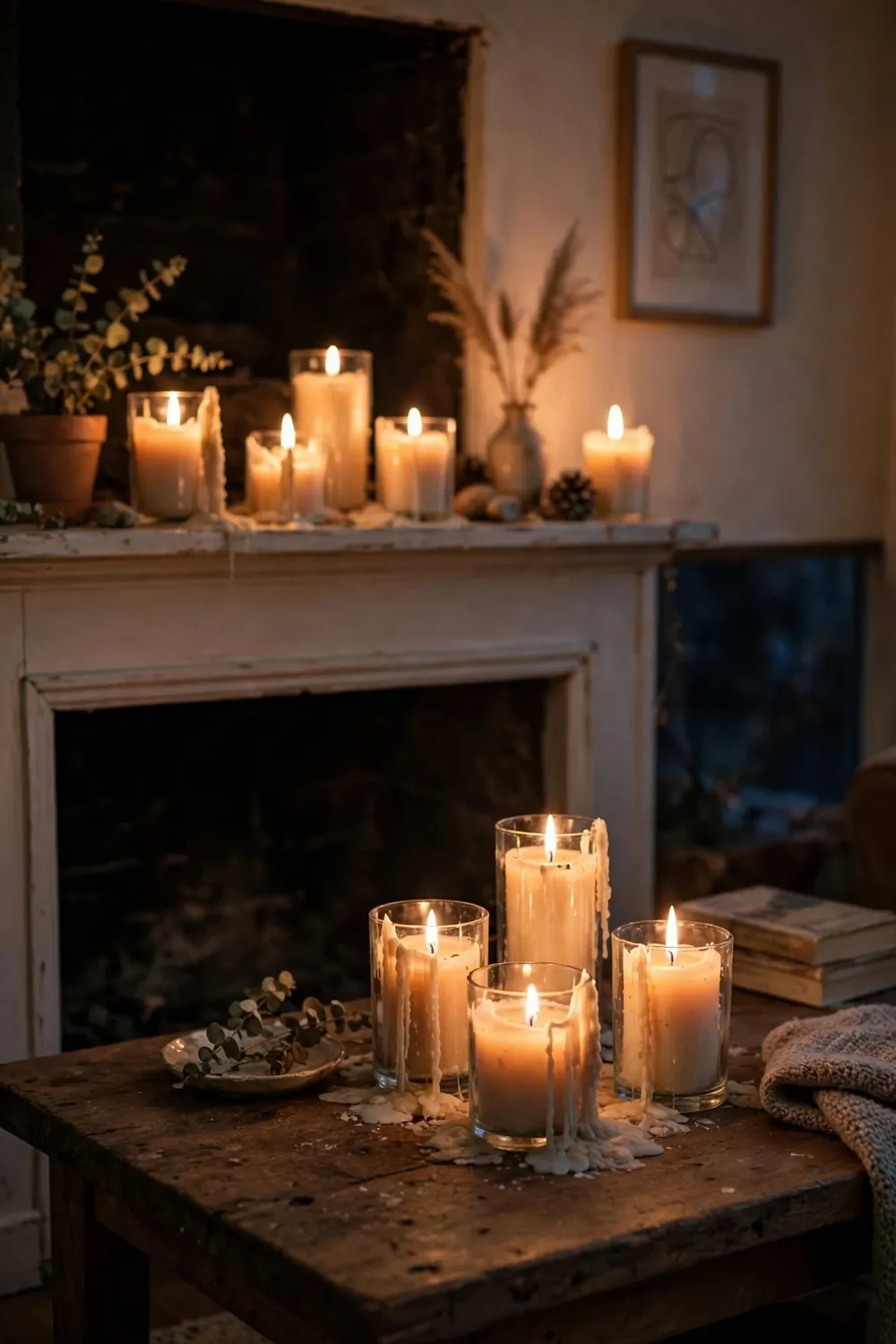
Group candles (real in safe spots, flameless elsewhere) in threes on trays, in the fireplace if you have a non-working one, or along a windowsill behind glass. In a small space, one good candle cluster lights the whole room — you need fewer than you think.
Reflect candlelight with a mirror or a metallic tray underneath and you double the glow for free.
9. Add One Lamp Where There Was None
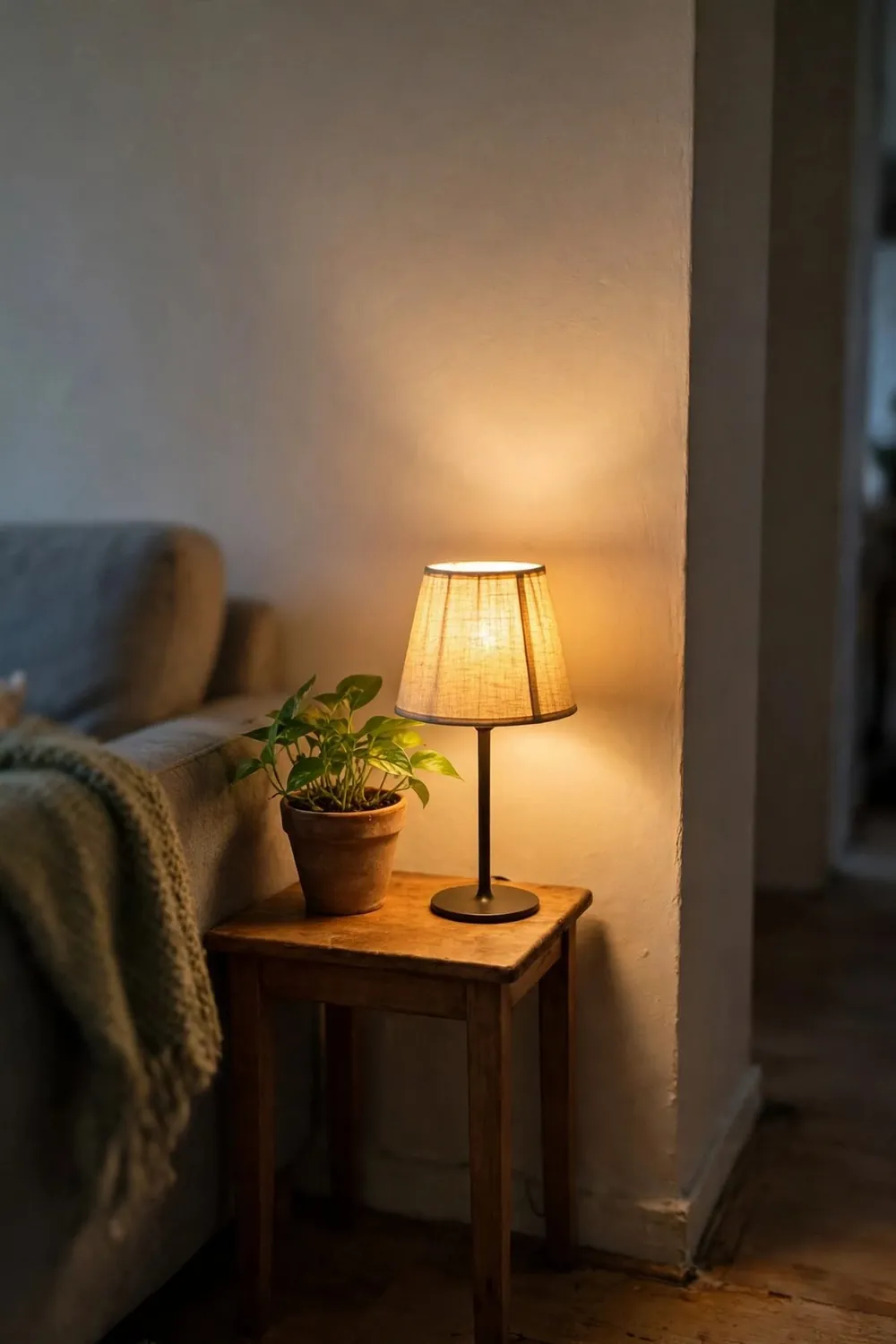
Most small rooms are under-lamped. A small lamp on a kitchen counter, a bookshelf, or the bathroom vanity brings evening warmth to corners that usually go dark at 6pm. Plug-in and battery lamps make this possible anywhere, no electrician required.
Layer Three: Green Life & Winter Scents
Winter rooms can feel sealed and still. Living green and real scent open them back up.
10. Bring in Evergreen Branches
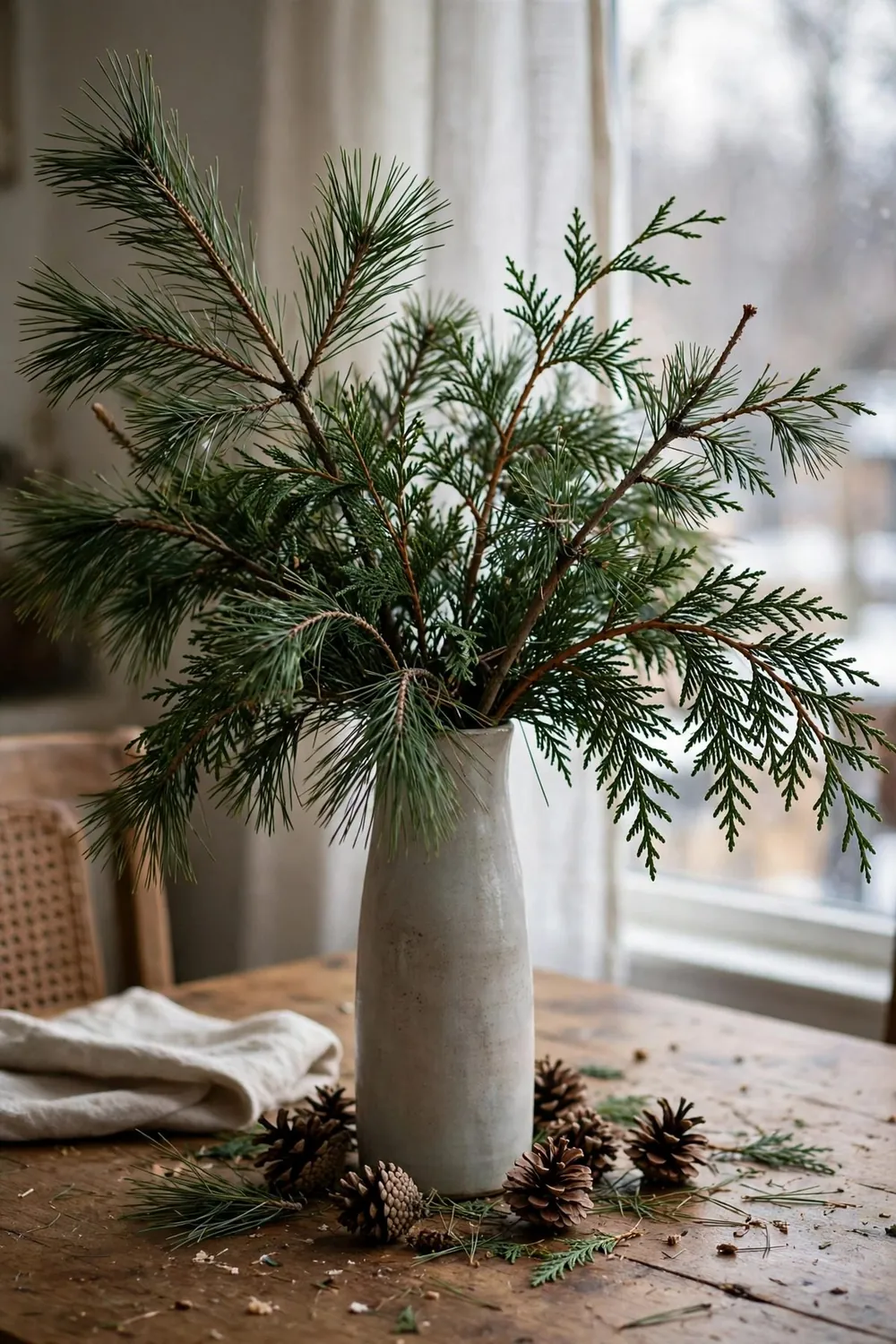
A vase of evergreen clippings — from a tree lot’s free offcuts bin, your garden, or a grocery bouquet — lasts for weeks in water and brings the winter woods indoors. It is the season’s best free decor: sculptural, fragrant, and the perfect deep green against all your creams.
11. Keep One Plant Thriving by the Window
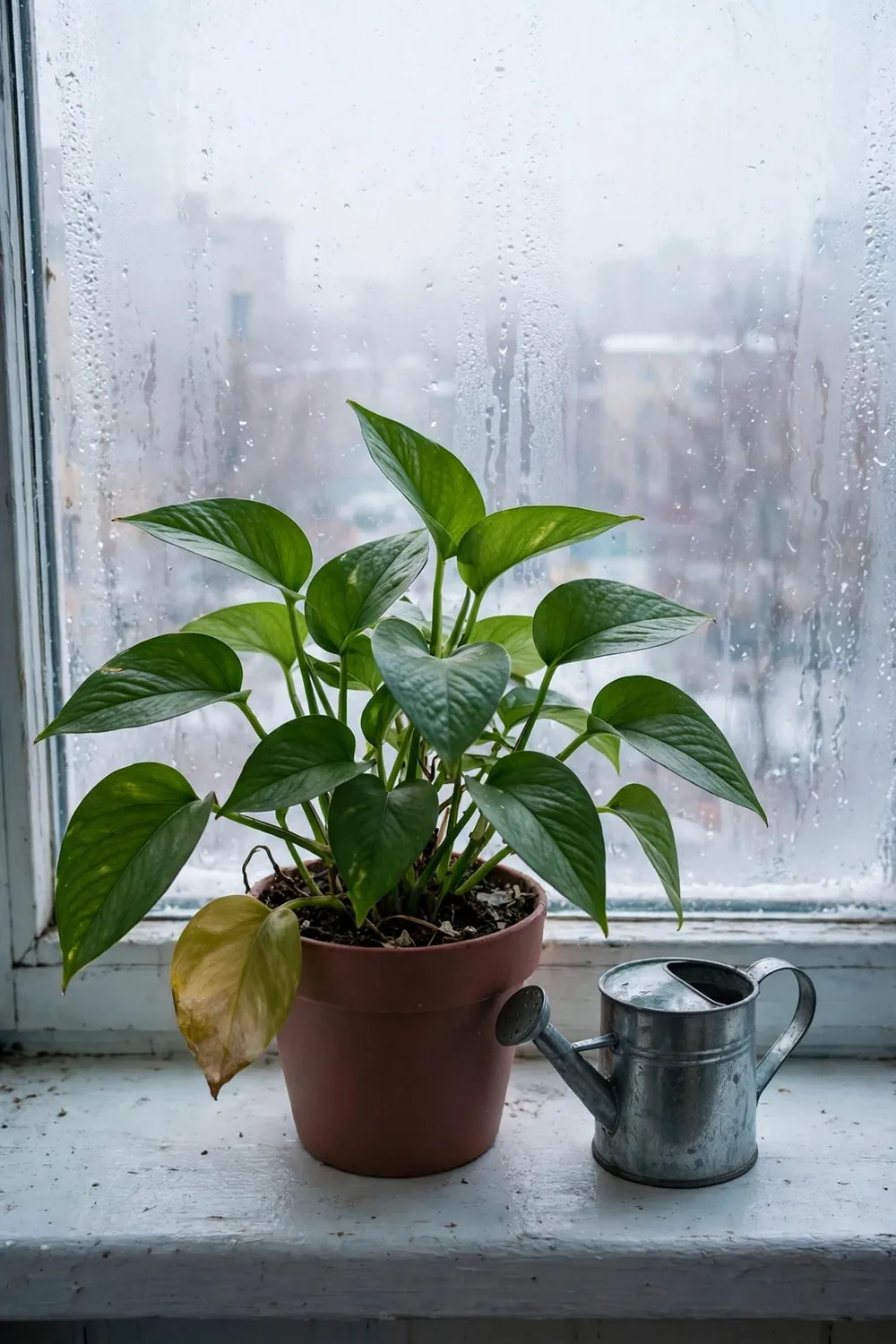
Your regular houseplants matter more in winter, when the world outside is bare. Group them on the brightest windowsill you have — a small indoor jungle glowing in weak winter sun is the happiest sight in a small home. Rotate them weekly so all sides get light.
12. Set Out Bowls of Winter Nature

Pinecones, cinnamon sticks, dried orange slices, and walnuts in a wooden bowl make a centerpiece that smells faintly of the season and costs almost nothing. Foraged and pantry decor is the small-space way: beautiful now, compost or storage later, nothing wasted.
13. Simmer or Diffuse a Winter Scent

On the coldest evenings, a stovetop simmer pot (orange peel, cloves, cinnamon, a sprig of evergreen in water) makes a small home smell like a winter cabin. It also adds humidity to dry heated air — a genuine comfort bonus in small spaces. Never leave a simmer pot unattended, and top up the water as it steams.
Small-Space Storage Swaps for Winter
Winter adds bulk — blankets, boots, coats — to homes that have no spare room. These swaps keep the cozy from becoming chaos.
14. Give Blankets a Basket Home
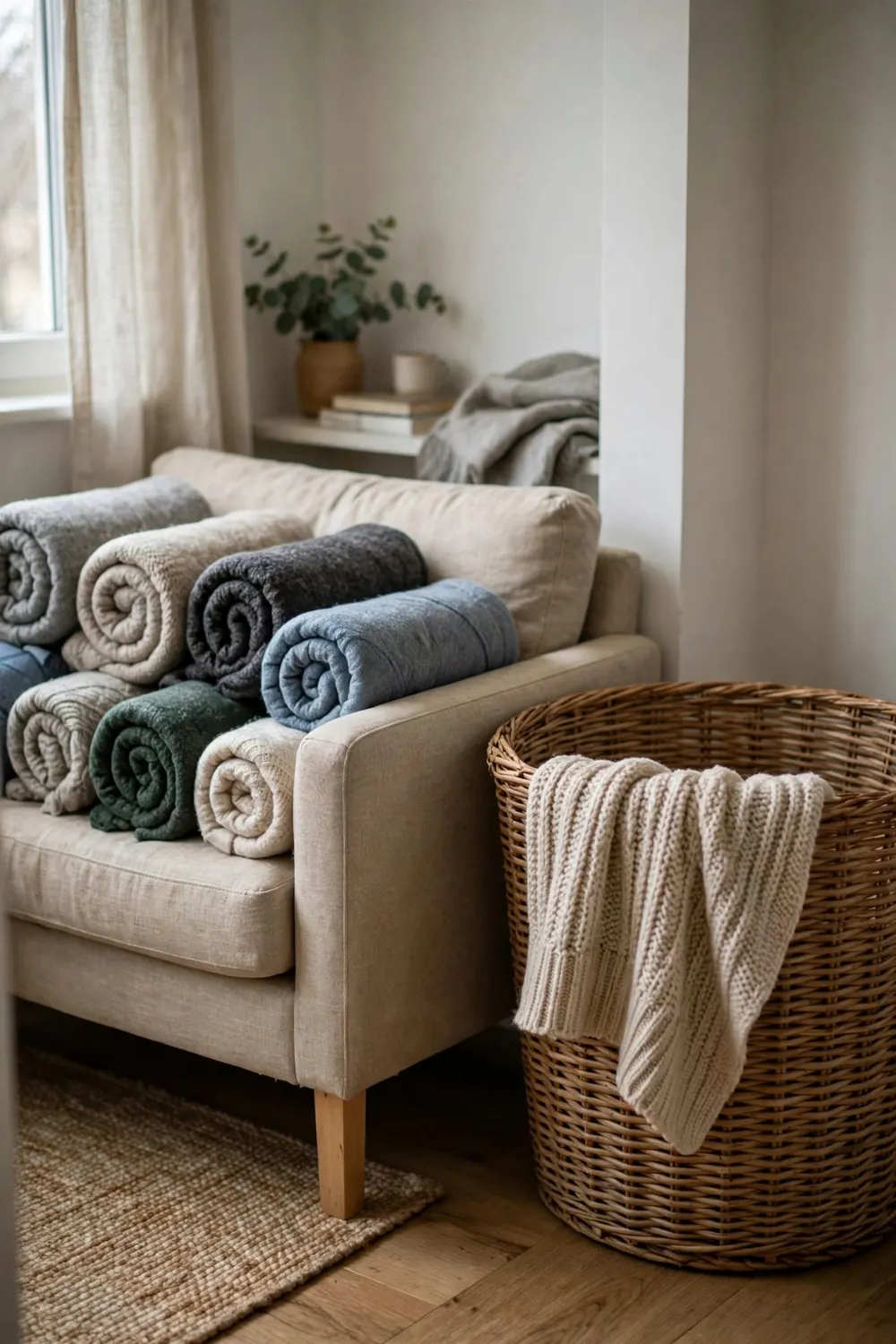
Every winter textile needs a designated basket or storage ottoman. When blankets have a home, the sofa gets cleared nightly in thirty seconds and the room resets to calm. One big basket by the sofa, one small one by the bed — that is the whole system.
15. Create a Boot Tray Zone
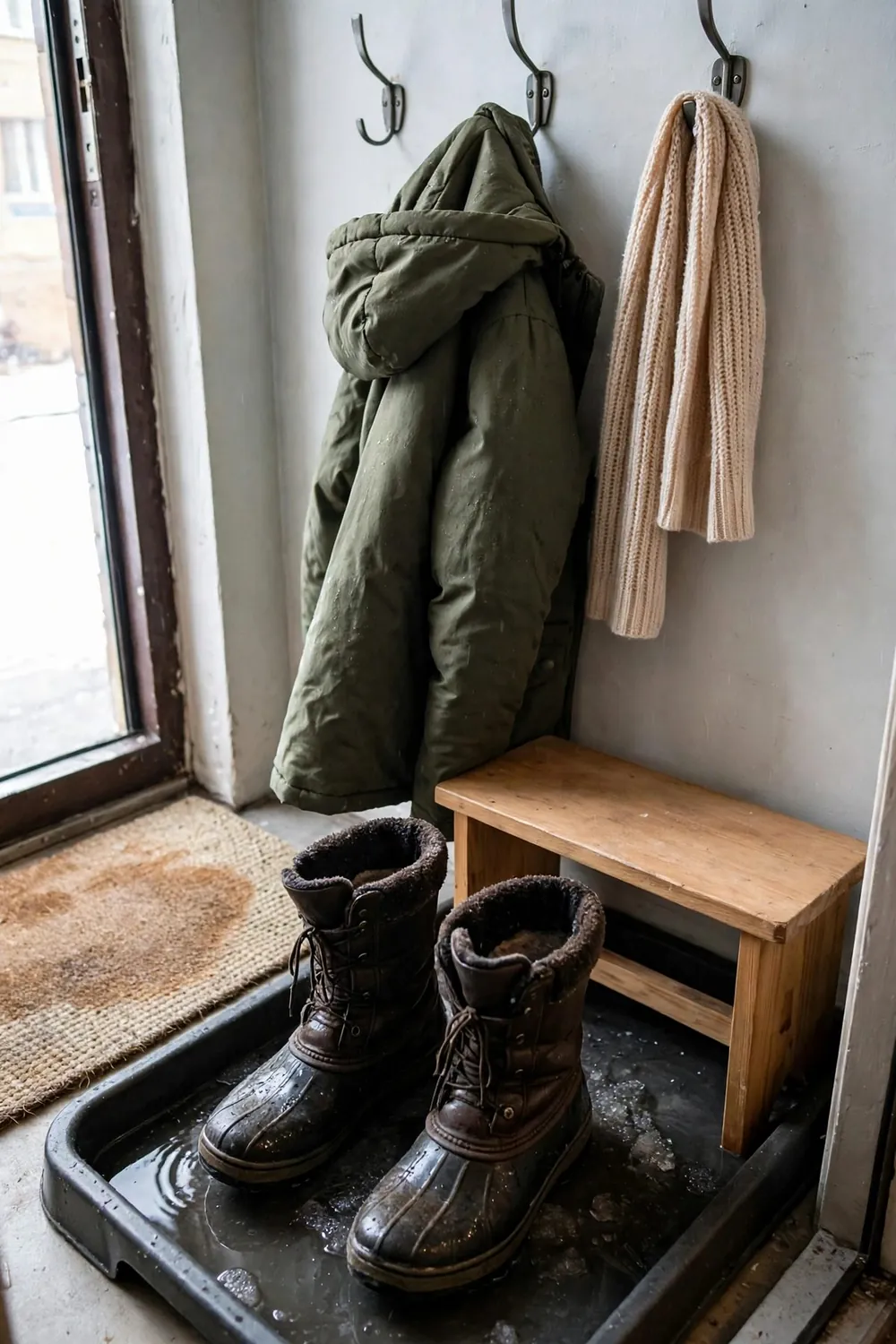
A simple tray by the door corrals wet boots and the puddles they bring. It is the least glamorous idea on this list and the one that saves your floors, your rug, and your temper all winter.
16. Rotate Decor Seasonally, Ruthlessly

Small-space winter decorating works because other seasons are in boxes. When the winter cushions and throws come out, the summer ones go into the same box. One box in, one box out — if it does not fit in the storage you have, it is a signal to edit, kindly but firmly.
More Winter Ideas for Small Spaces
Still collecting ideas? These final additions round out the list — each one tested against the same rule as everything above: it has to earn its place in a real home, on a real budget.
17. Drape a Chunky Knit Over the Sofa Arm
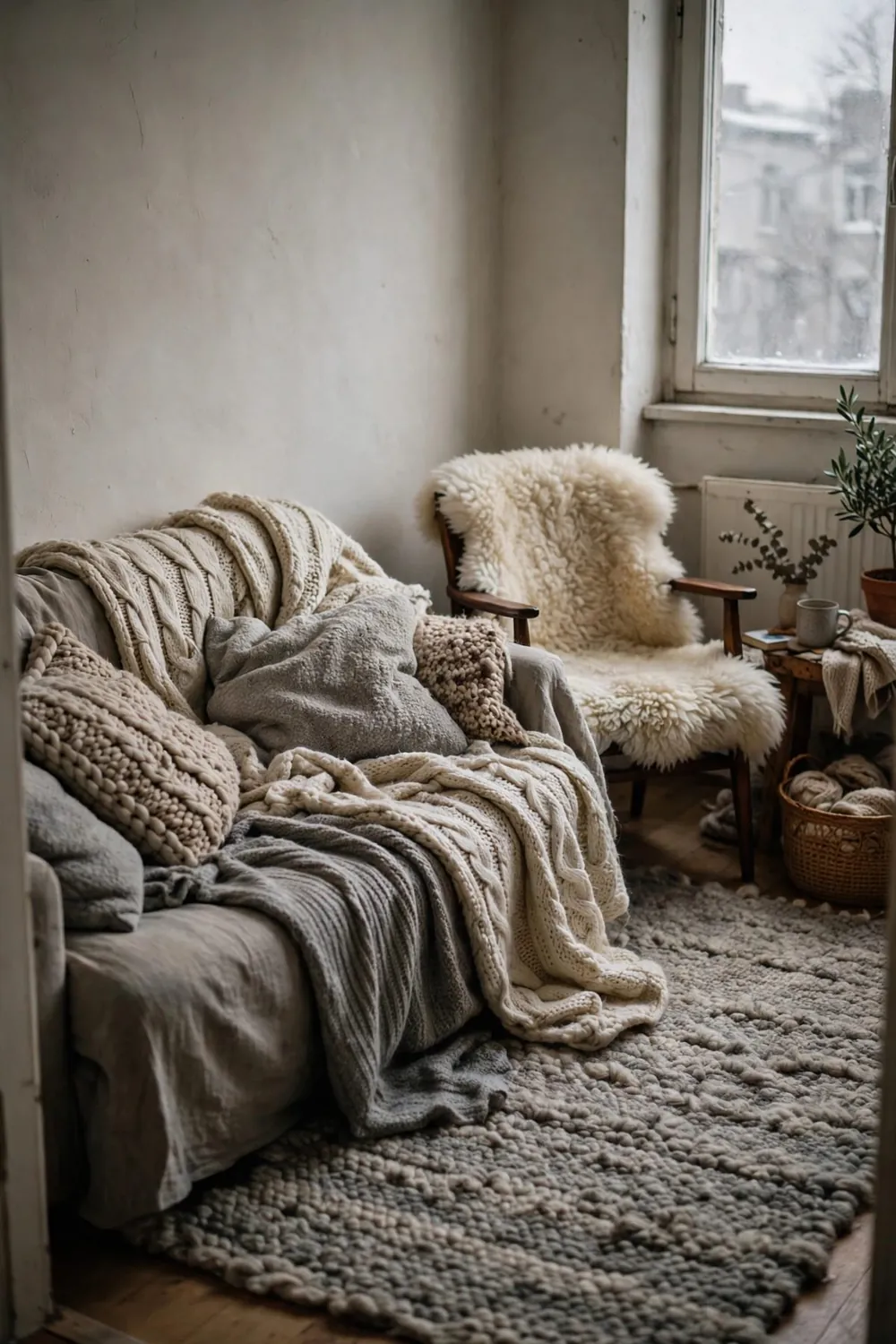
One oversized chunky-knit throw, draped casually over the sofa arm rather than folded away, is winter’s fastest signal. The scale of the knit does the work — it reads as warmth you can see from the doorway. Choose cream, oatmeal, or a deep forest tone.
You do not need the expensive hand-knitted version: machine-knit chunky throws look nearly identical in lamplight and wash far more easily.
18. Swap One Print for a Winter Scene
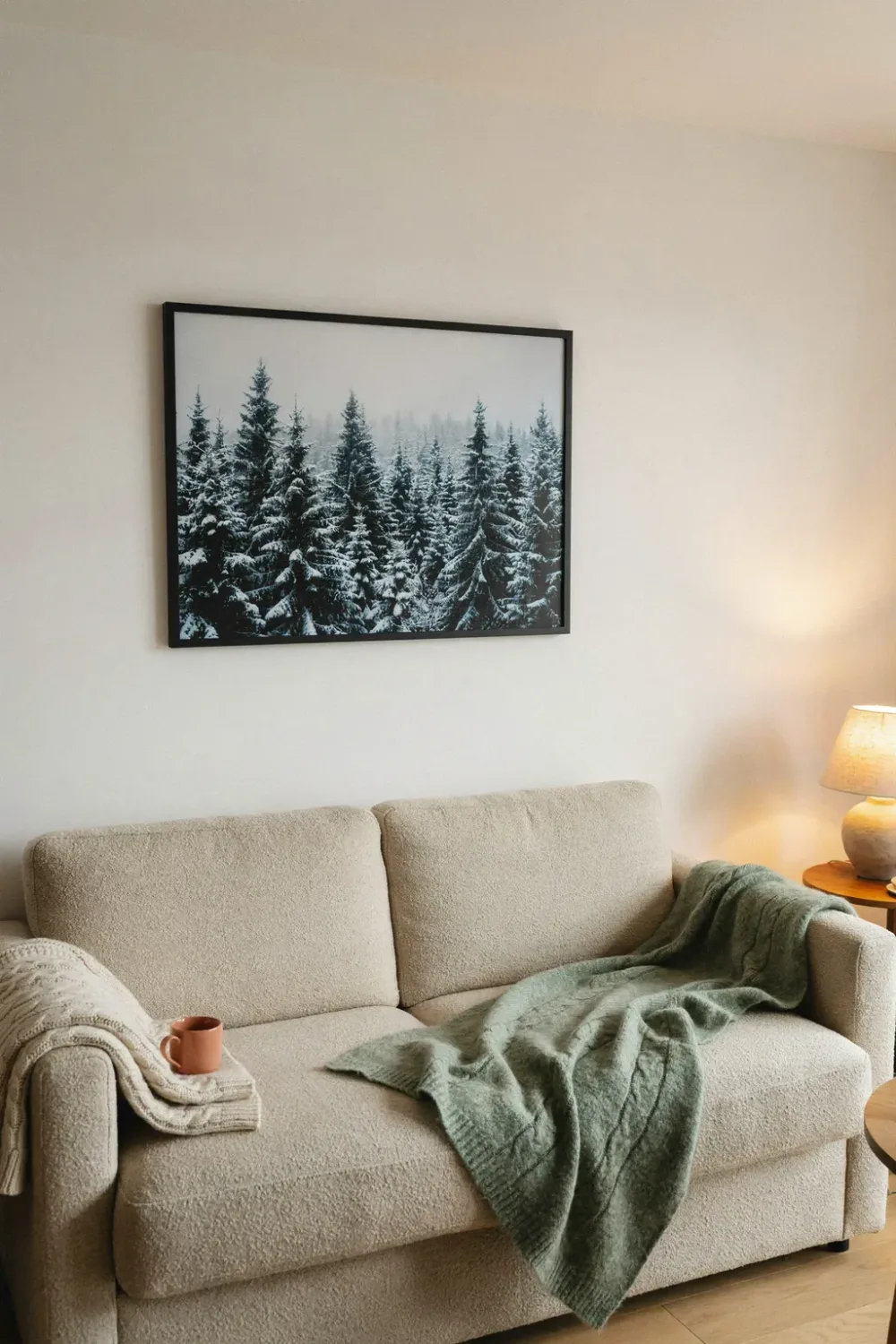
Changing a single framed print to a snowy landscape, a misty forest, or a winter village illustration tilts the whole room toward the season for the price of a download. Print at home or use a same-day photo service and reuse the frame you already own.
Keep a small folder of seasonal prints — fall leaves, winter snow, spring blossom — and rotating them becomes a ten-minute ritual that makes the room feel newly decorated four times a year.
19. Add Velvet Cushions in Deep Jewel Tones
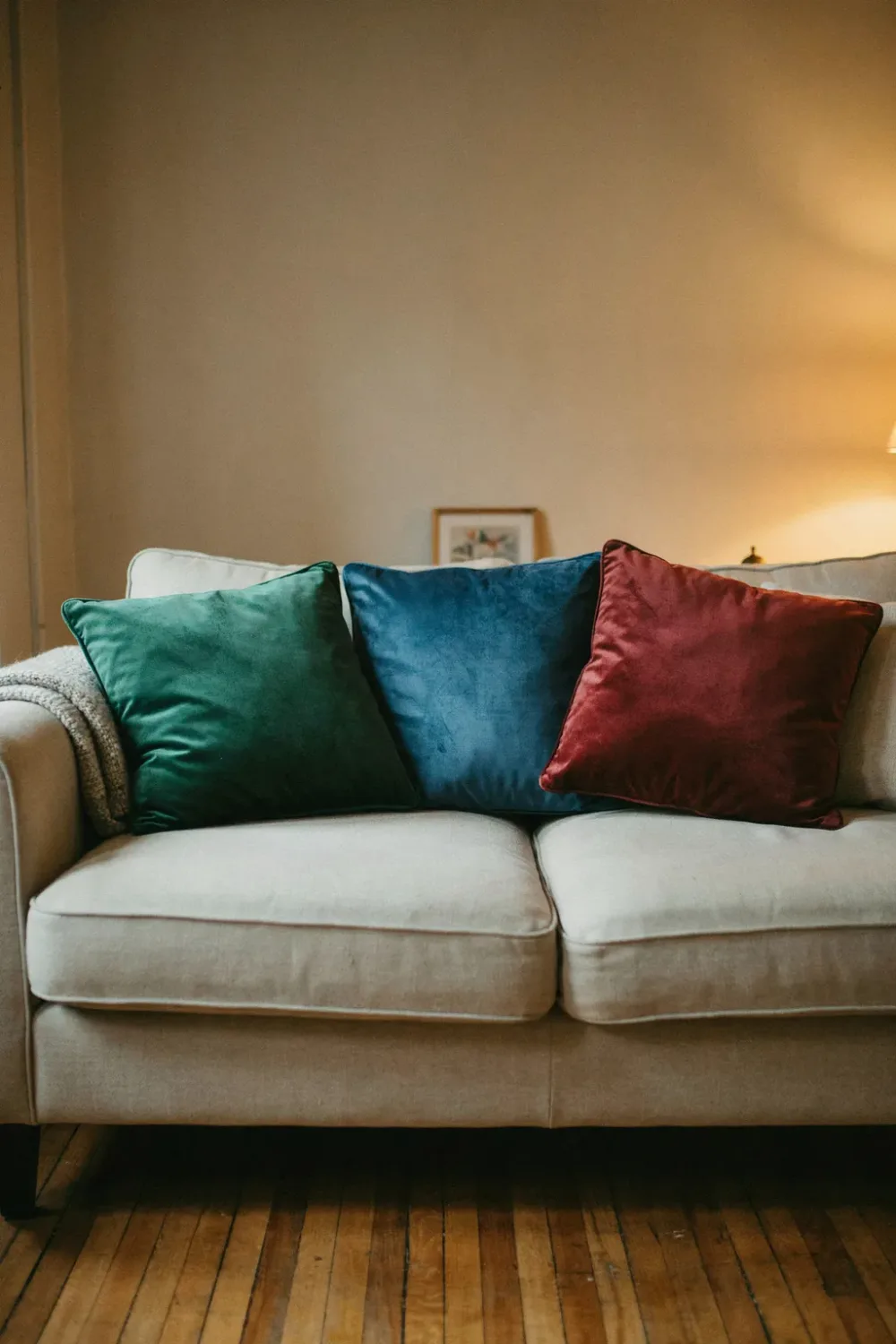
Velvet catches low winter light like nothing else. Two cushions in deep emerald, burgundy, or midnight blue against your existing neutrals give the sofa an evening richness that cotton cannot. Keep the rest of the palette calm so the jewel tones glow rather than shout.
Covers only, not whole cushions — they store flat in summer and the inserts you already own do the rest.
20. Create a Hot-Drink Station on a Tray
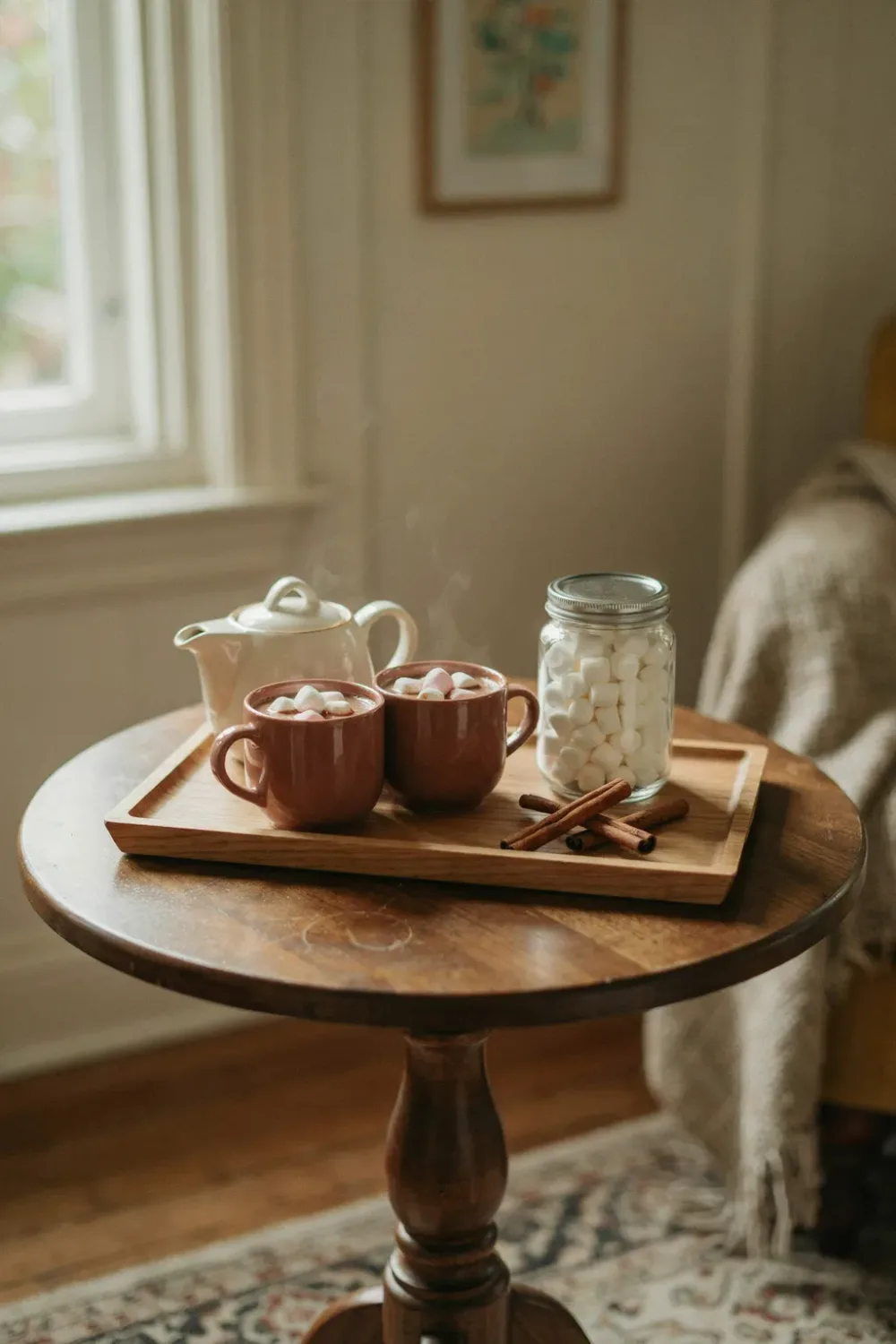
A tray holding a small teapot or cafetière, two favorite mugs, and a jar of cocoa or spiced tea turns a kitchen corner into a winter ritual station. In a small space it also corrals the mugs that otherwise spread across the counter.
Add one candle beside it for the evening version. Rituals are what make small homes feel luxurious, and this one costs almost nothing to set up.
21. Line the Windowsill With Pinecones and Greenery
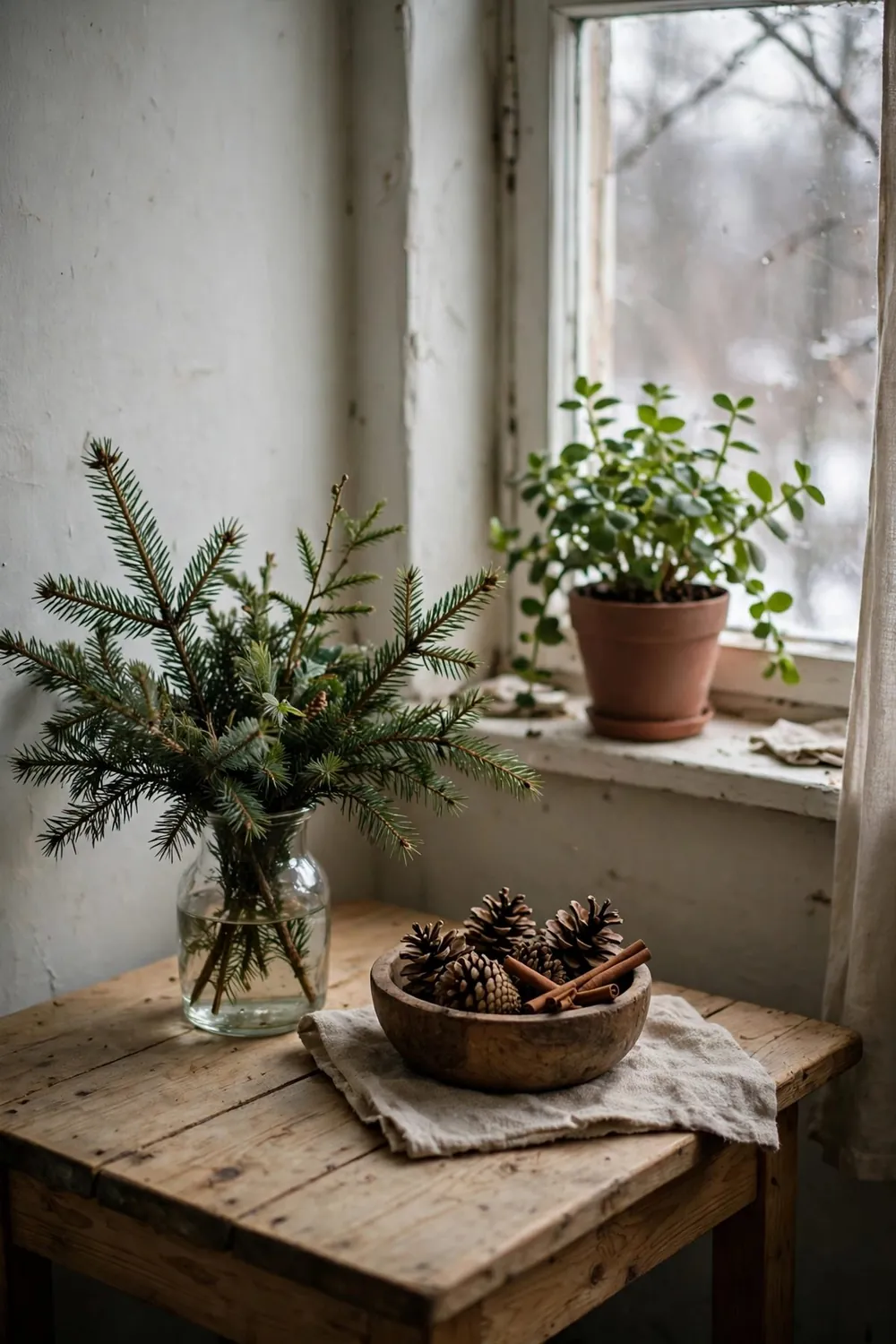
A row of pinecones, a short strand of faux or real greenery, and one small candle along the windowsill frames the winter view instead of fighting it. It takes ten minutes and uses the one display ledge every small room has.
Collect pinecones on a walk and bake them at a low heat for 30 minutes to clean them — free decor with a story attached beats shop-bought every time.
22. Switch to Brushed Cotton or Flannel Bedding
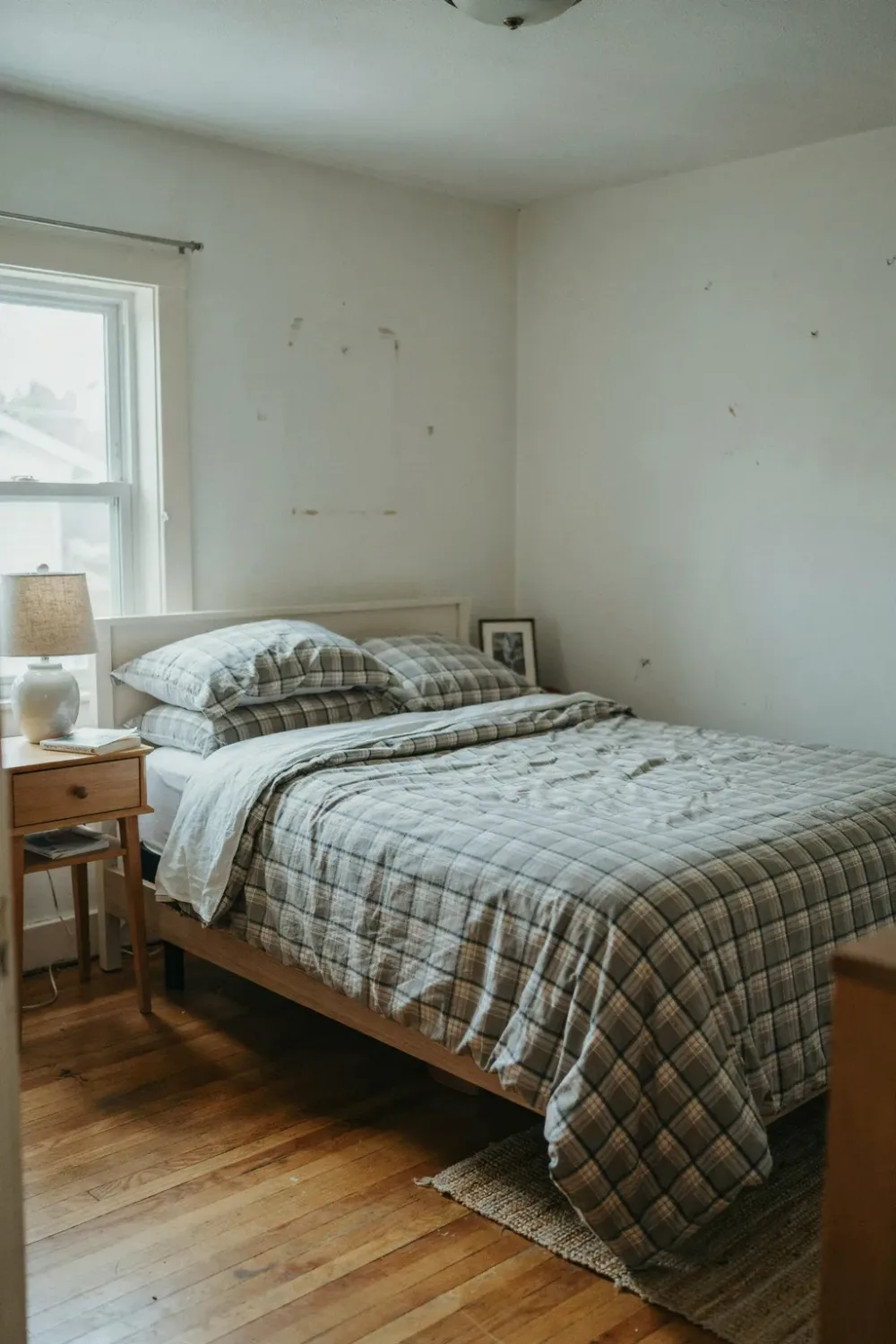
Winter bedding is felt, not seen. Brushed cotton or flannel sheets feel warm the second you get in — no cold-sheet shock — and make the whole bedroom read cozier. Keep colors pale (cream, soft grey, faded plaid) so the small room stays bright in short daylight.
One set is enough: wash and line-dry early in the day, or tumble on low, and it is back on the bed by evening.
23. Keep a Basket of Spare Blankets by the Sofa
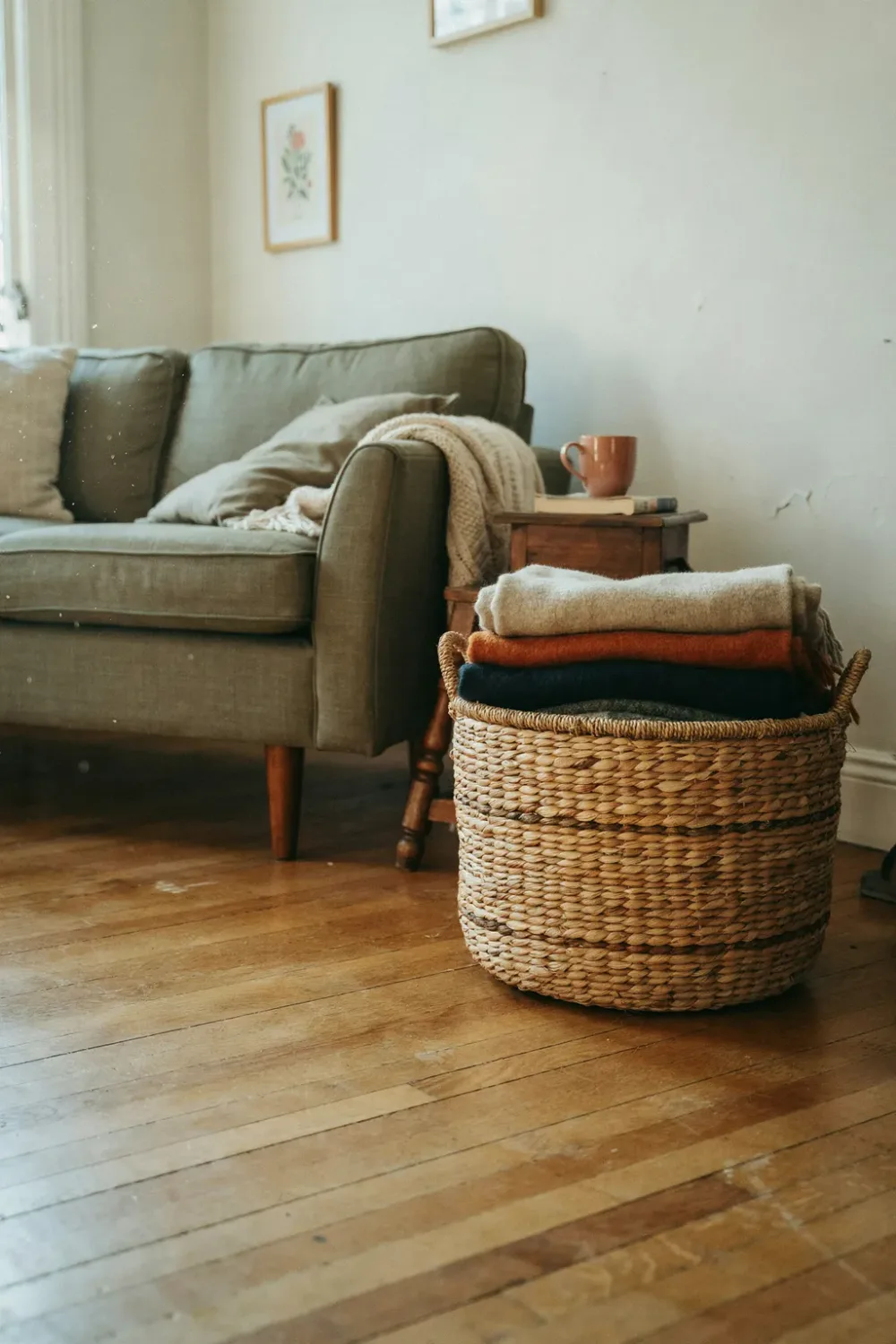
A woven basket holding two rolled spare throws beside the sofa says ‘settle in’ to guests and to you. In a small space it is also honest storage — the blankets live where they are used instead of overflowing a cupboard.
Roll, do not fold: rolled throws show their texture, fit more per basket, and look styled rather than stored.
24. Hang a Wreath Indoors, Over a Mirror or Door
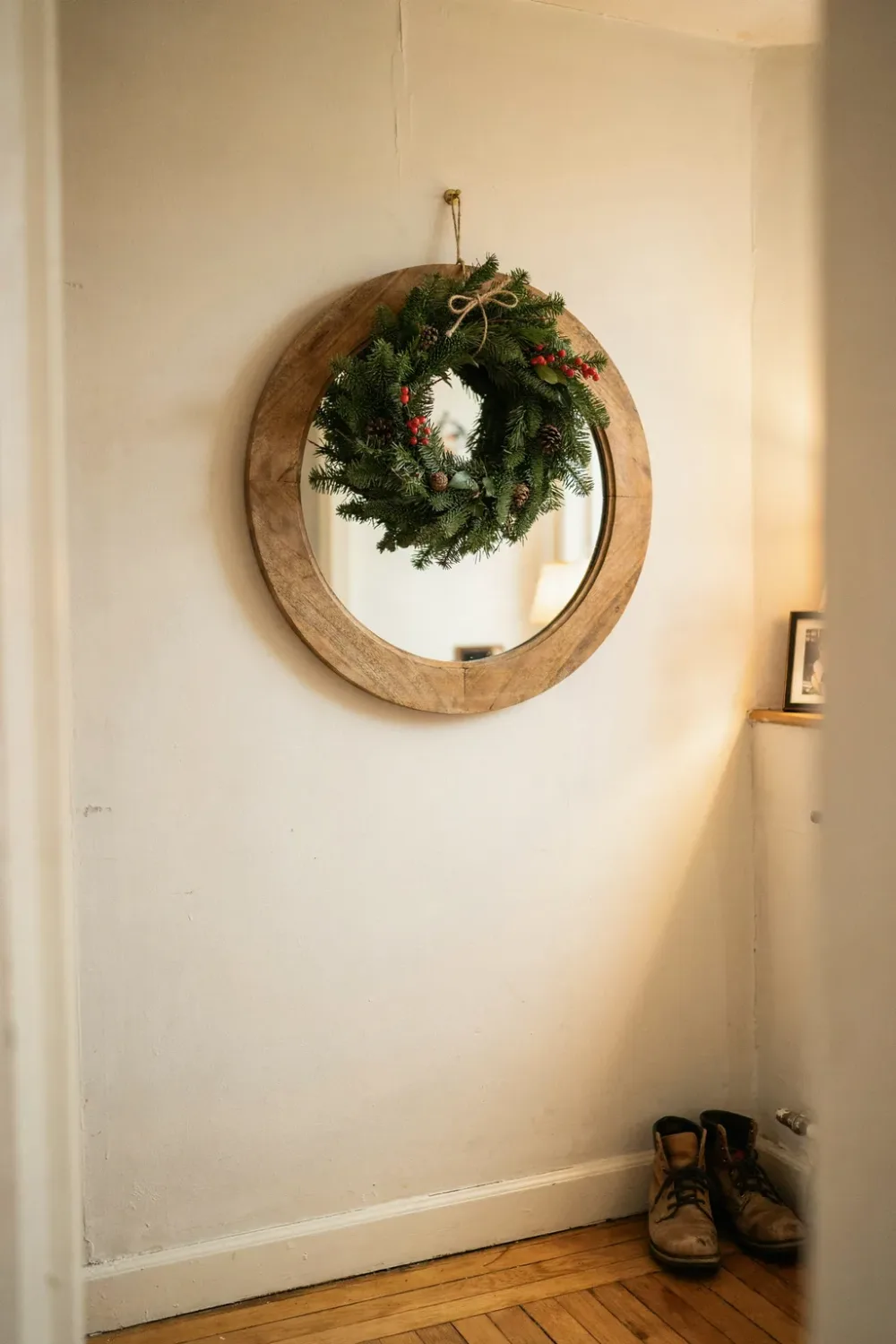
Wreaths are not only for the front door. Hung over a mirror, a bookcase, or an interior door, a simple greenery wreath brings winter’s shape inside where you actually live with it. Add a ribbon in your room’s accent color and nothing else.
Over a mirror is the stylist’s trick: the reflection doubles the greenery, and in a small room that doubling is free depth.
25. Give the Entry a Winter Welcome
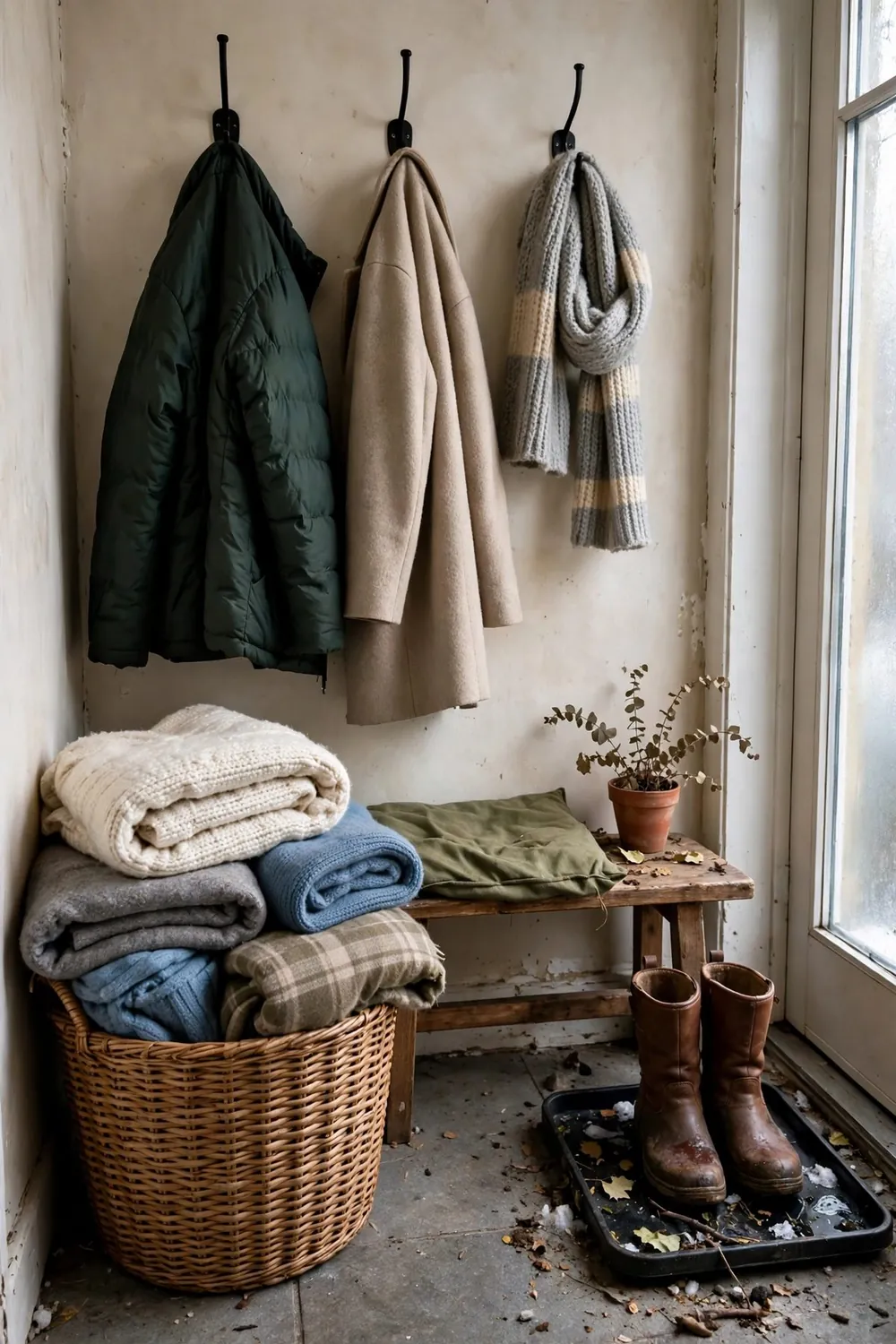
In a small home the entry is two square feet and first impressions. A washable runner in a warm tone, a boot tray to catch the weather, and one hook holding a scarf and a small wreath make coming home feel like an occasion.
Add a battery candle on a timer in the hallway and the home greets you with light at the darkest time of year — a tiny thing that changes winter evenings out of all proportion.
Winter Cozy in Every Other Room
The living room and bed get the glory in most winter guides. The rest of the house deserves its share.
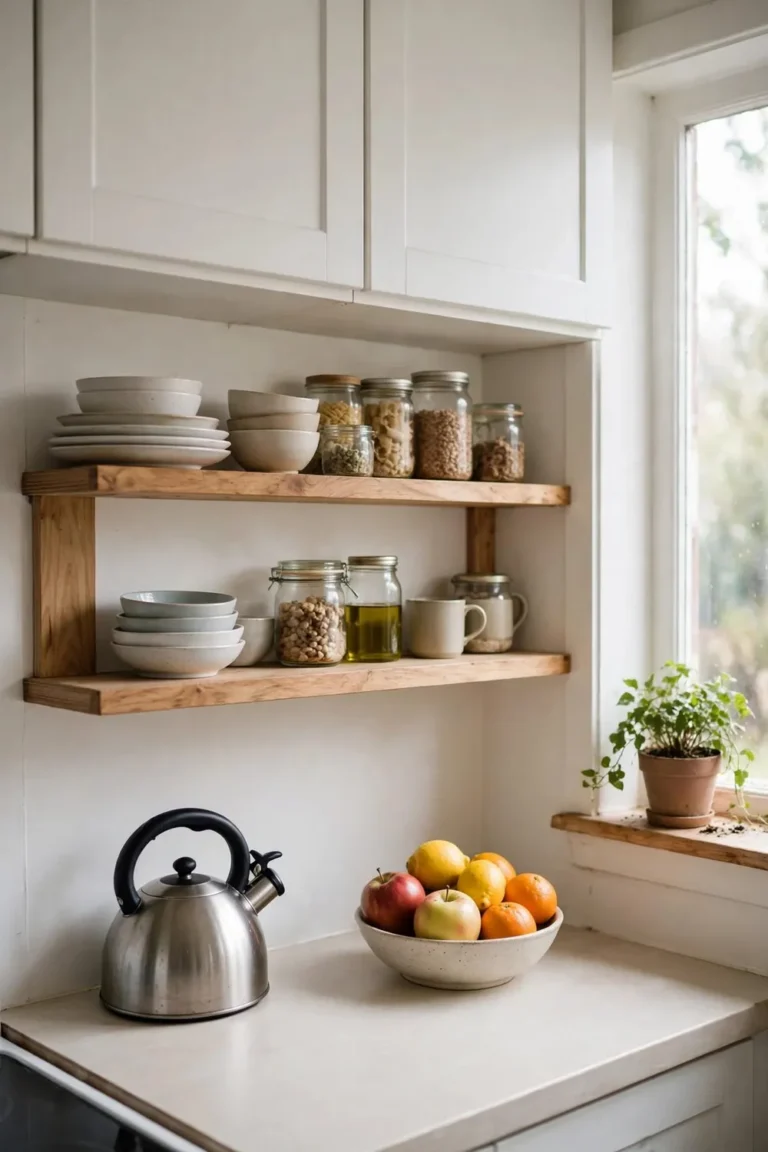
The kitchen. Winter kitchens run on warm light and hot drinks. Under-cabinet lights on in the afternoon gloom, the kettle station styled like a little café corner, a runner warming the floor where you stand to cook, and one evergreen sprig in a jar by the sink. Cooking in a glowing kitchen on a dark evening is one of winter’s genuine pleasures — set the room up to give it to you.
The bathroom. Cold bathrooms are winter’s rudest room. A plush bath mat, a towel warmed on the radiator, a flameless candle by the tub, and the eucalyptus bundle refreshed — five minutes of thought turns the chilliest room into a small steam-and-glow retreat. If you take winter baths, this room may become your nook’s rival.
The hallway. Hallways collect winter’s evidence — coats, boots, scarves, darkness. Give the hall its own warm bulb (people forget hallways have bulbs at all), a mirror to multiply it, hooks that keep the gear handsome, and the boot tray from Idea 15 standing guard. A welcoming hallway makes coming home in the dark feel like arriving somewhere kind.
Kids’ rooms. Winter layers with safety swapped in: extra blankets and the good rug, fairy lights on timers as a night glow, a basket of the current bedtime books, and window dressings that keep the cold out and the dark delicious. Children experience winter coziness as pure magic — it costs almost nothing and they remember it for decades.
Why Winter Cozy Works: A Little Honest Science
Understanding why these layers work helps you improvise your own versions forever.
Warmth is partly visual. People genuinely rate rooms with warm colors, wood, and soft textures as warmer than identical-temperature rooms in cool colors and hard surfaces — the brain reads the signals and adjusts the feeling. This is why the cream textiles and warm bulbs in this guide matter as much as the heating: you are decorating the thermostat your guests carry in their heads.
Low light signals safety and rest. Bright overhead light is the light of workplaces, shops, and being watched. Low, warm, peripheral light — lamps, candles, fairy lights — is the light of hearths and evenings, and it measurably helps people relax, talk longer, and settle. Small rooms amplify this because the glow reaches every wall. When you “ban the big light,” you are not being precious; you are using the oldest comfort technology humans have.
Layers mean control. A room with one duvet and one light setting gives you two comfort options. A room with throws, cushions, curtains, and three light layers gives you dozens — and control over your own comfort is itself comforting. Winter in a small space feels harsh when you are at the mercy of it; layered, it feels like a den you command.
Nature indoors offsets the sealed season. Heated winter air, closed windows, bare trees — the evergreen branch, the thriving plant, and the wooden bowl are small corrections to a real sensory deficit. You do not need a jungle. You need proof of life in the room, and your nervous system notices it more in February than in June.
Winter Mornings: Winning the First Ten Minutes
Evenings get the glory in winter decorating, but mornings are where the season is won or lost.
Set the stage the night before: slippers on the rug where your feet land, the robe on its hook, the kettle filled. Let the fairy lights’ timer greet the alarm — waking to a soft glow instead of a dark room and a harsh ceiling light is the difference between dreading a winter morning and padding happily into it. Keep one warm lamp on a timer in the kitchen too, so the first room you enter properly is already kind. Winter mornings built this way stop being the season’s tax and become its quiet ceremony.
How to Recreate the Look in One Weekend
Step 1 — Textile swap (Saturday morning). Covers, throws, bed layers, the rug layer. This is 60% of the transformation.
Step 2 — Light audit (Saturday evening). Walk the home at dusk. Everywhere that feels dark or harsh gets a lamp, candle, or fairy light decision. Note where you need a battery strand or a timer.
Step 3 — Green and scent (Sunday). Evergreen clippings, the plant shuffle to the best window, one bowl of winter nature, simmer pot ingredients into the pantry.
Step 4 — Entry control (Sunday). Boot tray out, coat hooks checked, blanket baskets placed. Winter enters through the front door; meet it there.
Going deeper: the rotation calendar. Small-space winter decorating fails on storage, not taste, so plan the season as three gentle rotations instead of one big installation. Late autumn: textiles only — throws out, cushions swapped, bed layered. Early winter: light — candles grouped, fairy lights up, lamps moved to the corners that darken first. Deep winter: scent and green — the small tree or vase of branches, cedar and clove in the air, everything else still. Each rotation fits in one storage box, takes under an hour, and keeps the home feeling like it is evolving rather than decorated once and endured. Photograph each stage; by the third winter you will have a personal playbook of exactly what your rooms love, and you will stop buying decorations your space has already voted against.
Real-Life Problems, Solved
These are the questions real people ask most when a room isn’t working yet, answered for this style.
Which blankets actually keep you warm without costing a fortune?
Wool or a wool blend is the warmest for its weight and stays comfortable over time. A quilted down-alternative blanket is a good budget choice. Fleece is warm but can pill and build up static. For the bed, a blanket layered between the sheet and duvet adds more warmth than a heavier comforter on top.
The floor is freezing. How do I fix that?
Put a rug with some pile under the bed, wide enough to stick out on both sides, or a runner along the side you get up on. A soft rug is the first thing your feet touch every winter morning, and it makes the whole room feel warmer.
My partner runs hot and I’m always cold. How do we share one bed?
Use two separate duvets of different weights, the Scandinavian way, plus a breathable protector on the warmer side. You keep one bed and stop fighting over the covers.
Budget Guide: Where to Save, Where to Spend
Save on: evergreen clippings (often free), fairy lights, cushion covers, bowls of foraged nature, and simmer pot ingredients (they are literally kitchen scraps). Second-hand wool blankets and throws are superb quality for very little money.
Spend a little more on: one genuinely warm, beautiful throw and good flannel sheets. Winter is long, you will use both daily, and quality natural fibers out-warm and out-last synthetic bargains. A timer plug for your lights is a tiny spend with a huge daily payoff.
Mistakes to Avoid
Too many decorations for the square footage. Winter small-space rule: every cozy item in, one ordinary item out of sight. The room should feel full of warmth, not full of things.
Cool white light bulbs. Nothing kills winter cozy faster than blue-toned light. Check every bulb is warm (2700K or lower) before the season starts.
Blocking heaters and radiators with textiles. Throws and curtains near heat sources are a safety issue and they steal your warmth. Keep the glow and the heat in their own lanes.
Ignoring the entryway. Winter mess enters daily — boots, coats, gloves. A small space without an entry system spreads that mess across every room.
Saving the cozy for guests. Winter is long and you live here. Light the candle on a Tuesday. The best version of a small home is the one you actually enjoy daily.
Your Winter Small-Space Checklist
- Two layered throws on the sofa in one color family
- Winter cushion covers on (boucle, velvet, knit, faux fur)
- Rug layered where feet land most
- Heavier curtains hung high and wide
- Bed layered: flannel sheets, duvet, quilt, throw
- No overhead light after dark — lamps and glow only
- Fairy lights on a timer at dusk
- Candle cluster on a tray, reflected for extra glow
- One extra lamp in a dark corner
- Evergreen branches in a vase
- Plants grouped at the brightest window
- Bowl of pinecones, cinnamon, and dried oranges
- Blanket baskets by sofa and bed
- Boot tray at the door
- Summer textiles boxed away in exchange
Frequently Asked Questions
How do I make a small space feel cozy for winter without buying much?
Rearrange what you own: layer every textile you have in the rooms you use most, move lamps so evenings run on low light, and gather anything green or natural you can find into the living area. A simmer pot of kitchen scraps adds the scent for free. Cozy is mostly arrangement, not acquisition.
What colors feel warmest in a small winter room?
Warm whites and creams as the base, with deep green, burgundy, warm brown, and touches of brass or copper as accents. These colors glow under lamplight and make a small room feel like a den rather than a box.
Are fairy lights and candles enough light for evenings?
For relaxing — reading in a chair with a lamp, watching a film, talking — yes, with one good reading lamp where you actually read. Keep task areas (kitchen counters, desks) properly lit, and let the rest of the room glow.
How do I keep a studio apartment feeling like separate rooms in winter?
Rug layers and light. A distinct rug and its own warm light source for the “bedroom” zone and the “living” zone makes each feel like a room. A layered, made bed versus a lamp-lit sofa corner reads as two spaces, especially in the evening.
What is the best winter upgrade for a small rental?
Flannel sheets, a timer for your lamps and fairy lights, and a boot tray. All three are cheap, portable, damage-free, and together they change how the whole season feels at home.
Final Thoughts
Remember, too, that you are allowed to build this slowly. A throw this payday, the fairy lights next, the flannel when the cold truly arrives — winter is long, and a room that grows cozier week by week gives you something to look forward to in the darkest month. The finished room matters less than the ritual of making it, one warm layer at a time, in the home you actually live in.
Save this for later
Save this list before the first cold snap and do the weekend plan in order — textiles, light, green, entry. Winter in a small space, done this way, stops feeling like something to endure and becomes the coziest season of the year.
Keep reading: 22 Small Living Room Ideas That Make Your Space Feel Bigger for the year-round layout your winter layers will sit on, and 22 Cozy Fall Bedroom Ideas to Welcome Sweater Weather for the autumn version of this cozy layering.

One Comment