21 Sage Green Bedroom Ideas for a Calm, Earthy Retreat
Sage green is the color bedrooms were waiting for. It is soft enough to sleep in, interesting enough to style around, and — this is the part people get wrong — it can be genuinely warm, not cool and grey, when you pair it with the right woods, creams, and light.
A warm sage bedroom feels like waking up in a garden cottage in the best possible way: calm, green, and wrapped in soft textures. This guide shows you how to build that feeling layer by layer, whether you are painting the whole room or just bringing sage in through bedding and small touches.
We will start with getting the sage itself right, then layer in bedding, wood and metal partners, light, and the finishing touches that keep sage elegant instead of flat.
In this guide
- Getting the Sage Right: Warm, Not Cold
- Bedding & Soft Layers
- Furniture, Light & Finishing Touches
- More Sage Ideas to Complete the Retreat
- Sage in Every Situation: Light, Size & Renting
- Sage Bedding Fabrics: Choosing & Caring
- Sage & Sleep: Setting the Room for the Evening
- How to Recreate the Look Step by Step
- Real-Life Problems, Solved
- Budget Guide: Where to Save, Where to Spend
- Mistakes to Avoid
- Your Warm Sage Bedroom Checklist
- Frequently Asked Questions
Getting the Sage Right: Warm, Not Cold
Sage goes wrong in one direction — too grey, too blue, too cold. These first decisions keep yours on the warm, living side of green.
1. Choose a Sage With Yellow Undertones
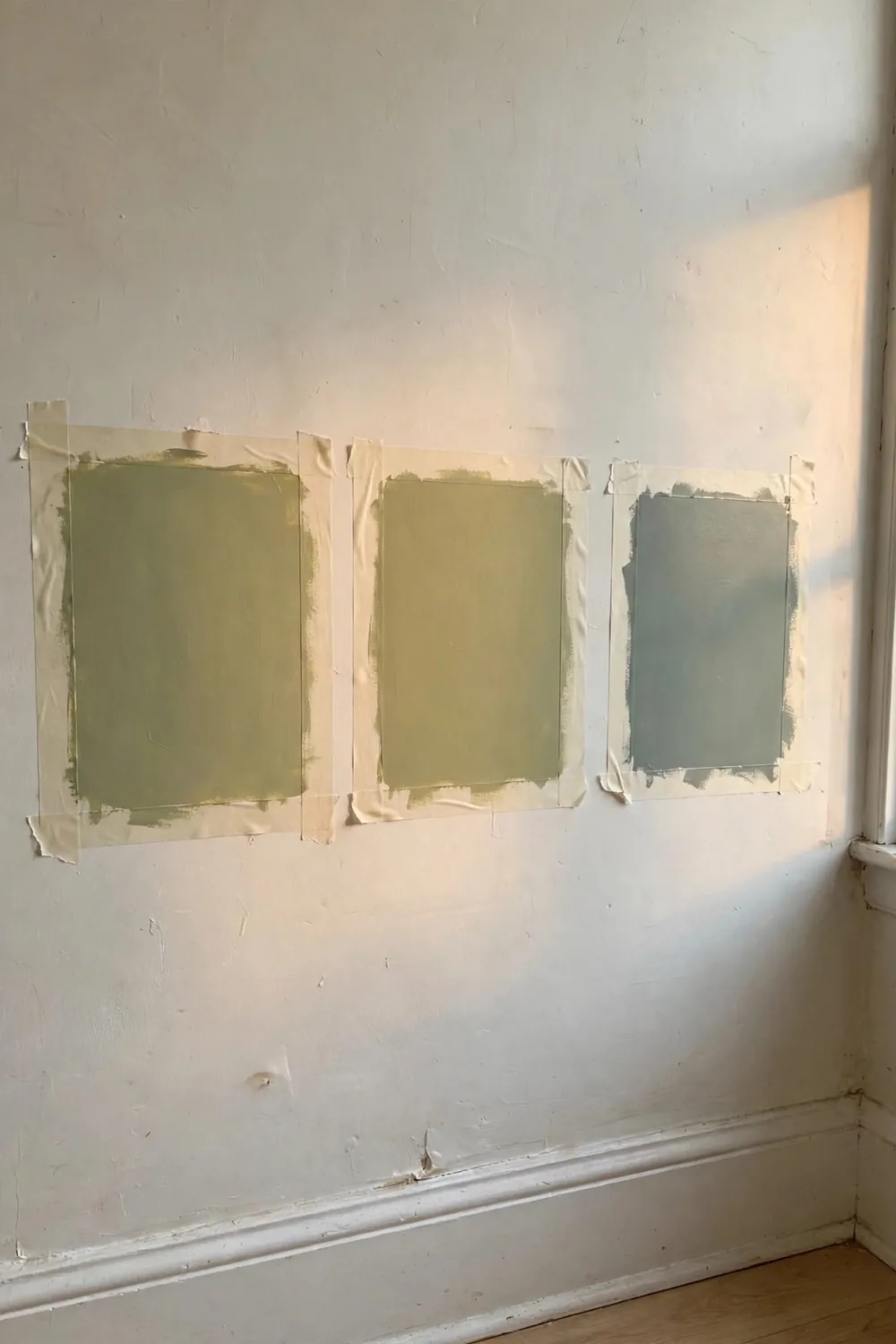
Sage paints and fabrics vary enormously. Warm sages lean slightly yellow or olive; cool sages lean grey-blue. Hold samples against warm wood and cream in your room’s actual light — warm sage will glow, cool sage will look minty or flat.
Paint names to look for include words like “sage,” “eucalyptus,” and “herb” in warm-leaning brands; always test a big swatch and check it morning and evening before committing.
2. Pair Sage With Cream, Never Stark White
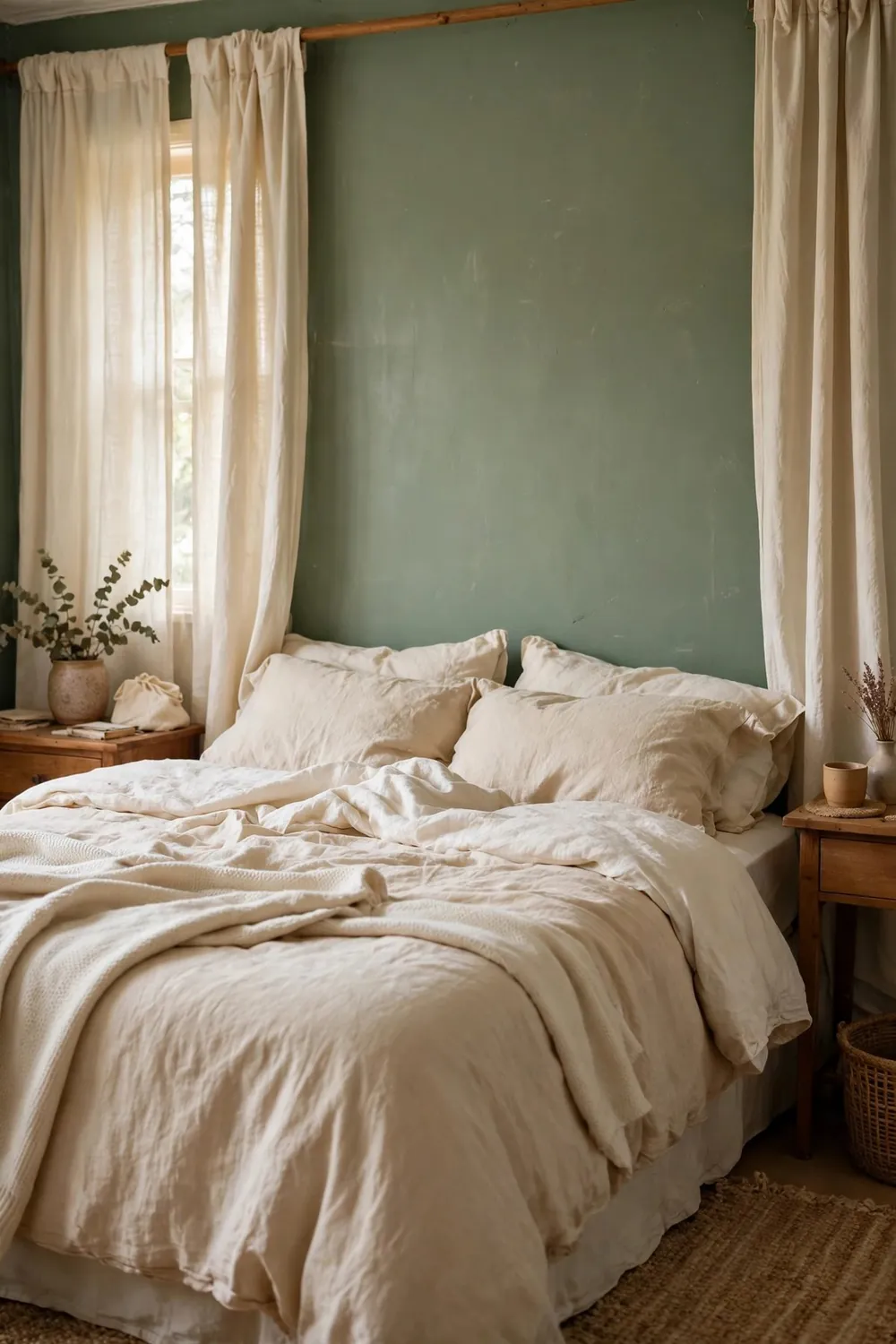
Bright white against sage can turn the green cold and the white harsh. Cream, ivory, warm white, and soft oatmeal warm the whole pairing up and give that elegant, expensive feeling. Use cream for bedding, curtains, and trim, and let sage be the color.
This single swap — cream instead of white — is the difference between a sage room that feels like a spa hotel and one that feels like a hospital corridor.
3. Decide How Much Sage the Room Wants
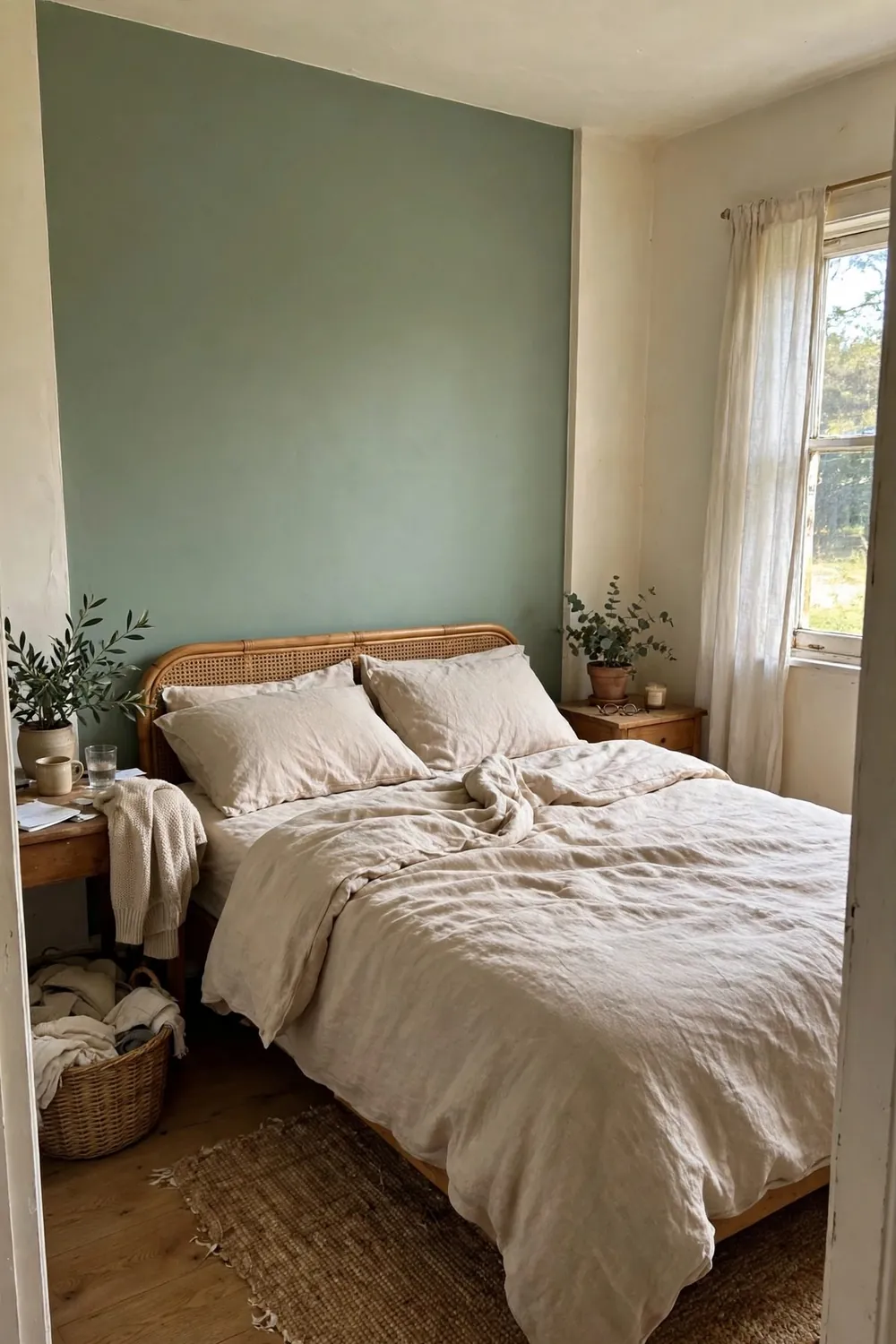
There are three happy doses. Full sage: walls in sage, bedding in cream — immersive and cocooning. Half sage: bedding and curtains in sage, walls warm cream — flexible and renter-friendly. Accent sage: cushions, a throw, one chair, art — a whisper of green in a neutral room.
Small, dark bedrooms often suit the half dose best; large bright rooms can carry the full painted version beautifully. There is no wrong answer, only the one that suits your light.
4. Bring in Warm Wood — Sage’s Best Friend
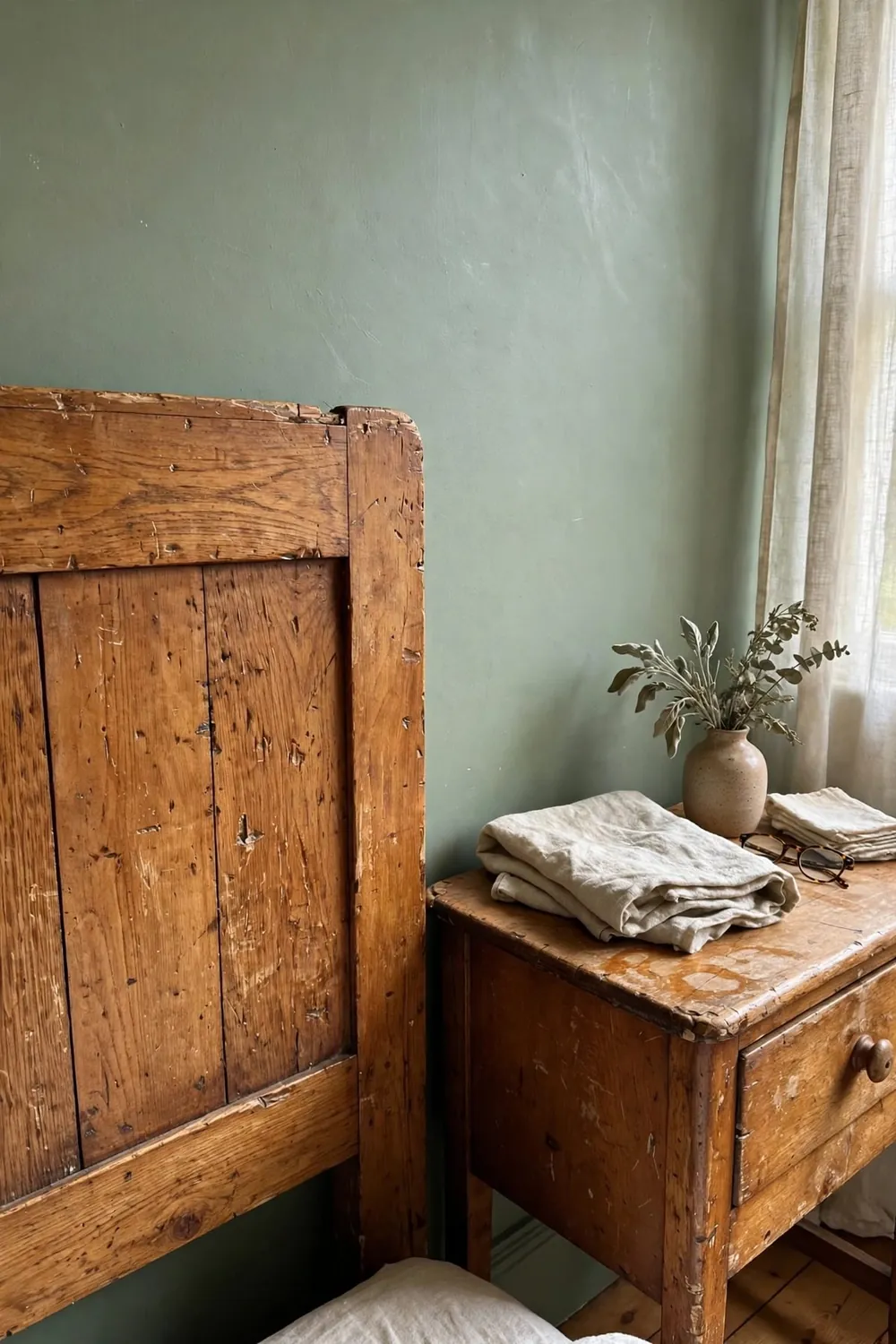
Honey oak, warm walnut, rattan, and aged pine all pull the yellow warmth out of sage. A wooden headboard, rattan bedside lamps, or a warm-toned dresser anchors the green and stops it floating.
If your furniture is cool grey or black, even one warm wood piece — a stool, a tray, a picture frame — shifts the whole room’s temperature.
Bedding & Soft Layers
The bed is the biggest surface in the bedroom, so bedding is where a sage scheme succeeds or fails.
5. Layer Sage Linen With Cream Sheets
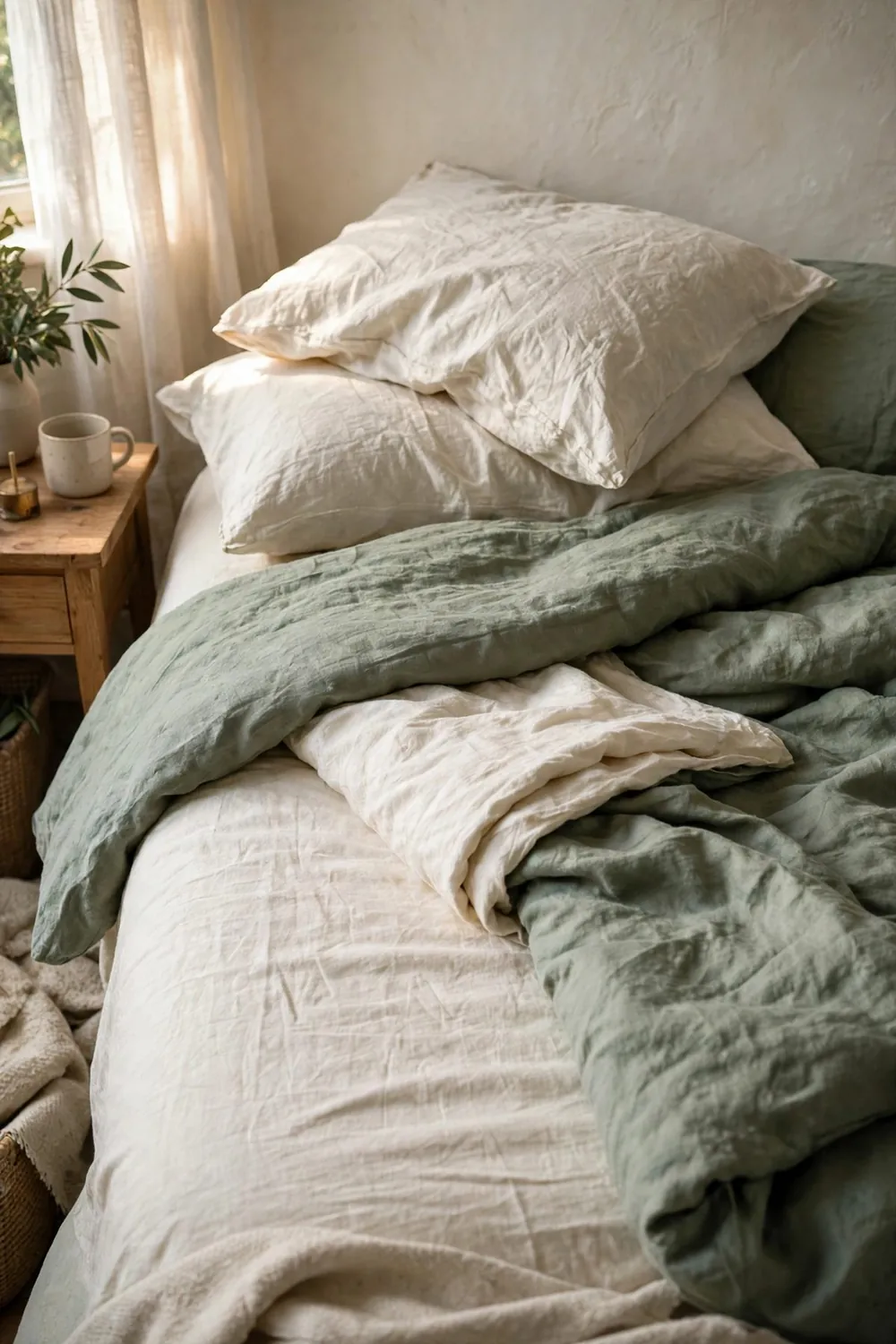
A sage linen duvet over cream sheets is the signature look: rumpled, soft, breathable, and elegant without trying. Linen’s natural texture forgives a less-than-perfectly-made bed, which suits real life wonderfully.
Wash linen a few times before judging its softness — it improves with every wash, for years.
6. Mix Three Textures Minimum
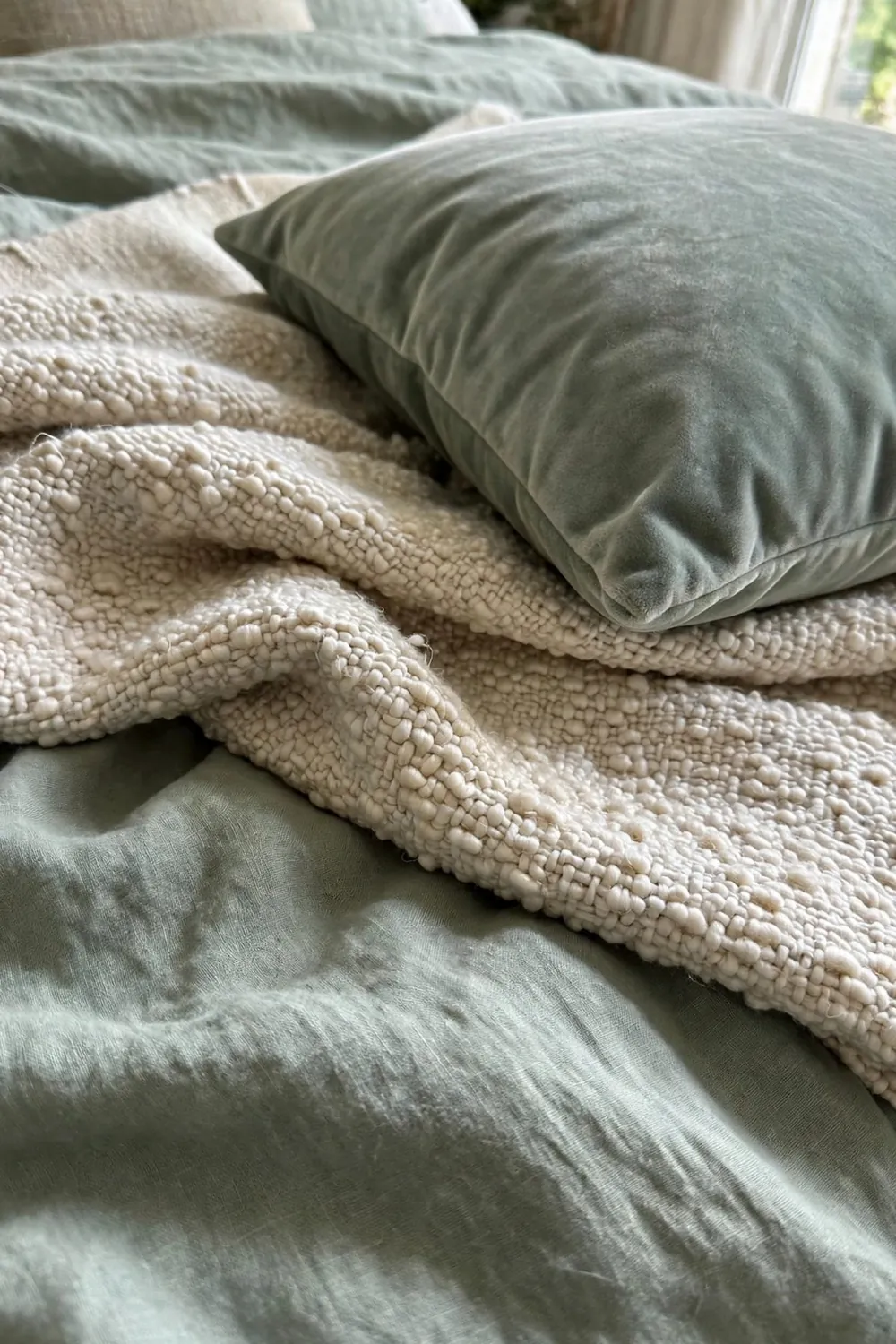
Sage is a quiet color, so texture does the talking. Aim for three textures on the bed: smooth (cotton sheets), slubby (linen duvet), and nubby (a boucle or knit throw or cushions). That trio keeps a gentle color scheme from ever looking flat.
Add a fourth in winter — velvet or faux fur — and the bed becomes the coziest object you own.
7. Add One Deeper Green Accent
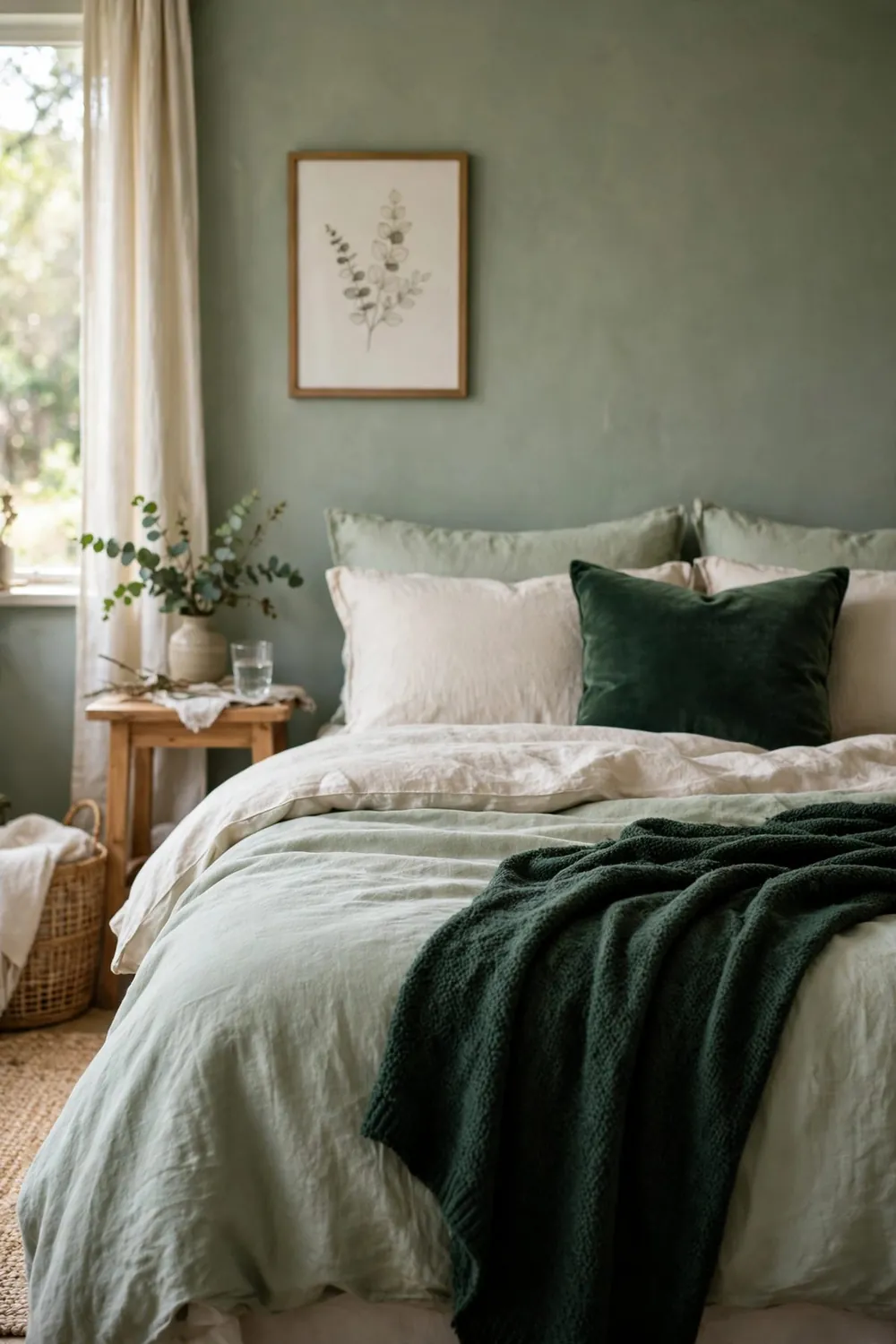
A cushion or throw in forest, olive, or deep emerald gives sage depth — light colors need a darker relative in the room to look intentional. Keep it to one or two pieces so the calm stays.
This also gives you a place to land the eye: sage, deepened once, then cream. A tiny three-step gradient that stylists use constantly.
8. Choose Cushions in Cream, Clay, and Natural Stripe
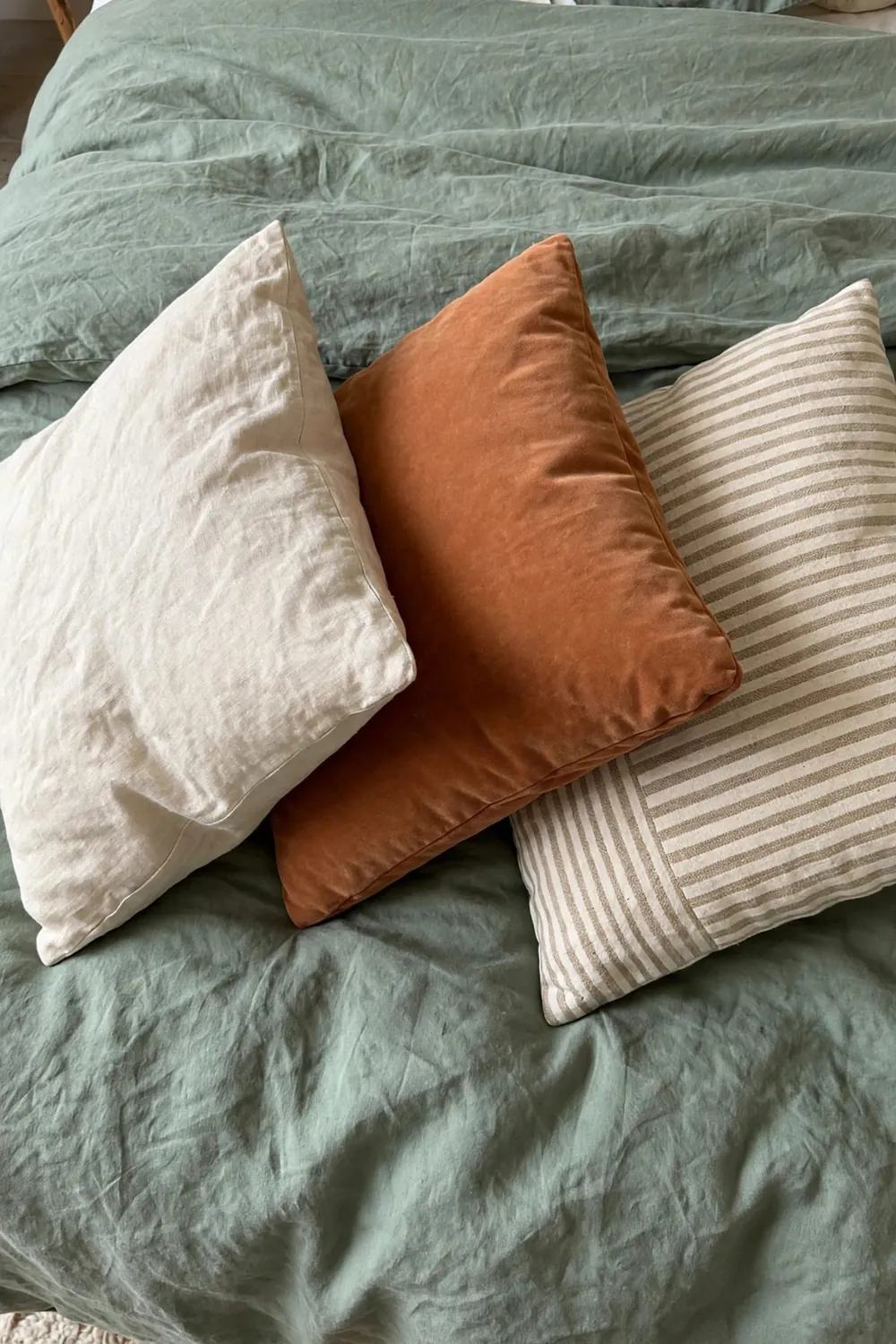
Beyond the deep-green accent, cushions in cream, soft clay, terracotta-tinged beige, or a natural linen stripe warm the bed and connect sage to skin-friendly earthy tones. These are the colors of pottery and sunlight, and they make sage feel sunlit too.
Avoid bright white and grey cushions here — they cool the whole arrangement down.
Furniture, Light & Finishing Touches
With color and bedding set, the room’s bones and glow finish the job.
9. Pick Warm Metals: Brass, Bronze, Aged Gold
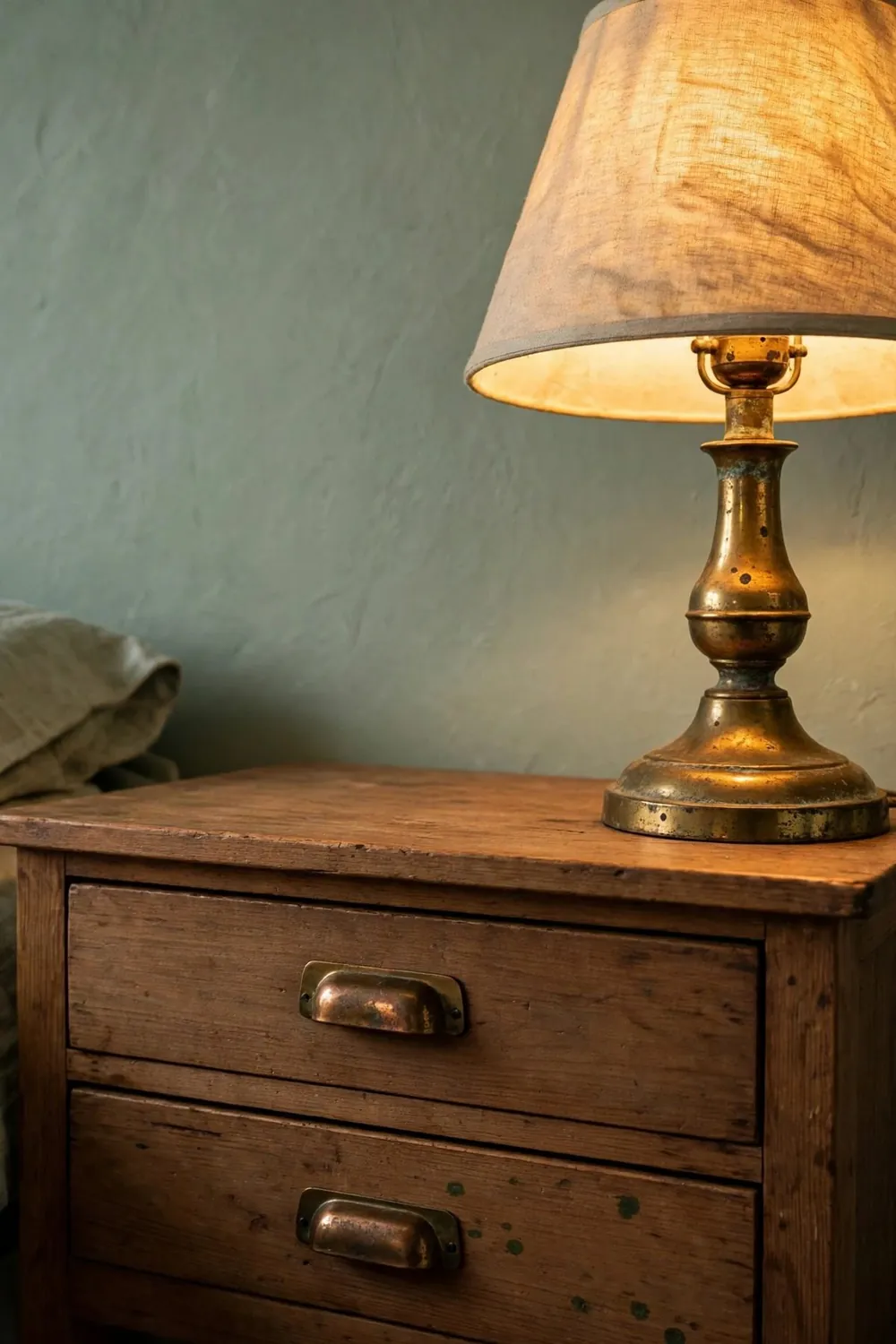
Cool chrome fights sage; warm metals flatter it. Brass lamp bases, aged-gold frames, and bronze handles bring a quiet glow that reads elegant instantly. You do not need much — lamp, mirror frame, and drawer pulls in the same warm metal family unify the room.
10. Light It Like Evening in a Garden
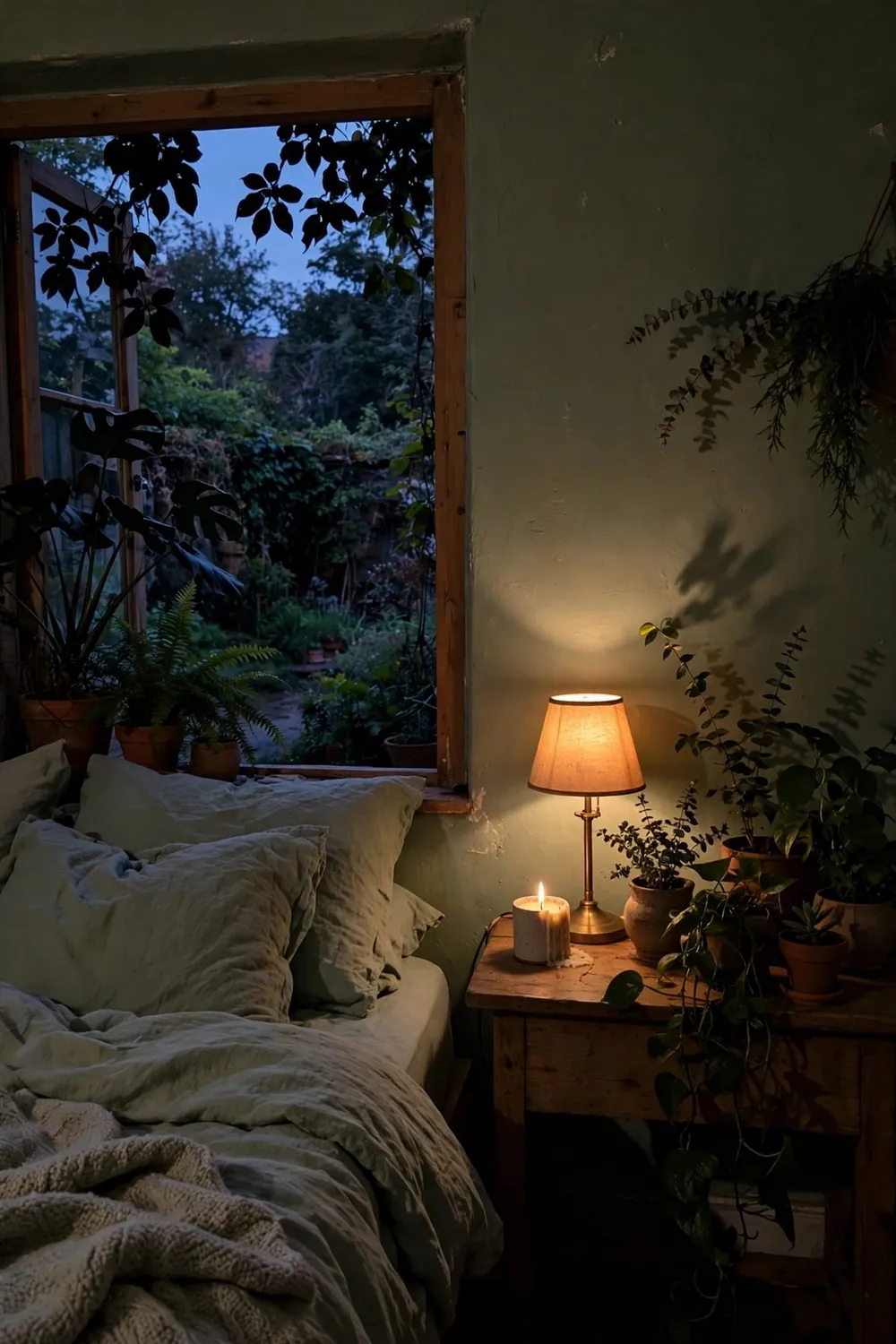
Sage deepens beautifully under warm light. Choose 2700K bulbs, fabric or rattan shades that diffuse glow downward, and if you can, one candle (real or flameless) for the last hour of the day. Cool daylight bulbs will undo your warm paint choice every single evening.
11. Hang Botanical Art — But Not Too Matchy
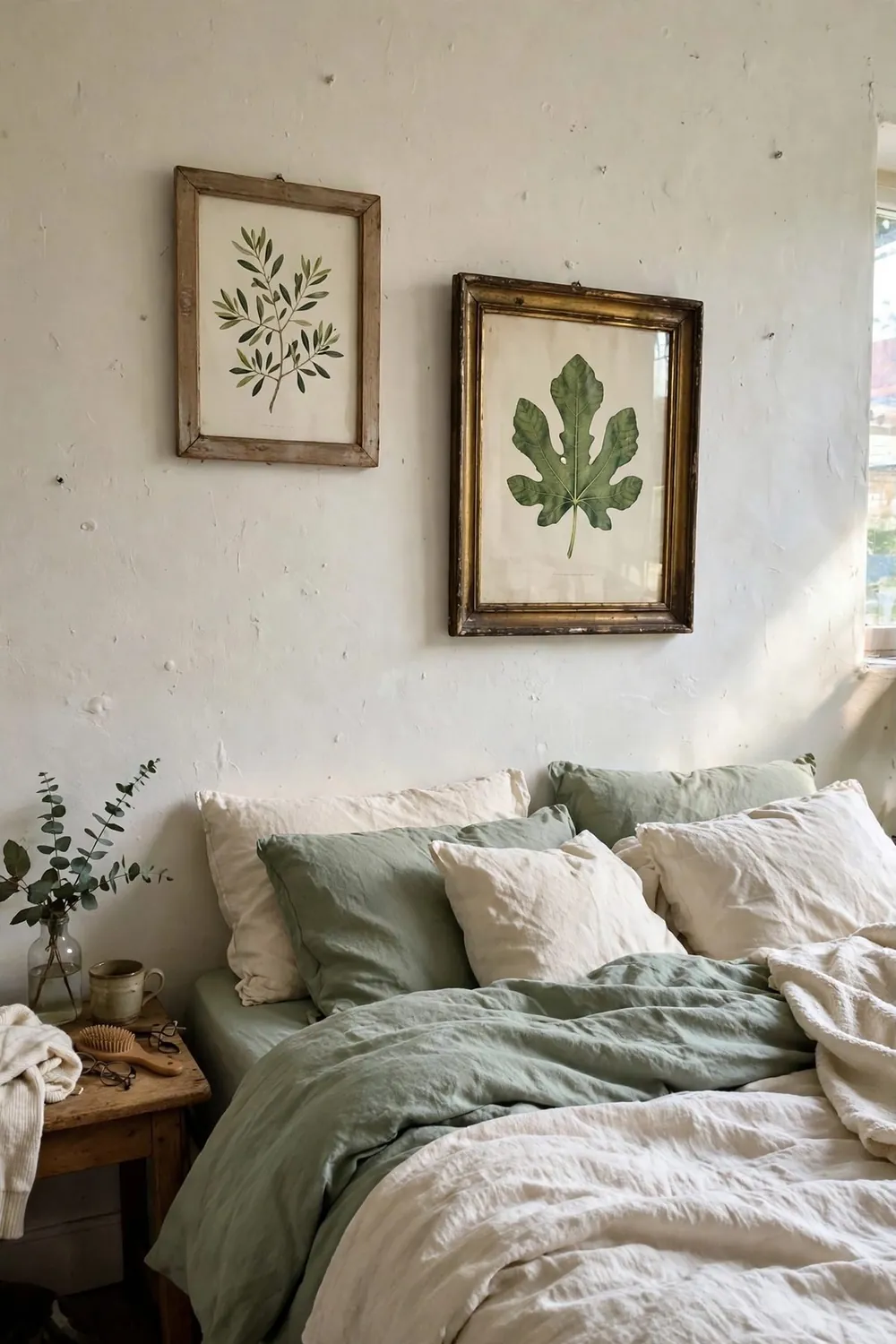
Leaf prints, soft landscapes, and herbarium-style botanical art echo the garden feeling without literal repetition. Choose art with cream backgrounds and a mix of greens — including shades darker and lighter than your sage — so the walls feel collected, not coordinated from a single shopping trip.
12. Add a Living Plant With Soft Leaves
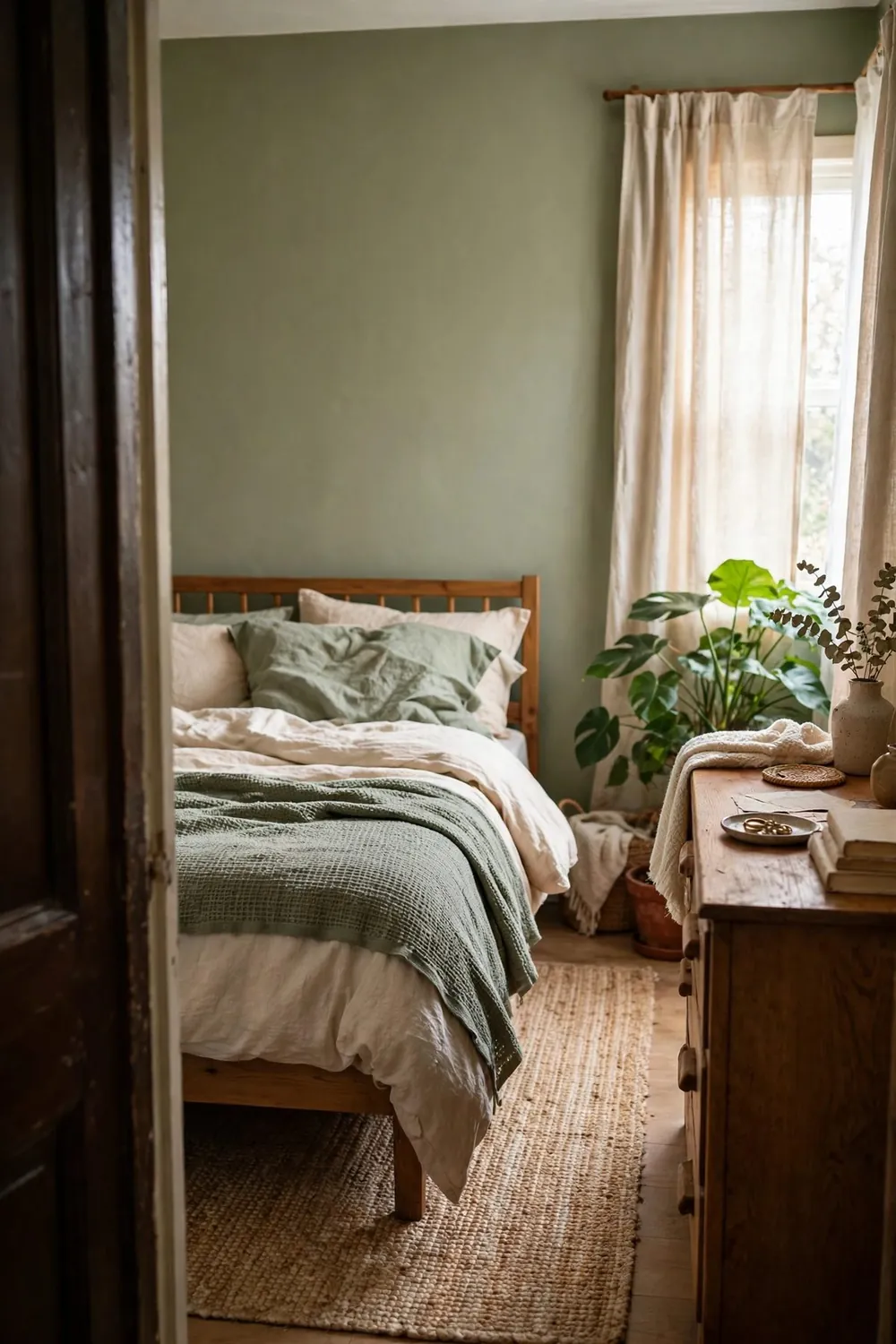
A plant in a sage room is almost a joke — of course there is a plant — but choose softly-shaped ones: a trailing pothos on the dresser, a fern on the nightstand, an olive-style tree in the corner. Their living green makes the painted green feel like a choice nature agreed with.
13. Finish With Natural Fibers Underfoot and Overhead
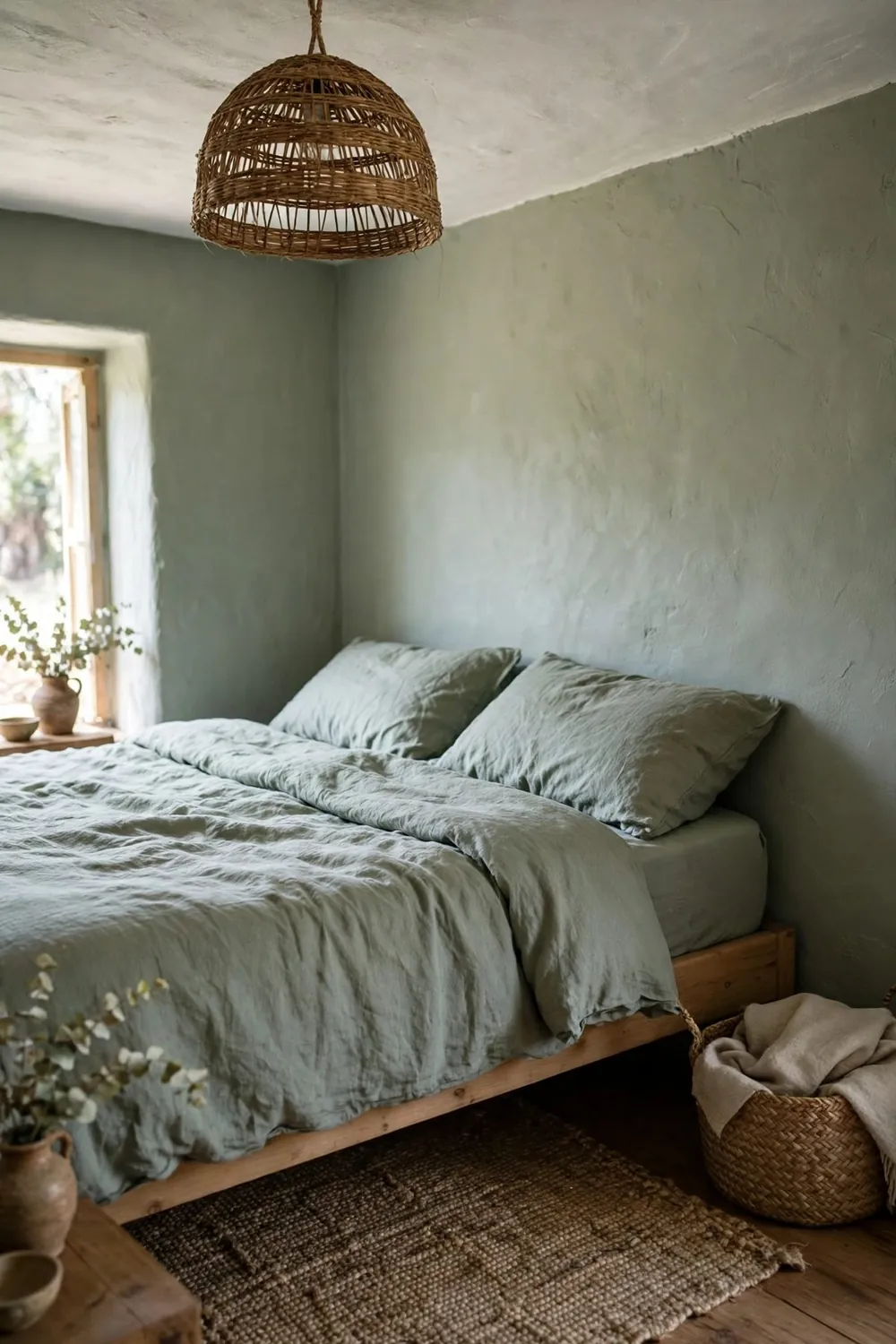
A jute, wool, or woven cotton rug in warm natural tones grounds the room, and linen curtains in cream keep the windows soft. Natural fibers are sage’s extended family — the room feels like one ecosystem when everything in it could have come from a field.
More Sage Ideas to Complete the Retreat
Still collecting ideas? These final additions round out the list — each one tested against the same rule as everything above: it has to earn its place in a real home, on a real budget.
14. Whisper Sage on the Ceiling
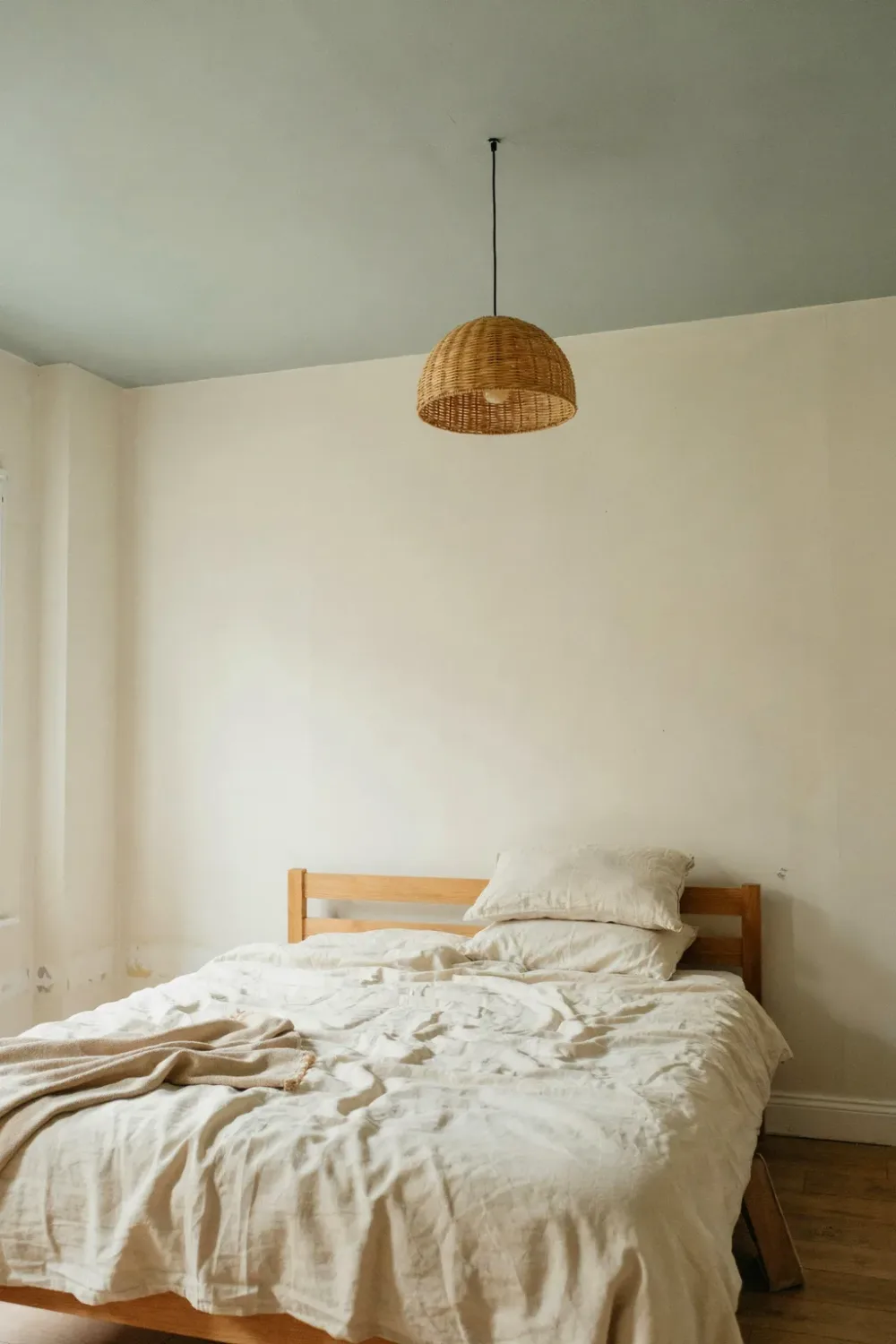
Painting the ceiling the palest version of your wall sage — or sage-tinted white — wraps the room in color without darkening it. In a bedroom you spend half your time looking at the ceiling, and a soft green-white overhead feels like lying under light tree canopy.
Use the paint card’s lightest shade for the ceiling when walls carry the mid-tone. It is a one-tin experiment with an outsized effect on how ‘designed’ the room feels.
15. Add a Sage Bench at the Foot of the Bed
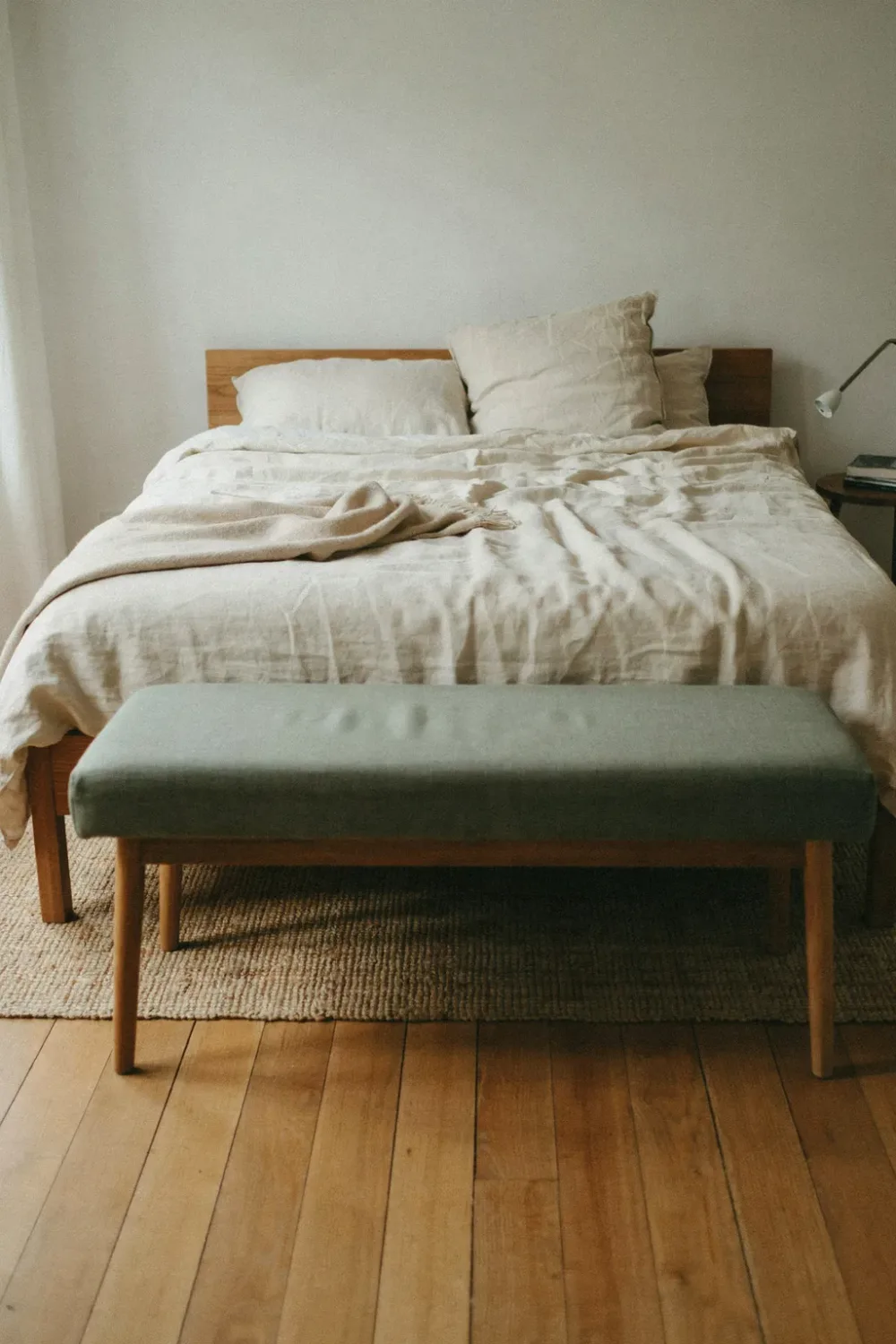
A narrow upholstered bench in sage velvet or linen at the foot of the bed gives the room its finishing layer — a place for the folded throw, tomorrow’s clothes, and sitting to put on shoes. It also visually extends the bed, making the room feel longer.
Second-hand benches are plentiful and re-covering one is a staple-gun afternoon. Choose a fabric a shade deeper than the bedding so the bench anchors the palette.
16. Mix Sage-and-Cream Striped Cushions
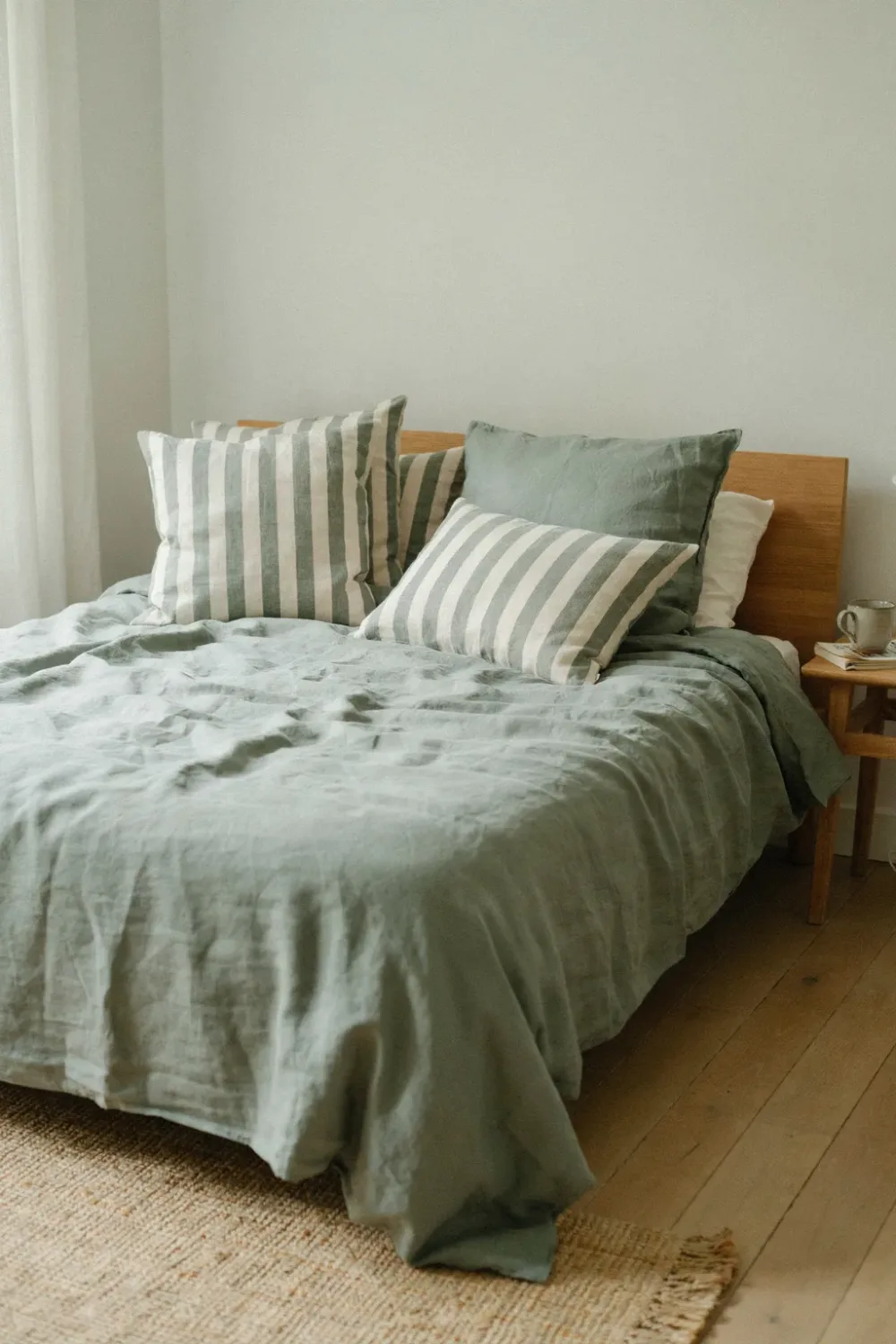
A classic ticking stripe in sage and cream is the pattern this palette was born for. Two striped cushions among your plains break up solid color, add a tailored note, and nod to country-house bedrooms without turning rustic.
Keep stripes to one pair only — stripes compete loudly, and a single repeated pattern reads intentional where three read busy.
17. Hang Botanical Prints in Thin Wood Frames
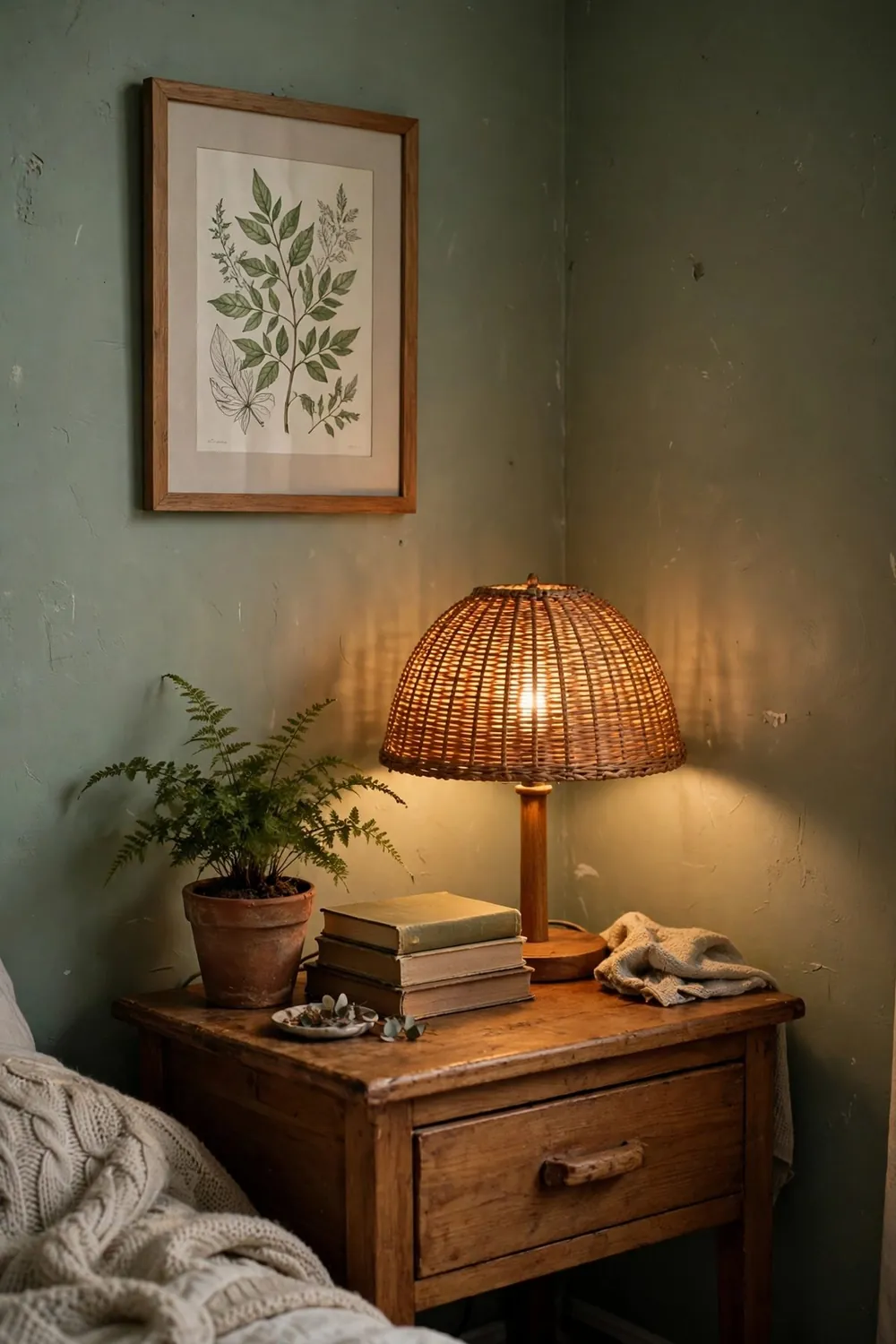
Pressed-fern and botanical study prints echo sage’s garden origins and fill the wall above the bed or dresser with quiet detail. Thin natural-wood frames keep them light; arrange three in a row or a loose grid of four.
Printable botanical sets cost a few dollars and thrifted frames a few more — this is the highest-value wall in the sage bedroom recipe.
18. Fold a Cream Quilt Over Sage Bedding
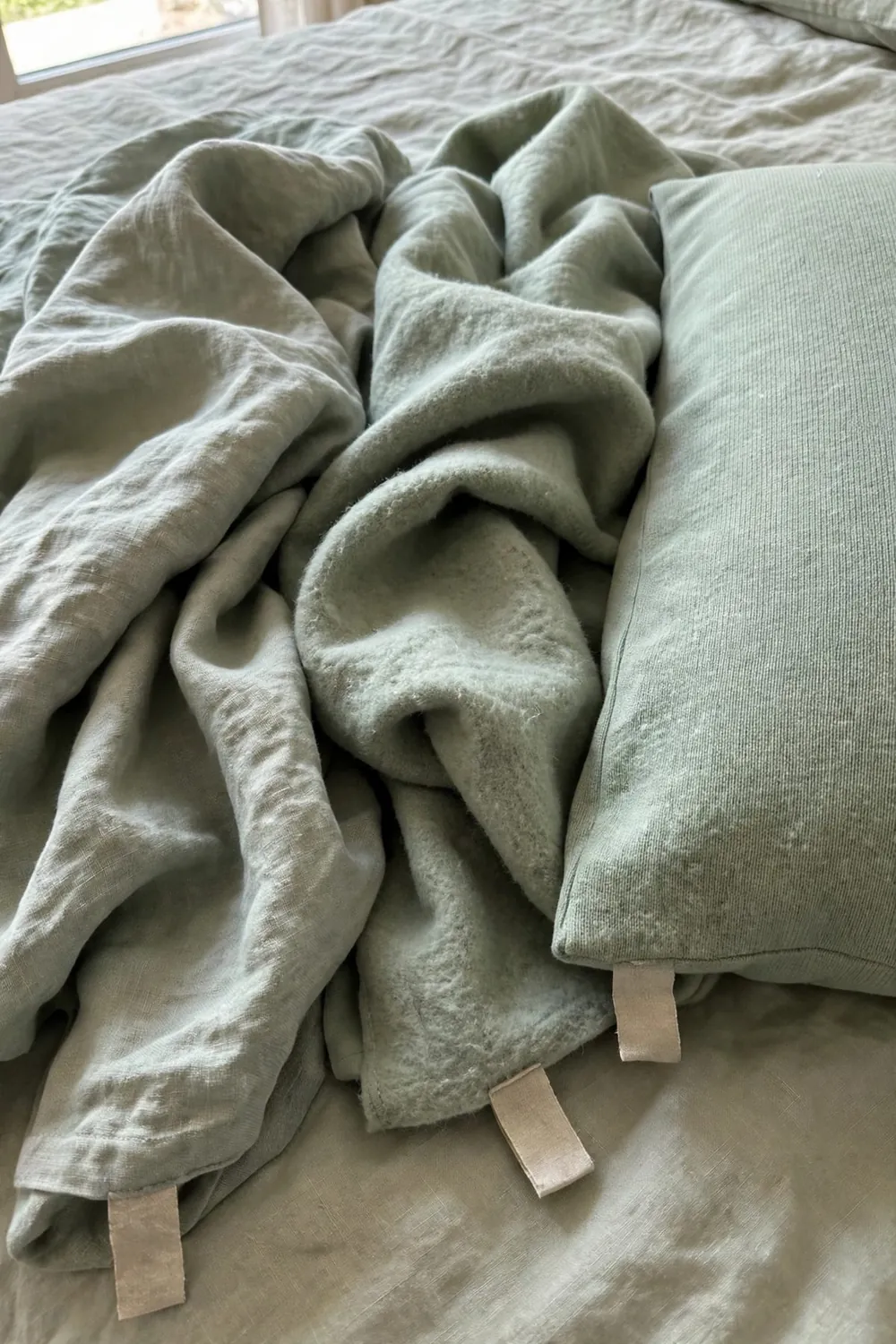
Reverse the usual order: sage duvet beneath, a cream quilt folded across the lower third. The cream band brightens the bed, adds a second texture for the eye, and gives sleepers a lighter layer for warm nights.
A quilt with visible stitching or a subtle diamond pattern earns its place — flat, plain layers can look like a hotel bed, while stitched texture reads handmade and calm.
19. Keep Extra Blankets in a Seagrass Basket
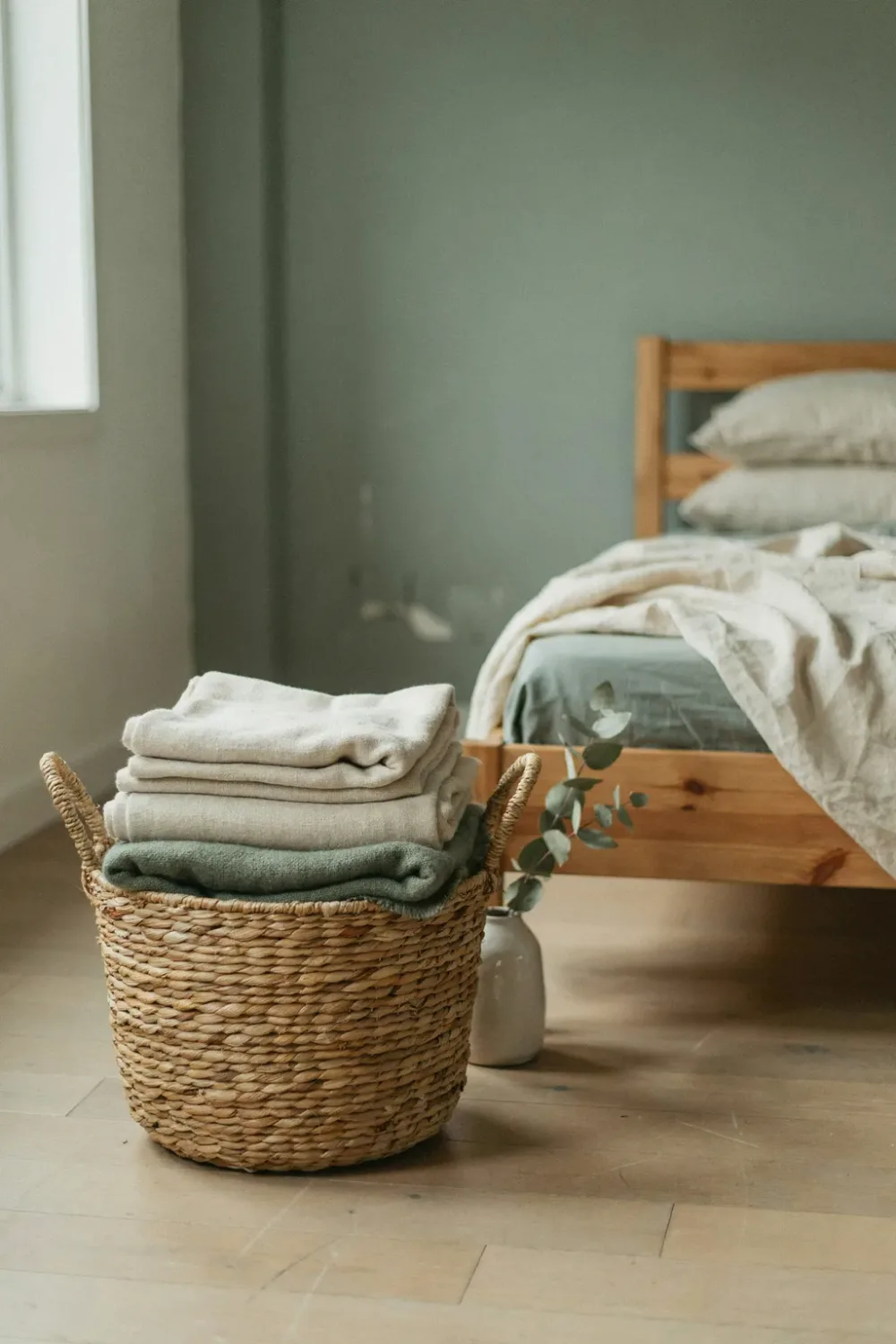
A lidded or open seagrass basket beside the bed holds the spare blanket and the book pile, and its honey tone is sage’s warmest natural partner. It also gives the room one organic, irregular shape among all the rectangles.
Choose a basket slightly larger than you think you need — blankets are bulky, and a basket that swallows them whole always looks tidier than one that overflows.
20. Warm the Green With Aged Brass
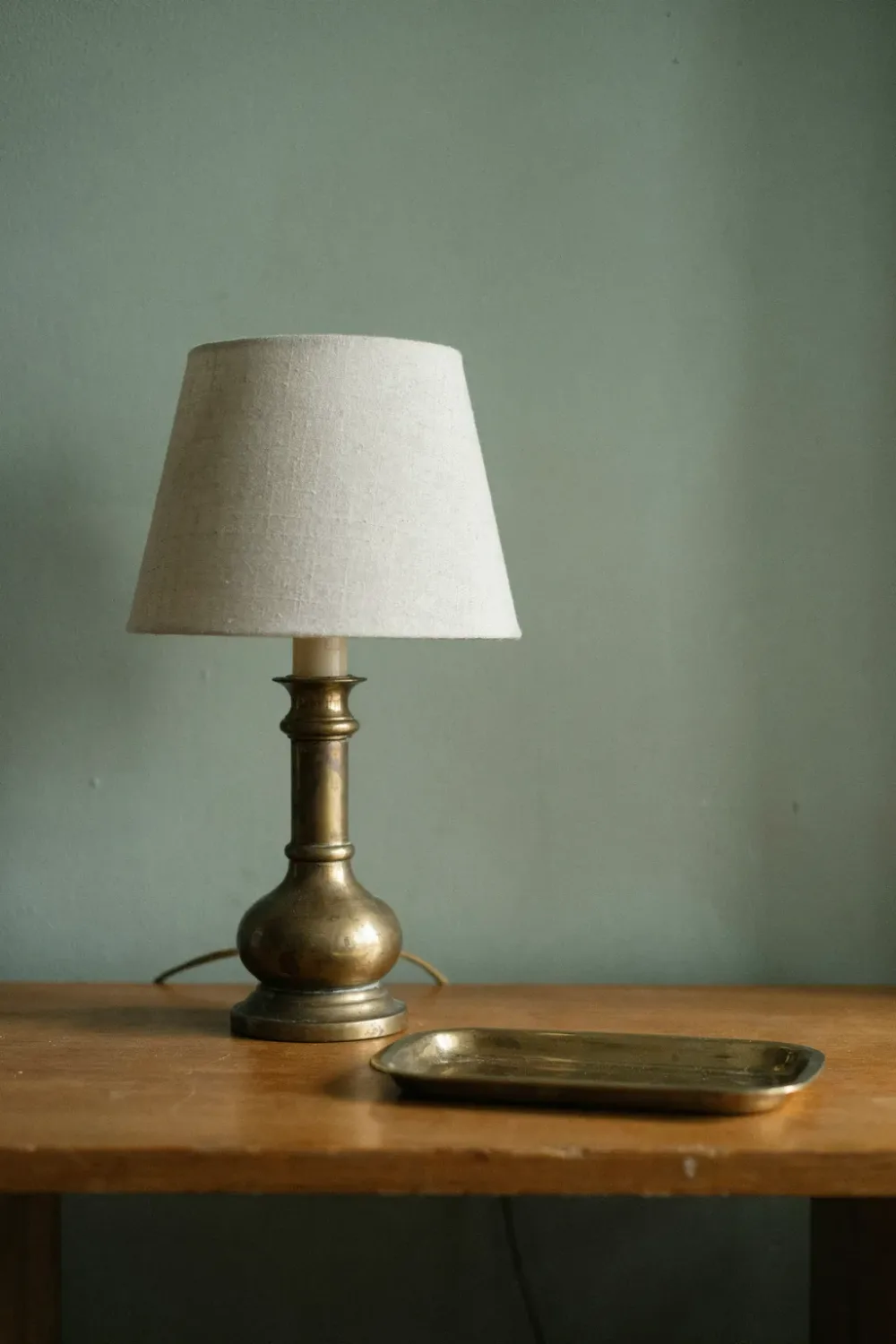
Sage is a cool-leaning green, and aged brass or antique gold is its perfect counterweight: lamp bases, picture frames, a small tray on the nightstand. The metal’s warmth stops sage feeling chilly in north-facing light.
Three brass touches are enough. More than that and the room tips toward formal; the goal is a warm glint here and there, like late sun through leaves.
21. Finish the Nightstand With a Green Glass Vase
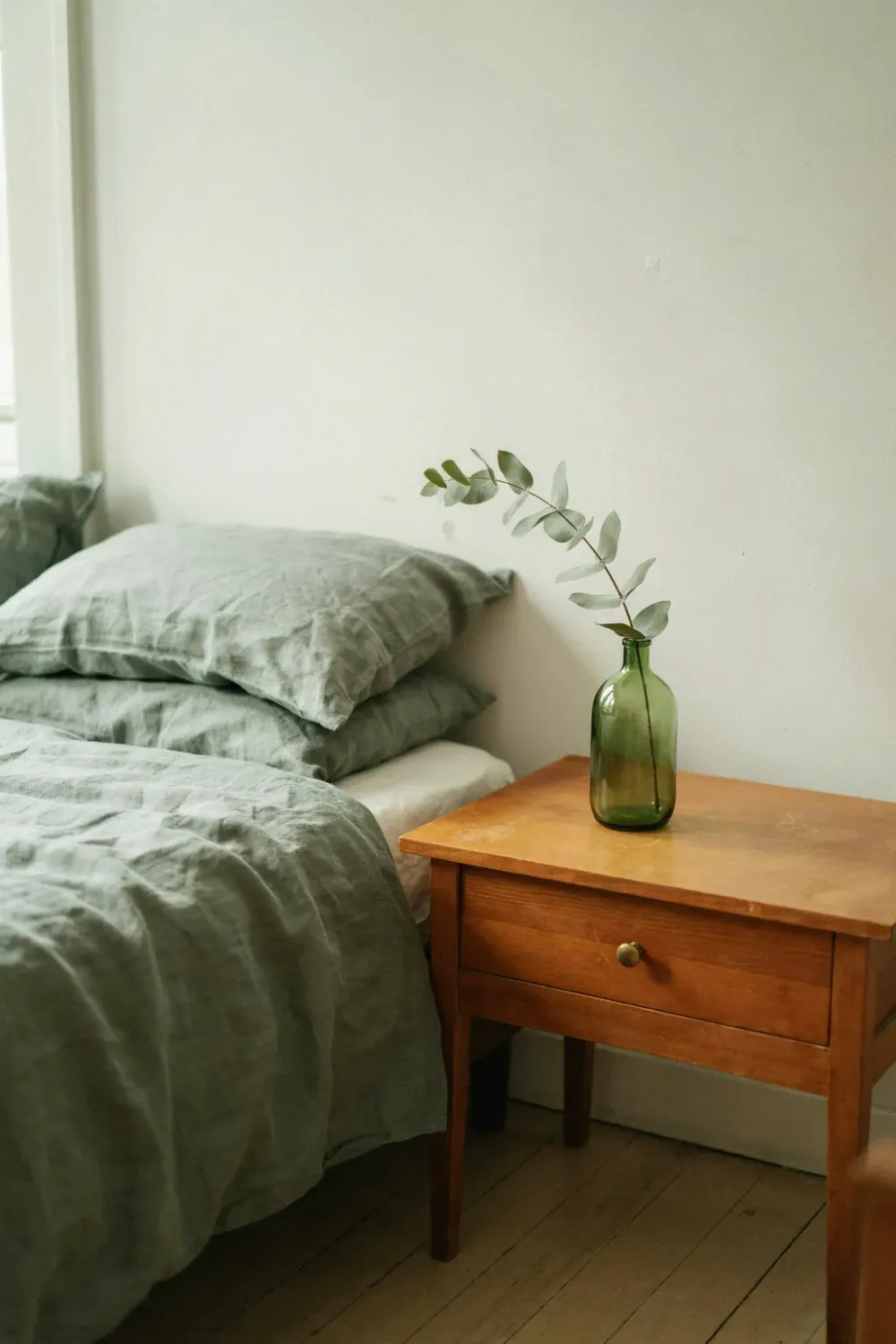
One small green-glass vase — with a single stem, a sprig of eucalyptus, or even standing empty — ties the nightstand to the palette and catches morning light beautifully. It is the smallest idea in this list and the one guests photograph.
Vintage and charity shops are full of green glass for pennies. Choose a shape you love; in this company, the color is already doing the coordinating.
Sage in Every Situation: Light, Size & Renting
Sage behaves differently in every room it enters. Here is how to adjust for yours.
North-facing bedrooms. North light is cool and a little grey, and it will pull your sage toward the blue side all day. Counter it with the warmest sage you can find — one with real yellow in it — and double down on the warm partners: honey wood, cream everywhere, brass, and bulbs at the warm end of the scale. In a north room, take the half dose (sage textiles, cream walls) unless your windows are large; the cream walls will catch what light there is and hand it back to the room kindly.
South-facing bedrooms. Warm golden light flatters every sage, including the cooler, greyer ones that fail elsewhere. South rooms can carry the full painted dose beautifully, and the green will shift through the day from fresh in the morning to deep and restful at dusk — a living wall. If anything, protect against too much warmth at midday: linen curtains to diffuse the sun keep the room serene rather than glaring.
Small bedrooms. Sage in a small room should mostly live on the bed. Cream walls, sage duvet and cushions, warm wood in the nightstands, one plant — the room reads calm and fresh instead of enclosed. If you paint, consider the wall behind the bed only: a sage backdrop with cream on the other three walls gives depth without closing in. Keep the furniture light in tone and the floor as visible as you can; pale floors make small sage rooms float.
Rentals and the no-paint path. Sage is one of the easiest colors to rent with, because its best delivery vehicle is bedding. A sage linen duvet, cushions, and a throw over cream walls that already exist deliver roughly ninety percent of this look. Add the brass lamp, the wooden tray, the botanical print in a frame leaned (not hung) on the dresser, and the plant. When you move, the whole sage bedroom folds into two boxes — and works in the next home’s light after one fresh swatch test.
Sharing with a partner who is unsure about green. Start with the accent dose and the natural argument: sage reads as a neutral to most eyes within a week, especially grounded with wood and cream. Let them choose the deep accent piece and the art. Green bedrooms have an unusually high conversion rate among skeptics, mostly because of how people sleep in them.
Sage Bedding Fabrics: Choosing & Caring
Since bedding carries the sage in most rooms, its fabric decides how the color behaves — sage in different fabrics is almost different colors.
Linen. The connoisseur’s sage. Linen’s matte, slightly irregular surface softens green into something that looks grown rather than dyed, and its rumple is part of the aesthetic. Sage linen reads warm and organic, pairs with every wood, and improves for a decade. Wash cool, dry with some air, and never iron the life out of it — the creases are the charm.
Washed cotton. The practical twin: softer from day one, cheaper, easier to wash hot, and its sage runs slightly cleaner and brighter than linen’s. If your household washes bedding weekly at high temperatures, washed cotton is the grown-up choice and nobody will know the difference from across the room.
Cotton sateen. A gentle sheen that makes sage look more formal and slightly cooler. Sateens suit elegant, tailored bedrooms — the hotel version of sage. If your sage scheme leans romantic-rumpled, sateen fights it; if it leans crisp and composed, sateen is your fabric.
Flannel and brushed cotton (winter). Sage flannel sheets are the cold-season upgrade — the color goes deeper and cozier in the brushed finish, and the bed becomes hard to leave. A sage flannel set under a cream linen duvet is the connoisseur’s winter bed: warm at the skin, calm to the eye.
Care rules that protect the color. Greens fade toward yellow-grey with harsh detergents and hot sun drying. Wash sage textiles inside out, on cool, with gentle detergent, and dry in shade when you can. Rotate two duvet sets if the bed is a daily sunbather. Ten years of soft sage is entirely possible; it just asks for kindness in the wash.
Sage & Sleep: Setting the Room for the Evening
A sage bedroom’s colors are chosen for waking hours too, but its finest hour is the last one of the day.
The dusk check. An hour before bed, walk in and look at the room by lamplight only. Sage should have deepened to something soft and shadowy, the cream gone honey-colored, the wood warm. This is the version of the room your nervous system reads as “safe to rest,” and it is worth tuning deliberately: if the room looks grey at dusk, the bulbs are too cool; if it looks flat, add the candle or the second lamp.
The wind-down layer. Keep one ritual object in the room — the book on the nightstand, the hand cream in the wooden tray, the carafe of water. Sage rooms feel calm partly because green asks so little of the eye; the ritual completes the message. Screens leave the room or go face-down in the drawer; a green room with a glowing phone in it is just a room.
The morning payoff. Wake in the same room at dawn and the sage is pale and fresh again — garden light without leaving the bed. People consistently describe sage bedrooms as the ones they wake up happiest in, and the color’s double life — deep at dusk, fresh at dawn — is the reason this guide exists.
How to Recreate the Look Step by Step
Step 1 — Test the sage. Swatch paint or order fabric samples; check against cream and warm wood in morning and evening light.
Step 2 — Set the base. Cream bedding, curtains, and rug — the warm neutral frame. If painting, do the walls now.
Step 3 — Add the sage layer. Duvet, cushions, or walls, depending on your dose. One shopping trip, one afternoon.
Step 4 — Place the deep accent. One forest-green cushion or throw. Step back and feel the room gain depth.
Step 5 — Warm the details. Brass lamp, wooden tray, plant, botanical art. Small pieces, big temperature change.
Going deeper: the 24-hour paint protocol. Sage shifts more between light conditions than almost any green, so give it a full day before you commit. Paint two coats on a large foam board or poster sheet, let it dry completely — sage dries darker than it looks wet — then move the board around the room across a day: beside the window at breakfast, in the lamplit corner at night, against your actual bedding at noon. Photograph it in each spot; the camera exaggerates the grey or yellow undertone your eye forgives. Check it against your skin in the mirror, too, since this is the color you will wake up inside. Only then buy the full tin. This one-day patience has saved more sage bedrooms than any color chart, because the sage that wins is always the one chosen in your light, not the shop’s.
Real-Life Problems, Solved
These are the questions real people ask most when a room isn’t working yet, answered for this style.
My sage bedroom still feels flat. What’s missing?
Usually one of three things. The rug is too small: it should reach 45–60 cm (18–24 in) past each side of the bed, so your feet land on it when you get up. The art above the bed is too small: aim for roughly two-thirds the width of the headboard. Or the green only lives in one spot. Repeat sage, or its deeper cousin, in three places such as the bedding, a cushion or curtain, and a plant or print, and the room suddenly looks finished.
Do I really need all those bedding layers?
No. A bed that takes ten minutes to make every morning stops getting made. The calm sage look only needs cream sheets, one linen duvet, two pillows you sleep on, two decorative cushions at most, and a throw folded at the foot. That is enough texture to look styled, and it still takes two minutes to make.
Can I add a bolder color, like red, to a sage room?
Yes, but use a muted version and keep it small. Rust, terracotta or brick red sit beautifully next to warm sage, while a saturated tomato red tends to feel loud in a room meant for rest. Try it in one or two cushions or a small print first, and live with it for a week before buying anything bigger.
Budget Guide: Where to Save, Where to Spend
Save on: paint (one room of sage needs little and mid-range paint covers beautifully), cushion covers, thrifted wooden furniture, and botanical prints (printable art in thrifted frames looks genuinely high-end). Sage is a forgiving color — inexpensive versions of it still read soft and calm.
Spend a little more on: the linen duvet and your main lamp. The duvet is the room’s largest surface and linen rewards you for a decade; the lamp sets the evening temperature of the whole scheme every single night.
Mistakes to Avoid
Cool sage plus cool light. Grey-leaning sage under daylight bulbs is the most common way this look fails. Test both together before you commit to either.
Matching everything exactly. A bed, curtains, rug, and walls all in the identical sage looks like a paint accident. Vary the depth — lighter, mid, and one deep green — for a layered, designed effect.
Forgetting warmth at floor level. A cool grey rug or bare cold floor undermines the whole scheme. Warm natural fibers underfoot are structural, not decorative.
Too much sage for a north-facing room. North light is cool and weak; a full sage paint job can go muddy. In north rooms, take the half dose — sage textiles against warm cream walls.
Your Warm Sage Bedroom Checklist
- Sage tested in the room’s real light, morning and evening
- Cream (not stark white) as the partner neutral
- Sage dose chosen: full, half, or accent
- Warm wood present in at least one real piece
- Linen duvet layered over cream sheets
- Three textures on the bed
- One deep green accent piece
- Warm metal (brass/bronze) repeated in 2–3 places
- 2700K bulbs and soft fabric or rattan shades
- Botanical art with cream background
- One living plant with soft leaves
- Natural fiber rug in warm tones
Frequently Asked Questions
What colors go best with sage green in a bedroom?
Cream and warm white first, then warm woods, clay and soft terracotta, brass, and one deeper green (forest or olive) as an accent. Dusty blush also pairs beautifully with sage for a softer, romantic version of the scheme.
Is sage green a warm or cool color?
It sits in the middle, which is why testing matters. Sages with yellow or olive undertones read warm; sages with grey or blue undertones read cool. For a cozy bedroom, choose the warm-leaning version and pair it with cream and wood.
Can a sage bedroom work in a small or dark room?
Yes — use the half or accent dose. Keep walls warm cream, bring sage in through the duvet, cushions, and curtains, and make sure your lamp light is warm. The green will feel fresh rather than enclosing.
What wood tones work with sage green?
Honey oak, warm pine, walnut, rattan, and cane are all lovely. Avoid very orange woods (they fight the green) and cool grey-washed woods (they cool the room). Mid warm tones are the sweet spot.
How do I make a sage bedroom feel elegant, not country?
Keep shapes simple and tailored, choose warm metals over rustic black iron, use solid colors with texture rather than patterns everywhere, and give the room breathing space — elegance is mostly editing.
Final Thoughts
If you take one sentence from this whole guide, let it be this: test the sage in your own light, at dusk, before you buy anything else. Every other step — the cream, the linen, the wood, the brass — is forgiving and adjustable. The sage itself, in your particular light, is the decision the whole room stands on. Get that one right and the calmest bedroom you have ever owned is mostly a matter of layering.
Save this for later
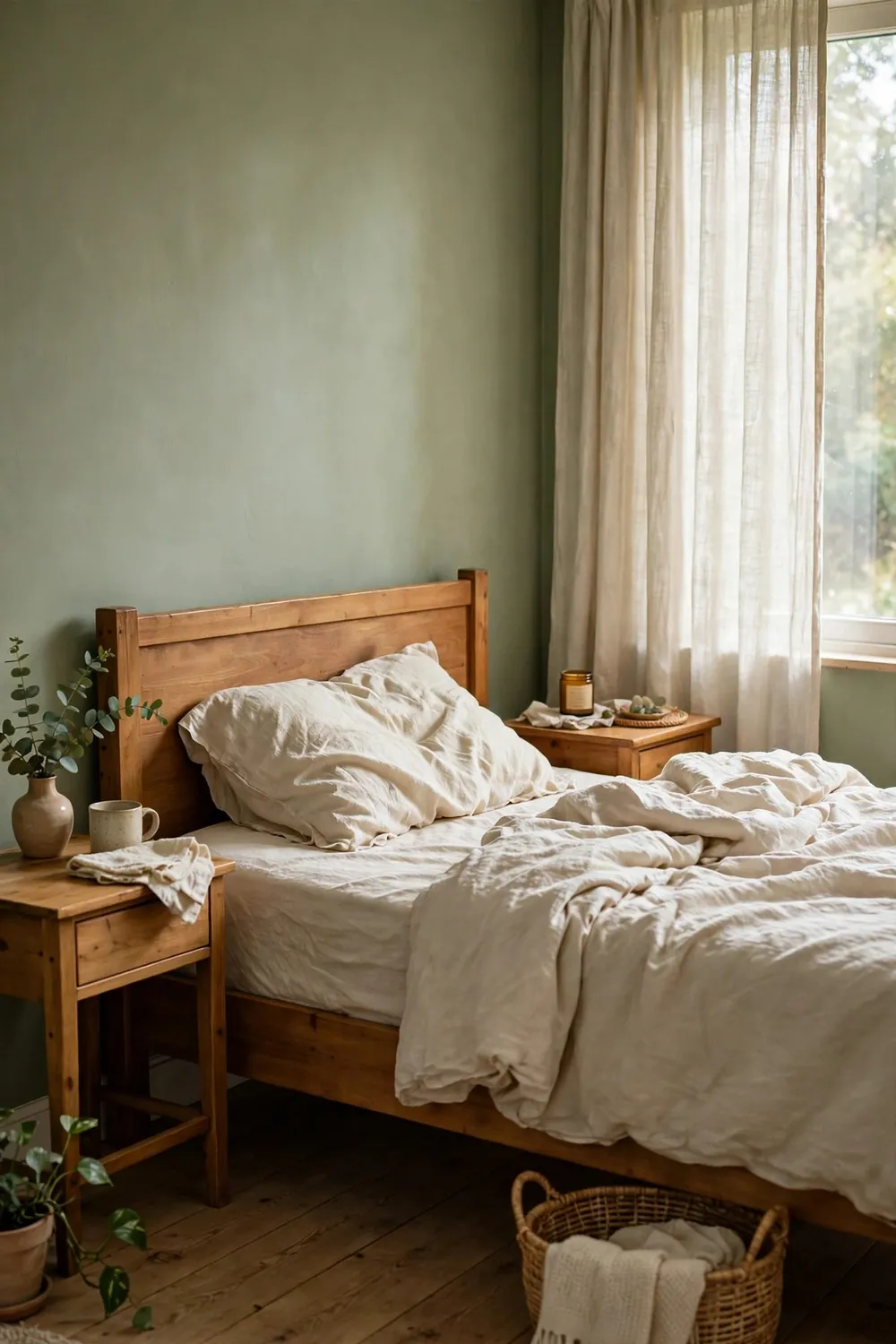
Save this guide before you buy a single swatch — testing sage in your own light is the step that decides everything. Then build the layers in order: cream base, sage layer, deep accent, warm details. Your bedroom is about to become the calmest room you have ever slept in.
Keep reading: 22 Pink Bedroom Ideas That Feel Grown-Up and Dreamy for another soft, calming color done the grown-up way, and 20 Cozy Neutral Master Bedroom Ideas for the layered cream base that sage sits on so well.


2 Comments