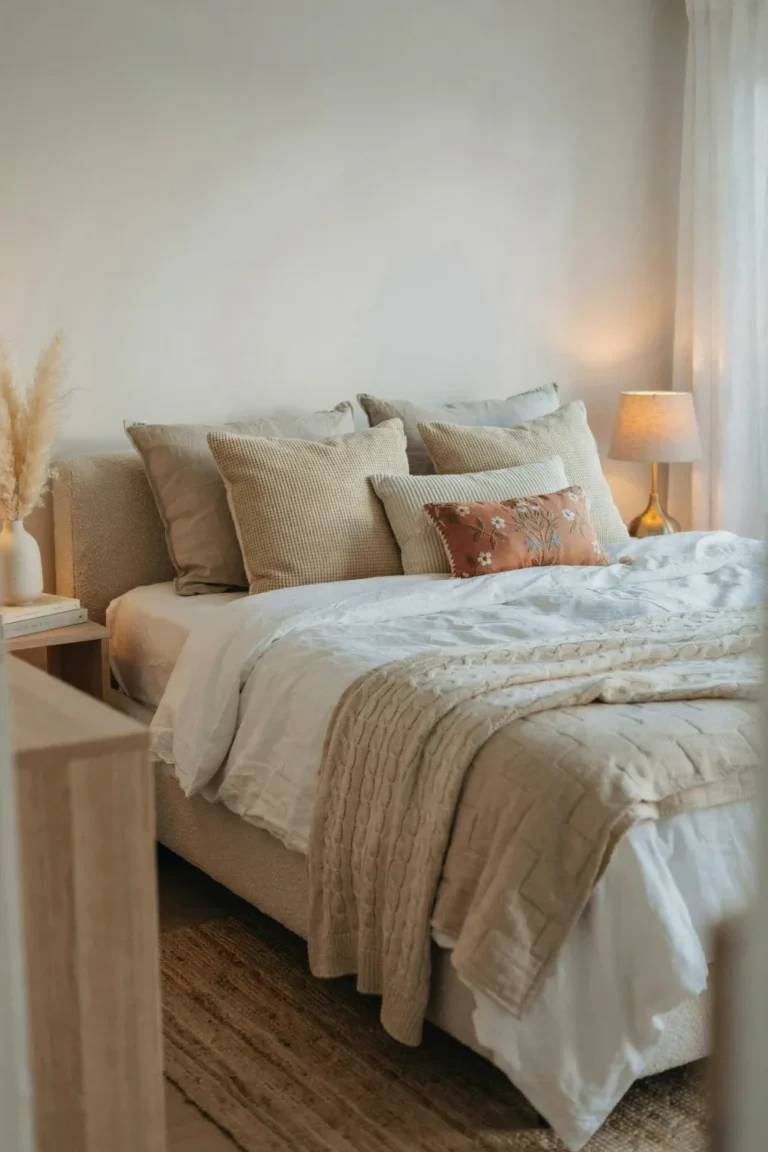
23 Sky Blue Bedding Ideas for a Fresh, Airy Bedroom
There is a reason we say “sleep like a baby” and picture soft blue. Blue is the color our brains associate with open sky and still water, and study after study links blue bedrooms with longer, calmer sleep. Sky blue bedding takes that effect and makes it gentle: light, airy, and serene rather than deep and dramatic.
But sky blue has a trap in it. Done cold — icy blue against stark white under bright light — a bedroom can feel like a dentist’s office. Done warm and layered, with creams, natural wood, and a range of blues, it feels like waking up on a quiet morning by the sea. This guide is entirely about the second version.
We will build the bed layer by layer, find sky blue’s best partner colors, and finish with the details that keep the calm going all year, in every season.
In this guide
- The Bedding Layers: Building the Calm
- Colors That Love Sky Blue
- Finishing the Calm Room
- More Sky Blue Ideas for a Fresher Bed
- Sky Blue Through the Seasons
- Sky Blue in Different Bedrooms
- Caring for Blue Bedding (So It Stays Calm, Not Tired)
- The Five-Minute Calm Bed: A Daily Making Ritual
- How to Recreate the Look Step by Step
- Real-Life Problems, Solved
- Budget Guide: Where to Save, Where to Spend
- Mistakes to Avoid
- Your Sky Blue Bedroom Checklist
- Frequently Asked Questions
The Bedding Layers: Building the Calm
A calm bed is a layered bed. Here is the order, from the mattress up.
1. Start With White or Cream Sheets — Cream for Warmth

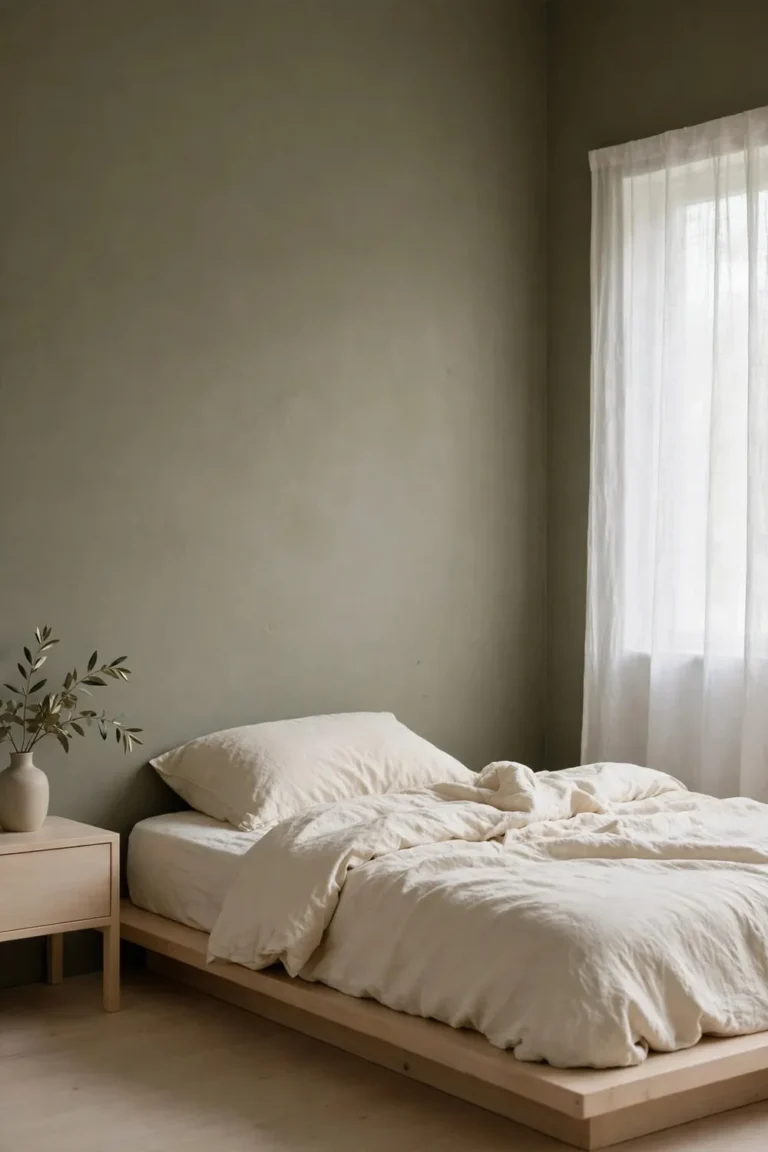
The sheet layer peeking out at the top of the bed sets the temperature of the whole scheme. Bright white reads crisp and cool; cream or ivory reads soft and warm. For the calm-but-cozy version of sky blue, choose cream whenever your room’s light is cool or north-facing.
If your room is very sunny and warm-toned, classic white gives you that fresh coastal crispness instead. Either way, the light neutral under-layer is non-negotiable — it is what makes the blue look intentional.
2. Choose the Right Sky Blue: Dust It Down
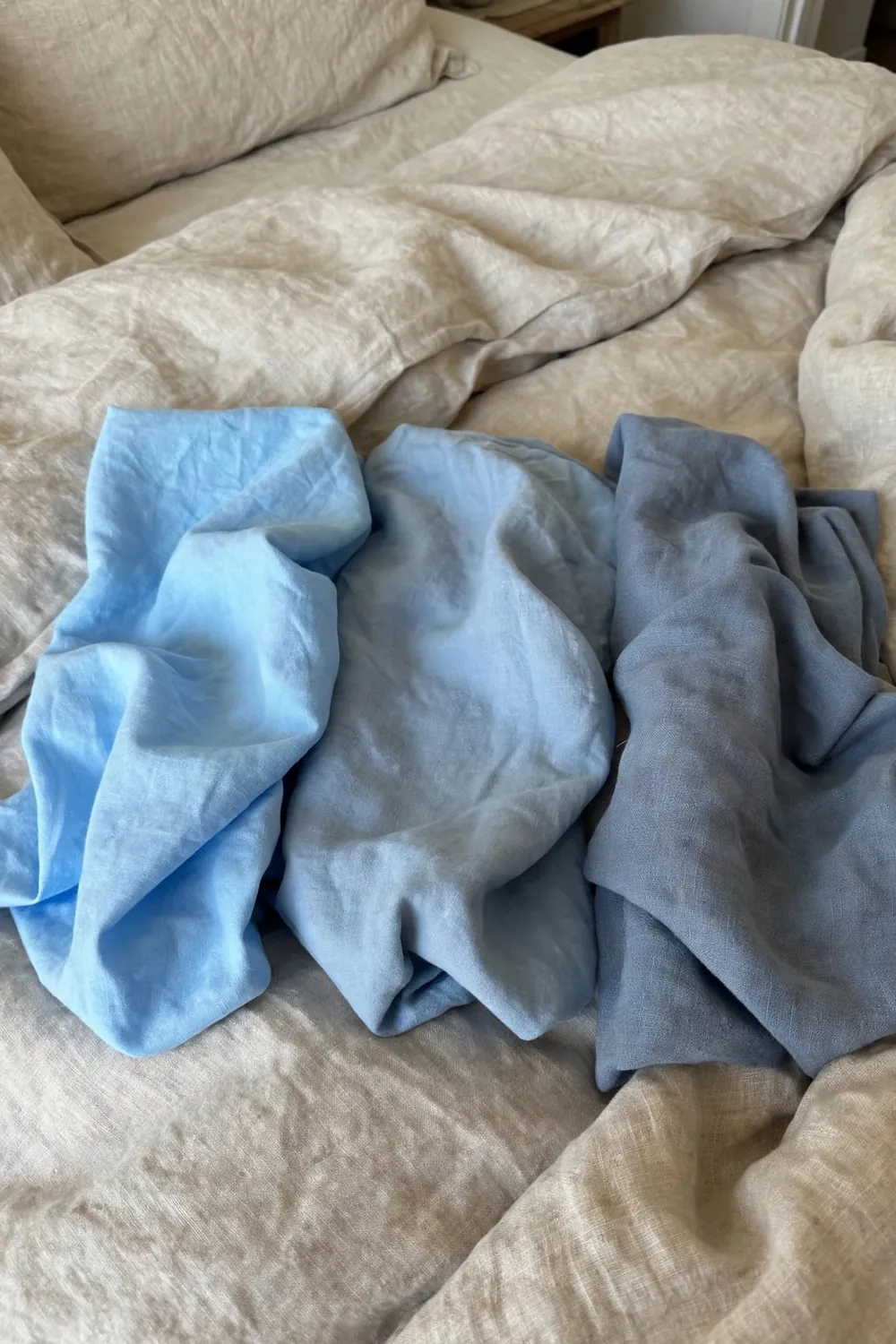
The calmest sky blues are slightly dusty — they have a whisper of grey in them, like the sky on a hazy morning. Pure, saturated baby blue belongs in nurseries; dusty sky blue belongs in serene adult bedrooms. When shopping, hold the fabric next to something grey: if the blue still looks soft, you have the right one.
Linen and washed cotton show dusty blues best, because their matte, slightly rumpled texture keeps the color gentle.
3. Layer a Second, Deeper Blue

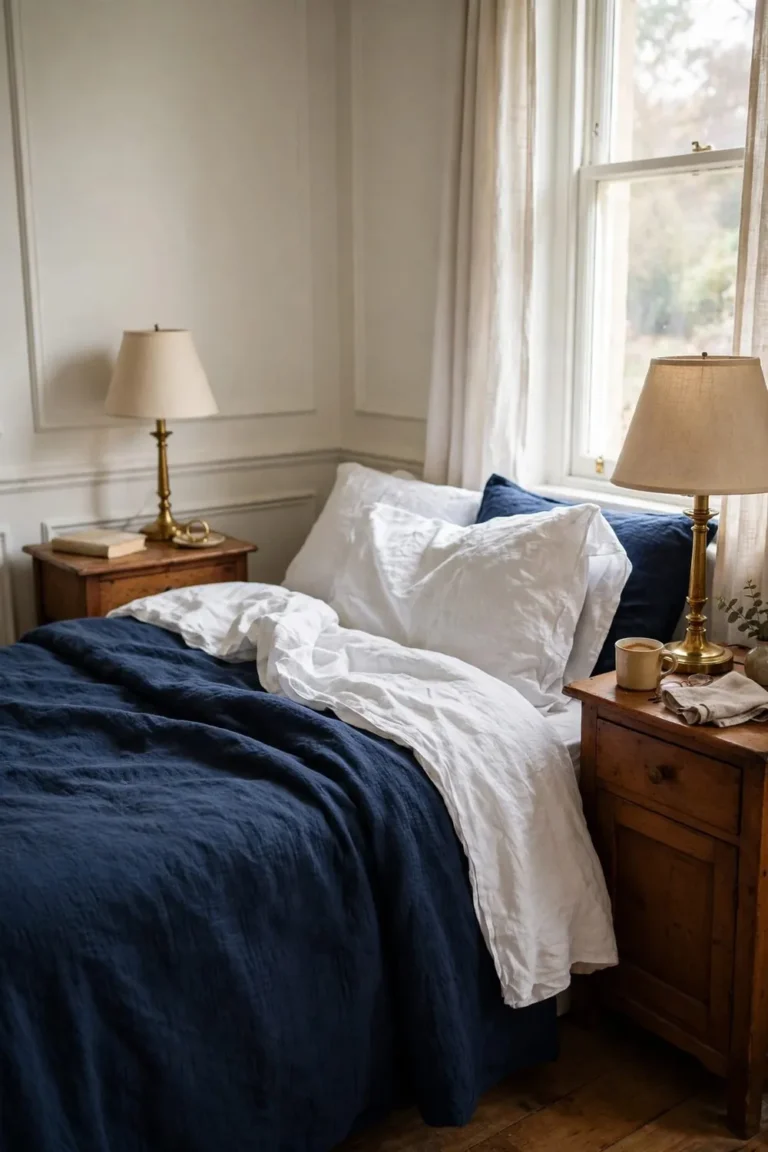
One blue alone can look flat. Add a second blue two or three shades deeper — a dusty mid-blue throw, cushions in soft denim or slate blue — and the bed gains the depth of a real sky, pale at the horizon and deeper overhead.
Keep the deepest blue to the smallest pieces (a cushion, the edge of a throw) so the overall feeling stays light and sleepy.
4. Add Texture Before You Add Pattern

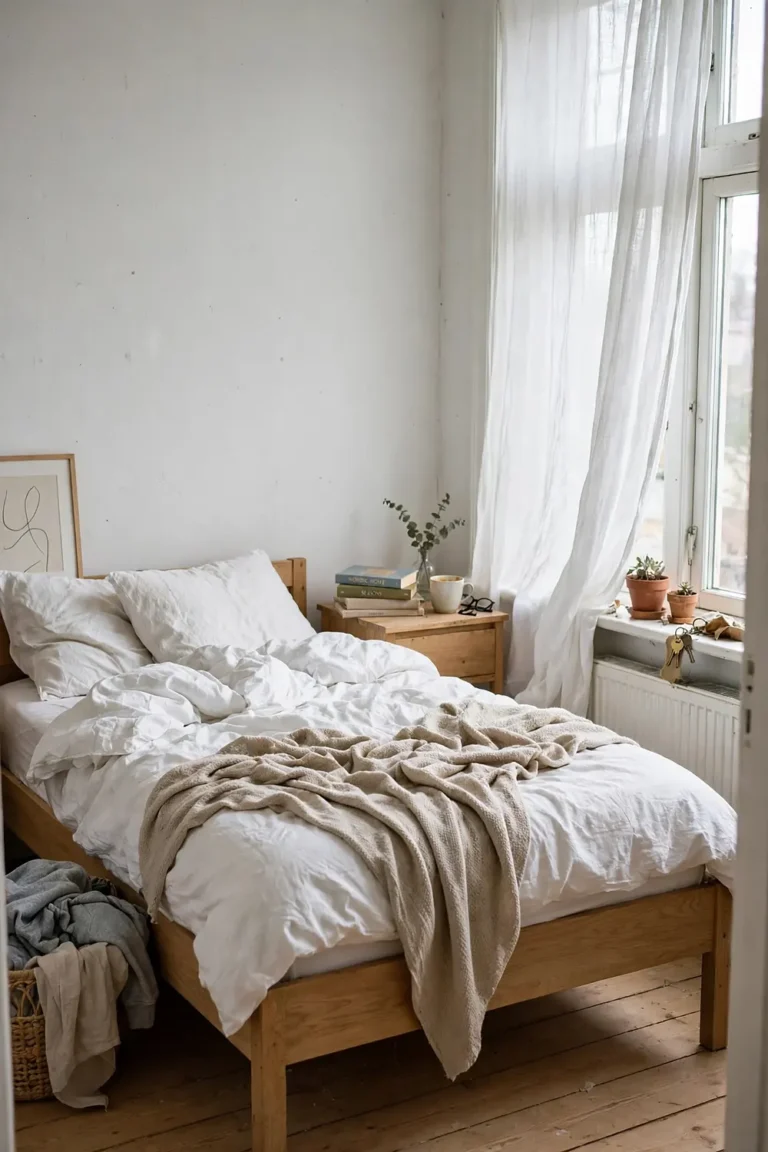
Calm rooms get their interest from texture, not prints. On a sky blue bed, aim for three textures: smooth cotton sheets, slubby linen or washed-cotton duvet, and one nubby layer — a cream chunky knit throw or a boucle cushion. Your eye reads the variety; your brain reads the peace.
If you do want pattern, choose the quietest kind: a thin ticking stripe, a tiny faded floral, or a subtle white-on-blue print, on one piece only.
5. Fold the Duvet Back to Show the Layers

The stylist’s trick for bedding photos works in real life too: fold the duvet back about a third, so the sheet layer shows as a band across the bed. It displays your layers, looks inviting, and makes climbing in feel like an event. A casually draped throw across the folded corner finishes it.
Colors That Love Sky Blue
Sky blue is friendly, but some partners make it sing while others make it shiver.
6. Cream and Warm Wood: The Cozy Direction
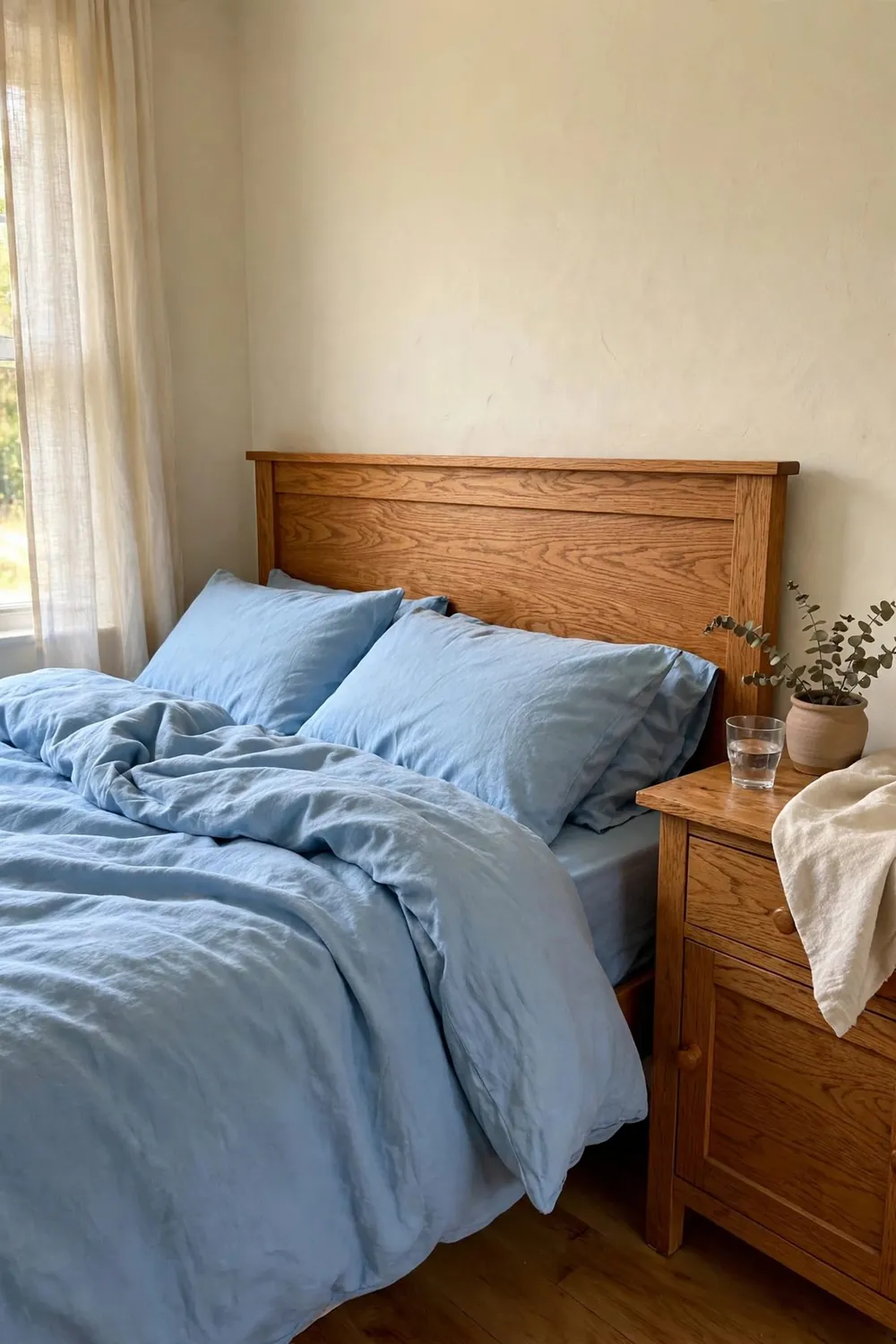
Cream textiles and honey or mid-tone wood furniture warm sky blue into a cottage-by-the-sea feeling. This is the pairing for cooler rooms and anyone who wants calm and cozy at once — which is most of us. A wooden headboard or warm-toned nightstands do most of the work.
7. White and Pale Grey: The Crisp Coastal Direction

White walls, pale grey accents, and a touch of natural rattan or seagrass turn sky blue into classic coastal style — bright, breezy, and clean. Keep some natural texture in the room (a jute rug, a woven basket) so the crispness stays friendly.
8. Soft Blush and Dusty Rose: The Gentle Romantic Direction

A whisper of blush — one cushion, a small throw — against sky blue is unexpectedly lovely: sunrise colors, essentially. Keep the blush dusty rather than sugary and the effect is sophisticated, like a dawn sky. This pairing is a favorite for guest rooms because everyone sleeps well in it.
9. Navy: The Depth Anchor

Just as sage needed a deep green relative, sky blue needs one piece of navy or deep indigo to keep it grounded: a cushion, a bedside book stack, a small rug with a navy border. Light colors float without a darker anchor; one deep note tells the eye the palette was chosen, not defaulted.
10. Greenery: The Living Accent
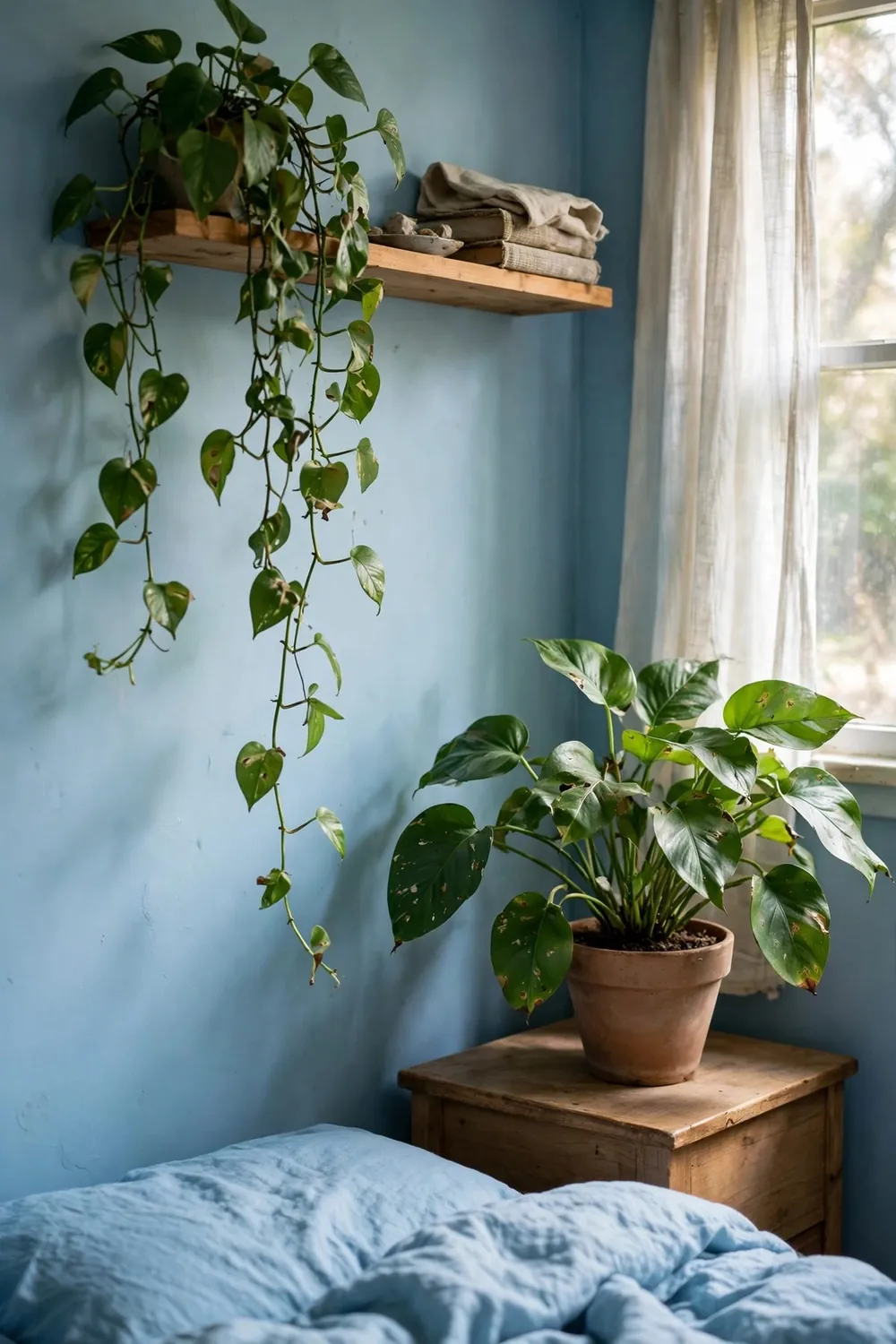
Every blue room needs something green and alive. A leafy plant’s green sits between blue and yellow on the color wheel and bridges the whole scheme to nature. One plant on the nightstand or dresser, and the room stops looking like a color swatch and starts looking like a place.
Finishing the Calm Room
Bedding sets the mood; these finishing ideas carry it to the walls, windows, and light.
11. Keep Curtains Sheer, Light, and Airy

Heavy drapes fight sky blue’s whole personality. Sheer or light linen curtains in white or cream let the daylight filter through like morning haze — the room literally glows the color of calm. If you need blackout for sleep, layer sheers over a simple blackout blind and keep the sheers as the visible layer.
12. Choose Art That Whispers: Seascapes and Sky
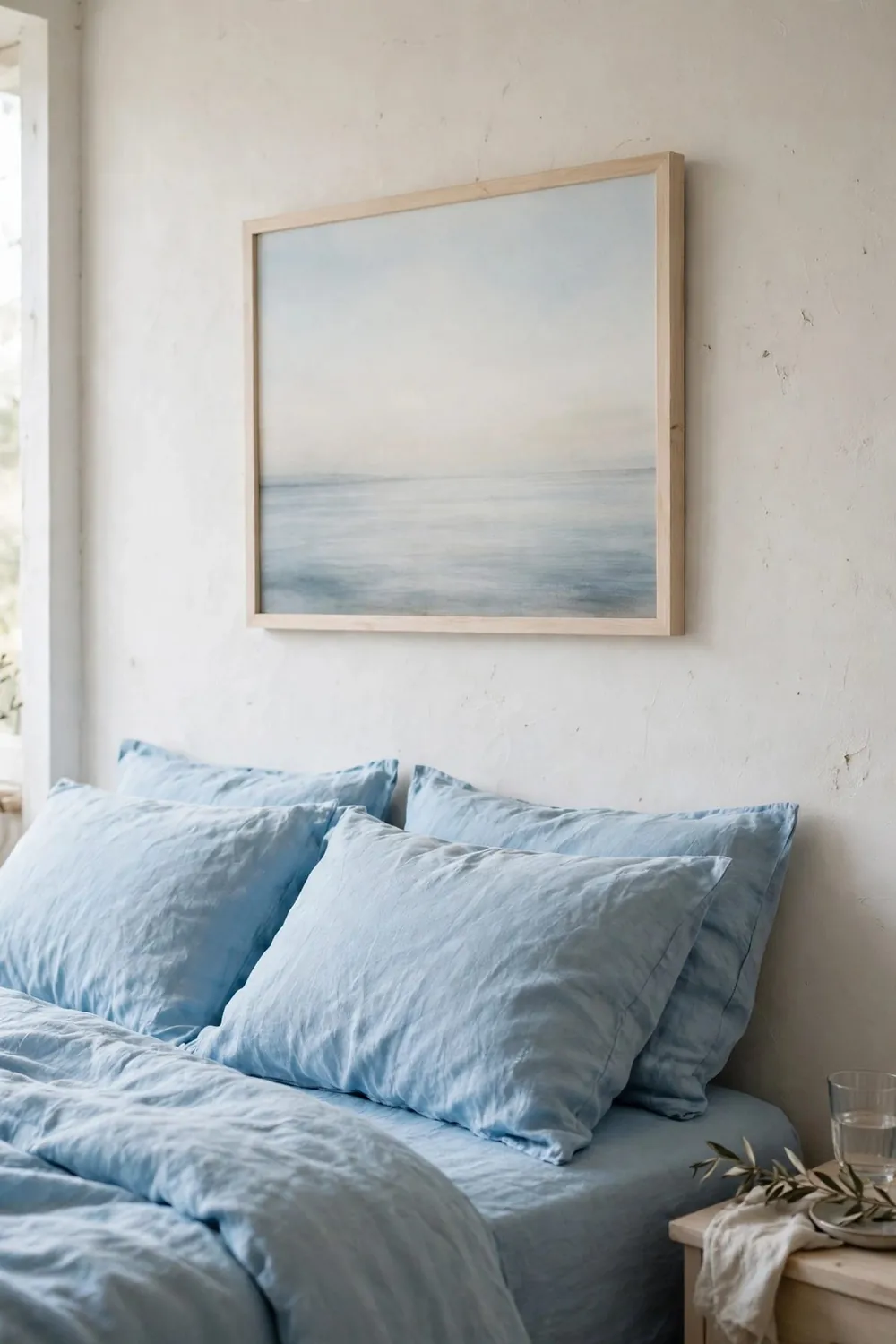
Above the bed or dresser, art in soft blues, sandy neutrals, and misty whites extends the palette up the wall. Seascapes, cloudy skies, and abstract watercolors are the natural subjects. Keep frames light — pale wood, white, or thin brass — so the art floats rather than lands.
13. Light It Warm in the Evening (This Is the Secret)
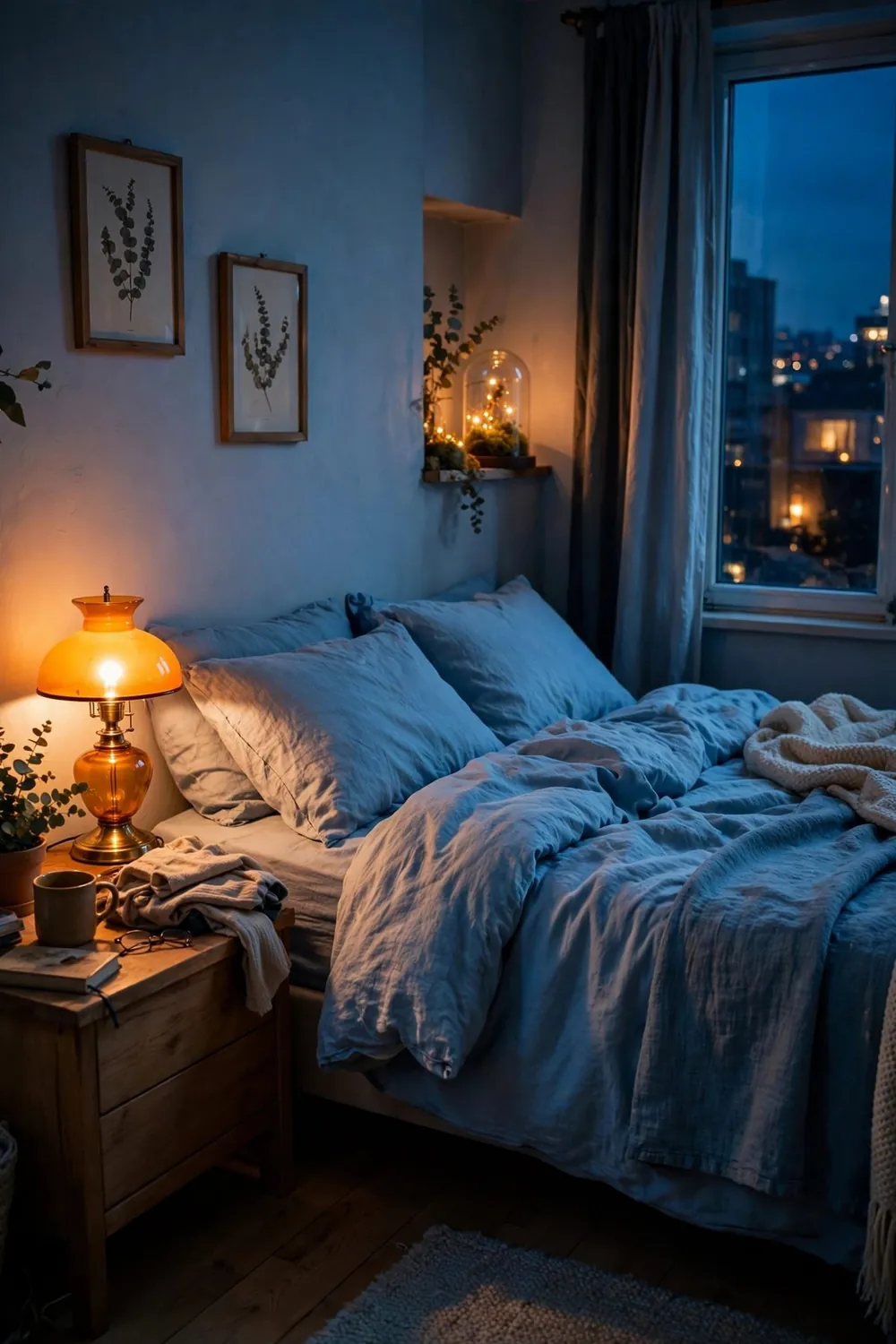
Here is what separates calm blue rooms from cold ones: at night, warm light. Blue bedding under a warm 2700K lamp glows soft and dusky, like twilight — genuinely one of the prettiest effects in home decorating. Under a cool bulb, the same bedding turns icy. If your blue room feels cold, change the bulb before you change anything else.
14. Take Blue Around the Room in Small Echoes
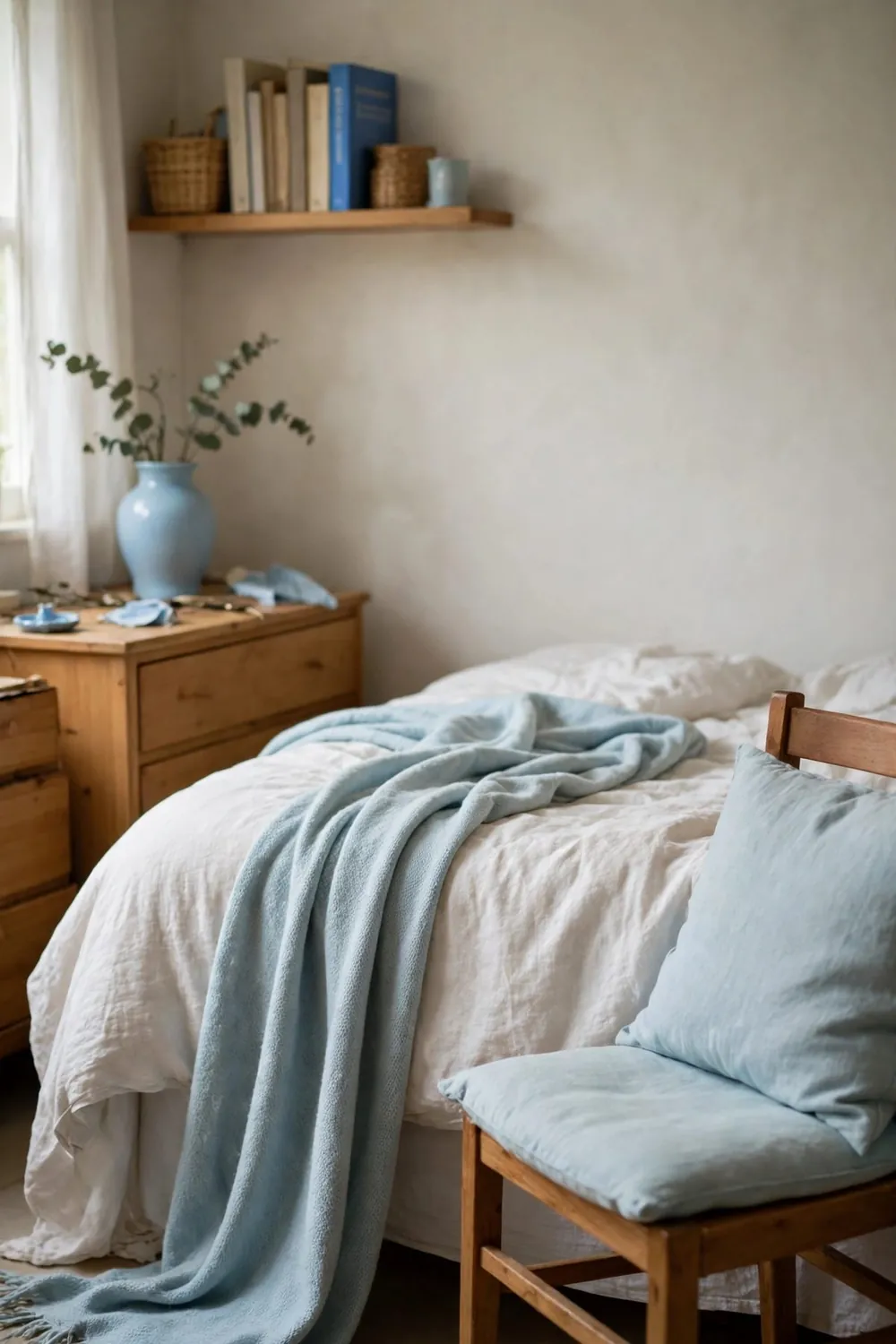
A calm scheme repeats quietly: the blue in the bedding echoed in a cushion on a chair, a vase, the art, a folded throw on a bench — three or four small echoes, no more. Echoes make a room feel designed; repetition everywhere makes it feel themed. There is a difference, and your eye knows it.
More Sky Blue Ideas for a Fresher Bed
Still collecting ideas? These final additions round out the list — each one tested against the same rule as everything above: it has to earn its place in a real home, on a real budget.
15. Add a White Waffle-Weave Throw

A white waffle-weave throw across sky blue bedding adds the texture that stops pale blue looking flat. The little squares catch shadow and light, read beautifully in photos, and give hands something satisfying to fold back at night.
Waffle weave is also practical: breathable in summer, an extra layer in winter, and it washes without ceremony. If you buy one white thing for this bed, make it this.
16. Pair Sky Blue With Soft Grey for Mist

Layer sky blue with the palest warm grey — a grey throw, grey linen cushions — and the bed takes on a misty, early-morning quality that feels expensive and deeply calm. Keep the grey warm, not blue-grey, so the pairing stays soft.
This is the combination for bedrooms that feel too bright or stark: the grey quiets the blue the way fog quiets a landscape.
17. Choose Reversible Bedding and Flip the Mood
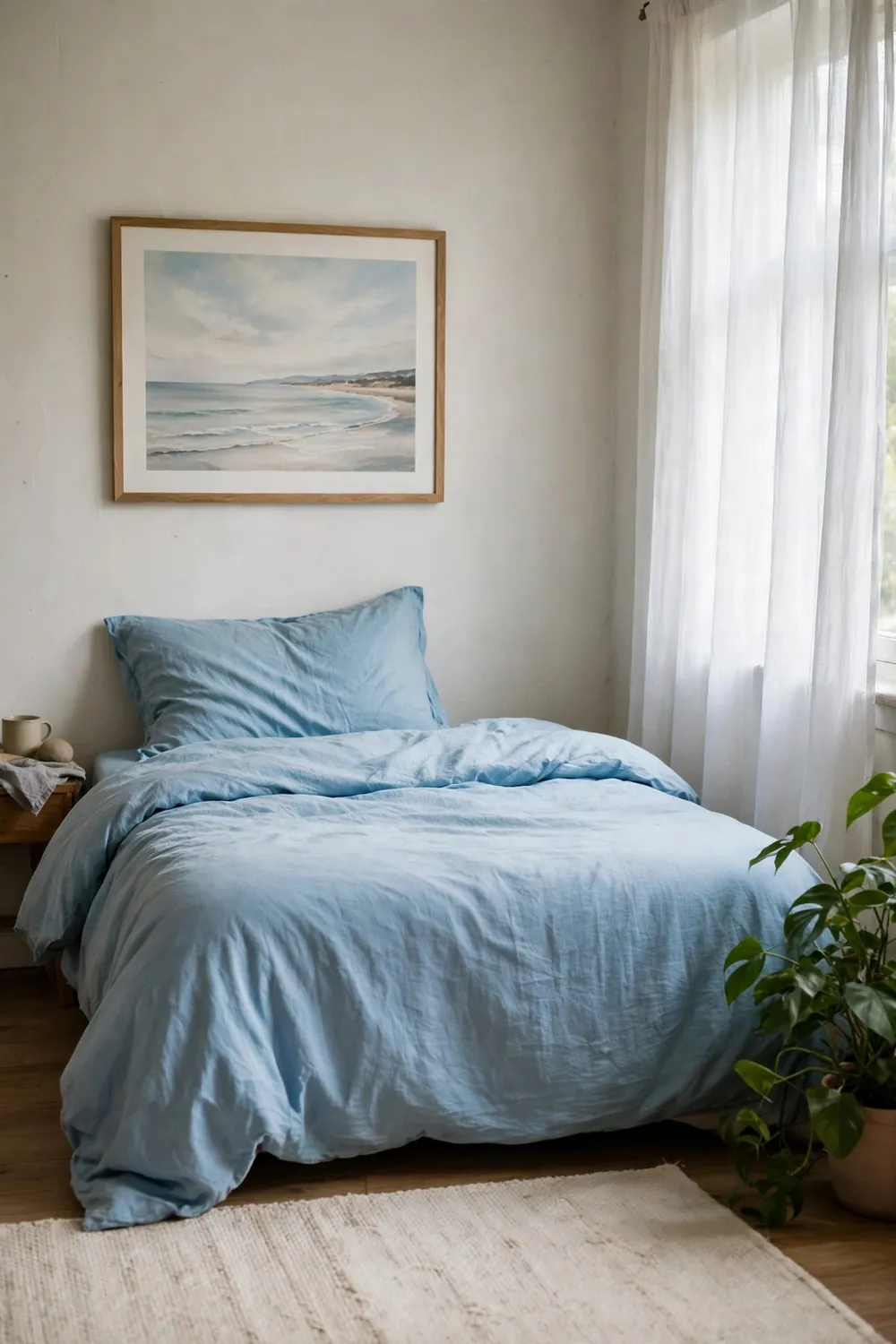
A reversible duvet cover — sky blue on one side, white or a fine stripe on the other — doubles your looks for one purchase. Blue side up for the full sky effect; flipped and folded back for the crisp hotel fold.
Fold the top third down to show the reverse every time you make the bed. Two seconds of folding is the difference between ‘bedding’ and ‘styled bedding’ in every photo ever taken.
18. Line Up Blue-and-White Striped Cushions

One pair of blue-and-white striped cushions — ticking, awning stripe, or fine pinstripe — gives sky blue bedding its classic coastal-tailored note. Stripes are the pattern that never fights with blue; they organize it.
Keep the stripe scale medium and the pair identical. Mismatched stripes read seaside-souvenir; a matched pair reads yacht-club calm.
19. Keep a Pale Blue Quilt for Summer Weight
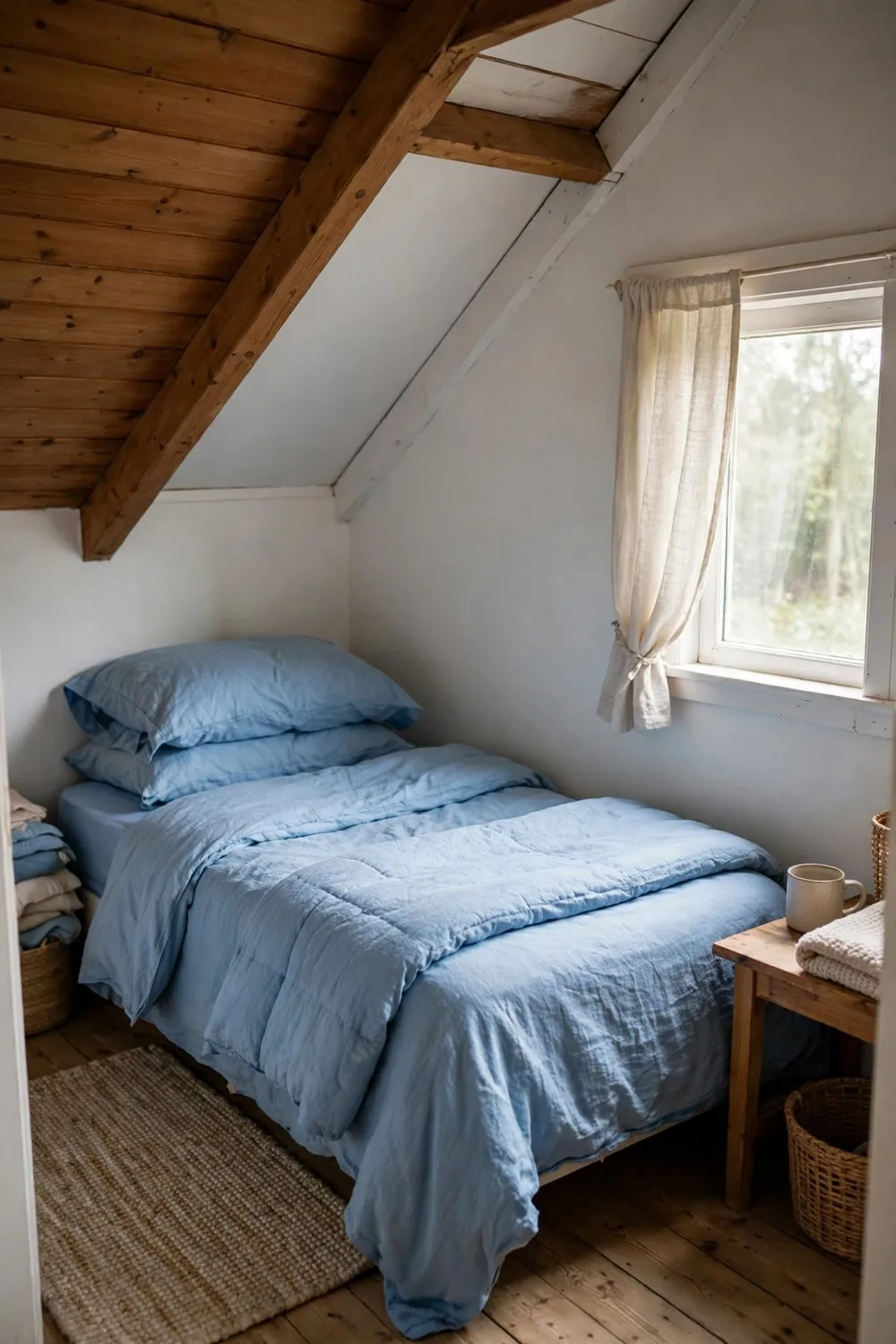
A lightweight pale blue quilt or coverlet replaces the duvet in warm months, keeping the color story while the bed breathes. Quilting stitches add quiet pattern, and the flatter profile suits small bedrooms especially well.
Fold the duvet at the foot or store it — seeing the bed change with the seasons is one of the small pleasures this whole palette is built around.
20. Match the Bed With Sheer White Curtains
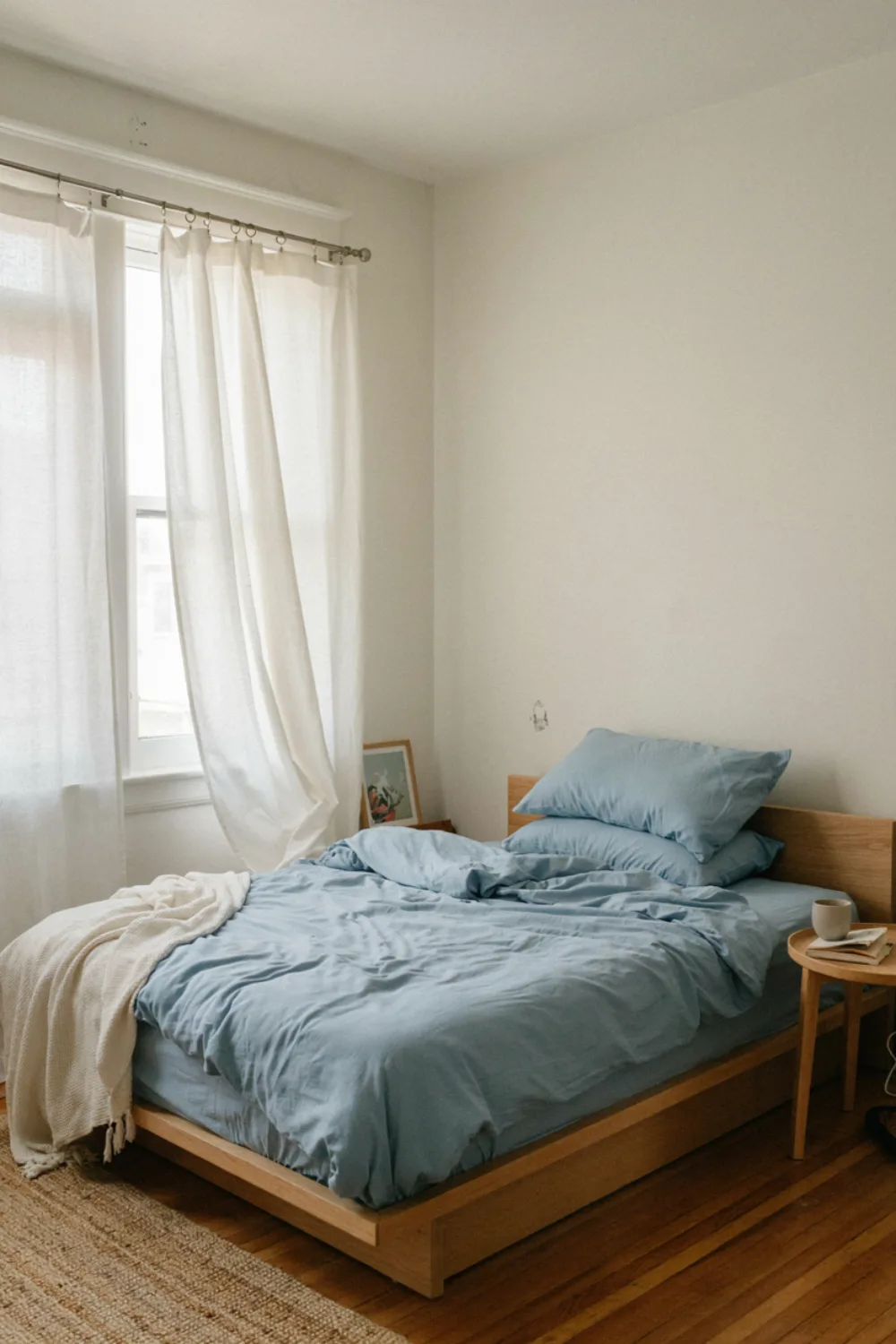
Sheer white curtains that move with the breeze extend the bed’s airy feeling to the whole room. Light through sheers turns sky blue bedding luminous in the morning and keeps the palette connected from window to pillow.
Hang sheers on their own rod inside or instead of heavy drapes in summer. They cost little, wash easily, and photograph like a deep breath.
21. Set a Small Blue Ceramic Lamp by the Bed
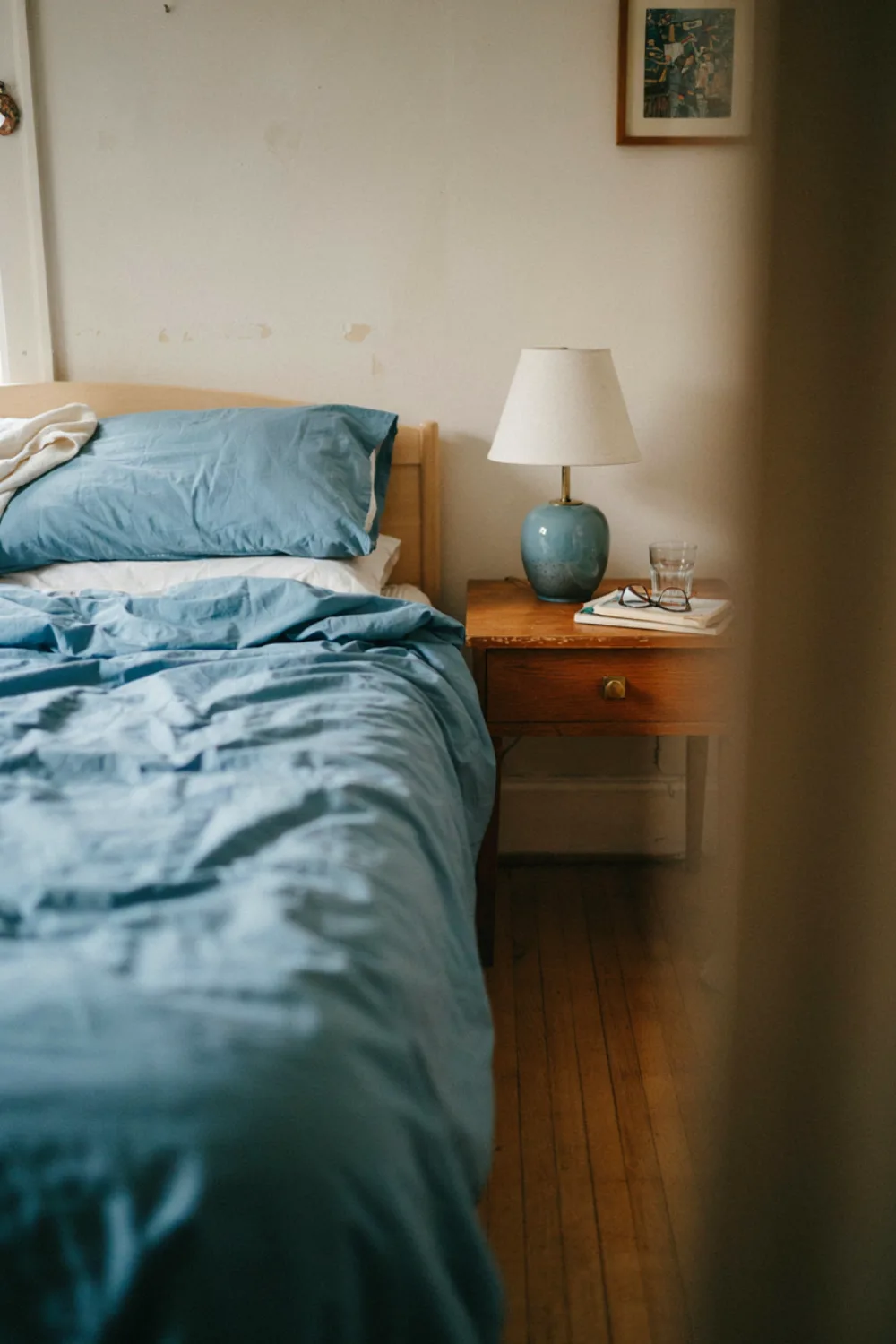
A bedside lamp with a dusty blue ceramic base repeats the bedding color at eye level and makes the palette feel designed rather than accidental. Choose a warm white shade so the evening light stays cozy against the cool blue.
Ceramic lamps are thrift-shop regulars — a dusty blue one found for a few dollars will look like it was chosen by a stylist, because in effect it was: you.
22. Sleep Cool in Cotton Percale
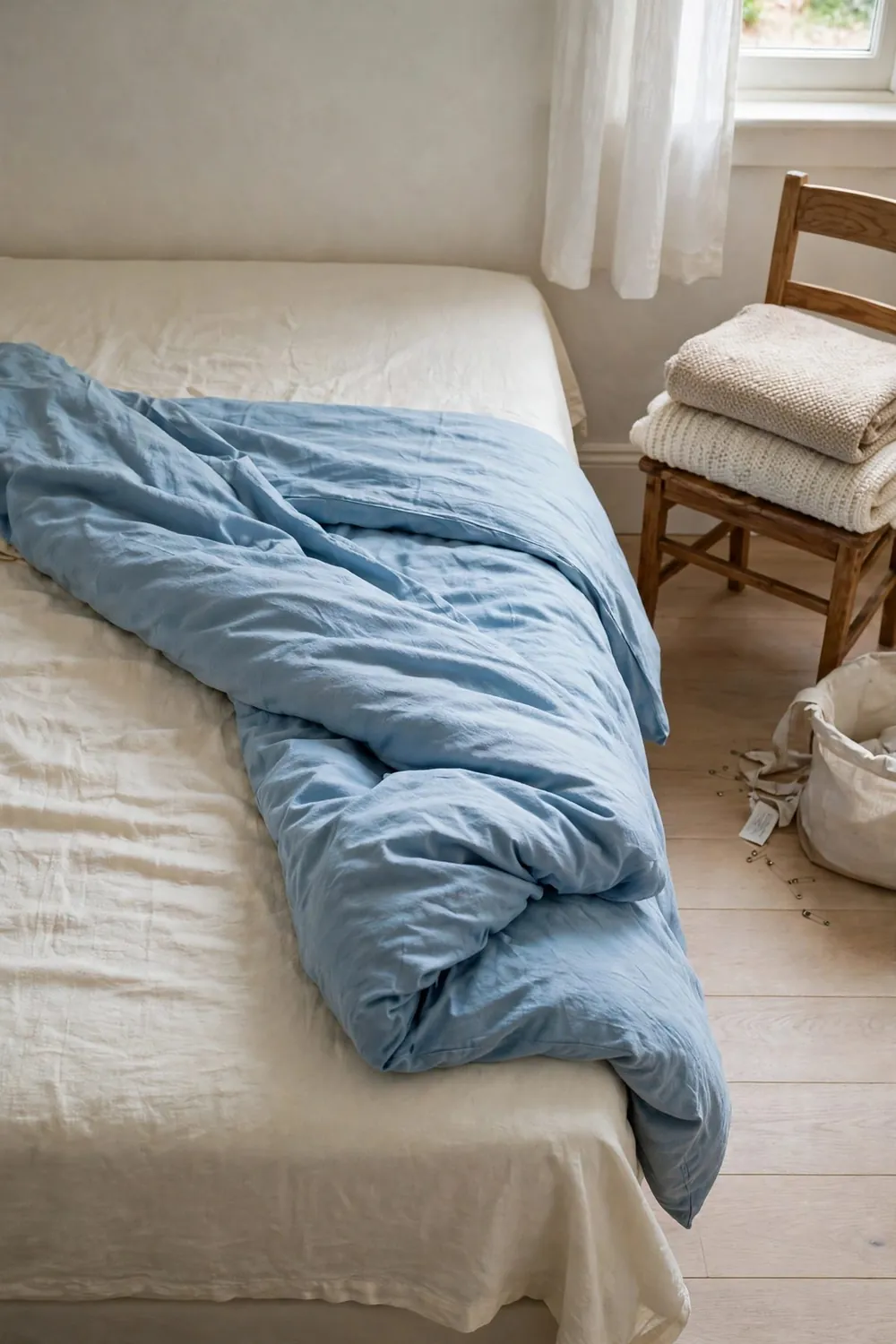
Fabric changes how blue feels. Crisp cotton percale in sky blue has a cool, smooth hand that suits the color’s fresh character — the sheet equivalent of opening a window. It also holds the pale color bright wash after wash.
Hot sleepers should start here before buying anything decorative: the right sheet fabric in the right color does more for this look than any cushion.
23. Fold a Denim-Blue Throw at the Foot

Every pale palette needs one deep note. A folded throw in washed denim blue at the foot of the bed anchors sky blue the way deep water anchors a sky — and hides the end of the bed where duvets look their plainest.
Denim tones are forgiving of wear and pets, and the casual fabric stops the bed feeling precious. This is the layer that gets used on laps and shoulders, so let it be the sturdy one.
Sky Blue Through the Seasons
One of sky blue bedding’s best qualities is that it works all year with tiny swaps. In spring, pair it with white and fresh green for a garden-morning feel. In summer, it is naturally cooling — lighter layers, the knit throw retired to a basket, sheers blowing.
In autumn, warm it with the cream knit throw’s return, a camel or soft rust cushion, and warmer lamplight. In winter, layer a cream or pale grey heavier blanket over the blue and let it read as a frosty, peaceful morning — especially pretty with a strand of warm fairy lights nearby.
Sky Blue in Different Bedrooms
The same bedding recipe adjusts for the room it lands in.
The main bedroom. Go the full layered way: dusty blue duvet, deeper blue accents, the navy anchor, sheer curtains, and the warm lamp glow. Main bedrooms deserve the complete composition because you see it first and last every day. If the room is large, let the blue travel a little further — a blue-upholstered bench at the foot of the bed or an armchair in the corner in a mid-blue linen extends the calm without breaking the echoes rule.
The guest room. Sky blue is the perfect guest color — universally liked, gender-neutral, and calm for unfamiliar sleepers. Keep the layers simple and the surfaces clear, and add one thoughtful warmth: the cream knit throw folded where a guest will find it. Guests sleep measurably better in rooms that feel considered, and blue rooms are the ones they compliment at breakfast.
The small or dark bedroom. Pale is your strategy: the lightest end of sky blue on the duvet, white or cream everywhere else, the mirror trick from the living room borrowed for the wall opposite the window, and warm light working overtime. Skip the navy anchor in a very dark room — a mid-blue deeper shade gives you the depth without the weight. Small blue rooms done this way feel like morning sky in a box: bright, soft, and bigger than they measure.
A child’s room that can grow up. Sky blue is one of the few colors that serves a seven-year-old and a seventeen-year-old with only styling changes. Choose the dusty adult shade from the start, keep the playful elements in removable pieces (cushions, art, a rug), and the room matures by editing rather than redecorating. Parents who have repainted a bubblegum room will tell you: start dusty.
Caring for Blue Bedding (So It Stays Calm, Not Tired)
Sky blue’s one weakness is fading: pale blues wash toward grey-white faster than deep colors, and a tired blue bed loses exactly the calm you bought it for. A few habits protect it for years.
Wash cool and gentle. Hot water and harsh detergents are fade machines. Cool-to-warm washes with a gentle detergent, turned inside out, keep dusty blues true. Skip the optical brighteners on the blue pieces — they shift pale blues toward a hard, icy tone that fights the whole scheme; save brighteners for your whites.
Dry with kindness. Line-drying in full midday sun bleaches gently but relentlessly; shade-drying or a tumble on low keeps the dust in the blue. If you love sun-dried bedding (and the smell is half the pleasure), rotate two sets so each rests between sunnings.
Store the off-season set properly. Washed, fully dry, folded in a breathable cotton bag or pillowcase — never a sealed plastic box, which traps moisture and yellows pale fabrics. A lavender sachet in the storage keeps the set smelling like the calm it provides.
Refresh rather than replace. When a beloved blue set does fade unevenly, it can graduate: the duvet becomes the summer-weight layer under a cream throw, or moves to the guest room where its paler tone reads as intentional softness. Good fabric earns second lives; plan them instead of binning the set at the first sign of age.
The Five-Minute Calm Bed: A Daily Making Ritual
A styled bed only stays styled if making it is a pleasure rather than a project. Here is the two-layer method calm-room people actually sustain.
Layer one (one minute): sheets smoothed, duvet pulled up and folded back the signature third, sleeping pillows standing against the headboard. The bed is now, by any standard, made.
Layer two (when you feel like it): the deeper-blue cushions in their row, the knit throw draped at its corner, the book placed on the nightstand side you read from. Some days layer two happens; some days it stays in the basket. The genius of the system is that layer one alone looks intentional — the calm survives busy mornings, and the full composition returns whenever you have five unhurried minutes and a cup of tea.
Keep the nightstand at three things — lamp, book, water — and the bed ritual stays the easiest beautiful habit in the house.
How to Recreate the Look Step by Step
Step 1 — Pick your direction. Cozy (cream + wood), coastal (white + grey + natural), romantic (blush whisper), or classic (navy anchor). This decides every purchase after.
Step 2 — Sheets first. Cream or white, the best quality you can manage — they touch your skin all night.
Step 3 — The dusty blue duvet. Linen or washed cotton, tested in your room’s light. This is the one piece to get right.
Step 4 — The deeper blue accent. Throw or cushions two shades deeper, plus your one navy anchor piece.
Step 5 — Texture and light. Cream knit throw, sheer curtains, and check every bulb is warm. Stand in the doorway at dusk — if the room glows dusky and soft, you have done it.
Going deeper: wash blue like you mean to keep it. Sky blue fades unevenly when it is washed carelessly, and patchy blue reads as tired rather than calm. Wash bedding inside out, in cool water, with similar pale colors only, and skip the optical-brightener detergents that slowly yellow whites and distort blues. Dry in shade when you can; an hour of strong sun does more fading than ten washes. Rotate two sets weekly so both wear and rest equally — bedding that is rested between uses keeps its loft and color far longer. For the layered look in this article, wash the white layers more often than the blue ones, since whites grey fastest and a greyed layer drags the whole bed down. Five small habits, and your calm blue bed stays the color you chose for years instead of a season.
Real-Life Problems, Solved
These are the questions real people ask most when a room isn’t working yet, answered for this style.
I sleep hot. What blue bedding should I choose?
Look for cotton percale or linen. Both breathe and feel cool, while microfiber and polyester trap heat. Memory foam mattresses also hold warmth, so a breathable mattress protector or topper can help. Layer two lighter pieces instead of one heavy comforter, so you can kick one off at night.
Are 1000-thread-count sheets worth the money?
Usually not. Very high counts are often reached by twisting thin, multi-ply yarns together, which can feel heavy and wear out sooner. Single-ply, long-staple cotton at roughly 200–400 thread count tends to feel better and last longer. If you have sensitive skin, look for OEKO-TEX or GOTS certification rather than a big number.
How many layers does a calm blue bed actually need?
Keep it simple: fitted sheet, flat sheet or duvet cover, one duvet, the pillows you sleep on, and one throw. A bed should work for everyday life first. A few well-chosen blues look calmer than a pile of cushions you move every night.
Budget Guide: Where to Save, Where to Spend
Save on: cushions and throws (covers over inserts you own), art (printable seascapes in simple frames), and plants from cuttings — a pothos in a blue-glazed pot costs almost nothing and grows the room’s calm for free.
Spend a little more on: the duvet set and sheets. Sky blue shows quality clearly — good fabric keeps its dusty softness wash after wash, while cheap fabric fades to a tired pastel by spring. Since this bedding is your room’s entire color scheme, it earns the investment.
Mistakes to Avoid
Cool bulbs over blue bedding. The number one cause of “my blue room feels like a hospital.” Warm light first, always.
Too-saturated blue. Bright, candy sky blue overwhelms a bedroom and cheapens everything near it. Dust it down — grey is your friend.
Matching blue everything. Blue bedding, blue curtains, blue rug, blue walls reads as a themed kids’ room. Blue belongs on the bed and in small echoes; the rest of the room is cream, wood, and texture.
Forgetting the warm layer. Blue plus only whites and greys can drift cold by November. Keep the cream knit throw and warm wood in the room year-round as insurance.
Skipping the deep anchor. All-pale rooms look washed out in photos and in person. One navy or deep-blue piece gives the whole palette its spine.
Your Sky Blue Bedroom Checklist
- Cream (or white) base sheets chosen for your light
- Sky blue kept dusty, never candy-bright
- Duvet in linen or washed cotton
- Second, deeper blue layered in small pieces
- One navy anchor item
- Three textures on the bed
- Duvet folded back to show the layers
- Partner palette picked: cream/wood, coastal, blush, or navy
- One living green plant
- Sheer or light linen curtains
- Soft seascape or sky art in a light frame
- All bulbs warm (2700K) — checked at dusk
- Three or four small blue echoes around the room
Frequently Asked Questions
Does blue bedding really help you sleep better?
Blue is consistently the color people associate with calm, and studies of bedroom color have linked blue rooms with longer average sleep. Whether the mechanism is psychology or light perception, generations of experience agree: soft blue bedrooms feel restful, and feeling restful is most of falling asleep.
What wall color works with sky blue bedding?
Warm white and cream are the safest and most versatile. Pale greige works for the coastal direction. If you want color on the walls, a very soft, dusty blue-grey several shades lighter than the bedding creates a serene tone-on-tone effect — test carefully so the room stays light.
How do I stop sky blue from looking like a child’s room?
Dust the blue down, use grown-up fabrics (linen, washed cotton), add the navy anchor, and keep everything else neutral and textured. The nursery association comes from saturated baby blue plus cute patterns; remove both and the color is pure calm.
Can sky blue bedding work in a dark, north-facing room?
Yes, with the warm recipe: cream sheets, warm wood furniture, the cream knit throw, and strictly warm lighting. North light is blue-ish already, so your bedding will read a touch cooler — the warm partners balance it beautifully.
What colors should I avoid with sky blue?
Harsh black in large amounts (it makes pale blue look washed out), bright orange and red (they vibrate against blue), and icy silver-grey everywhere (the room turns cold). Small amounts of brass or warm gold, by contrast, are lovely.
Final Thoughts
A closing thought: of all the colors you can sleep in, sky blue asks the least of you. It does not need a styled room around it, a particular season, or a matching anything — it simply makes the bed look like morning and the sleeper feel like resting. If your bedroom has felt restless, busy, or simply not quite right, the calmest experiment you can run is a dusty blue duvet and one warm lamp. Sleep on it, literally, and judge by how you wake.
Save this for later

Save this guide before you shop — the dusty-blue test and the warm-bulb rule will save you from the two mistakes almost everyone makes first. Build the bed in layers, pick one direction, and let the calm build itself.
Keep reading: 22 Pink Bedroom Ideas That Feel Grown-Up and Dreamy for sky blue’s sunrise partner in a full room scheme, and 20 Bedroom Color Combinations That Always Look Expensive to see where blue-and-cream ranks among the classics.