21 Olive Green Zen Bedroom Ideas for Peaceful, Restful Nights
There is a particular kind of calm that only a Japanese-inspired room can give — the feeling that nothing in the space is shouting, nothing is extra, and every object has earned its place. Now imagine that calm washed in olive green: earthy, grounded, and quietly alive.
Olive is deeper and moodier than sage, and in a zen-style bedroom it behaves like nature itself — the color of leaves in shade, of moss, of tea. Paired with low furniture, pale wood, rice-paper light, and generous empty space, it creates a bedroom that does not just look restful. It slows your breathing down.
This guide walks you through building the look piece by piece: the olive itself, the low zen bed, the materials, the light, and the discipline of leaving space empty on purpose.
In this guide
- The Olive Foundation: Color That Grounds
- The Zen Bed: Low, Layered, Undone-Just-So
- Materials, Light & The Art of Empty Space
- More Olive Zen Ideas for Restful Nights
- Carrying the Zen Beyond the Bedroom Door
- Building the Zen Room Slowly: A Shopping Philosophy
- If You Do Nothing Else: The Three-Day Zen Reset
- How to Recreate the Look Step by Step
- Real-Life Problems, Solved
- Budget Guide: Where to Save, Where to Spend
- Mistakes to Avoid
- Your Zen Olive Bedroom Checklist
- Frequently Asked Questions
The Olive Foundation: Color That Grounds
In zen design, color is never decoration for its own sake — it is atmosphere. Olive does the atmospheric work of a whole forest in one quiet shade.
1. Choose a Muted, Grey-Leaning Olive
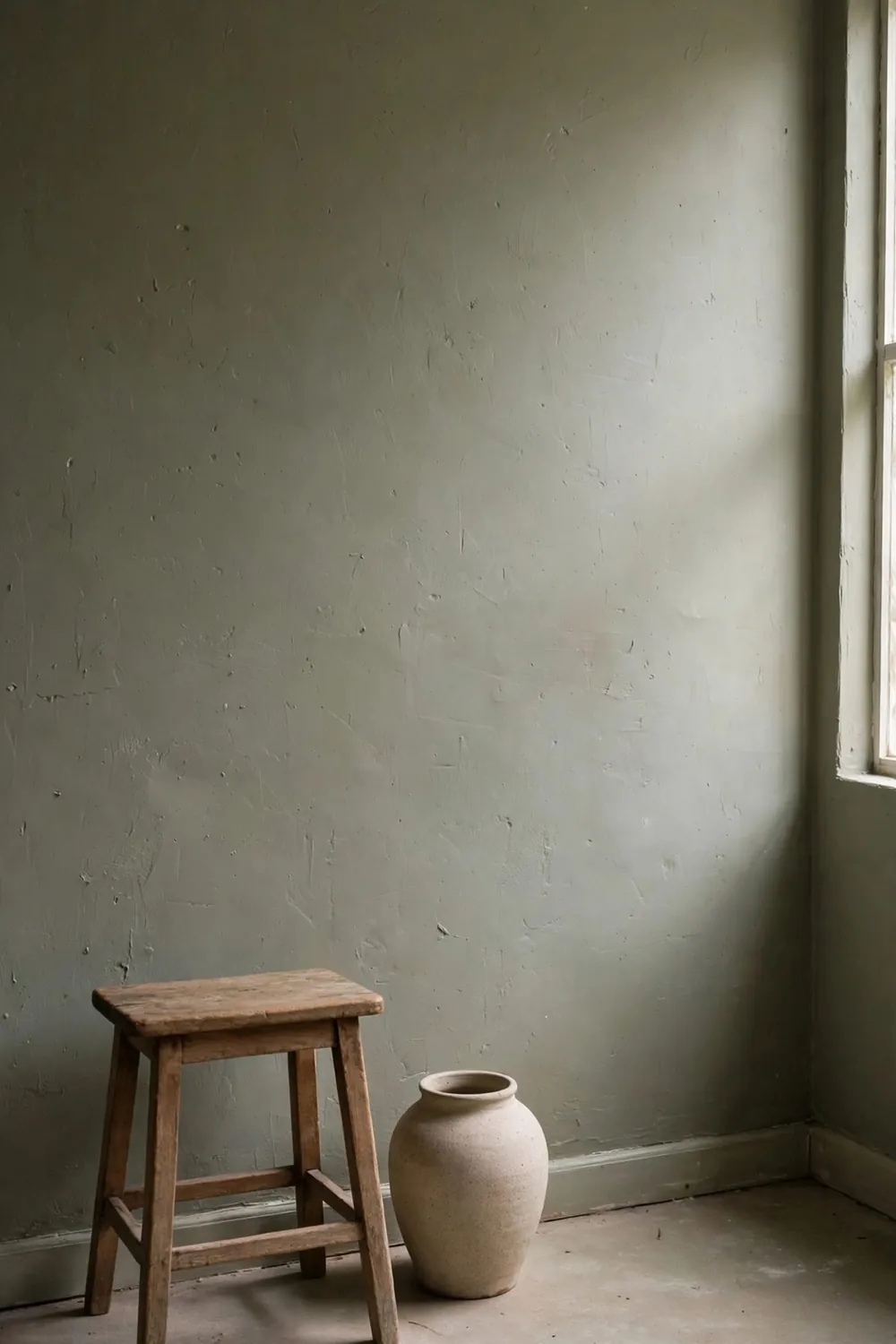
Zen olive is dusty and subdued — more dried leaf than fresh lime. Look for olives with grey or brown in them; they read as earthy and calm rather than bright. Bright, yellow-heavy olives belong in kitchens and playful rooms, not in a space built for stillness.
Test your olive in low evening light as well as daylight. A zen bedroom lives mostly in soft light, and the right olive deepens into something almost brown-green and incredibly restful.
2. Let Olive Be One Voice in a Quiet Trio
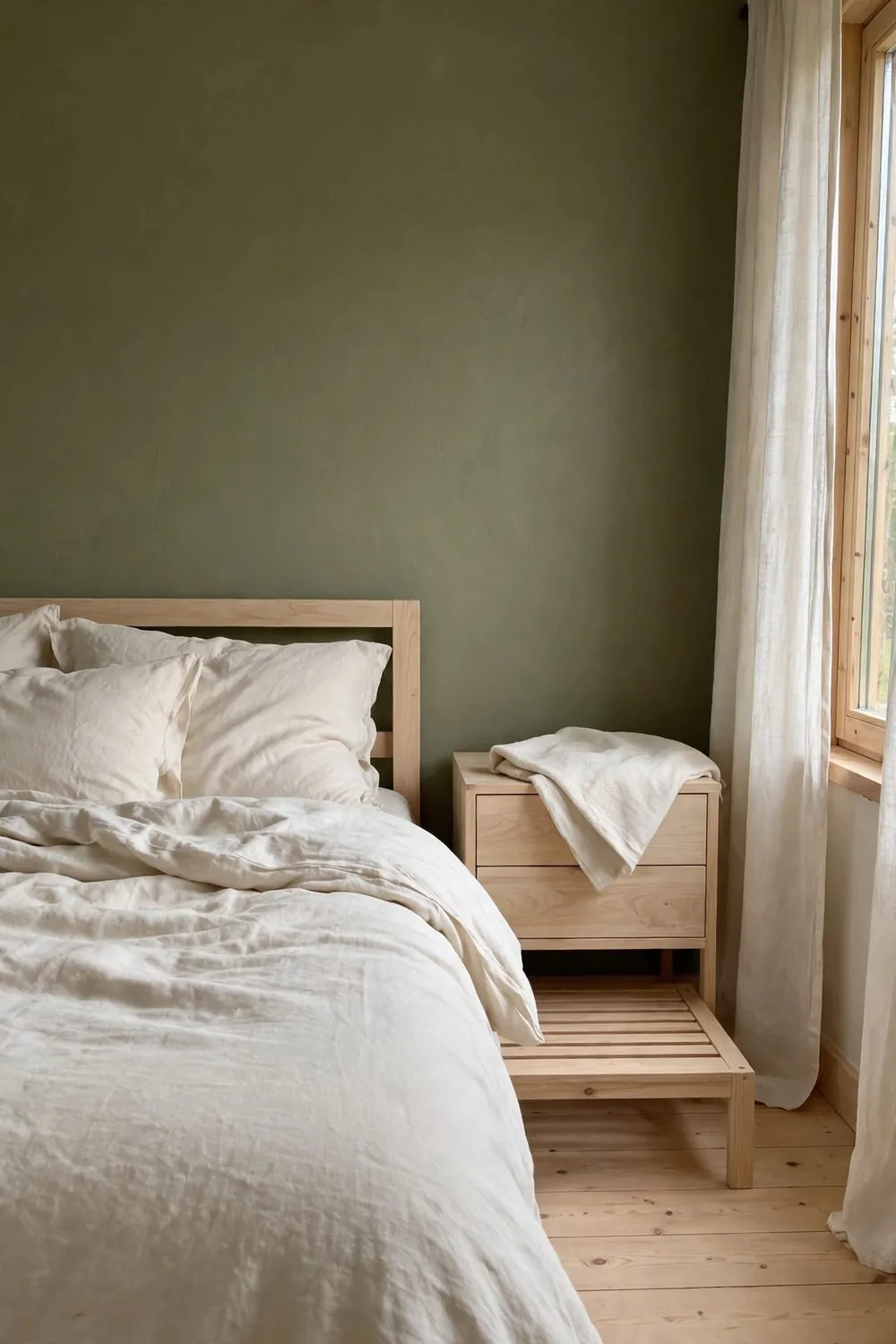
The classic zen-olive palette is three colors: olive, warm off-white (like undyed cotton), and pale natural wood. That is all. Black appears only as a whisper — a frame, a branch, a stone — to give the eye one deep note.
Resist adding a fourth color. In minimal rooms, restraint is not the absence of style; restraint is the style.
3. Paint One Wall or All Four — Both Work
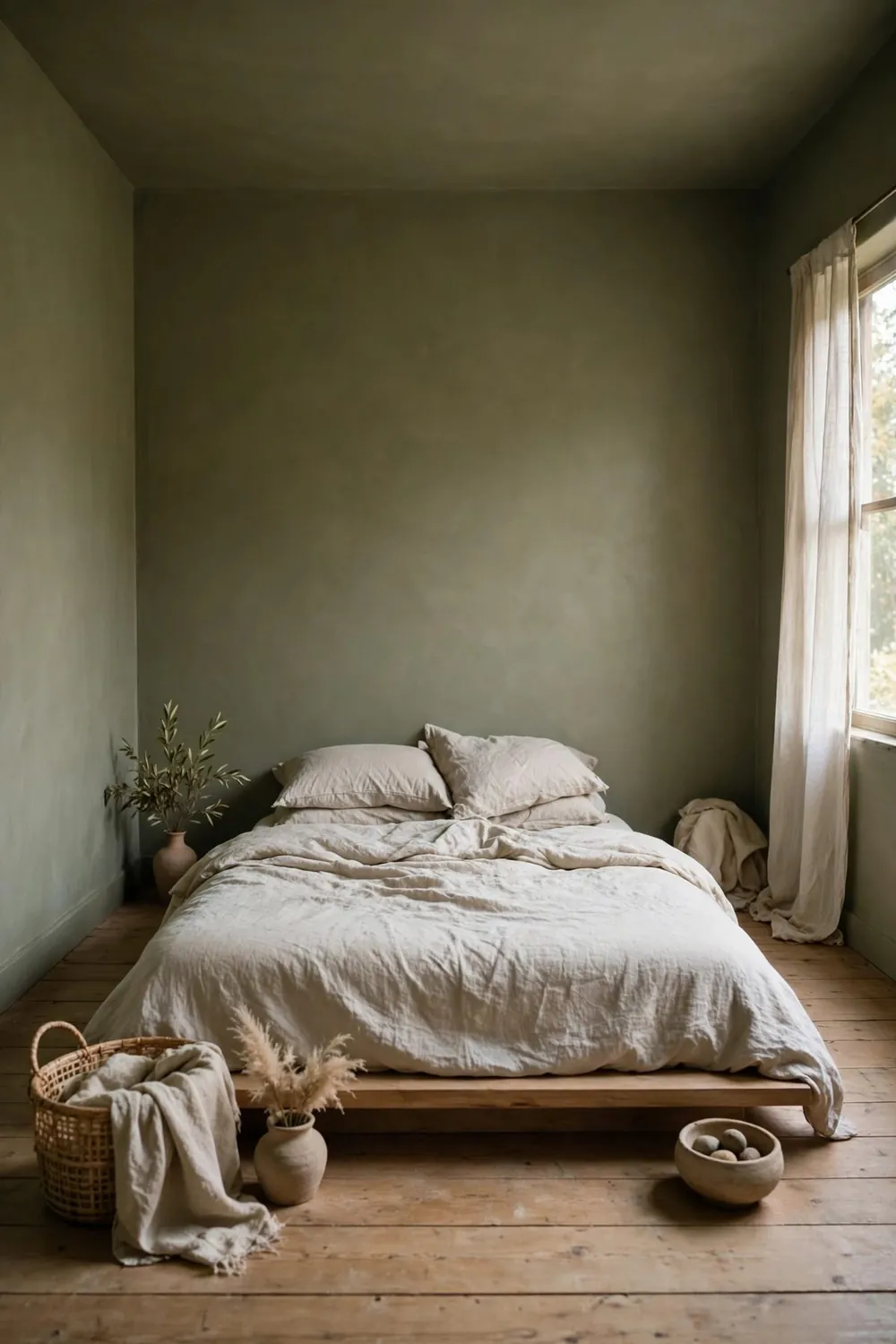
A single olive wall behind the bed creates a deep, grounding backdrop like a forest edge at the head of the room. All four walls in olive make a cocoon — wonderful in a bright room, risky in a dim one. If your room gets little natural light, take the single wall and keep the rest warm off-white.
Limewash or matte finishes suit olive better than satin; flat, chalky surfaces absorb light the way earth does.
4. Anchor With Pale, Honest Wood
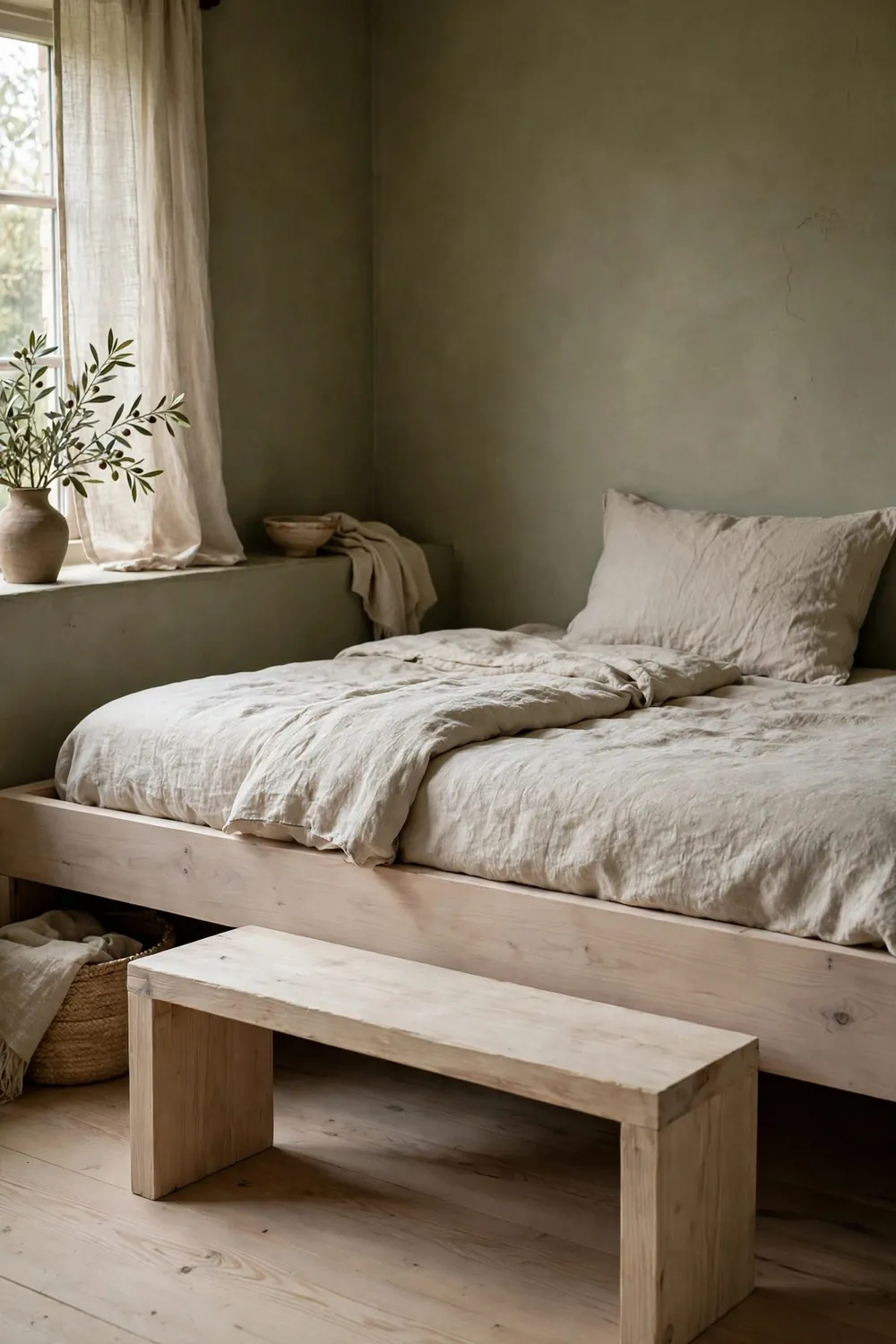
Japanese interiors run on pale woods: ash, beech, light oak, bamboo. Their quiet grain against olive is the whole aesthetic in one pairing. Avoid dark, heavy, or high-gloss furniture here — the room should feel like it grew rather than being installed.
One or two wood tones maximum. Matching-ish wood throughout the room is what makes minimalism feel serene instead of sparse.
The Zen Bed: Low, Layered, Undone-Just-So
The bed in a Japanese-style room sits close to the ground, dressed simply, and looks effortlessly soft — effort being the thing you hide.
5. Go Low With a Platform Bed
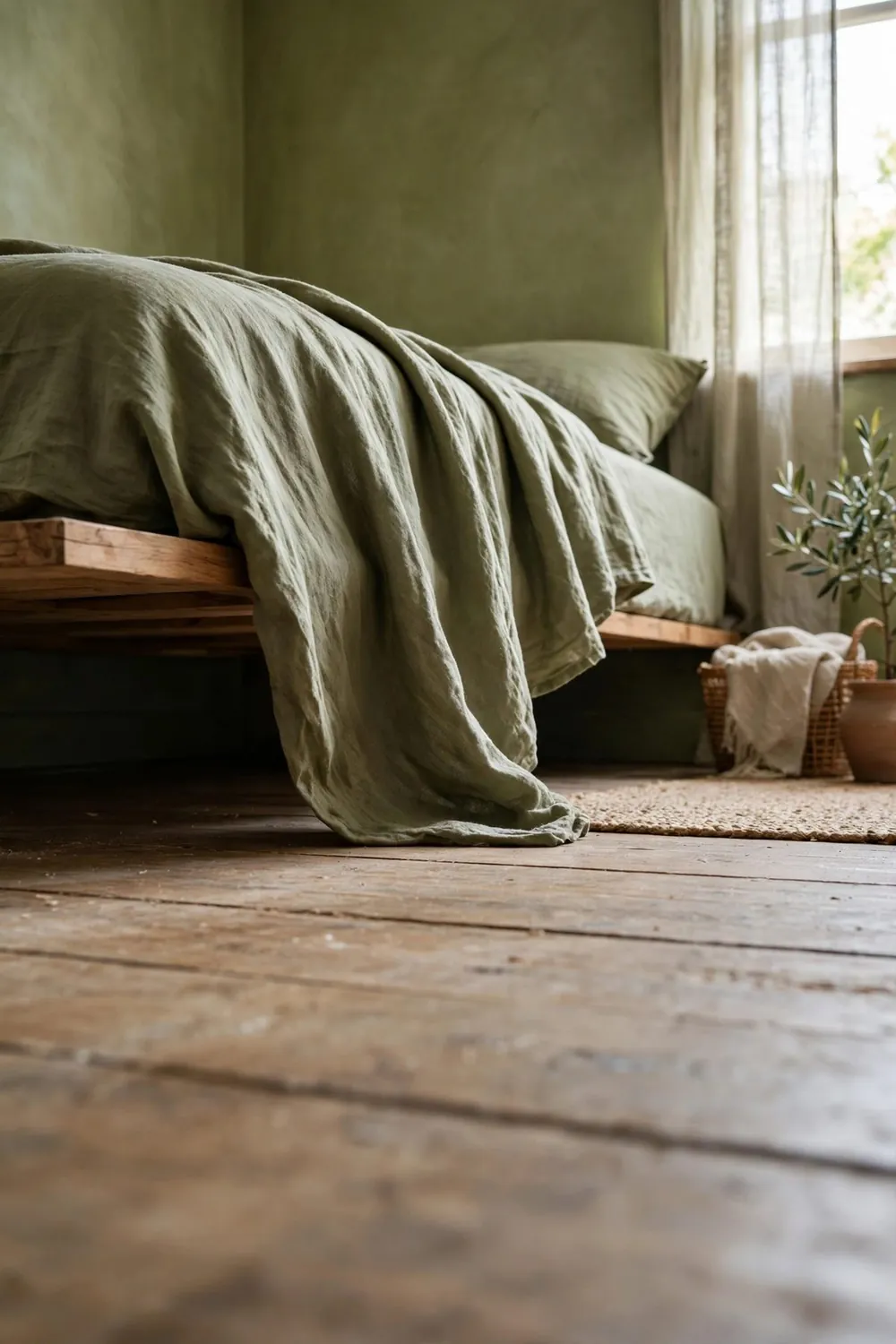
A low wooden platform bed — or even a quality futon-style mattress on a simple frame — changes the proportions of the whole room: ceilings feel higher, the space feels calmer, and the bed becomes a landscape rather than a structure. This is the single most important furniture decision in a zen bedroom.
If a new frame is not in the budget, removing a bulky box spring or choosing the lowest legs available gets you most of the effect.
6. Dress the Bed in Olive Linen and Undyed Cotton
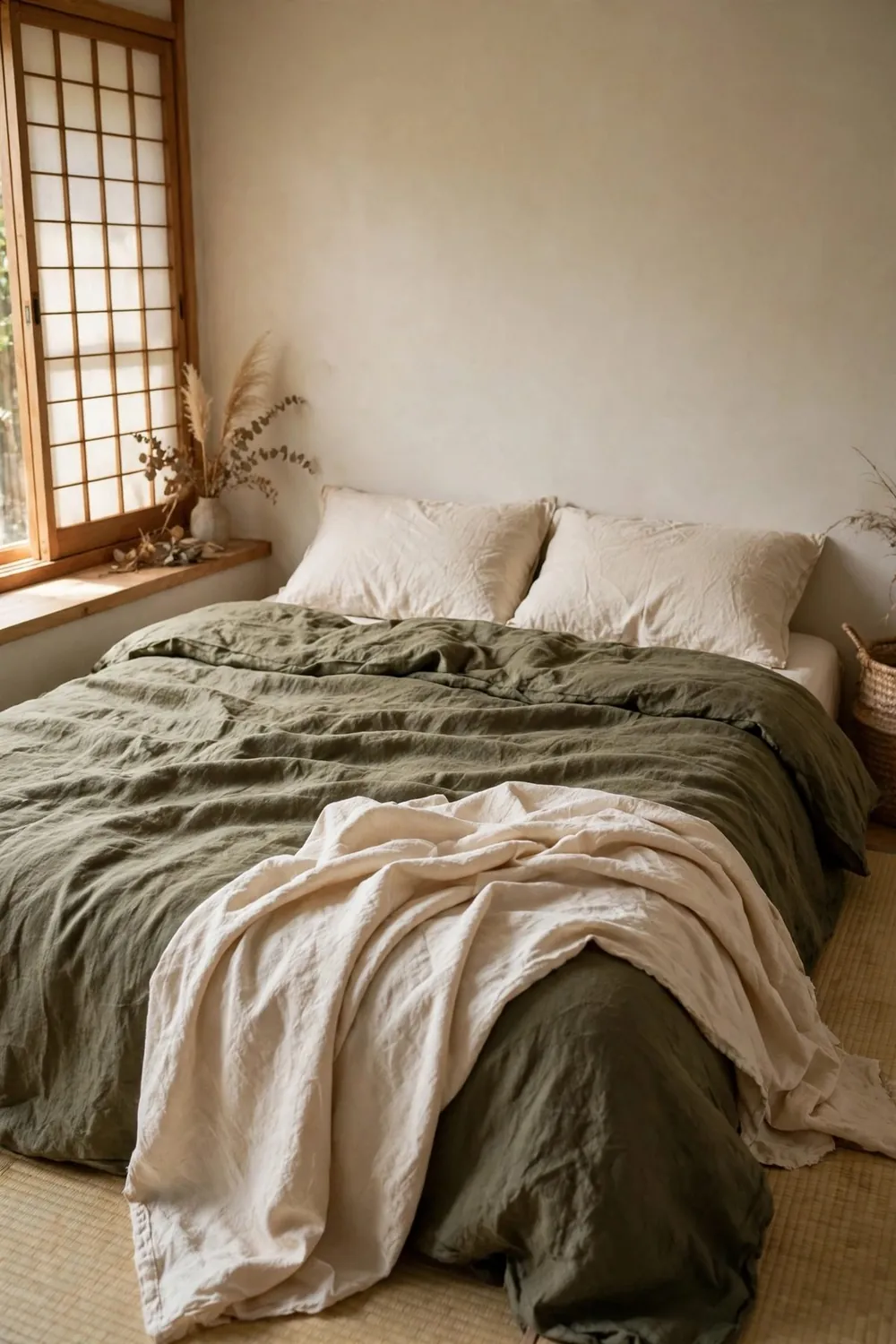
Olive linen bedding, washed and soft, over natural cream sheets is the signature look. Linen’s slub and wrinkle are welcome here — perfection is not zen; ease is. Fold the duvet back once, evenly but not crisply.
Keep the pillow arrangement minimal: sleeping pillows plus one or two simple cushions in cream or a slightly deeper olive. No cushion mountains — the bed should invite lying down, not excavating.
7. Add One Textured Throw, Placed Casually

A single woven throw in natural, undyed tones — or a deeper olive — laid across the foot of the bed adds the one soft accent. Let it fall naturally rather than styling it into origami. In zen spaces, a little beautiful disorder reads as life; total order reads as a showroom.
8. Keep the Floor Beside the Bed Nearly Empty
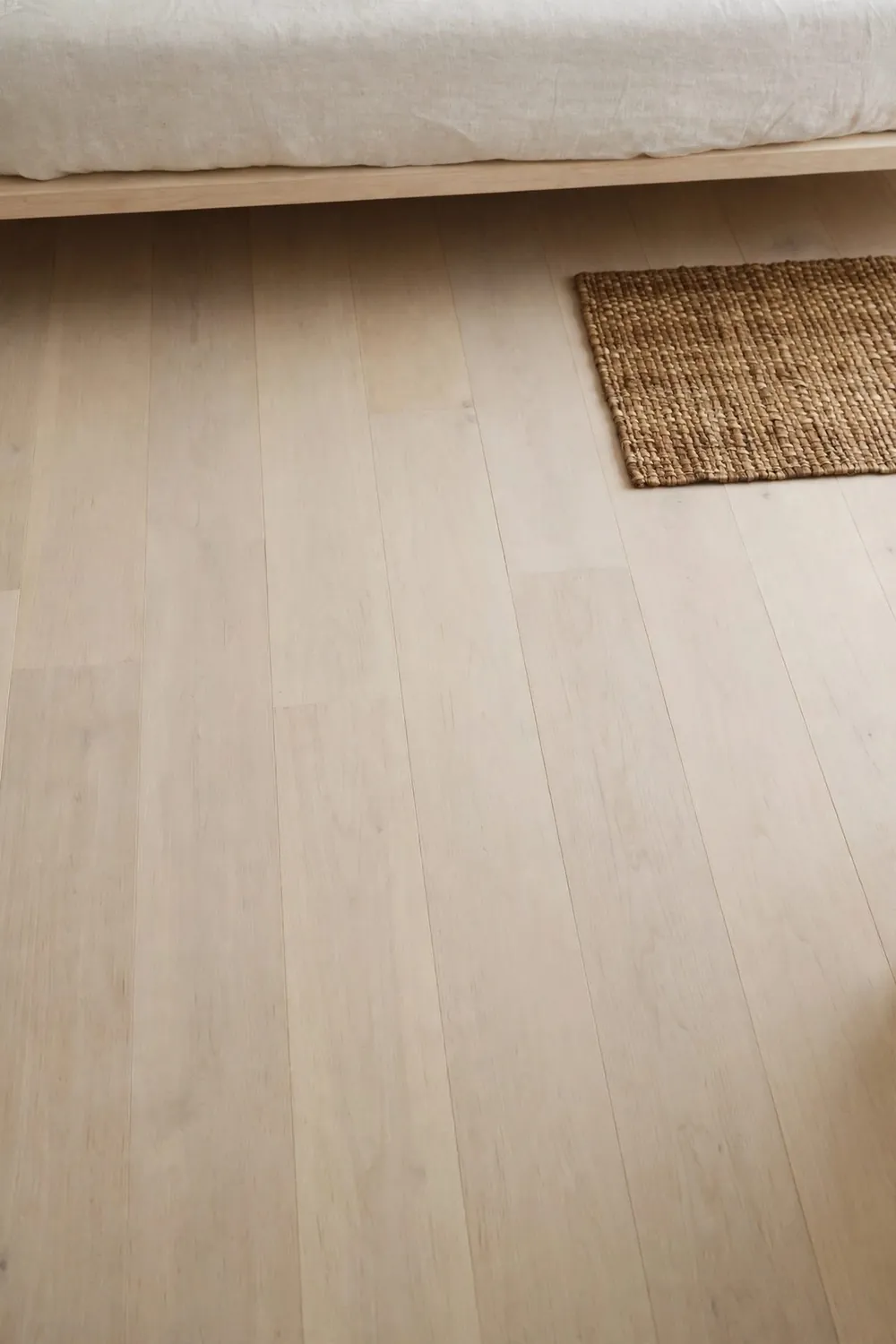
In Japanese rooms, the floor is a surface to be seen. Beside a low bed, that means: a small rug, perhaps a low stool or a stack of two books and a cup — and then space. Resist the urge to fill the bedside with objects. The empty floor is doing calming work.
A woven tatami-style or jute rug in natural tones extends the bed’s low landscape onto the floor beautifully.
Materials, Light & The Art of Empty Space
With the bed set, the room’s materials and light carry the philosophy. Every item from here on is chosen for how it feels at 7am and 10pm, not just how it photographs.
9. Choose Diffused, Paper-Soft Light
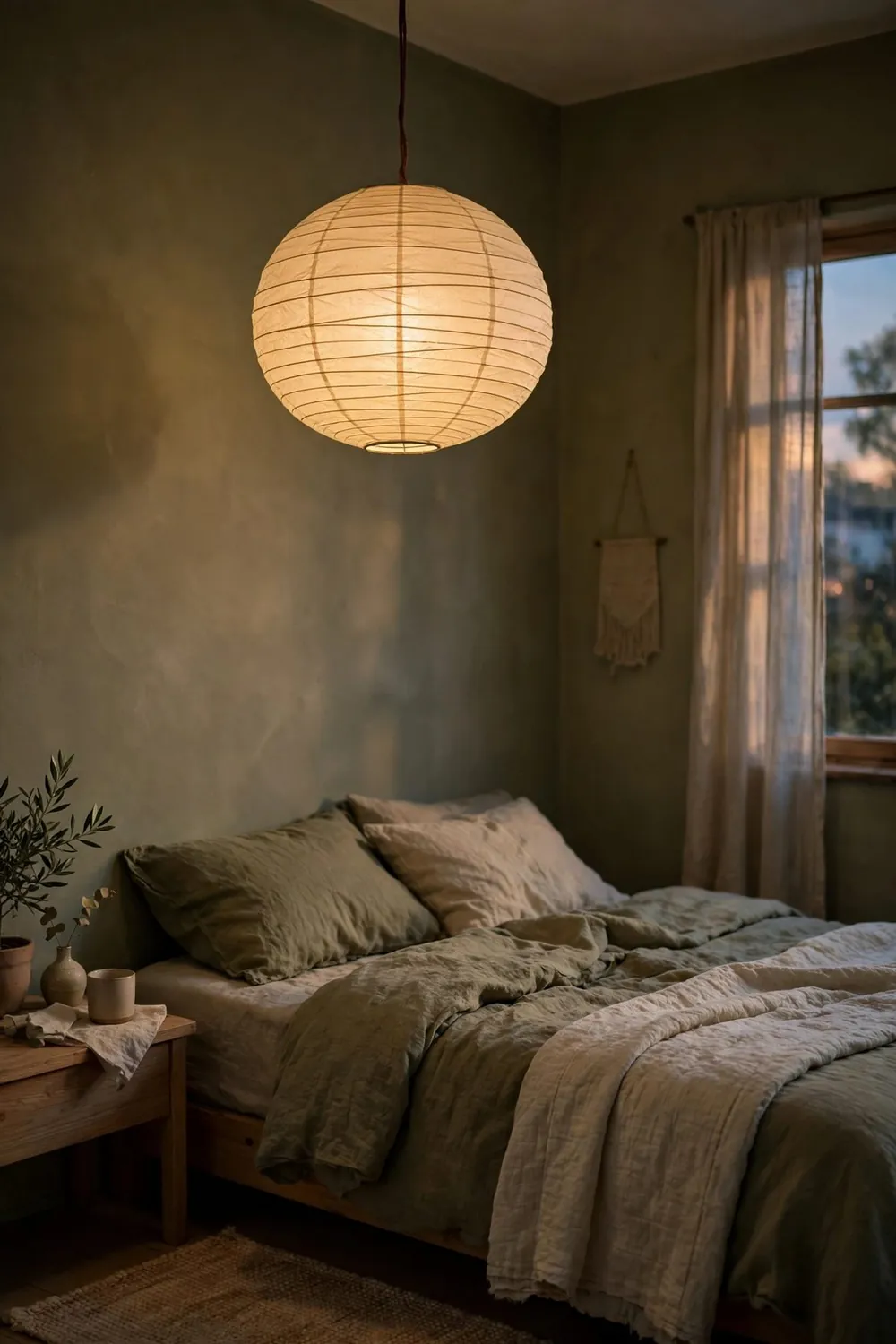
Hard light is the enemy of zen. Paper lantern pendants and lamps, frosted shades, and warm bulbs (2700K or lower) spread light like late-afternoon sun through leaves. One large soft pendant plus a small bedside lamp is usually all a bedroom needs.
If you can, put lights on dimmers. A zen room at full brightness is only half-finished; the dimmed evening version is the real one.
10. Invite Nature In, Sparingly
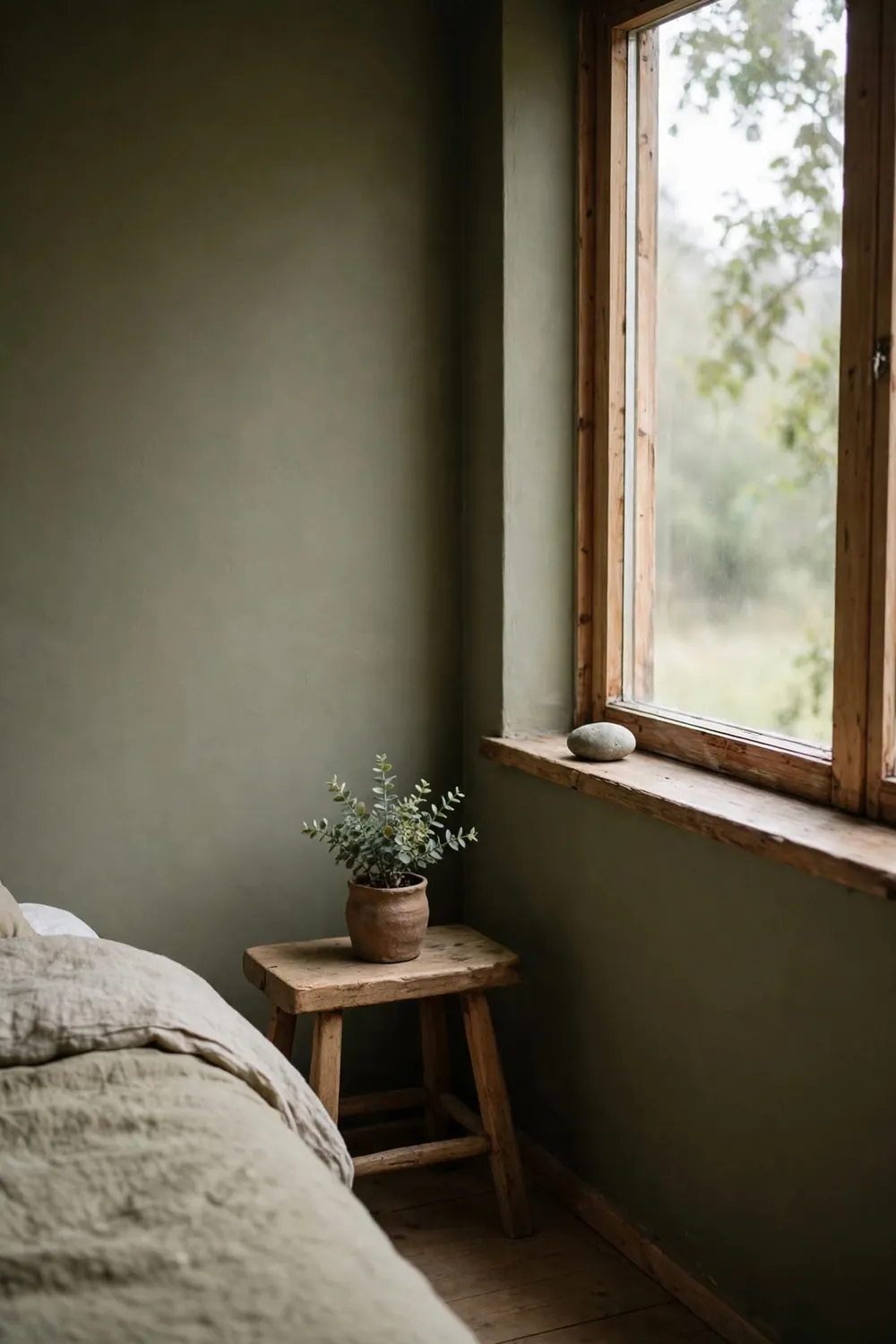
One plant, chosen like a sculpture — a small olive tree, a bonsai-style ficus, a single stem in a ceramic vase, a branch in water. The Japanese principle is that one perfect natural object, given space, says more than a shelf of plants. Let it breathe against the olive wall.
Dried grasses and a single interesting stone also count as nature here, and they ask nothing of you in care.
11. Display One Piece of Art, Hung Low and Quiet
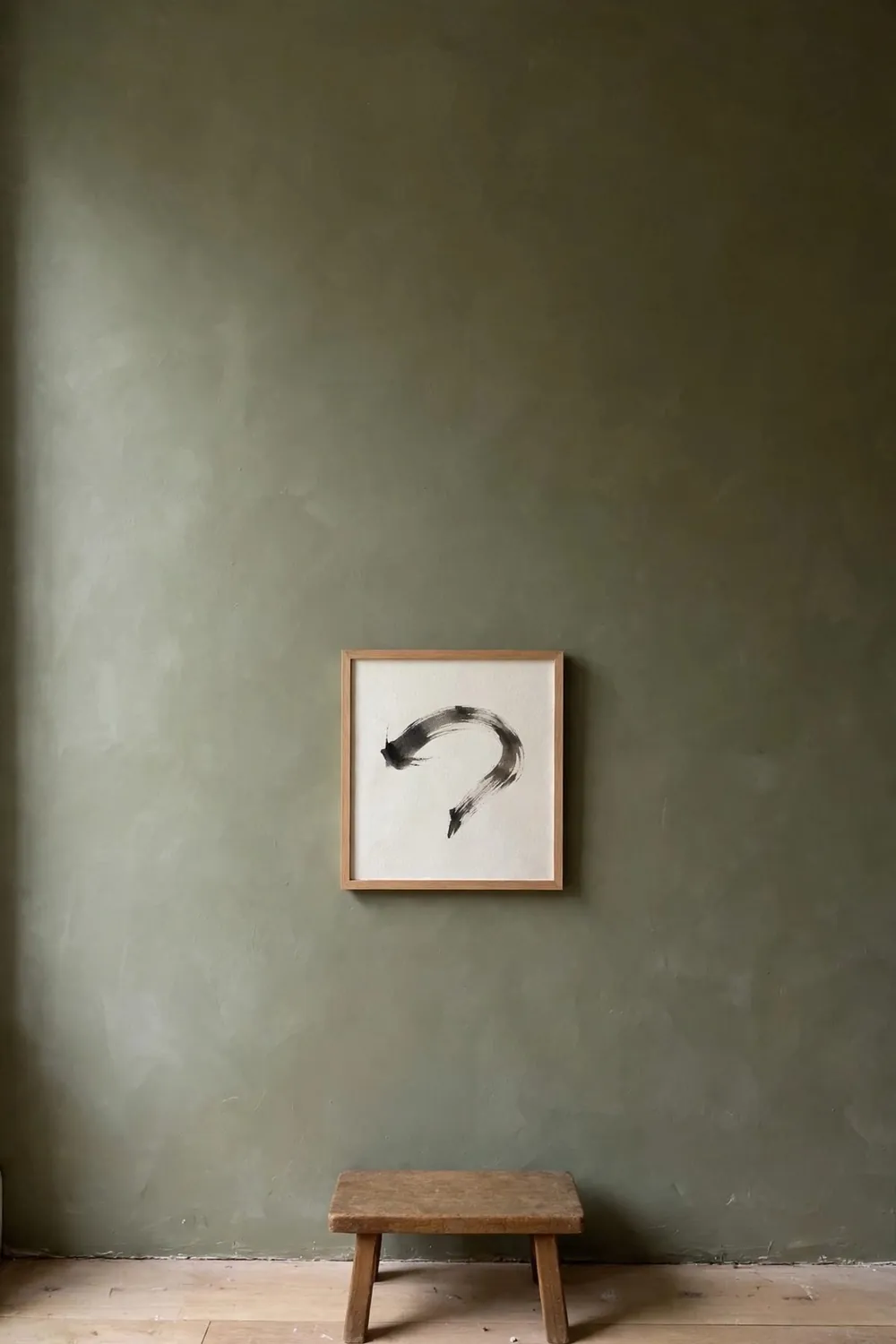
Above or near the bed, one artwork: an ink-style landscape, a simple brushstroke print, a woven textile. Hang it slightly lower than Western habit suggests, in conversation with the low bed. A natural wood or black frame, lots of empty margin in the image itself — the art should feel like a window onto quiet.
12. Hide the Modern World Kindly
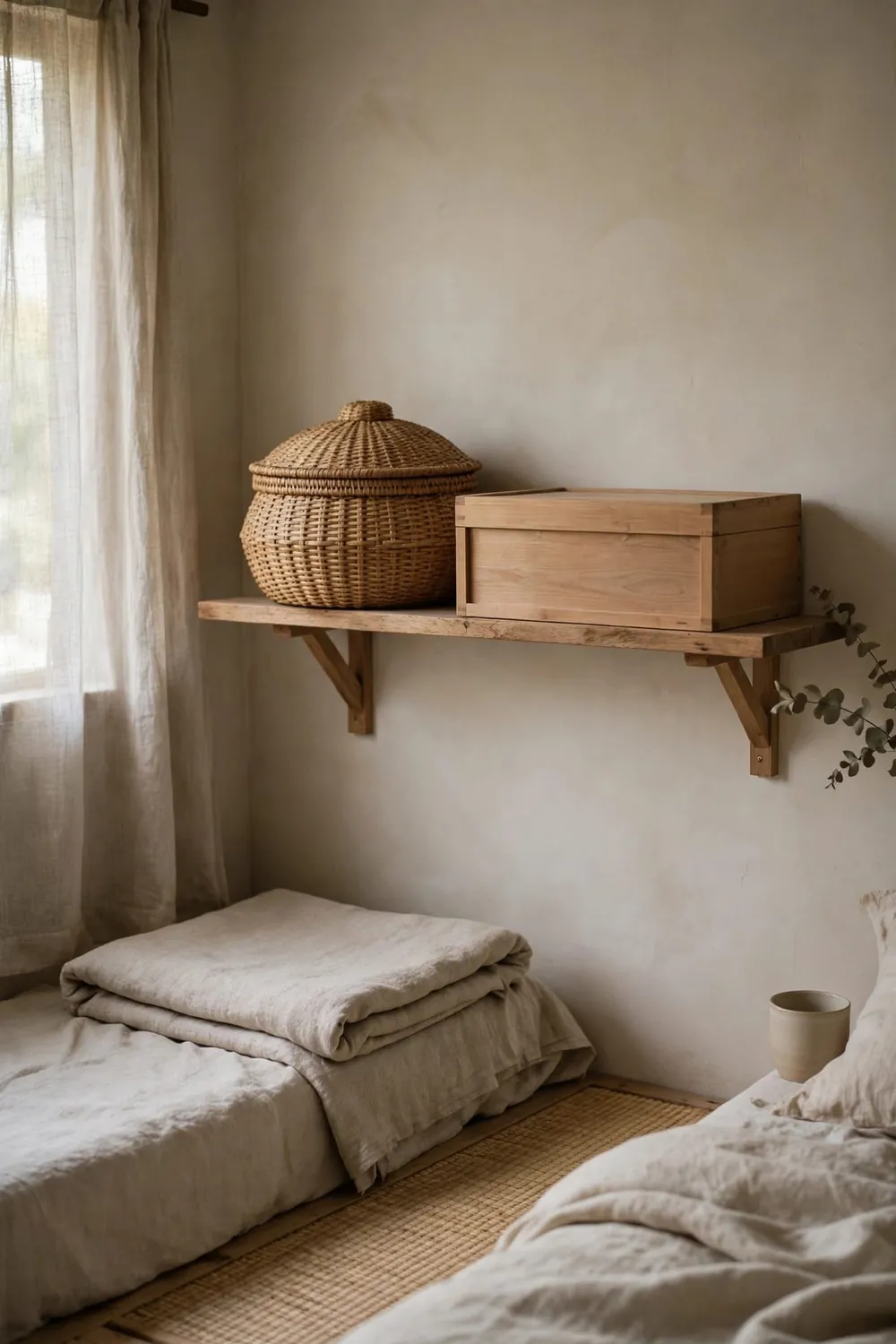
Zen calm evaporates in the presence of cable nests, charger sprawls, and glowing standby lights. A lidded wooden box or woven basket for chargers, a simple screen or curtain for the laundry basket, electronics out of the bed’s sightline — these unglamorous moves protect everything else you have built.
Keep surfaces at roughly 70% empty. When you are not sure whether something belongs out, put it away for a week and notice whether the room misses it. It rarely does.
13. Let Scent Be a Ritual, Not a Product

A stick of incense in the evening, a small dish of cedar, or simply opening the window for ten minutes of real air — scent in a zen room is an action you take, not a device that runs. Choose one gentle scent and keep it occasional, so the room’s true smell — wood, linen, air — stays the baseline.
More Olive Zen Ideas for Restful Nights
Still collecting ideas? These final additions round out the list — each one tested against the same rule as everything above: it has to earn its place in a real home, on a real budget.
14. Add a Low Wooden Bench for Slow Mornings
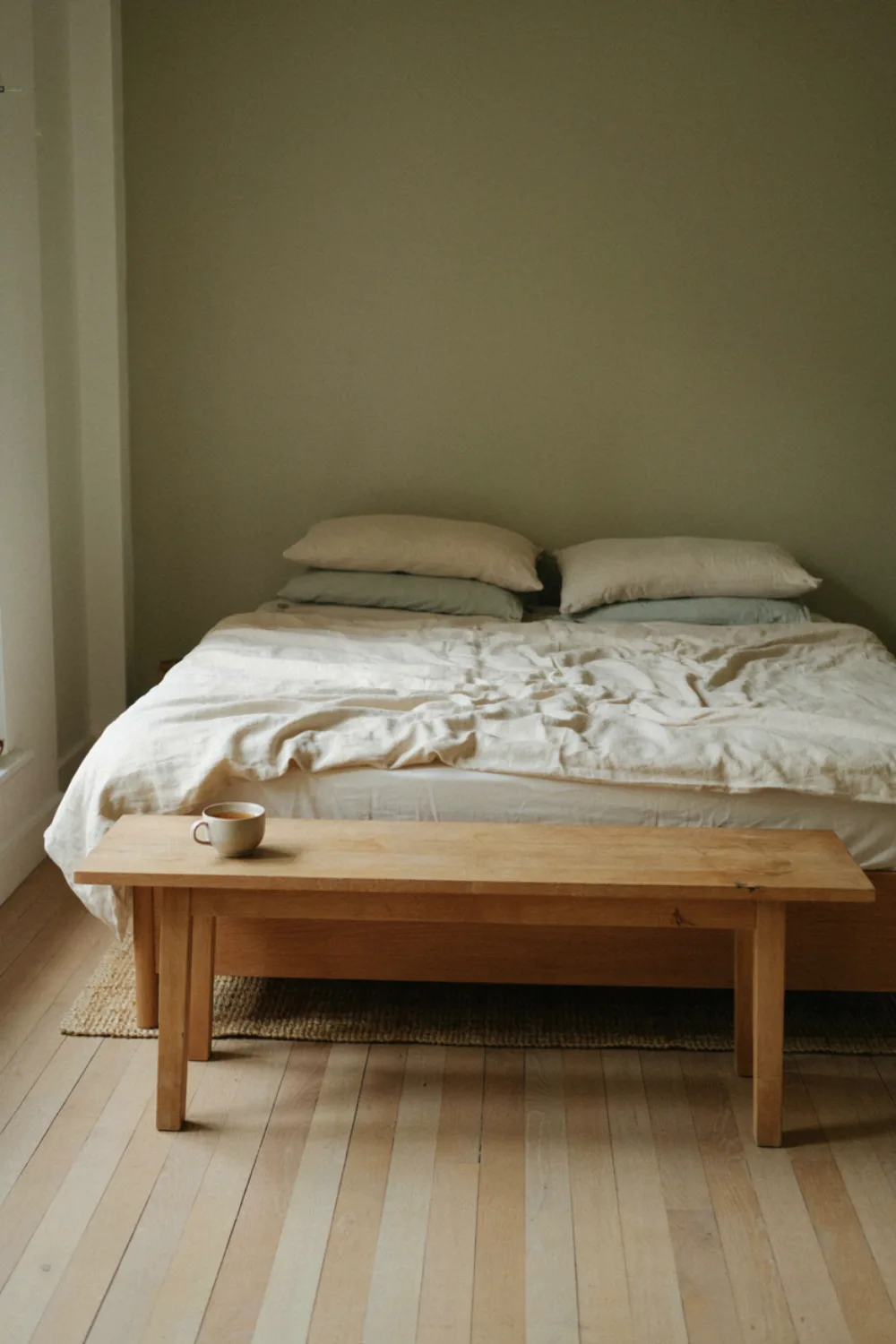
A low, plain wooden bench along a wall or at the foot of the bed gives the zen bedroom its pause point — somewhere to sit with tea, stretch, or meditate that is not the bed. Keep it bare or add one flat cushion in undyed linen.
Choose honest materials: solid wood with visible grain, no lacquer shine. In zen styling, one beautiful plain object outweighs five decorated ones.
15. Hang Undyed Linen Curtains
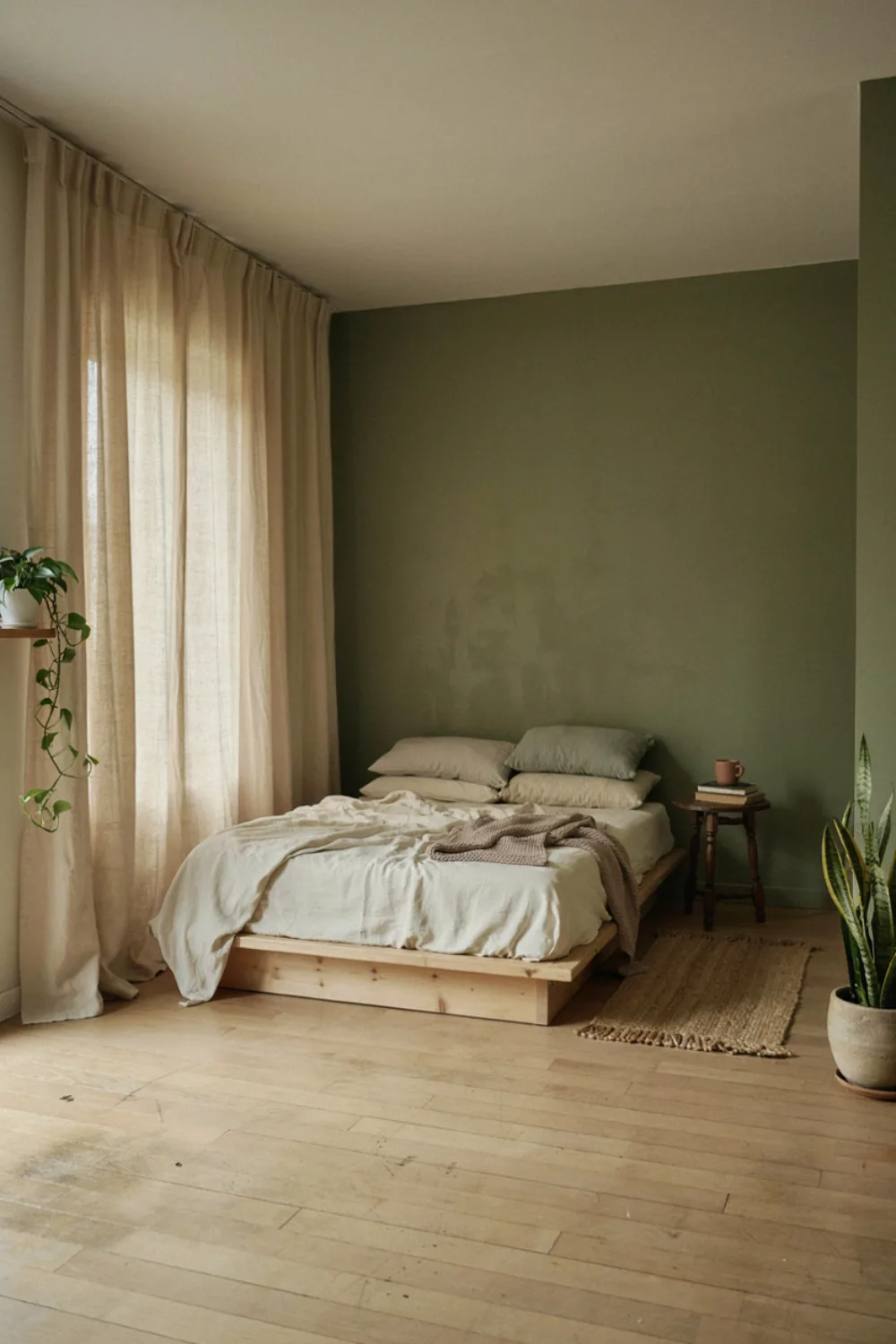
Curtains in natural, undyed flax soften daylight into the diffused glow zen rooms depend on, and their slubby texture pairs with olive like earth with leaves. Hang them to just kiss the floor and let them move a little with air.
Skip blackout formality if you can — waking with gradual natural light is part of the room’s philosophy, and an eye mask costs less than heavy drapes if you need darkness.
16. Rest One Stone or Ceramic Object on the Dresser
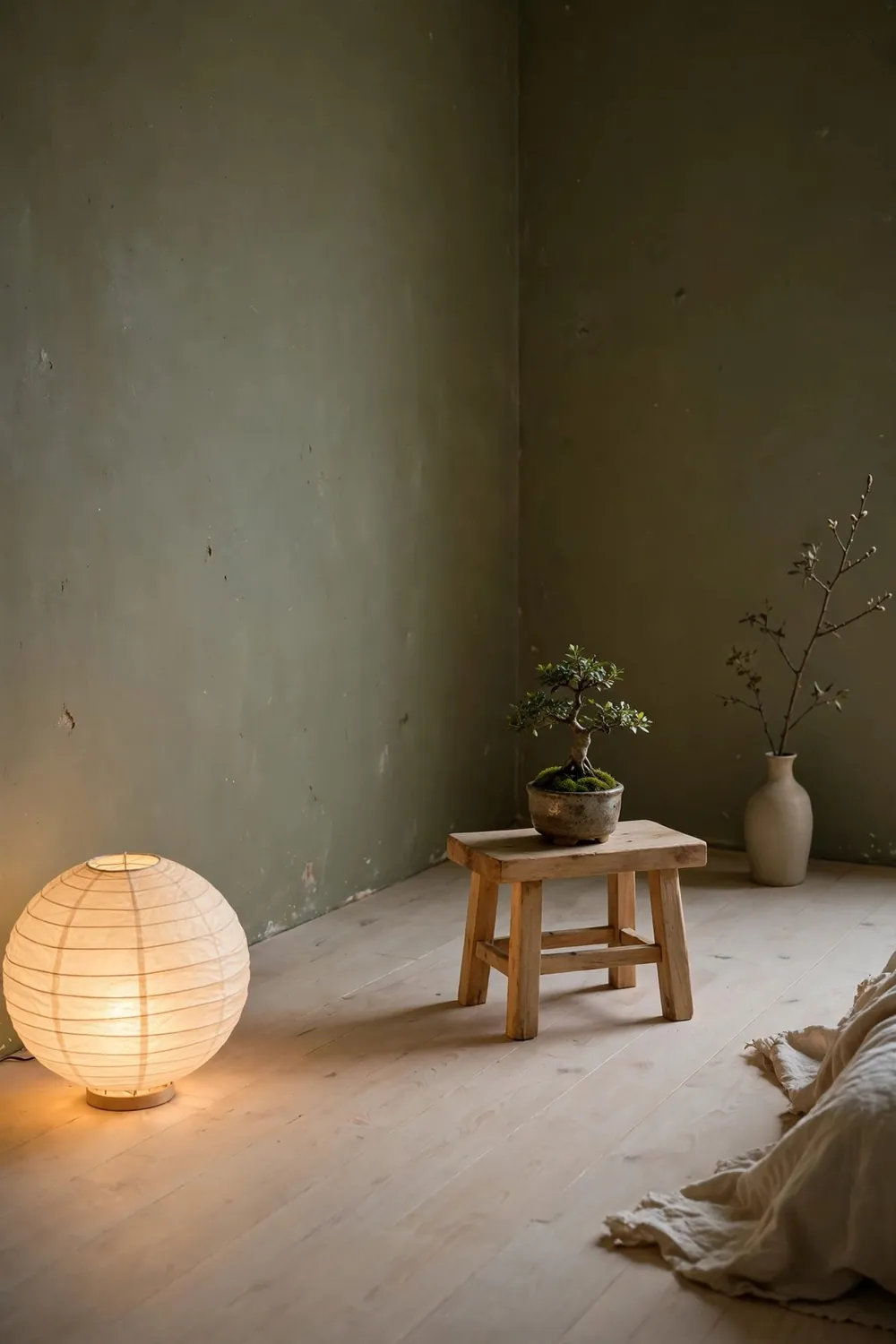
A single smooth stone, a handmade ceramic bowl, or a small clay vessel — alone on the dresser with space around it — is a complete zen composition. The empty space is not missing decor; it is half the design.
Find your object rather than buying a set: a river stone from a walk you remember will hold your attention kindly for years, which is exactly the job.
17. Keep the Floor Mostly Bare, One Flat-Weave Rug
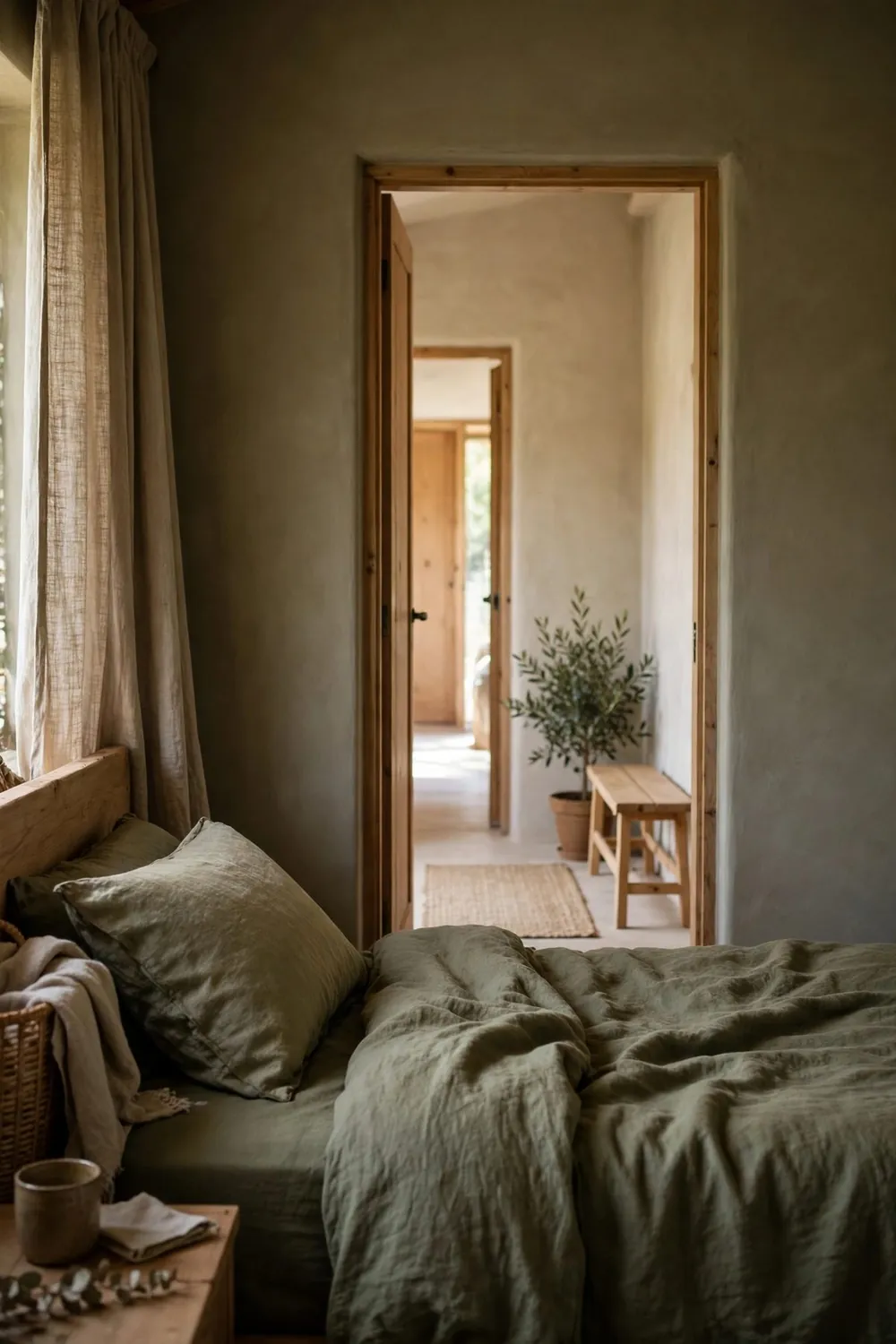
Bare wood or a quiet floor with a single flat-weave rug beside the bed keeps the room grounded and easy to breathe in. Deep pile and busy patterns pull the eye down and stir the mind; flat cotton or jute keeps the gaze level and calm.
Size the rug to land where your feet land — the first step of the day should be onto something soft and warm, the rest of the floor can stay serene and empty.
18. Stand a Bamboo Ladder for Robes and Throws
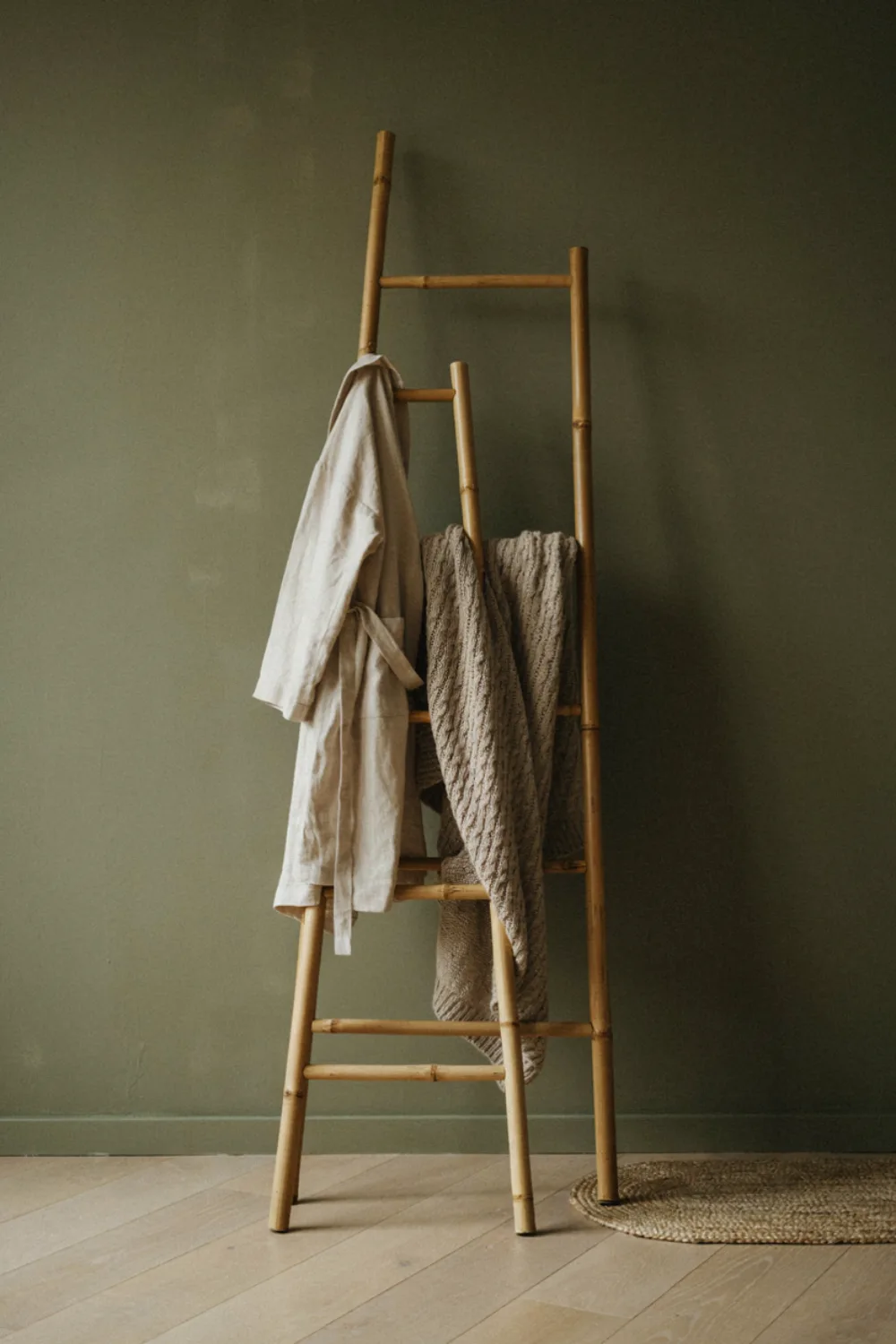
A leaning bamboo or light-wood ladder holds the robe, the evening throw, and tomorrow’s clothes in open view, replacing the dreaded chair pile. Its vertical lines echo bamboo groves and add height without bulk.
One ladder, three items maximum — the discipline is the decor. If it starts collecting more, the room is telling you a drawer needs attention, not the ladder more rungs.
19. Diffuse Light Like a Shoji Screen
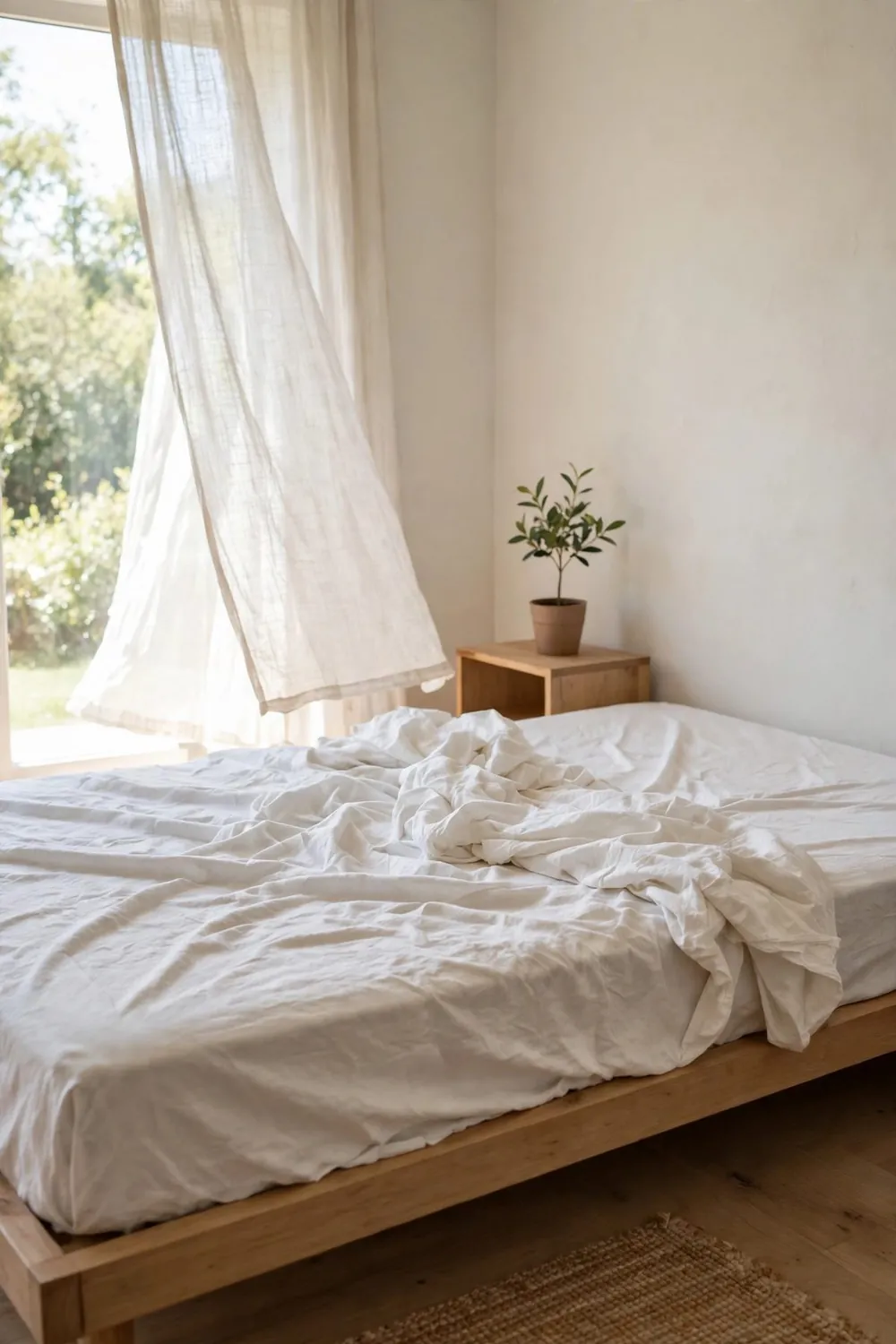
Zen light is indirect: paper-look shades, frosted globes, and lamps that bounce light off walls rather than beaming it at the bed. Swap one harsh ceiling fitting for a large paper pendant and the room exhales.
Keep every bulb warm (2700K) and dimmable if possible. A room that can lower its light in the evening teaches your body when the day is done.
20. Paint the Door and Trim the Same Olive
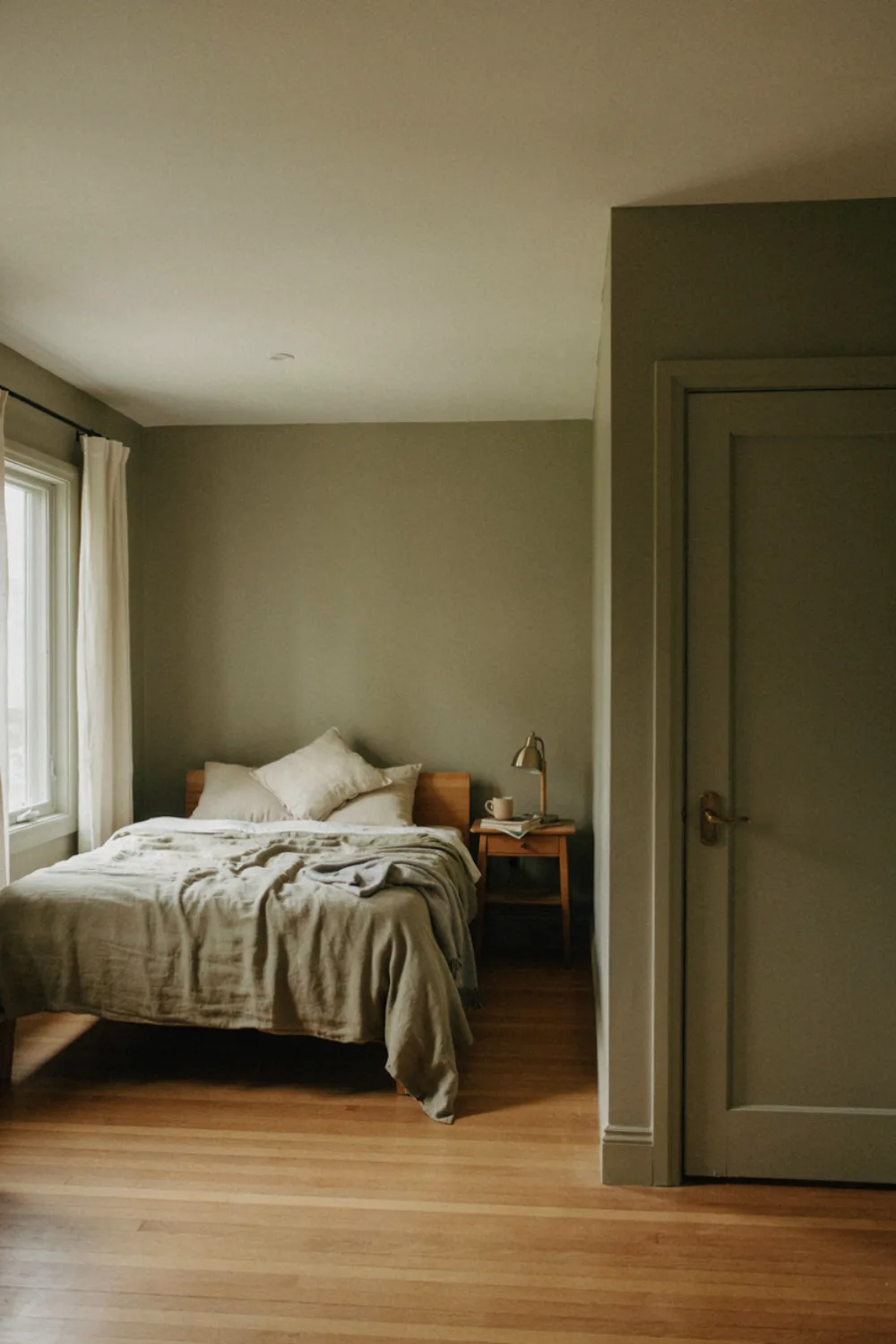
Color-drenching the door and trim in the wall’s olive removes the visual chopping that white woodwork creates, and the room becomes one continuous calm surface. It is a bold move that paradoxically makes the room feel quieter and larger.
Use a satin finish on woodwork against matte walls — the slight sheen difference defines the architecture without a color break.
21. Choose One Scent: Cedar or Sandalwood
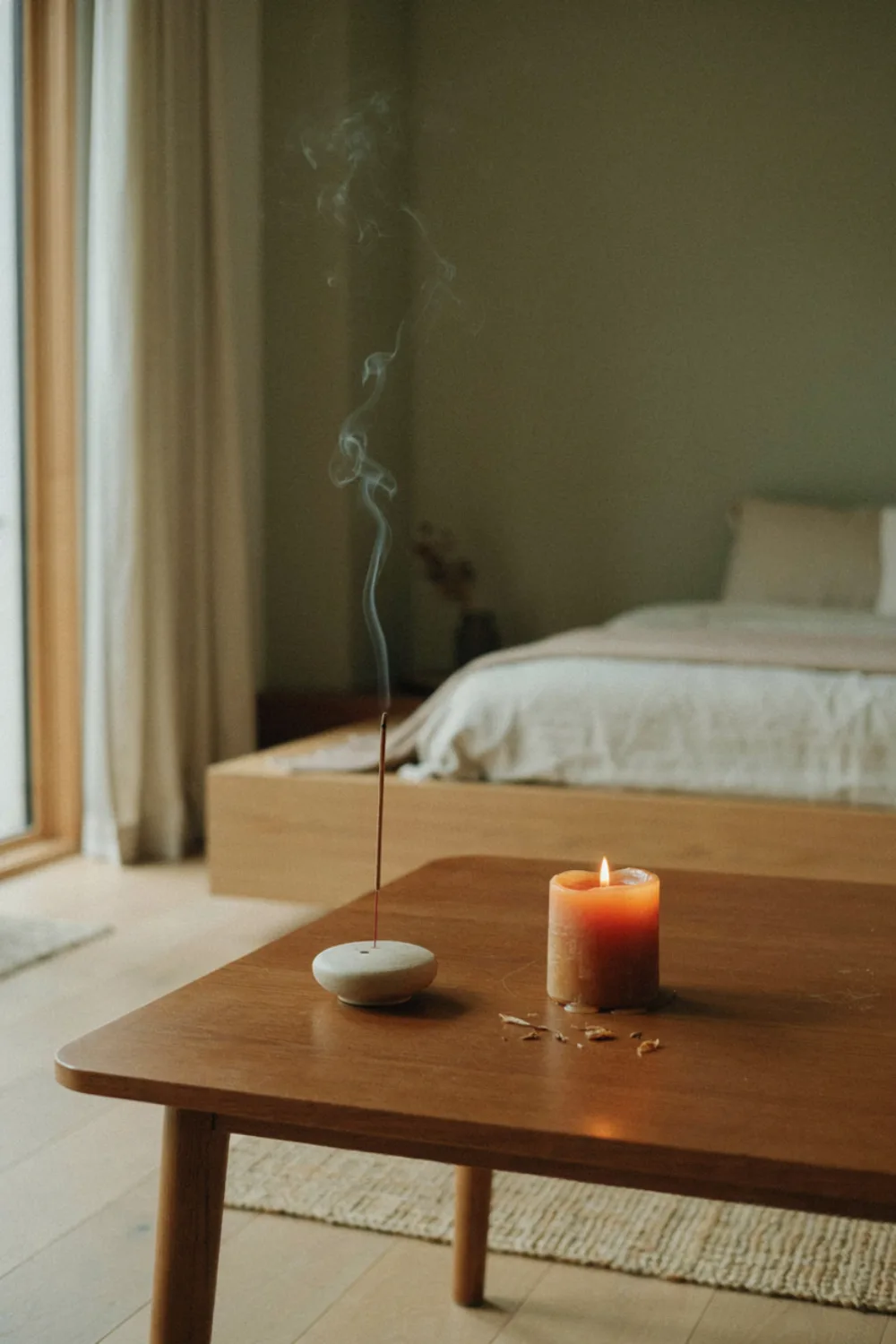
Finish the room with a single woody scent — a cedar block in the wardrobe, a sandalwood candle for the last hour of the day, or one incense stick on a ceramic holder. One scent, repeated, becomes the room’s signature and a sleep cue in itself.
Avoid fruity or floral rotation here: zen rooms rely on constancy, and a scent that never changes quietly tells your nervous system it is home.
Carrying the Zen Beyond the Bedroom Door
A zen bedroom changes the hours around sleep as much as the sleep itself, if you let the habits follow the decor.
The morning ritual. Zen rooms ask to be woken gently: open the curtain before touching a phone, let daylight land on the olive wall, make the bed simply — duvet folded back once, cushions placed — while the kettle heats. Two unhurried minutes. The room’s emptiness gives the morning room to be empty too, and most people find the habit outlasts every productivity system they have tried.
The evening ritual. Dim the lights an hour before bed (the dimmers from Idea 9 earn their money here), let the incense or open window reset the air, and clear the floor of the day — clothes to the basket, objects to their places — as a closing ceremony rather than a chore. A zen bedroom is re-made every evening; that tiny daily renewal is the practice the room was built to hold.
Sharing the zen. Two people can absolutely share a minimal room — it simply requires the discipline to be mutual. Each person gets one bedside surface and one storage box for their overflow; everything else in the room must pass the “chosen, not stored” test for both of you. Couples who manage it report the surprising side effect: a room with nothing spare in it leaves nothing to argue about at bedtime.
When zen meets real life. Illness weeks, new babies, deadline seasons — the room will fill with the evidence of a life being lived at full speed. The zen response is not guilt; it is the monthly edit, done kindly, when the season passes. The room is a practice, not a performance, and its whole purpose is to hold you — including the messy chapters.
Building the Zen Room Slowly: A Shopping Philosophy
Zen rooms should be acquired the way they are designed — slowly, deliberately, and with most purchases being non-purchases.
The one-in question. Before anything enters the room, ask: does this make the room calmer, or only fuller? Calmer can mean softer (a better throw), quieter (a lidded box that ends the cable chaos), or warmer (the right lamp). Fuller is everything else. The question takes four seconds and, applied for a year, builds the room more surely than any shopping trip.
Buy the best version of the few things. A small room count is a budget superpower: when a room needs only a bed, a lamp, a stool, and a plant, you can afford the beautiful version of each. The hand-thrown ceramic vase, the solid-wood stool, the linen that lasts a decade — minimalism lets quality replace quantity, and the room feels richer than a crowded room at three times the spend.
Live with gaps. The hardest discipline: leaving the place for the artwork empty until the right piece appears; letting the corner hold only a plant while you search for the stool. Gaps feel like failure in a decorating culture of before-and-after weekends, but in a zen room the gaps are load-bearing — they are the quiet the whole design exists to protect. The right object, found in month three, rewards the patience every single day after.
Sources that suit zen. Second-hand pale wood furniture (undervalued because it is unfashionable in cycles), handmade ceramics from local makers, natural fiber textiles from honest materials — and your own home, shopped ruthlessly: the stool in the hallway, the plain vase on the kitchen shelf. Most zen rooms are half-assembled from things the household already owned and had never looked at properly.
If You Do Nothing Else: The Three-Day Zen Reset
For readers who will not repaint or refurnish this year — the essence of the room, achievable in three days with what you own.
Day one: subtract. Remove everything from the bedroom that is not essential or loved. Box it out of sight. Sleep in the emptiness and notice your dreams — most people report the best sleep in months on night one.
Day two: soften and warm. Remake the bed with the plainest, most natural bedding you own, folded simply. Move the warmest lamp you have beside the bed. Put one living or natural thing — a plant from another room, a branch in a jar — where you will see it on waking.
Day three: choose the green. One olive thing, as large as you can manage: the throw, the cushions, a curtain, a painted canvas leaned behind the bed. Live with the room for a month. If the calm holds — and it will — you have your answer about the paint.
How to Recreate the Look Step by Step
Step 1 — Empty the room first. Take out everything that is not bed, storage, or essential. Live with the emptiness for a day. Zen is built by subtraction before addition.
Step 2 — Set the palette. Olive (paint, bedding, or both), warm off-white, pale wood. Everything that does not fit the trio leaves or gets covered.
Step 3 — Lower the bed. Platform frame or lowest legs; olive linen on top; one throw.
Step 4 — Soften the light. Paper-style pendant or shade, warm bulbs, dimmers if possible.
Step 5 — Place three things only. One plant, one artwork, one natural object. Then stop. The discipline of stopping is the final step, and the hardest.
Going deeper: the seven-day zen reset. Zen is maintained in minutes, not achieved in weekends. Day one, clear every surface to zero and return only what the room truly needs. Day two, edit visual noise: hide chargers, align book spines, fold the throw the same way you will fold it daily. Day three, sound — oil the squeaky hinge, pad the drawer that bangs. Days four to seven, simply live in it and notice the one thing each day that disturbs the calm; fix only that. By the week’s end the room has been tuned to your actual habits rather than an ideal stranger’s. Repeat the reset each season, because zen drifts as life changes. The goal is a bedroom that returns you to baseline every single night — and small, regular corrections protect that far better than occasional grand purges.
Real-Life Problems, Solved
These are the questions real people ask most when a room isn’t working yet, answered for this style.
Can I decorate my bedroom for sleep first, and style second?
That is exactly what a zen room is for. Start with darkness, using blackout lining behind linen curtains. Add low, warm light: lamps with 2700K bulbs and no overhead light after dusk. Keep the room cool, around 16–19°C (60–67°F), and use breathable cotton or linen bedding. Keep the nightstand clear apart from a lamp, a book and water. Then add the olive, wood and texture around those decisions.
My partner and I like completely different temperatures. Any fix?
Try the Scandinavian bedding setup: two separate single duvets on one bed, each in the weight that suits its sleeper. In matching covers it still looks calm and intentional, and nobody wakes at 3 a.m. too hot or too cold. A cooling, breathable mattress protector on the warmer sleeper’s side helps too.
Where should the bed go for the most restful feel?
Put the headboard against a solid wall, ideally one where you can see the door from bed without lining up directly with it. Leave about 60 cm (24 in) to walk around each side. If every wall has a window or door, a low headboard under a window works well with curtains framing it.
Budget Guide: Where to Save, Where to Spend
Save on: almost everything, honestly — minimalism is the cheapest aesthetic there is. Paint one wall instead of four, print ink-style art at home, thrift pale-wood furniture (it is the less-fashionable tone and often priced kindly), and let one plant do the work of ten decorations.
Spend a little more on: the bed frame and the linen. You will touch both every day, a low platform frame lasts decades, and real linen in olive is the visual heart of the room. A good paper pendant light is the third worthy splurge — cheap ones glow harsh and yellow-grey.
Mistakes to Avoid
Mistaking minimal for empty. A zen room is not a bare room — it is a room where each thing is chosen. Bare feels cold; chosen feels calm. The difference is the bed made beautifully, one plant, one artwork, warm light.
Too many wood tones. Pale oak plus dark walnut plus orange pine reads as a furniture store clearance corner. One or two pale tones, repeated, keep the serenity.
Bright, saturated olive. If your olive reads as “green!” from the doorway, it is too loud for zen. Muted, grey-brown olives are the ones that whisper.
Clutter creep. Zen rooms fail by accumulation — one extra cushion, one more ornament, a growing bedside pile. A monthly five-minute edit keeps the philosophy intact.
Cold, bright lighting. Blue-toned or glaring light destroys the mood faster than any wrong purchase. Warm and diffused, always.
Your Zen Olive Bedroom Checklist
- Olive chosen muted and grey-leaning, tested in evening light
- Palette held to three: olive, warm off-white, pale wood
- One olive wall (or four, in a bright room)
- Low platform bed or lowest-leg setup
- Olive linen bedding over natural cream sheets
- Cushions kept to sleeping pillows plus one or two
- One casually placed textured throw
- Bedside floor nearly empty — rug, stool, space
- Paper-soft diffused light, 2700K or warmer
- One plant or natural object, given room to breathe
- One piece of quiet art, hung low
- Chargers and clutter hidden in lidded storage
- Surfaces around 70% empty
Frequently Asked Questions
What is the difference between sage and olive in a bedroom?
Sage is paler and softer — a grey-green whisper that suits bright, airy rooms. Olive is deeper and earthier, with brown in its bones, and suits the grounded, cocooning feeling of zen design. Olive generally needs a bit more light or a bit more cream around it to stay serene.
Can I do a zen bedroom without buying a platform bed?
Yes, mostly. Lower what you have (remove the box spring if your frame allows, choose short legs), keep the bedding simple and low-profile, and clear the floor space around the bed. The low, grounded feeling comes as much from the emptiness around the bed as from the frame itself.
What if my partner finds minimal rooms cold?
Add warmth through texture rather than objects: a thicker woven throw, a softer rug, warmer light, one more plant. Zen rooms feel “cold” when they are empty of softness, not when they are empty of stuff. Keep the count low and the softness high.
Which plants suit an olive zen bedroom?
A small olive tree is the poetic choice; a bonsai-style ficus, a snake plant (for its sculptural upright shape), or a single stem of eucalyptus in a vase all work. One plant, well-placed, in a simple ceramic pot.
Does the zen style work in a rental?
Beautifully — it is mostly about removal, textiles, and light. The olive wall can become olive bedding against your existing walls, the pendant can be a plug-in paper lantern, and everything else is furniture arrangement and editing. Nothing here needs a drill except one artwork hook, and sticky hooks handle that.
Save this for later
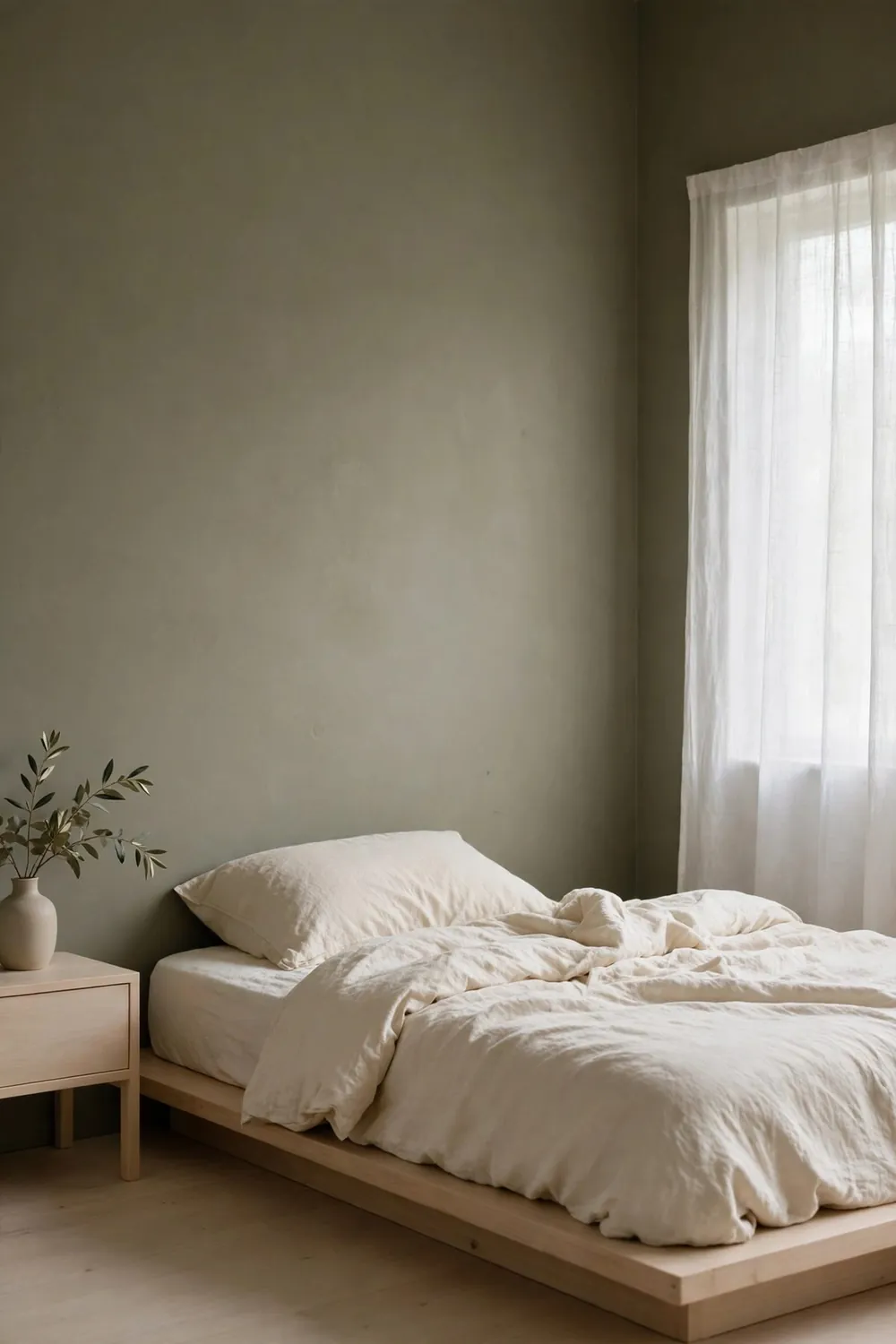
Save this guide and start with Step 1 — the emptying. Most people discover their zen bedroom was already in the room, buried under things it never needed. Then add back only what this list asks for: olive, linen, pale wood, soft light, and space.
Keep reading: 21 Sage Green Bedroom Ideas for a Calm, Earthy Retreat for olive’s paler sister in a warmer, more layered style, and 20 Bedroom Color Combinations That Always Look Expensive to see how olive and its partners rank against the classics.