21 Sculptural Wall Art Ideas to Make Any Room Feel Elevated
Flat art has had a long reign, but the most exciting living rooms right now have walls with dimension. Sculptural wall art — pieces with depth, shadow, and texture you can almost feel from the sofa — turns a plain wall into the room’s main event, and it does it with a single piece instead of a fussy arrangement.
Large is the operative word. One generous sculptural piece above a sofa does what a dozen small frames cannot: it gives the room a focal point with genuine presence, the feeling of a gallery or a boutique hotel. And because texture photographs as richness, these pieces make even a simple neutral room look expensive.
This guide covers the main families of sculptural wall art, the sizing and hanging rules that make them work, how to light them (this is where the magic happens), and how to get the look on a real budget — including pieces you can make yourself.
In this guide
- The Main Families of Sculptural Wall Art
- Sizing, Placement & Hanging Rules
- Light: Where Sculpture Comes Alive
- Getting the Look for Less (Including DIY)
- More Sculptural Ideas to Elevate the Wall
- Sculptural Art in Every Room
- Buying Sculptural Art: What to Look For
- Rotating & Refreshing: Keeping the Wall Alive for Years
- How to Recreate the Look Step by Step
- Real-Life Problems, Solved
- Budget Guide: Where to Save, Where to Spend
- Mistakes to Avoid
- Your Sculptural Wall Art Checklist
- Frequently Asked Questions
The Main Families of Sculptural Wall Art
Each material family has its own personality. Choose by the feeling you want the room to have.
1. Plaster and Relief Art: Quiet Drama
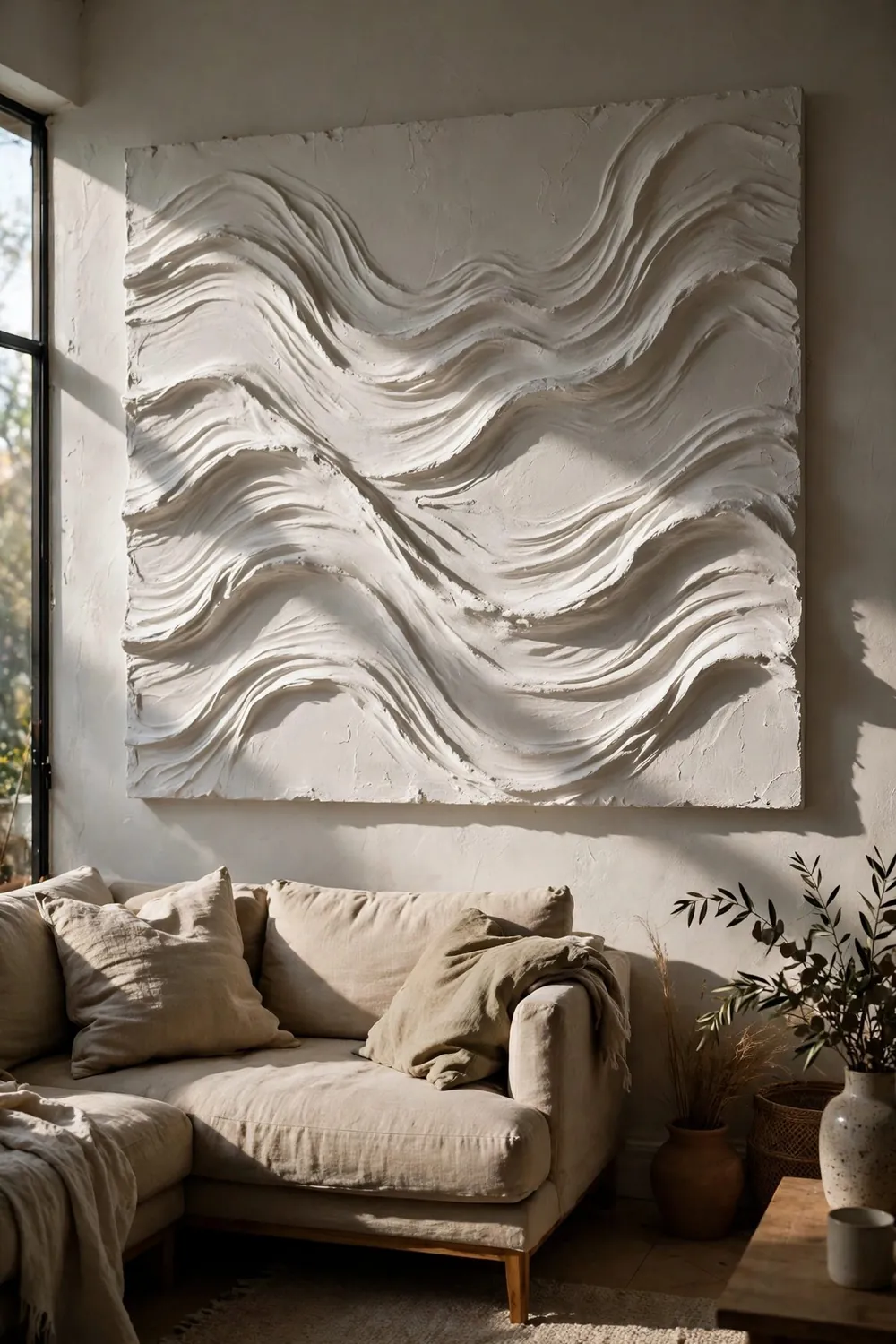
Plaster, gesso, and textured relief panels in white or warm neutrals are the signature of the modern organic living room. Arches, waves, sunbursts, and abstract curves cast gentle shadows that change through the day. They suit calm, neutral rooms that need depth without color.
Relief art is also the most DIY-able family on this list — joint compound or plaster on a board or canvas, shaped with a trowel or your hands, is a beloved weekend project (see Idea 9).
2. Metal Wall Sculptures: Movement and Shine
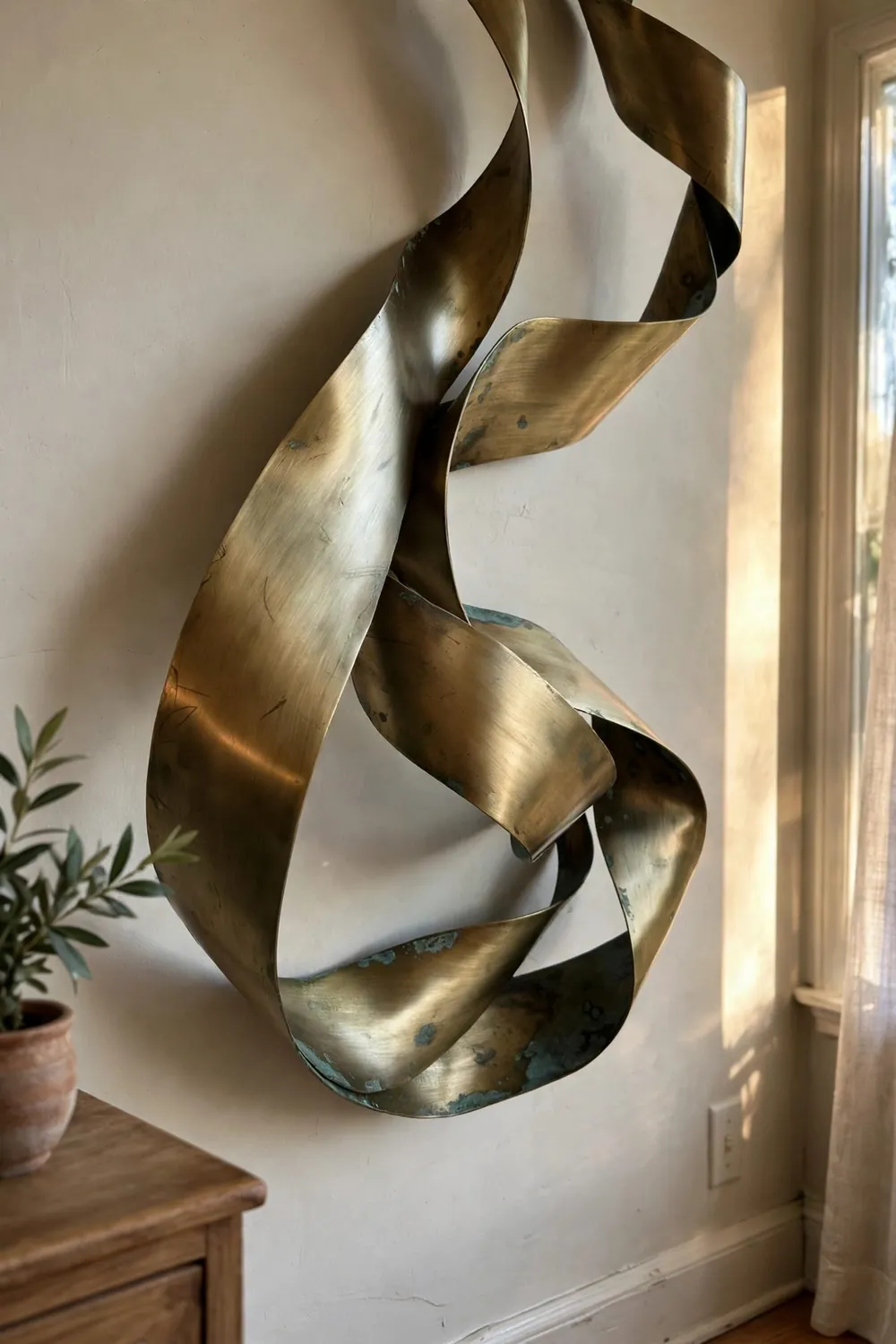
Forged, brushed, or painted metal pieces — flowing ribbons, clustered discs, abstract birds, geometric grids — bring energy and a hint of glamour. Warm metals (brass, bronze, aged gold) flatter warm rooms; blackened steel suits cooler, more architectural spaces.
Metal catches lamplight beautifully in the evening, which makes it a strong choice for rooms used mostly after dark.
3. Woven and Fiber Sculptures: Soft Architecture
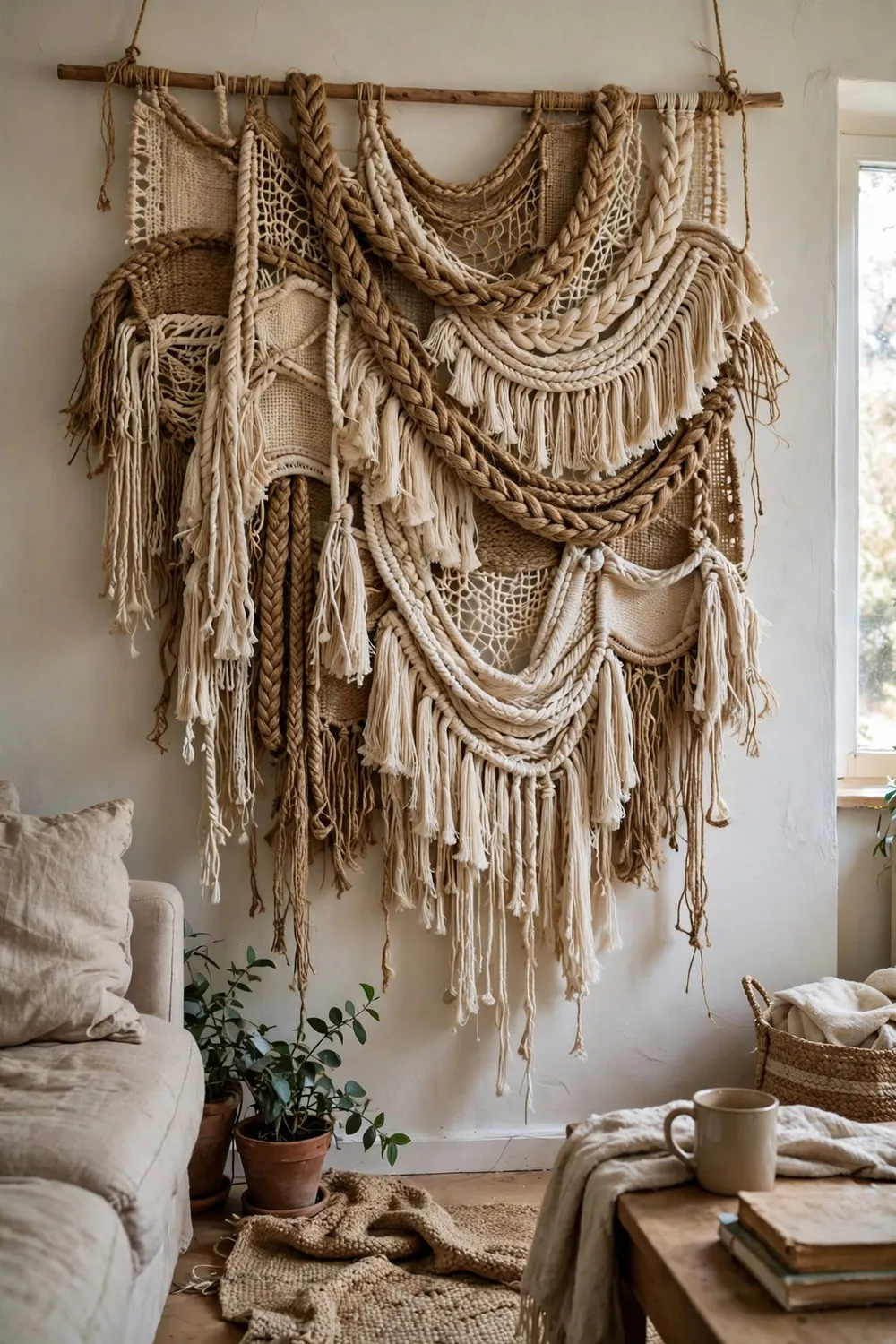
Oversized woven hangings, knotted rope pieces, woven basket compositions, and large-scale macrame bring sculpture’s dimension with textile softness. They warm up modern rooms that risk feeling hard, and they are light — a blessing for big pieces and rental walls.
A cluster of large flat baskets in varied natural tones is the budget superstar of this family: sculptural, warm, and available in every thrift store on earth.
4. Wood Sculptures and Carved Pieces: Warm Geometry
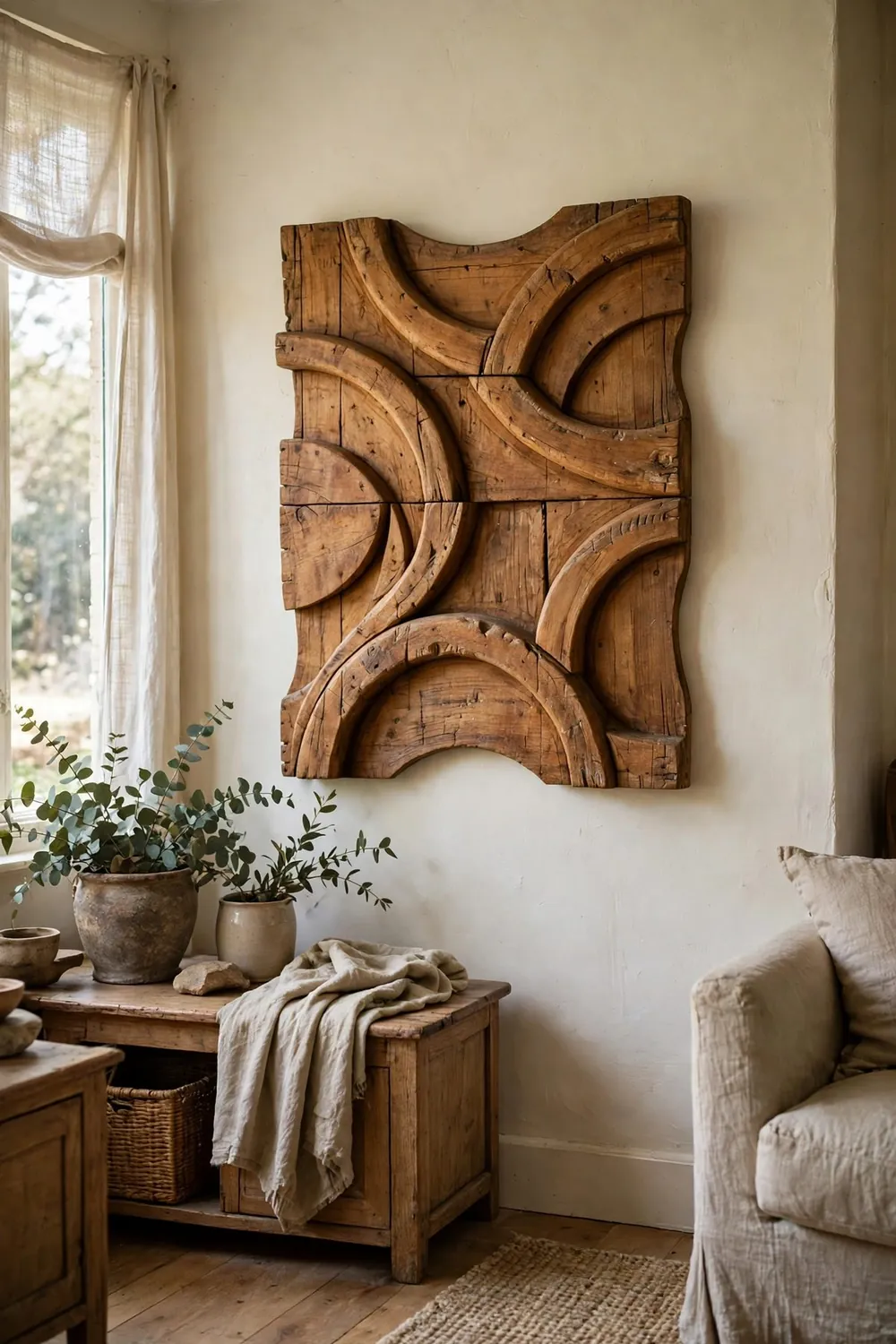
Carved wood panels, slatted wood compositions, driftwood arrangements, and geometric wood-tile art bring nature’s grain into the sculpture idea. Wood pieces bridge modern and rustic rooms effortlessly and add the warmth that plaster and metal sometimes lack.
Look for reclaimed and carved pieces with real variation in tone — the grain is the artwork.
5. Ceramic and Stone Compositions: Earthy Galleries
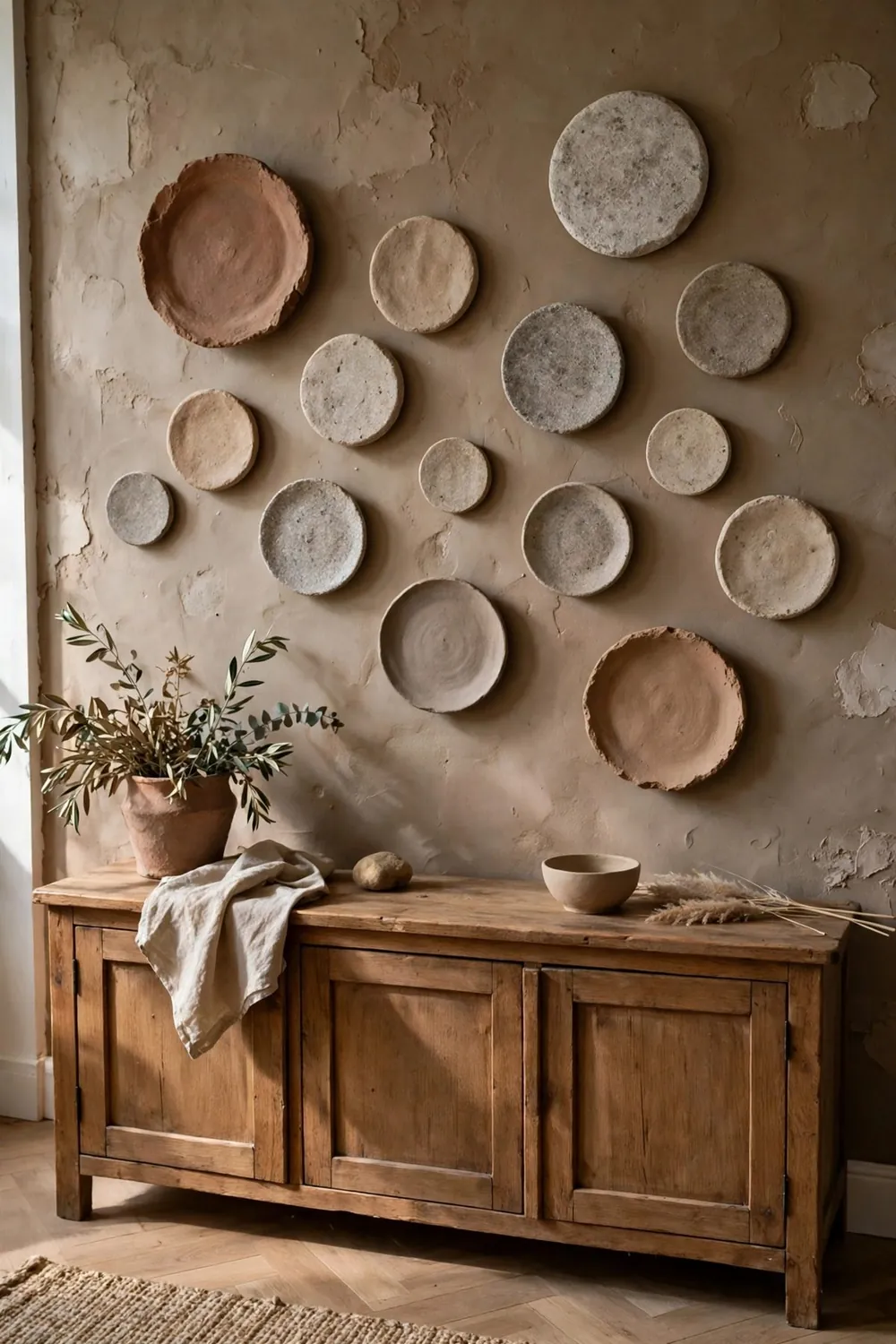
A composed group of ceramic discs, stone tiles, or pottery fragments mounted as one large installation gives a wall the feeling of an archaeological treasure. Individually they are small; composed within an invisible grid or a loose constellation across a big area, they read as one large sculptural work.
This family rewards patience — collect pieces over months, in one tight palette of stone, clay, and cream.
Sizing, Placement & Hanging Rules
Sculptural art fails more often from sizing and hanging mistakes than from the piece itself. These rules are the difference between “gallery” and “garage sale.”
6. Follow the Two-Thirds Rule Above a Sofa
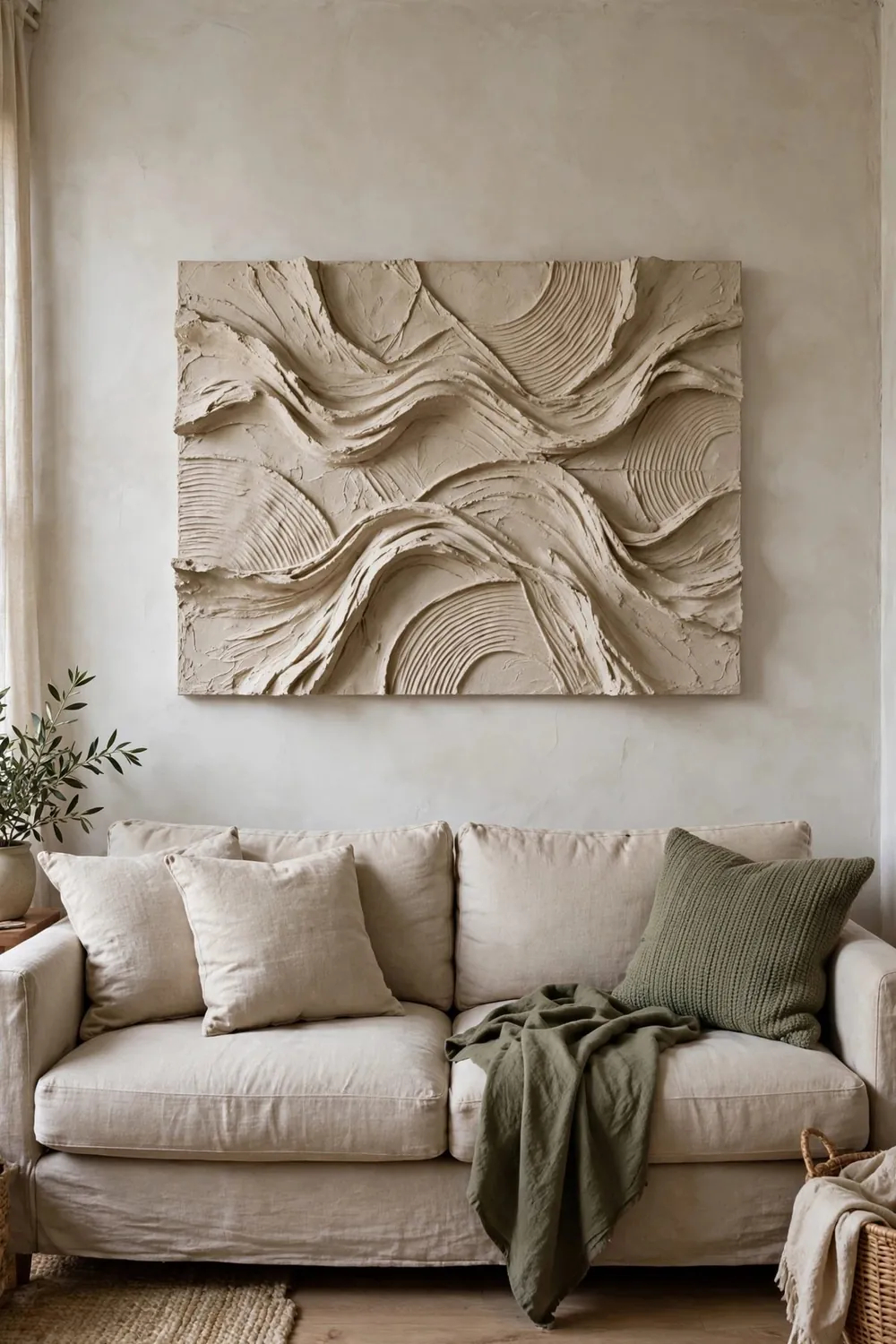
Above a sofa, art should span roughly two-thirds of the sofa’s width. For sculptural pieces, measure the whole composition — a basket cluster or ceramic constellation counts as one piece with one footprint. Too small is the universal error; when torn between two sizes, choose the larger.
Height matters too: the bottom of the piece should sit about 6–10 inches above the sofa back — close enough to feel connected, high enough to clear heads.
7. Respect the Weight: Anchors, Studs, and Honest Hardware
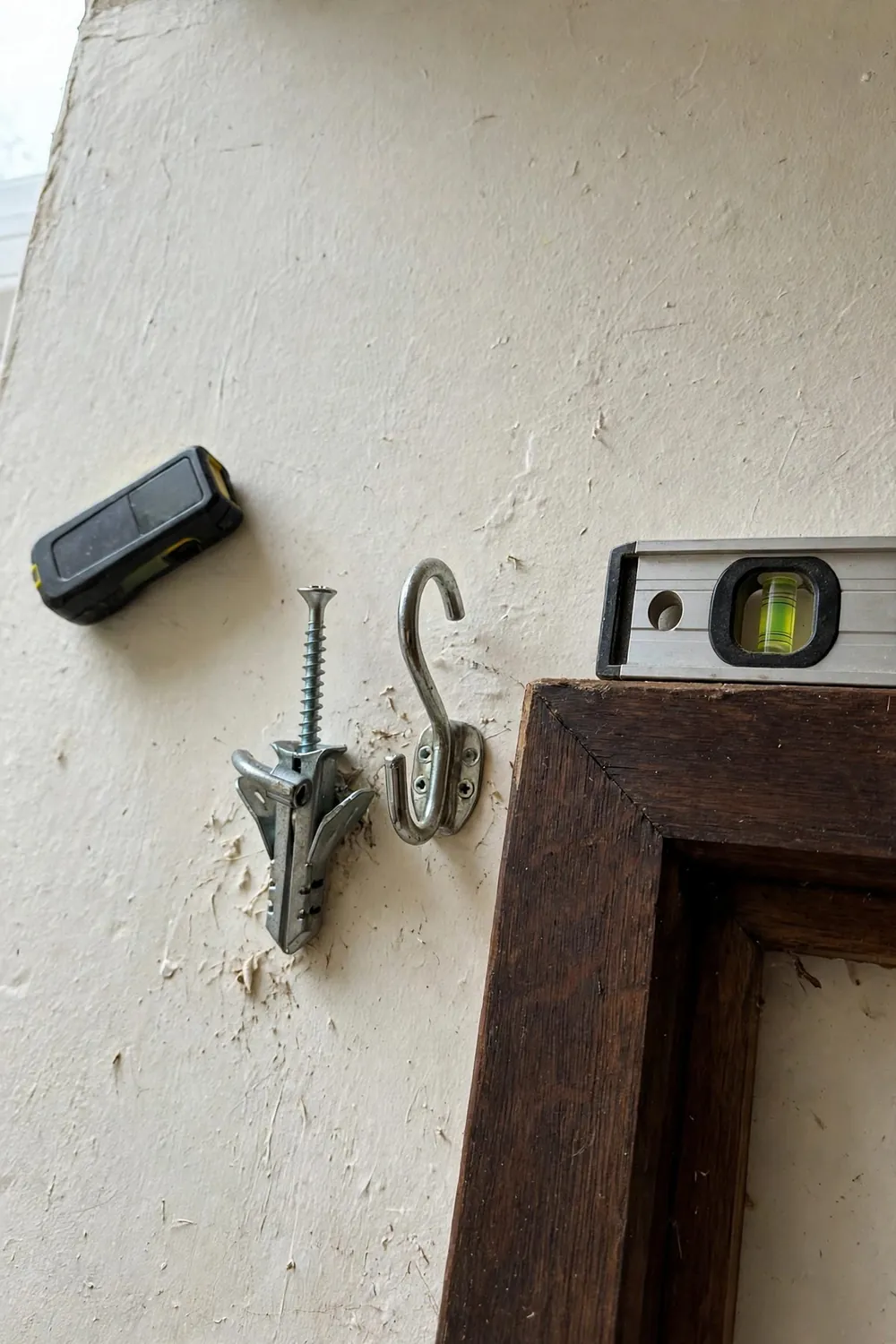
Depth means weight. Plaster panels, wood carvings, and metal pieces must go into studs or proper wall anchors rated for the load — never a single nail and optimism. Weigh the piece (a bathroom scale works), buy hardware rated well above it, and use two hanging points for anything wide so it stays level when doors slam.
Renters: French cleats on two studs, or leaning a very large piece on a mantel or console, give you the look with minimal holes.
8. Center on the Furniture, Not the Wall
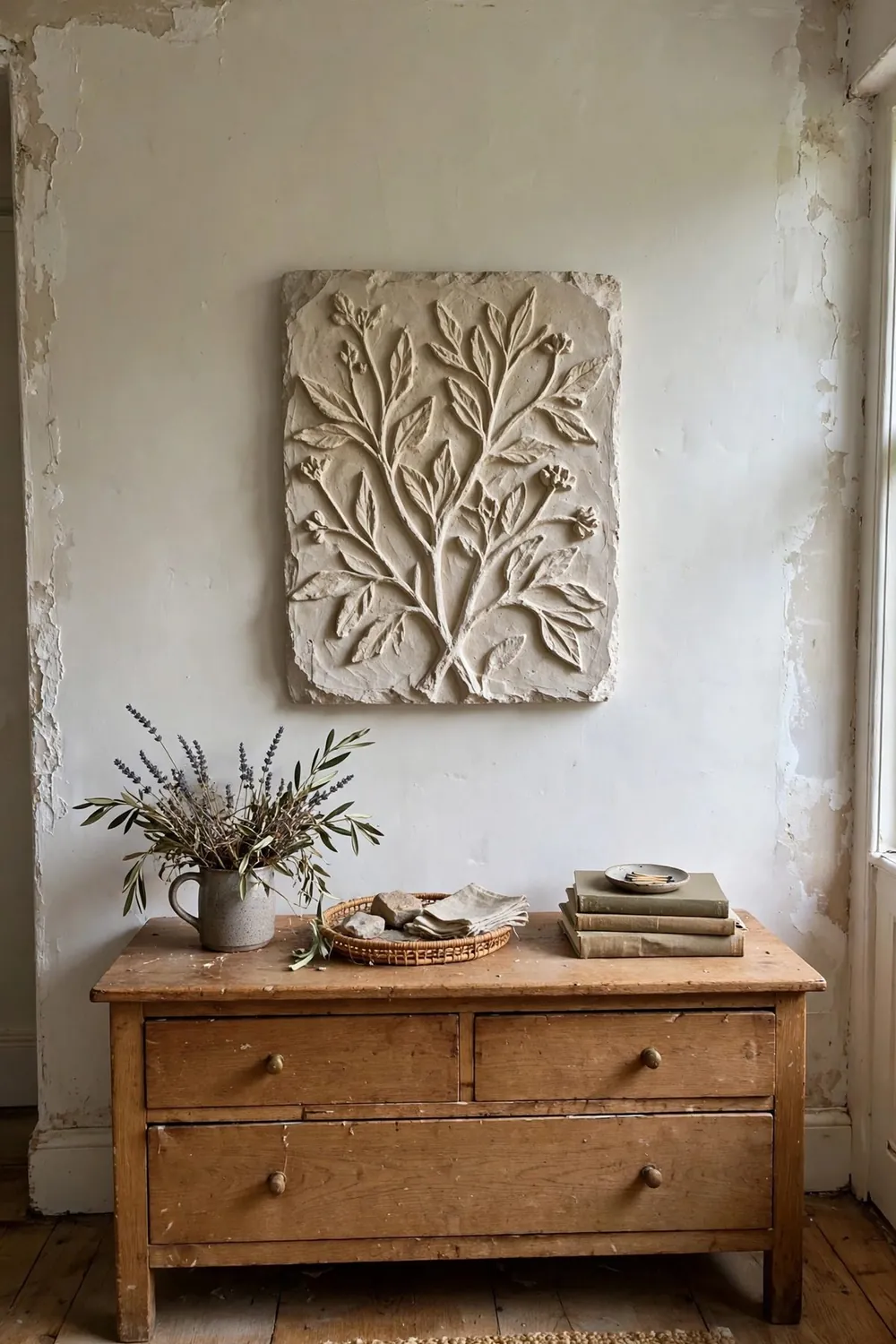
Art above a sofa belongs to the sofa. Center the piece on the furniture below it, even if that is off-center on the wall — the eye reads the grouping, not the architecture. The same applies above consoles, sideboards, and beds.
For a composed installation (ceramics, baskets), mark the footprint on the wall with painter’s tape first and live with the tape outline for a day. Adjust before drilling, not after.
Light: Where Sculpture Comes Alive
Flat art wants even light. Sculptural art wants raking light — light that skims across the surface and lets every ridge throw a shadow. This is the single biggest difference between a piece that looks fine and a piece that looks extraordinary.
9. Light It From the Side or Above at an Angle
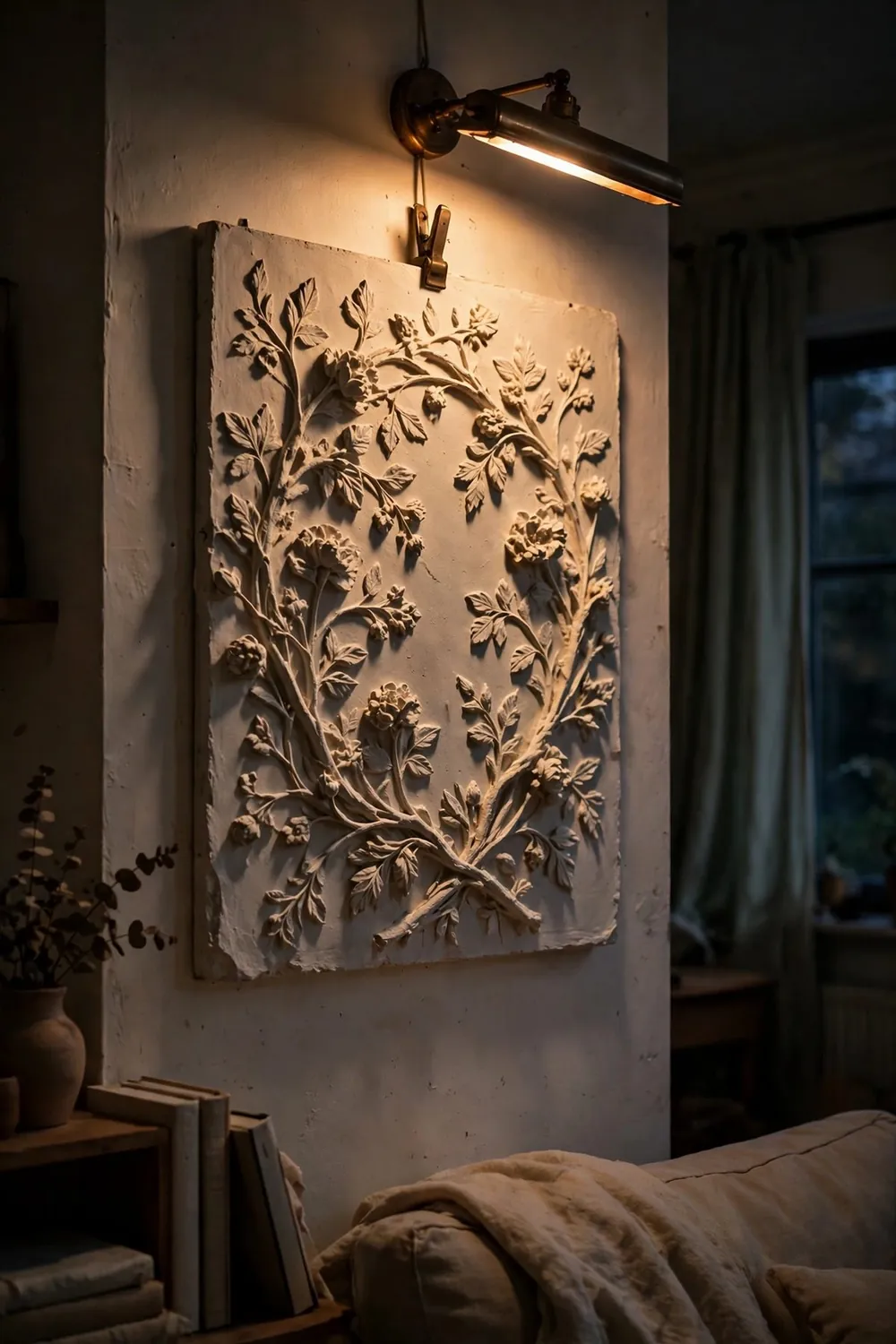
A picture light mounted above, a ceiling spot angled at 30 degrees, or even a floor lamp placed to one side will graze the surface and triple the drama. Avoid lighting sculptural pieces flat from the front — it erases exactly the depth you paid for.
In the evening, candlelight and low lamps near a relief wall create moving shadows that make the whole room feel alive. Try it once and you will never light the piece flat again.
Getting the Look for Less (Including DIY)
Sculptural art has a gallery reputation and a gallery price tag — but the look is unusually achievable on a budget, because texture reads as luxury at almost any cost level.
10. Make a Plaster Relief Panel Yourself
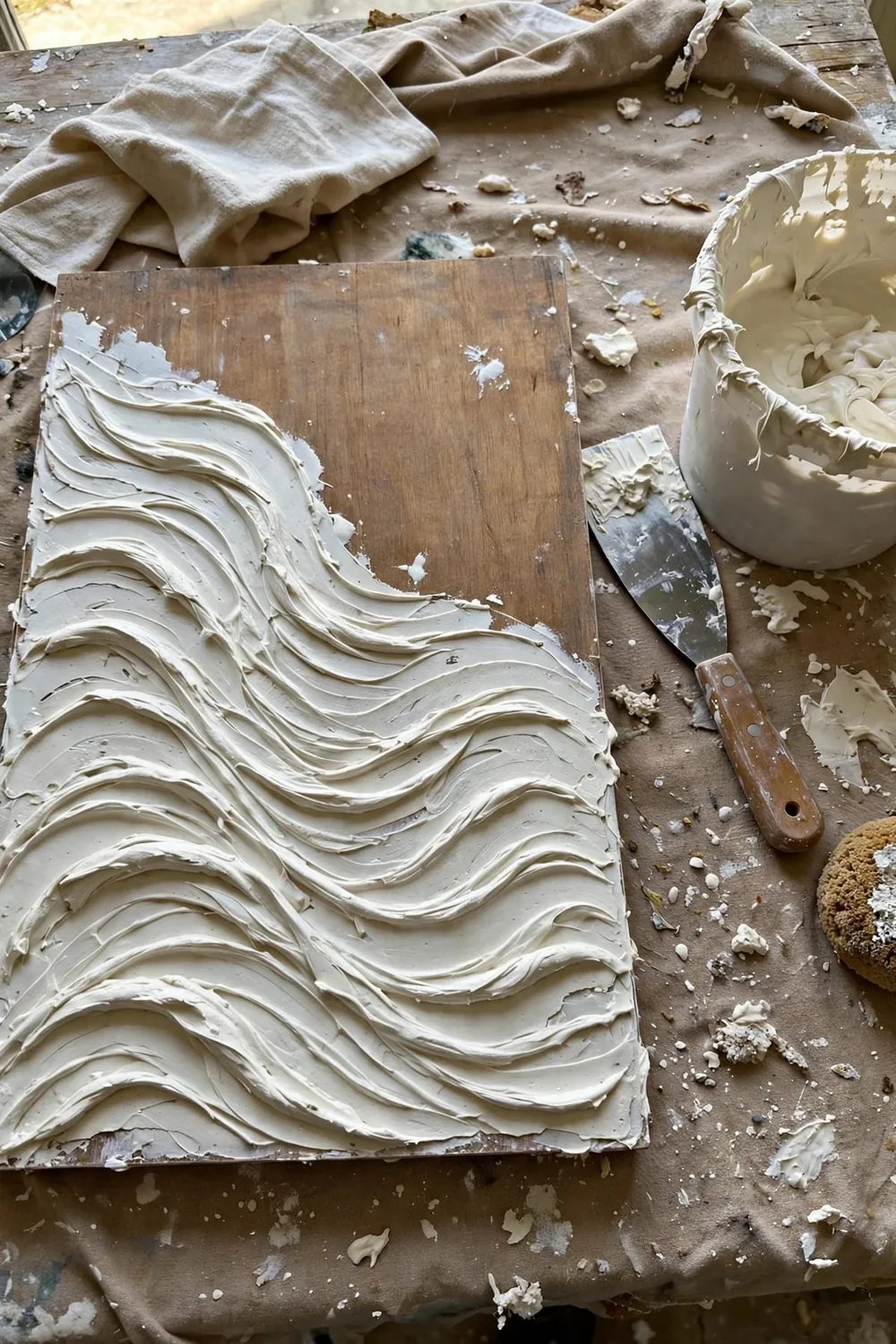
A large canvas or board, joint compound or modeling plaster, a trowel, and an afternoon: sweep arcs, arches, or organic waves, let it dry, and finish with warm white paint. The materials cost $20–$40 for a genuinely large piece, and the handmade variation is the charm — no two are alike, and guests will ask which gallery it came from.
Pro tip: paint the finished relief the exact color of your wall for the most sophisticated, architectural effect, or one shade warmer for subtle contrast.
11. Compose a Basket or Ceramic Wall From Thrift Finds
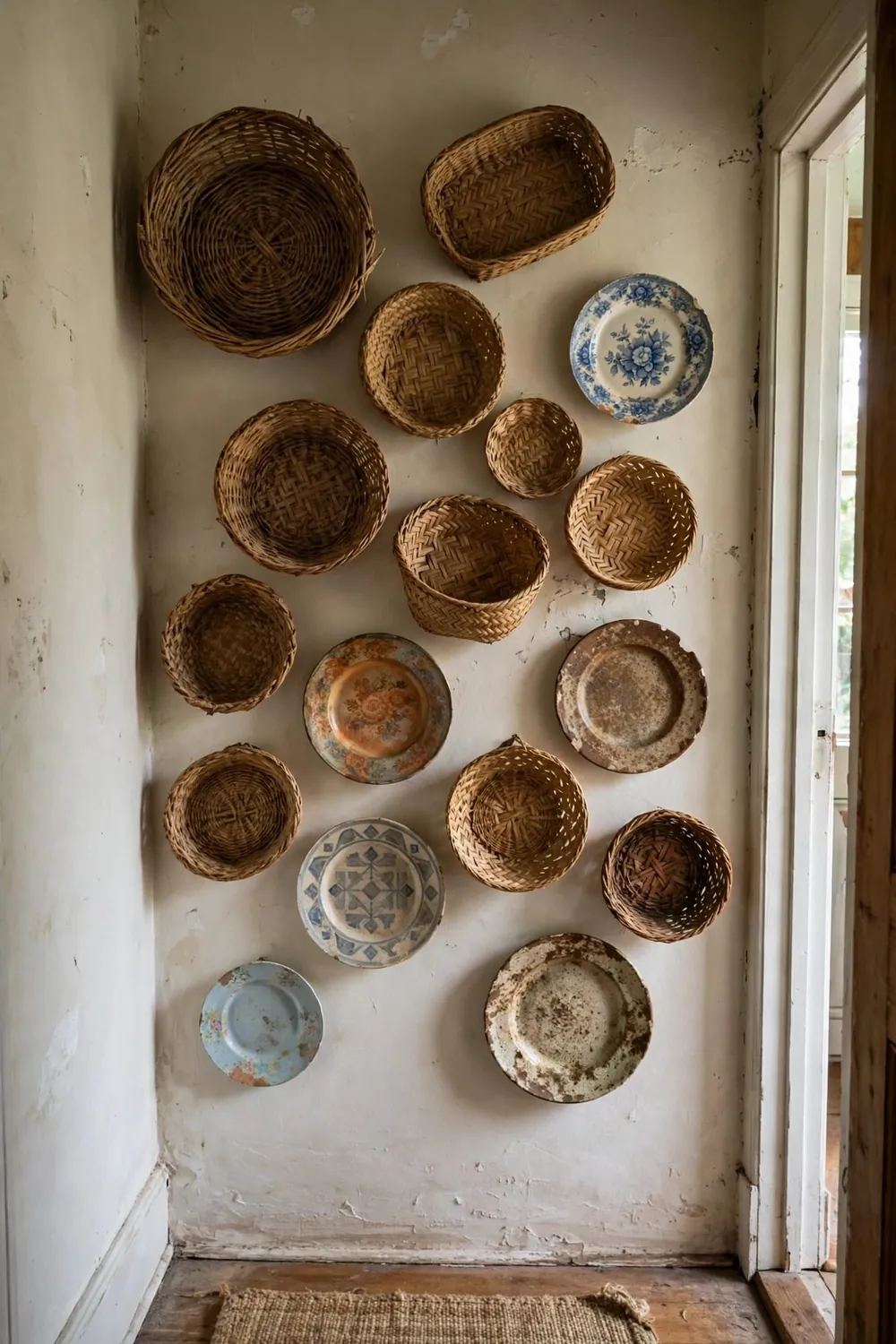
Collect flat woven baskets (or ceramic plates and discs) in one palette over a few weekends. Arrange them on the floor, photograph arrangements until one clicks, then hang with small nails or adhesive hooks. Total cost for a large installation: often under $50, and it is unmistakably one of a kind.
12. Go Oversized With One Statement, Skip the Rest
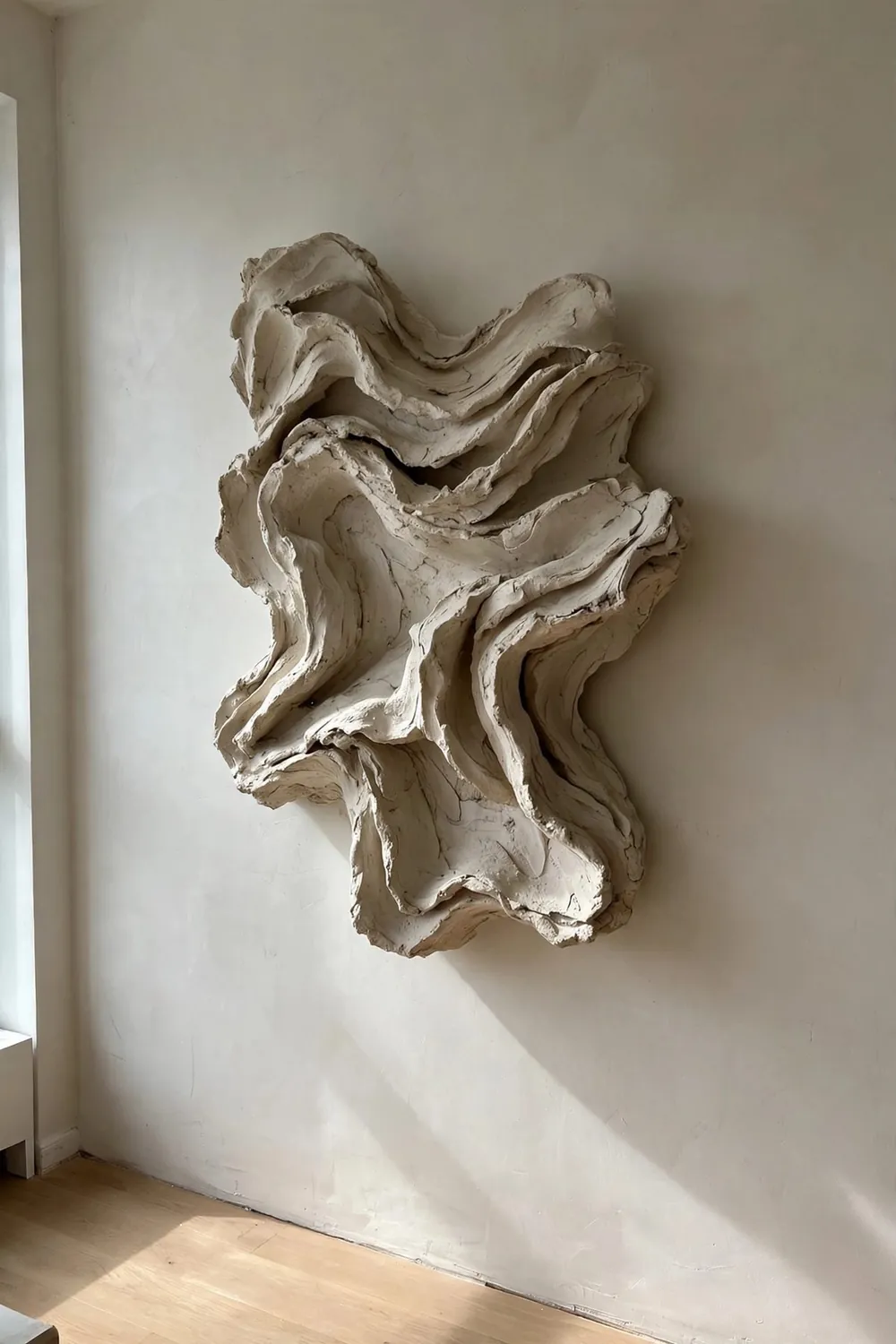
The budget logic of sculptural art is concentration: one large piece replaces the gallery wall, the mirror, and the shelf of objects you might otherwise buy. Fewer, bigger, better is cheaper in the end — and it is precisely what makes the room look expensive.
More Sculptural Ideas to Elevate the Wall
Still collecting ideas? These final additions round out the list — each one tested against the same rule as everything above: it has to earn its place in a real home, on a real budget.
13. Hang an Oversized Plaster Medallion
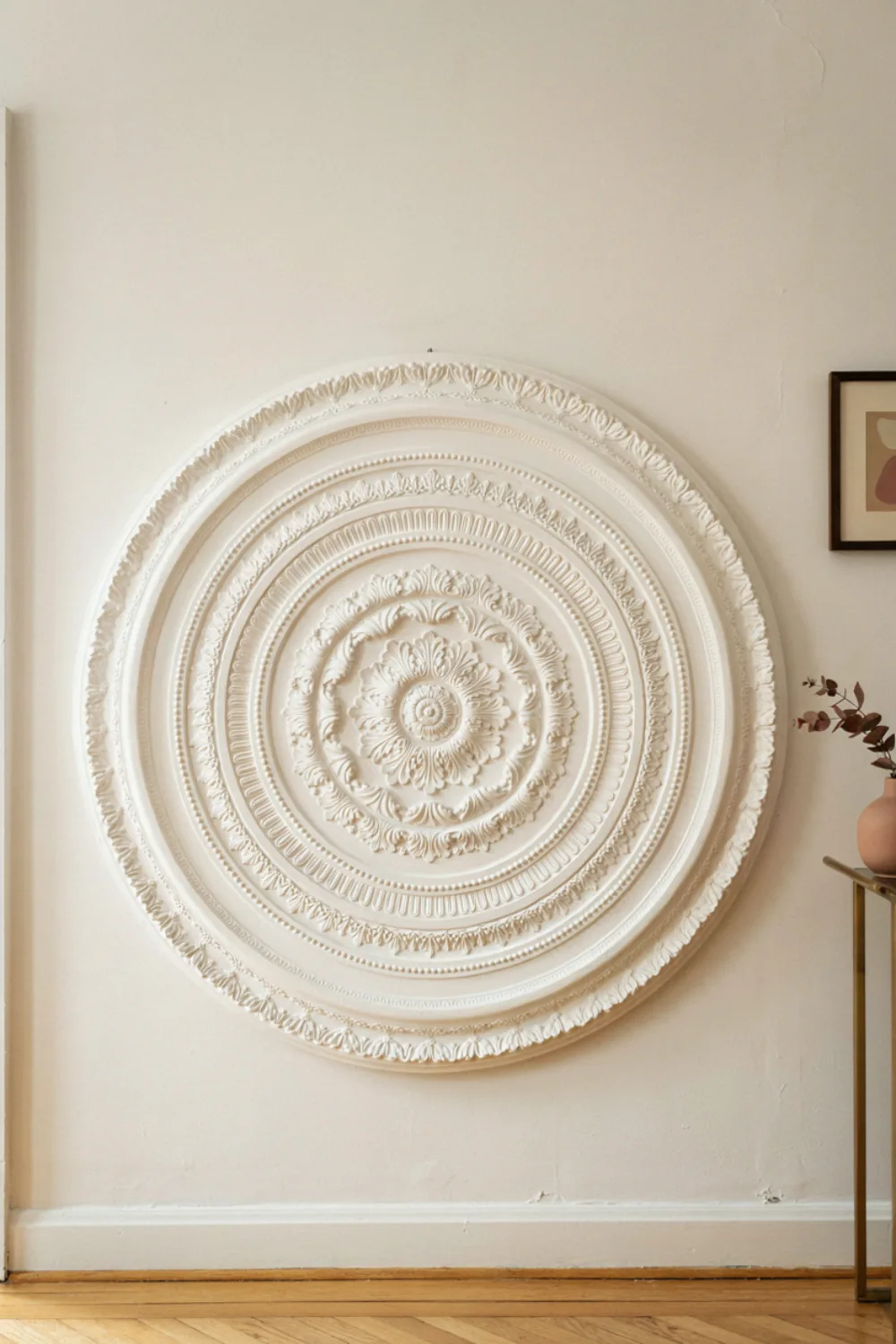
A ceiling medallion, rescued from its original job and hung on the wall, becomes a round plaster relief with instant architecture. Painted the wall color, it reads as pure shadow and shape; in a large size it can anchor a whole seating wall alone.
Lightweight polyurethane medallions cost little and hang on a single screw. Choose the biggest your wall can carry — medallions fail by timidity, not by scale.
14. Group Three Reliefs as a Triptych
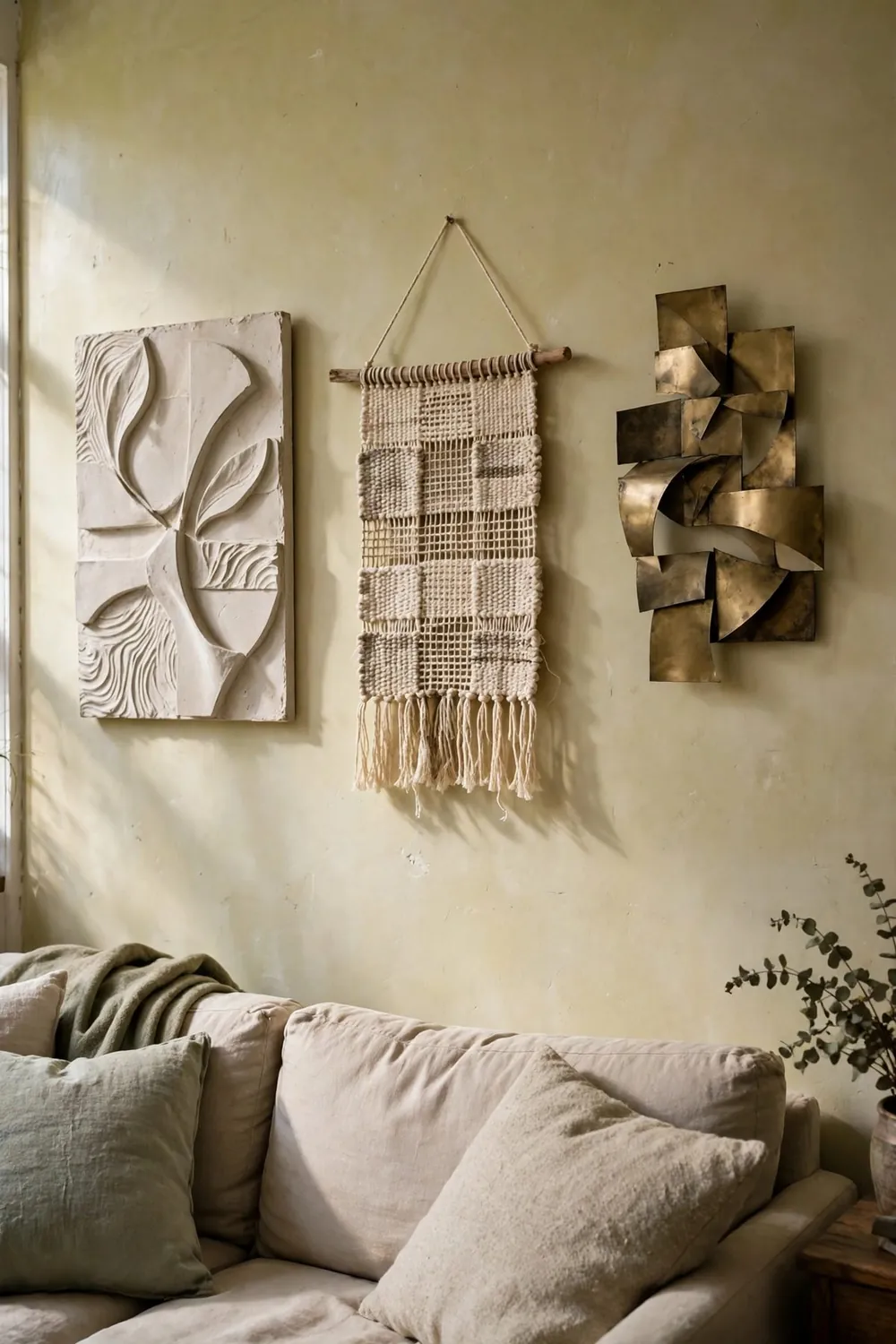
Three small plaster or ceramic reliefs hung in a level row tell a bigger story than any one of them alone, and the rhythm of repetition is what makes it feel like art rather than objects. Keep frames out of it — reliefs want to meet the wall directly.
Space them a hand’s width apart and align centers precisely. Triptychs are the easiest way to fill a long wall above a sofa without one risky oversized purchase.
15. Try a Carved Wood Panel
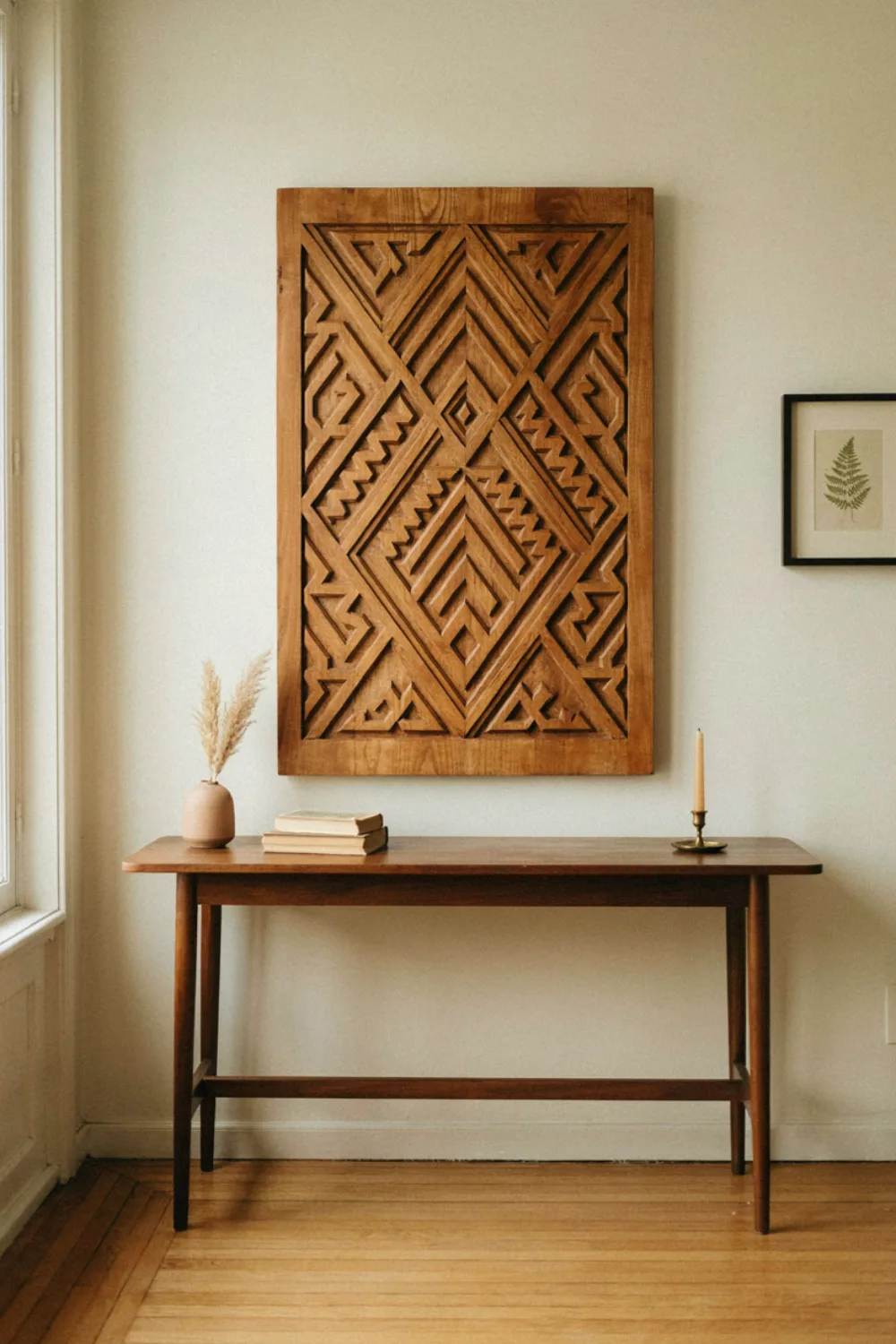
A carved wooden panel — Balinese, Moroccan, or a simple modern geometric — brings hand-made depth and warmth that metal and plaster cannot. Against a pale wall, mid-tone carving glows; against a deep wall, pale carving lifts.
Check the weight before you fall in love: solid carved panels are heavy and want proper wall plugs or a French cleat. The effort is repaid every evening when lamplight rakes across the carving.
16. Arrange Woven Wall Baskets
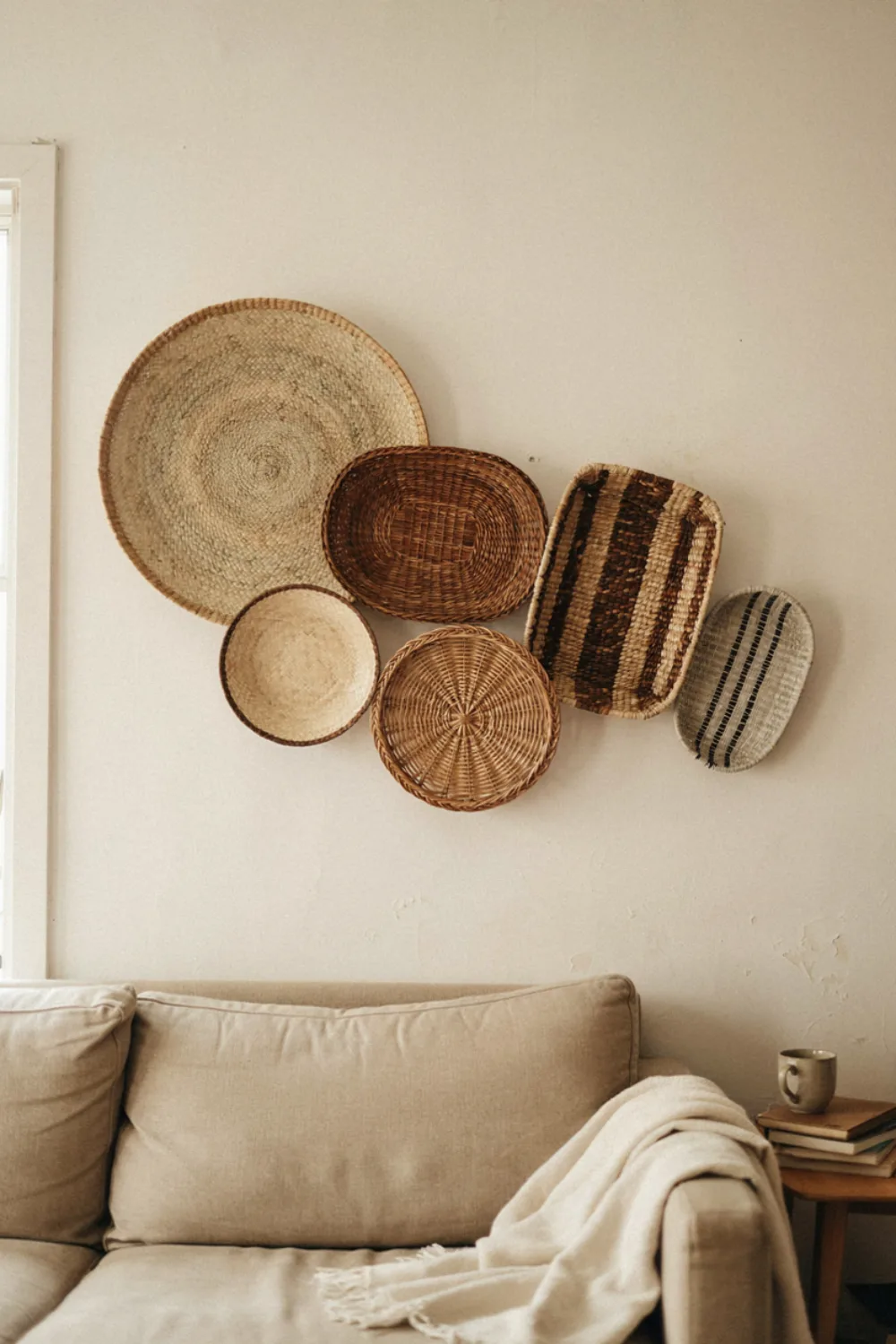
A cluster of flat woven baskets in varied sizes and natural tones creates a soft sculpture that suits boho, coastal, and earthy rooms — and weighs almost nothing. Arrange them low over a sideboard first to find the composition, then hang.
Mix two or three weave tones, not six. The arrangement should read as one breathing constellation, densest at the center and loosening at the edges.
17. Choose a Metal Botanical Sculpture
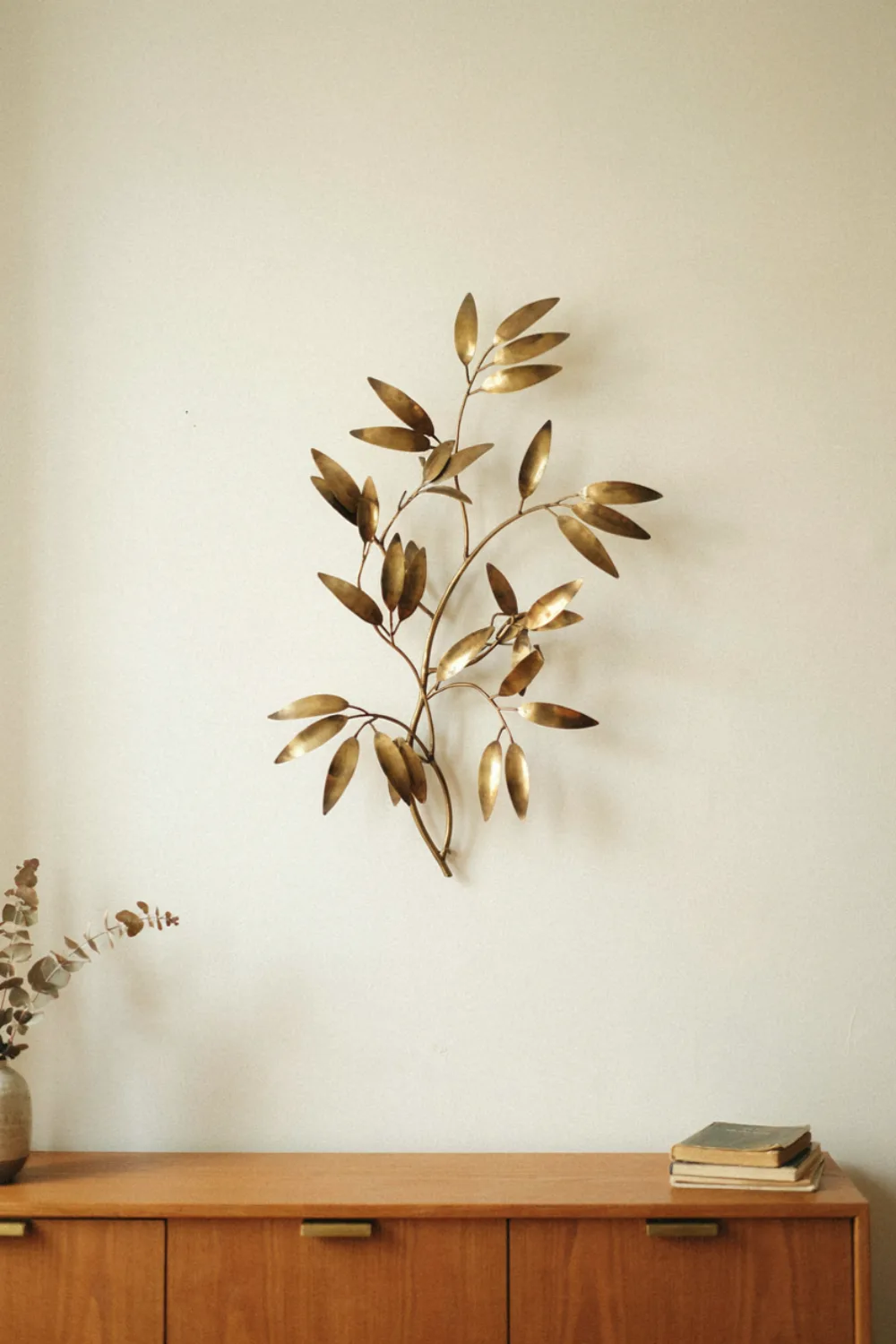
A metal branch, fern, or flock of abstract leaves brings sculpture’s movement to rooms that need life more than geometry. Gold and brass versions catch light warmly; blackened metal reads as a drawn silhouette.
Botanical metalwork is forgiving of wall color and room style, which makes it the safest first sculptural purchase — and it pairs with real plants nearby without competing.
18. Frame Sculptural Paper Art
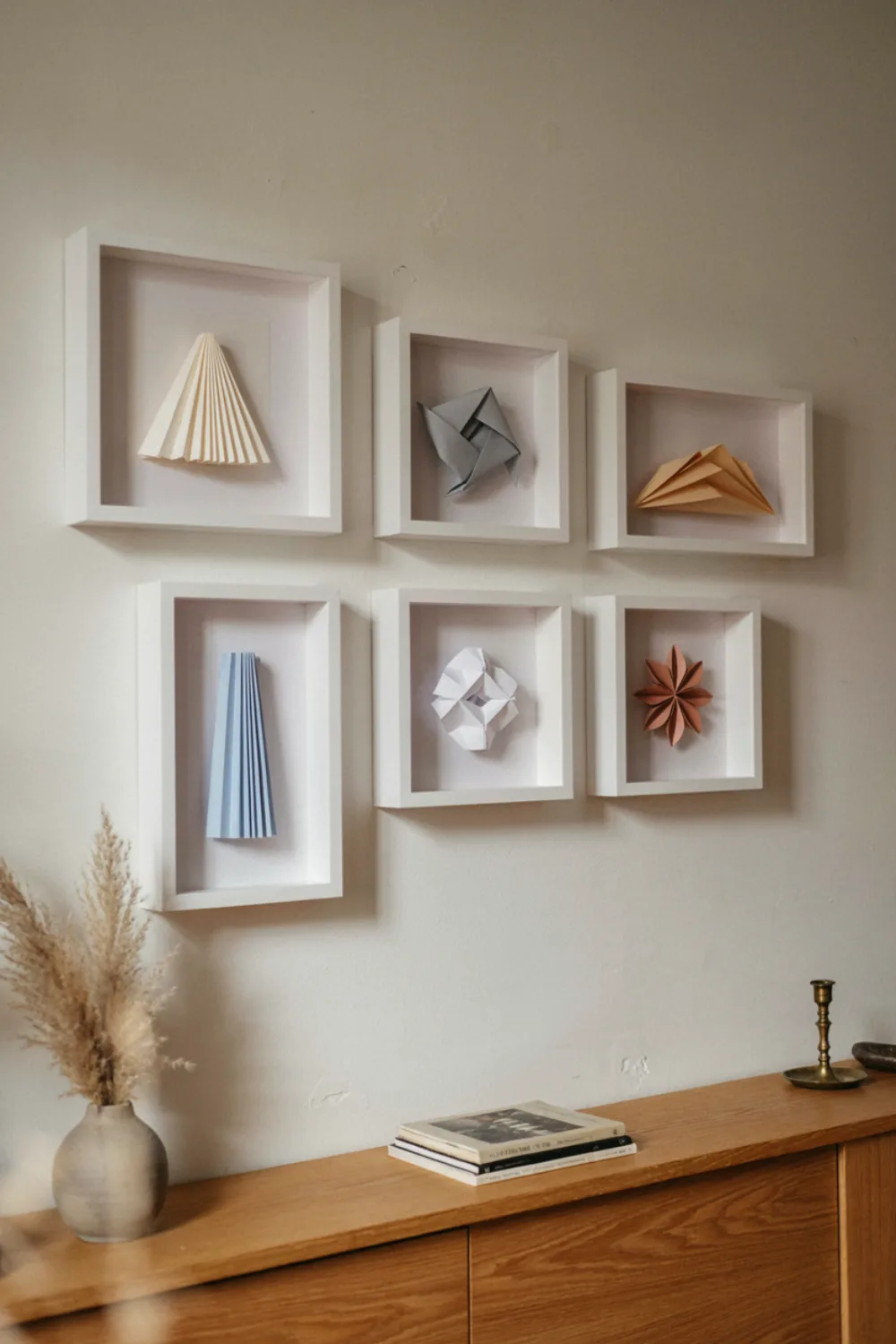
Handmade paper, folded paper constructions, and paper-cut pieces in deep box frames give you texture and shadow at a fraction of ceramic prices — and they are light enough for any wall. The deep frame is essential: the shadow inside it is half the artwork.
Keep paper art out of steamy bathrooms and direct sun. Everywhere else it is the budget sculptural medium nobody expects and everybody asks about.
19. Install a Ceramic Tile Composition
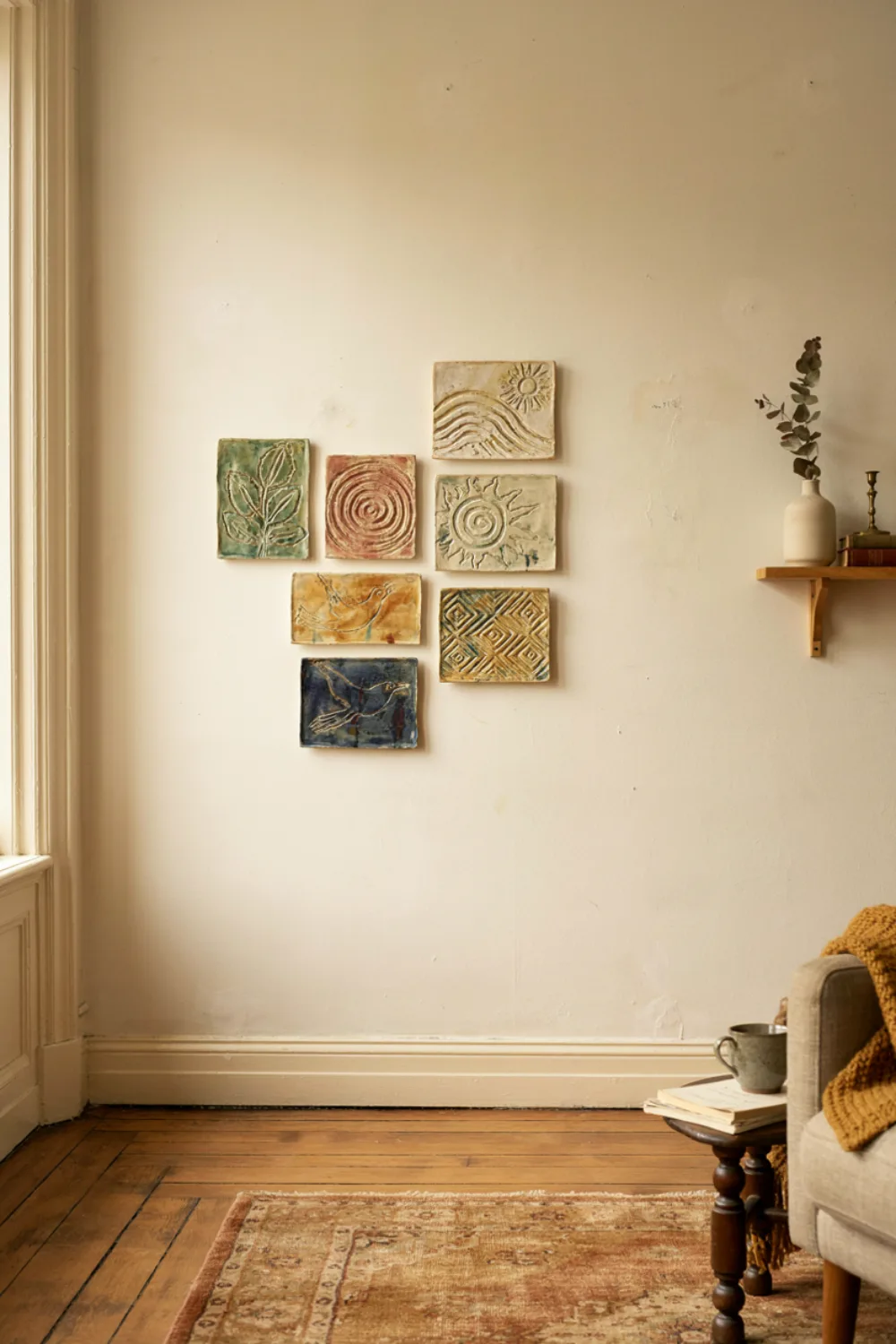
Individual art tiles — hand-glazed, relief, or patterned — arranged as a grid or a scattered constellation make a permanent-feeling sculpture you install one light piece at a time. It is the strongest option for kitchens and bathrooms, where steam rules out softer media.
Lay the whole composition on the floor and photograph it before the first tile goes up. Small spacing errors multiply in grids, and a rehearsal costs nothing.
20. Play With Shadow Using Perforated Metal
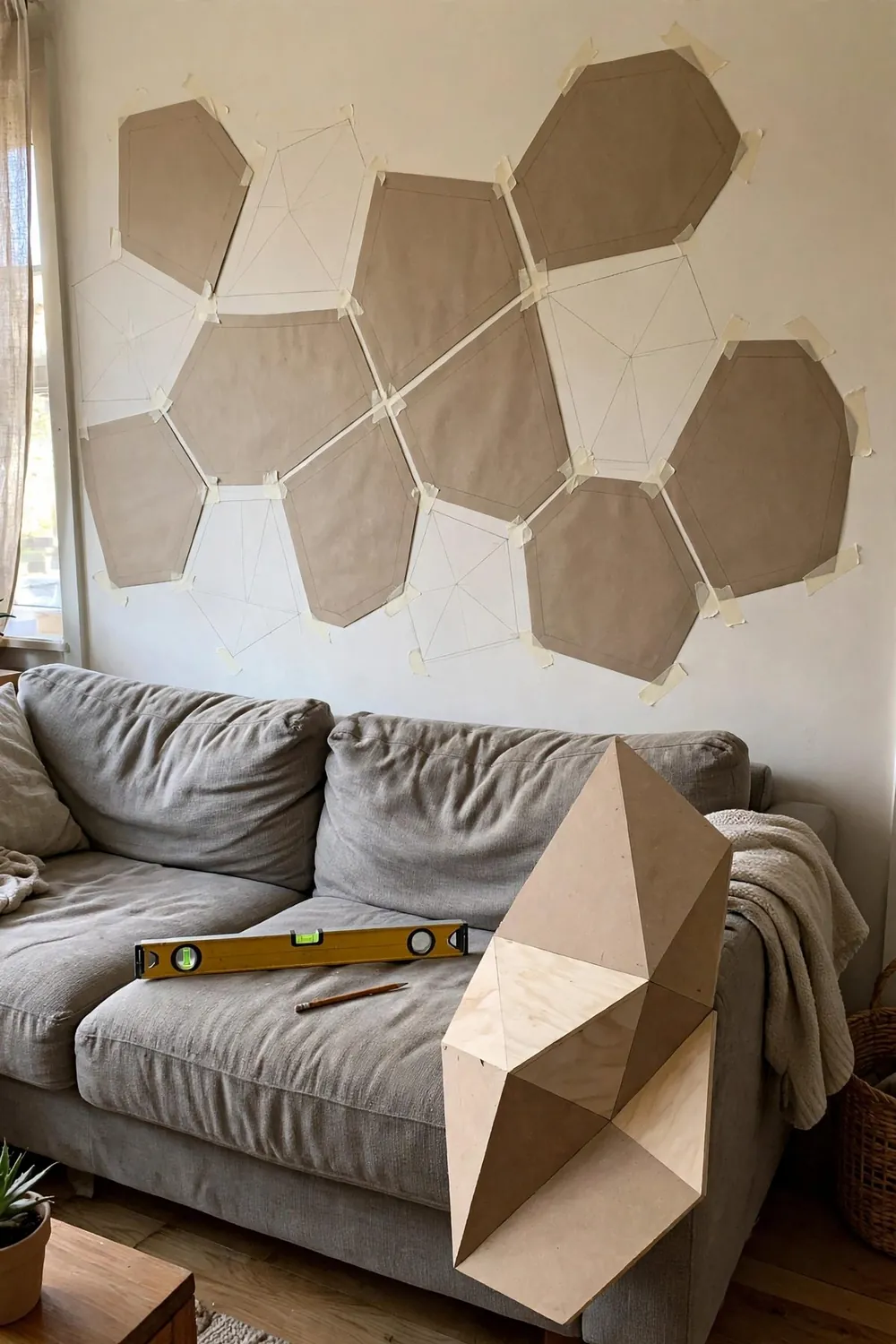
A perforated or laser-cut metal panel hung a few centimeters off the wall — or lit from behind a shelf — turns light itself into the artwork, casting patterned shadows that change from morning to lamplight.
This is sculpture for minimalists: the object is quiet, the effect is theater. One panel, one light source, and a wall becomes the most photographed corner of the home.
21. DIY a Textured Canvas With Joint Compound
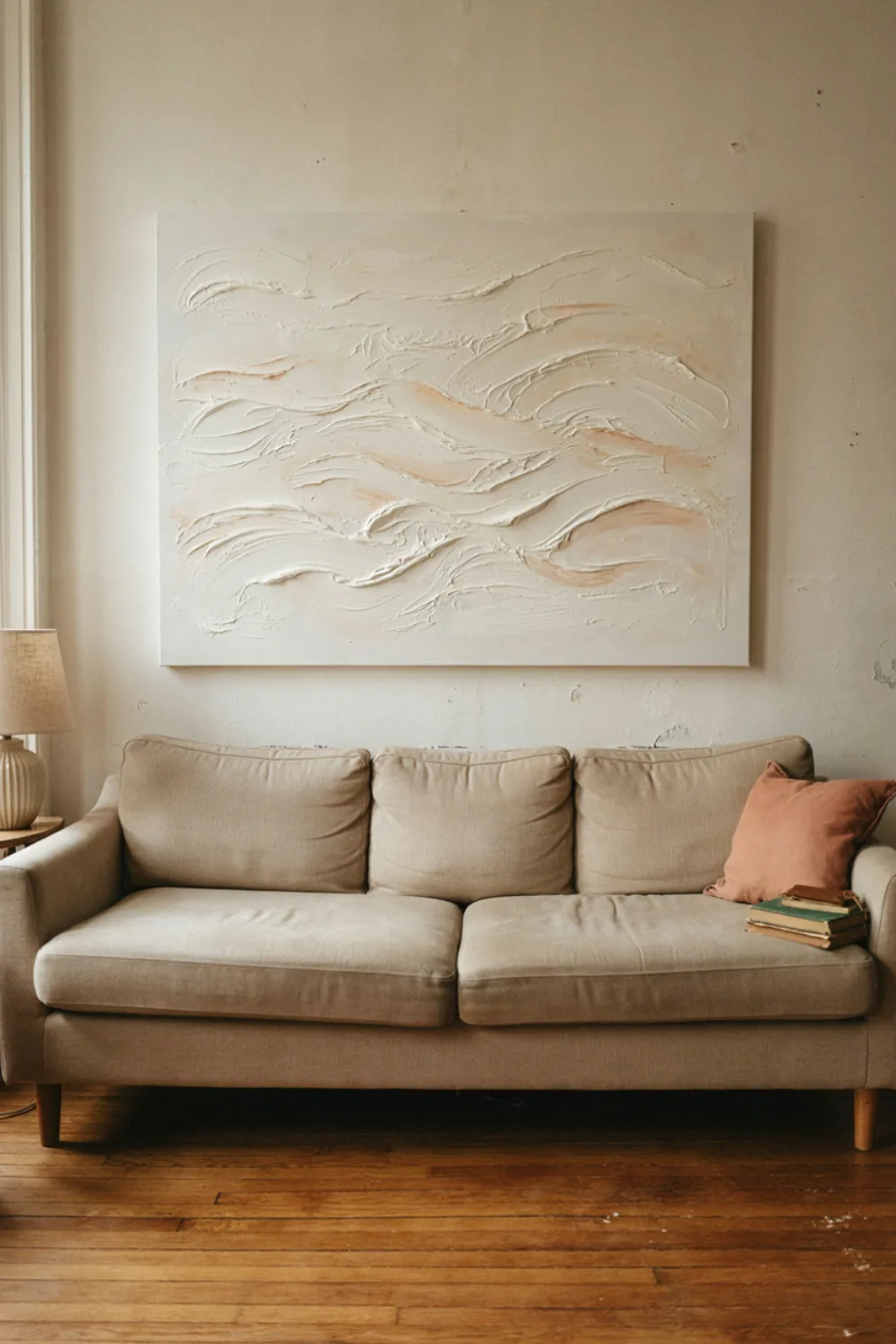
The famous budget sculpture: spread joint compound over a plain canvas with a trowel or palette knife — arcs, waves, or one bold sweep — let it dry, and paint it the wall color or a warm white. The result looks like gallery plaster art for the price of filler.
Work outdoors or ventilated, and seal it once dry so edges do not crumble. Of every idea in this guide, this one has the widest gap between cost and perceived value.
Sculptural Art in Every Room
The living room is the classic home for a big piece, but dimensional art earns its place everywhere.
Entryway. A single relief panel or carved piece above a console makes the home’s first impression architectural. Entryways have no sofas to size against, so follow the furniture rule with the console (two-thirds of its width) and hang the piece’s center near eye level for a standing viewer — slightly higher than living room art. This is also the safest place for your boldest piece; guests admire it and move on, so it never has to hold a whole evening.
Dining room. Sculptural art loves dining rooms because candlelight and low lamps rake across it all evening — the piece literally performs during dinner. Metal and plaster both glow in this setting. Center the composition on the table, not the wall, and keep the table’s own styling quiet so the wall stays the evening’s artwork.
Bedroom. Choose the soft families here — plaster, fiber, woven — and hang above the headboard using the sofa rules (two-thirds of the bed’s width, 6–10 inches above the headboard). Anchor with doubled care: nothing heavy should ever hang where it could fall on sleepers without hardware rated far beyond its weight and fixings into studs. Many people prefer a large woven piece here precisely because it is beautiful, dimensional, and feather-light.
Hallways and stairs. A composed constellation of ceramics or baskets turns a pass-through into a gallery moment. Stair walls suit ascending arrangements that follow the slope. Keep projections shallow in narrow halls — sculptural depth is wonderful until a shoulder meets it daily.
The small room exception. In very small rooms, one medium sculptural piece beats one huge one — the depth itself takes visual room. A 30-inch relief in a tiny living room delivers the whole idea without overwhelming it. Scale rules bend; the principle (one dimensional focal point, lit at an angle) does not.
Buying Sculptural Art: What to Look For
Whether you are spending $40 or $4,000, the same questions separate a piece that thrives on your wall from one that quietly disappoints.
Judge it in raking light before you buy. In a shop or a listing photo, pieces are often lit flat. Ask to see the piece with light from the side, or imagine a window to its left: relief and texture pieces live or die by their shadows. A piece that looks dramatic in flat showroom light will be extraordinary at home; a piece that needs the showroom’s spots to look alive may go dull on your wall.
Check the back before the front. The mounting tells you the maker’s seriousness: proper hanging hardware, a level back, finished edges. A beautiful front on a warped, nail-scratched board is a future problem hanging by a thread. For heavy pieces, ask the weight outright and write it down — your hardware shopping depends on it.
Scale-test with tape at home first. Photograph your taped outline from the sofa, with a person sitting there for scale if you can. Pieces that feel “big” in a gallery feel smaller on a home wall; the two-thirds rule plus the tape test is the whole defense against the most expensive word in art buying: “undersized.”
Material honesty. Plaster should feel dense, not foamy-light unless it is a designed lightweight panel (those exist and are great for rentals — ask). Metal should have finished edges and real weight in the hand. Woven pieces should be tight, even work. Carved wood should smell and feel like wood, with the grain running through the carving, not printed on top of it.
Buy the piece you keep looking at. Sculptural art is the room’s main event for years. The efficient choice and the on-trend choice both fade; the piece your eye returns to in the shop, the one you check once more before leaving, is the one that will still be giving you something in year ten.
Rotating & Refreshing: Keeping the Wall Alive for Years
A sculptural piece is a long relationship. These habits keep it from becoming invisible furniture.
The seasonal glance. Every few months, look at the piece as if visiting — most of us stop seeing our walls entirely by month two. If the piece has gone invisible, the fix is usually light, not replacement: re-angle the lamp, or accept the gift of a new shadow pattern as the sun’s angle changes with the season.
Swap the companions, not the piece. The sofa cushions, the throw, the plant below — changing the supporting cast twice a year makes the artwork read fresh again, because we see art in context. A plaster relief over a rust-cushioned autumn sofa and the same relief over a linen summer sofa are, perceptually, two different artworks.
One wall, one era. When you do fall for a second piece in a new family, move walls rather than mixing: the plaster stays in the living room, the new metal ribbon takes the hallway. Rooms can hold conversations between pieces; single walls rarely can.
How to Recreate the Look Step by Step
Step 1 — Measure your wall and sofa. Write down the two-thirds target width. Every shopping decision gets easier with that number in your pocket.
Step 2 — Choose your family. Plaster for calm, metal for energy, fiber for softness, wood for warmth, ceramic for collected character.
Step 3 — Tape the footprint. Painter’s tape outline on the wall, lived with for a day, adjusted until the scale feels generous.
Step 4 — Solve the hanging. Weigh, find studs, buy rated hardware, two points for wide pieces.
Step 5 — Light it at an angle. Picture light, angled spot, or a repositioned lamp. Then view the piece at dusk — that is its finest hour.
Going deeper: hang heavy art like a gallery does. Sculptural pieces fail at the fixing, not the styling. Find the studs first — a magnetic stud finder sliding over the wall catches the drywall screws and maps them reliably — because a heavy relief on plasterboard anchors alone is a countdown, not an installation. For anything over five kilograms, a French cleat is the kindest solution: one strip on the wall, one on the piece, and the art lifts on and off level every time. Paper-template the whole arrangement on the wall and live with it overnight before drilling; scale surprises everyone at full size. Keep the piece’s deepest point in mind when choosing the spot — relief art is walked into in narrow halls. Hung this way, the work feels architectural and permanent, and you will never straighten it again.
Real-Life Problems, Solved
These are the questions real people ask most when a room isn’t working yet, answered for this style.
The art above my bed or sofa looks too small. What size do I need?
Aim for a piece or grouping about two-thirds the width of the furniture below it, hung 20–25 cm (8–10 in) above the top edge. Small pictures floating on a big wall are the most common reason a room looks unfinished, and one larger sculptural piece fixes it instantly.
Budget Guide: Where to Save, Where to Spend
Save on: the piece itself, honestly — DIY plaster reliefs and thrifted basket compositions deliver the full sculptural effect for under $50. Also save on framing: most sculptural pieces need none, which quietly removes the most expensive part of ordinary wall art.
Spend a little more on: hanging hardware and lighting. A properly anchored piece is a safety matter, not a style one, and a good picture light or quality spot transforms the art nightly. If you buy one artisan piece, a handmade plaster or carved wood work from a local maker holds its beauty and story for decades.
Mistakes to Avoid
Going too small. A 24-inch piece over a 90-inch sofa looks lost no matter how beautiful it is. Scale is 70% of this look. Tape first, buy second.
Hanging too high. Sculptural pieces floating near the ceiling disconnect from the room. The 6–10 inches above the sofa back rule keeps the composition one family.
Flat, front lighting. It erases the shadows that are the entire point. Always angle the light.
Ignoring weight. A falling plaster panel is dangerous and heartbreaking. Studs, anchors, rated hardware — no exceptions for heavy pieces.
Mixing too many families on one wall. Plaster plus metal plus baskets plus ceramics on a single wall is a craft fair. One family per wall; the room can host a second family on a different wall if the palette matches.
Your Sculptural Wall Art Checklist
- Sofa/wall measured; two-thirds width target noted
- One material family chosen for the wall
- Footprint taped and lived with for a day
- Piece weighed; studs located
- Hardware rated above the piece’s weight
- Two hanging points for wide pieces
- Bottom of art 6–10 inches above sofa back
- Art centered on the furniture, not the wall
- Angled light source planned (picture light/spot/lamp)
- Evening viewing check done
- One family per wall — no craft-fair mixing
Frequently Asked Questions
How big should wall art be over a sofa?
About two-thirds of the sofa’s width is the classic guideline — for a 84-inch sofa, aim for a piece or composition around 56 inches wide. Err larger: in modern rooms, generous scale is what reads as intentional and expensive.
Is sculptural wall art a passing trend?
Textured and relief art has cycled through design for centuries — from carved panels to mid-century metal work — because walls with dimension feel good in every era. The current organic plaster wave is a style peak, but a well-made piece in a neutral material will outlast the trend cycle.
Can I hang heavy sculptural art in a rental?
Yes, with planning: use studs (small holes are usually acceptable and fillable), French cleats that spread weight on minimal screws, or lean oversized pieces on a mantel or console. Keep the landlord conversation honest and the patch kit ready at move-out.
What wall color works best behind sculptural art?
Warm white and soft neutrals make shadows the star and suit plaster, wood, and fiber. A deep wall (charcoal, forest) behind a pale or metallic piece is the dramatic alternative — stunning, but commit to it fully rather than halfway.
How do I clean textured wall art?
A soft brush attachment on a vacuum or a feather duster monthly keeps relief and woven pieces fresh. Keep plaster art dry; woven pieces can be taken down and shaken outside. Two minutes a month protects the piece for years.
Save this for later
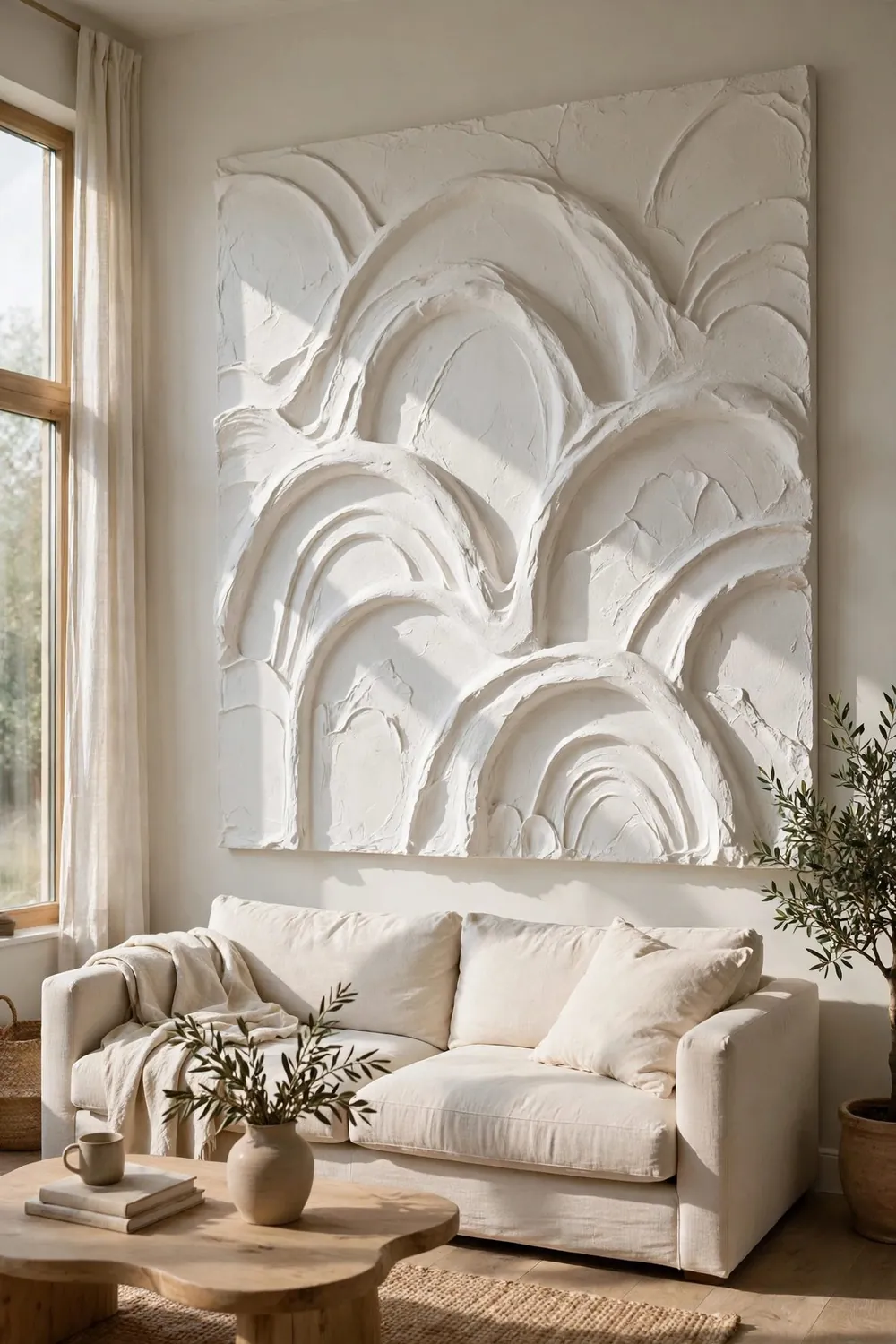
Save this before your next art purchase — the sizing and lighting rules here are what separate a wall that looks collected from one that looks expensive. One big piece, hung right, lit at an angle: that is the whole secret.
Keep reading: 20 Wood Wall Decor Ideas That Add Instant Warmth for the coziest branch of sculptural walls, and 20 Neutral Scandinavian Living Room Ideas for a Calm, Minimal Home for the calm room these pieces were made to hang in.
